Possible impact of Budget 2024 on physician supply in Canada
TL/Dr: May be very bad for physician supply
The latest federal budget proposes to increase the inclusion rate of capital gains and break tax integration.
May sound small, but could have huge implications.
Individuals must exceed a $250K/year threshold before exposure to higher capital gains tax.
Allows individuals to slowly realize capital gains in retirement and avoid harsh taxation (unless selling a large asset all at once)
Professional corporations (used by many physicians to create retirement packages, as don’t have a pension) will have ALL capital gains taxed at highest capital gains rate.
This removes ability to slowly draw down savings at retirement in order to avoid highest taxation.
In last decade, we’ve seen increasing restrictions on use of professional corporations to create retirement packages.
Notably if a corporation earns more than $50,000 in passive income in a year, its eligibility for the reduced small business tax rate on active business income is reduced, and is completely phased out if passive income reaches $150,000.
This has had the impact of making it harder to grow a nest egg for professionals using corporate savings.
With the new capital gains inclusion for professional corporations, it will become that much harder to save and will lower income in retirement.
How might this impact physician supply?
In the short term, it might help.
We may find older, near-retirement physicians recalculating their retirement income and realizing it will be far lower than expected (with tax rate on withdrawals jumping from 29.5% to 39.5% see https://t.co/Wk51Y55NTQ).
They may decide to work longer as they are no longer financially ready to retire.
Going forward, physican supply may be negatively impacted.
Already, hours work per physician has been dropping significantly.
Average MD work hours declined by about 21% between 1987 & 2020
For physicians saving money in their corporations, it’s increasingly clear that incrementally working a little harder each week (ie see more patients, earn more and then save more money) isn’t a great strategy.
While the uninformed may argue business owners can sell shares of their business and get $1.25 million lifetime capital gains exemption, what they don’t realize is that a physician’s practice has no value.
The entire value of the practice is based on the doctor doing the work. Given the physician shortage in Canada, any MD can open up their own practice and be full immediately. There is no value in buying a practice.
So what might young & financially savvy physicians choose to do?
Younger generation is more focussed on lifestyle and being fiscally savvy.
They’d be far better off earning just enough from their medical practice to pay their bills and live - and then using the rest of their time to create a healthcare adjacent business, where the shares can eventually be sold, and the capital gains exemption can be utilized.
They may also be tempted by the Entrepreneurs’ Incentive from Budget 2024. This allows for markedly reduced capital gains inclusion for a founder starting a business, but it requires that this founder meaningfully be involved in the business and explicitly excludes doing any sort of medical practice inside that business.
So we may see a generation of physicians, working <50% actually practising medicine / seeing patients and the rest of their time building a healthcare adjacent business.
It will be hard to criticize young physicians for making the financially advantageous choice in a fiscal environment that seeks to further tax professionals.
I’ve argued we need to find ways to make existing physicians more efficient (less time on paperwork, create efficient computer systems, adopt AI into workflow, etc) so we increase clinical output with same number of MDs.
If physicians start to shift how they work & save for retirement, who is going to see all the patients?
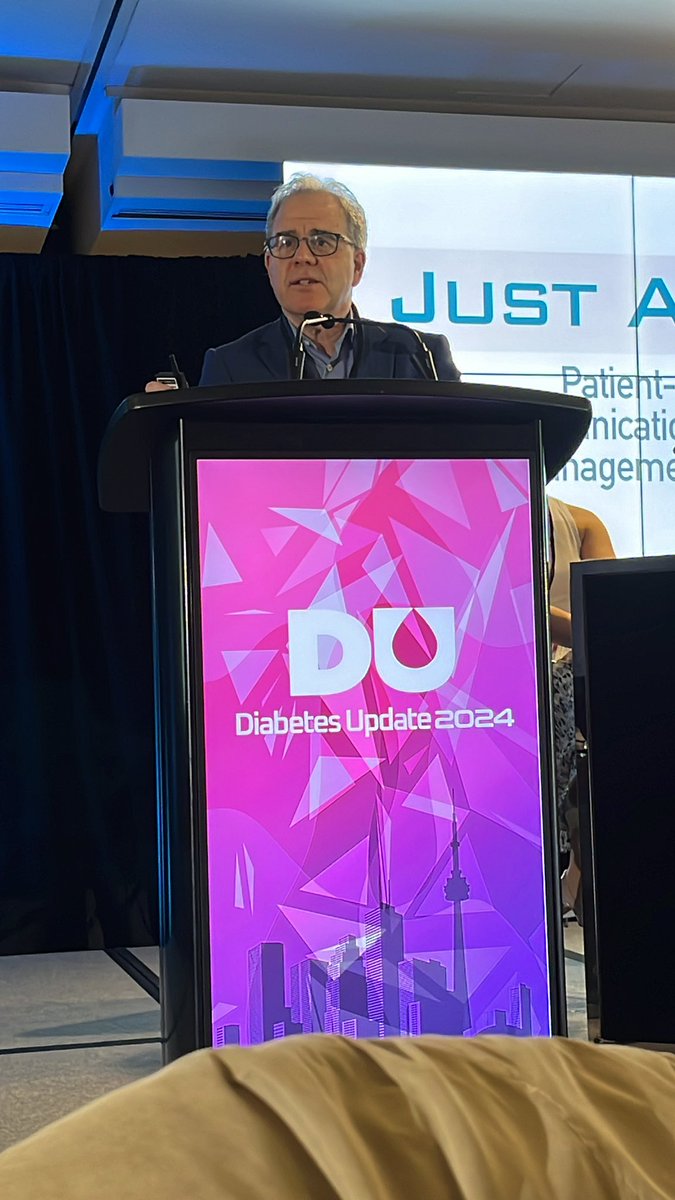
“Anxiety leads to shame. Shame leads to avoidance.” Our wealth of options for diabetes is wonderful but can ⬆️ anxiety. Frame strategies as a way to “ease burden” for the person. “A1c is a psychosocial marker, not just a biological marker” @BarrySimonMD @DUcongress #DUCongress24
Beating #KidneyFailure needs #RareDisease cures. @RenalRaDaR data out today reveals a staggering 28x higher 5-year kidney failure risk in 28k people with #RareKidney diseases c/w 2.8 million with #CKD. Trajectories in 28 diseases included for reference https://t.co/gVF7Ow0mAM
Finally. We figured out the dense deposits in dense deposit disease (DDD).
The answer is Apolipoprotein E.
You can stain for APOE & make the diagnosis of DDD in >80% cases. Without electron 🔬.
DDD was the reason I got into mass spectrometry 17 yrs ago. https://t.co/fQxitNbFYF