Weird world of Aussie bees: How one species creates gender balance in the nest @flinders@RSocPublishing https://t.co/W5bQR19b2m https://t.co/VISH3HAdWm
We're buzzing with excitement! SAM researchers @LRHearn@ParslowBen@michael_s_y_lee & Mark Stevens have co-authored 2 new papers showing why some Aussie bees prefer to stay single & why some are fussy about flowers. https://t.co/4iJkvtQAzt @ConversationEDU
📸 @JamesBeeDorey
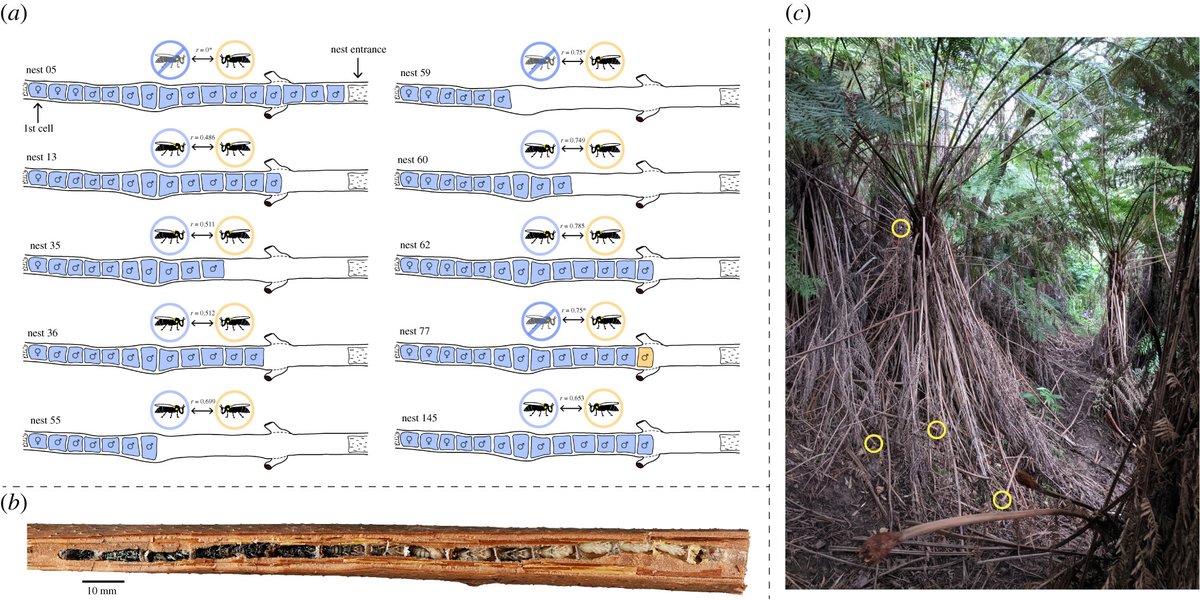
Dawn of sociality—investigating solitary to social nesting behaviour in an Australian native #bee https://t.co/2eqsxerU34 #ProcB@LRHearn @UnlivingDave @FlindersCSE
Excited about this new paper with @UnlivingDave showing how social behaviour in the only social colletid bee🐝provides a unique perspective on the evolutionary transition from solitary living to complex social organisation.
https://t.co/sRpDj6tor6
New work with J. Henske+@santiaguetz.We conduct an experiment examining totipotency in the orchid bee Euglossa dilemma, aiming to better understand the lack of nonreproductive workers in orchid bees, which have evolved in all other corbiculate bee tribes https://t.co/ZevARHcRCy
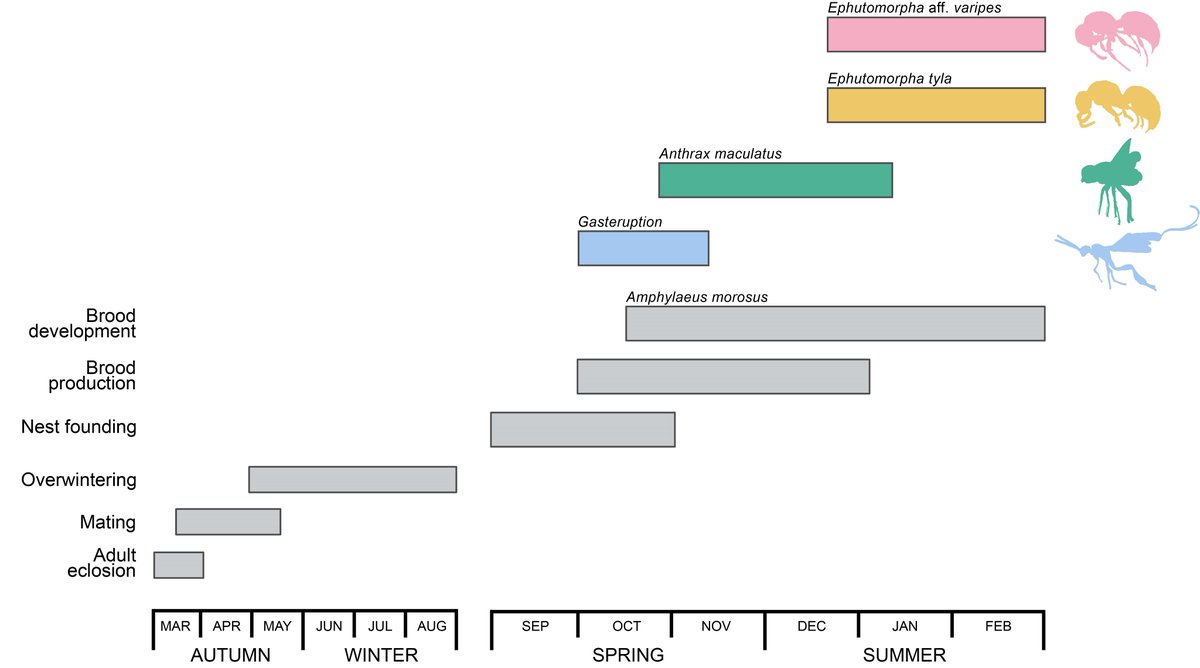
If you like bee + parasitoid systems check out this new study in @BehavEcol. We investigated how the benefits of group living can change across the life-cycle of a social bee depending on variation in parasite pressure. https://t.co/hFBdfiKOZc
#bees#evolution#hymenoptera
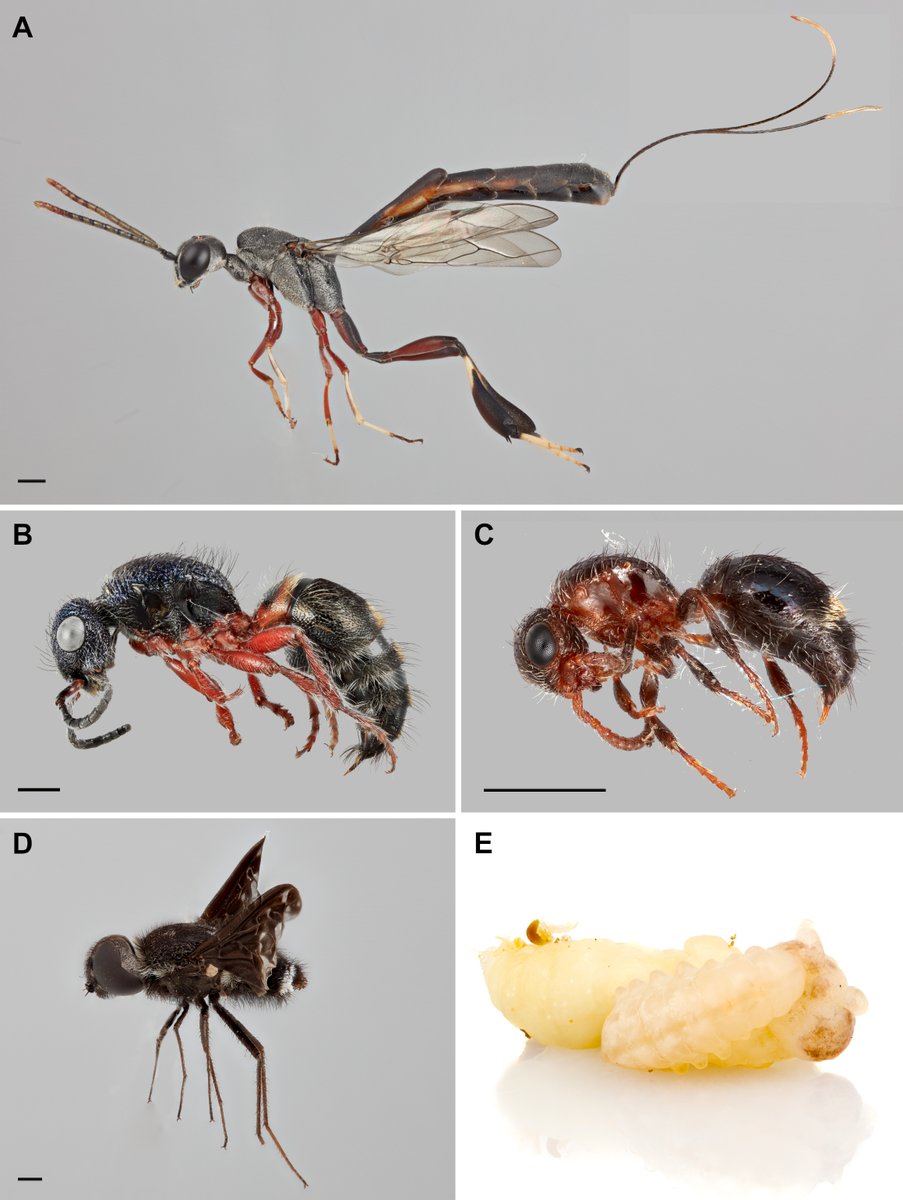
We found that there was temporal variation in when each parasite attacked A. morosus nests in the Dandenong Ranges, which may be driven by host resource utilization and have important implications for social nesting. Watch this space!
New paper with @ParslowBen detailing eight insect parasitoid associations that are likely to influence social nesting in the colletid bee, Amphylaeus morosus. https://t.co/z4tWvQMsWX
Biodiversity losses tend to be under-reported, especially for invertebrates. 📉 🐝 With the help of ALA data, @JamesDoreyPhoto and colleagues are changing that. Their study of 553 Aussie bee species post-fire found 11 are now eligible for the @IUCNRedList.
https://t.co/LXARVwIPqb
After nearly two years of collaborative effort we have finally published our #bushfires and #bees paper. In the paper we develop a new method to examine poorly-known taxa and recommend 11 spp. for #IUCN listing.
https://t.co/sd4FypXyxQ @GlobalChangeBio
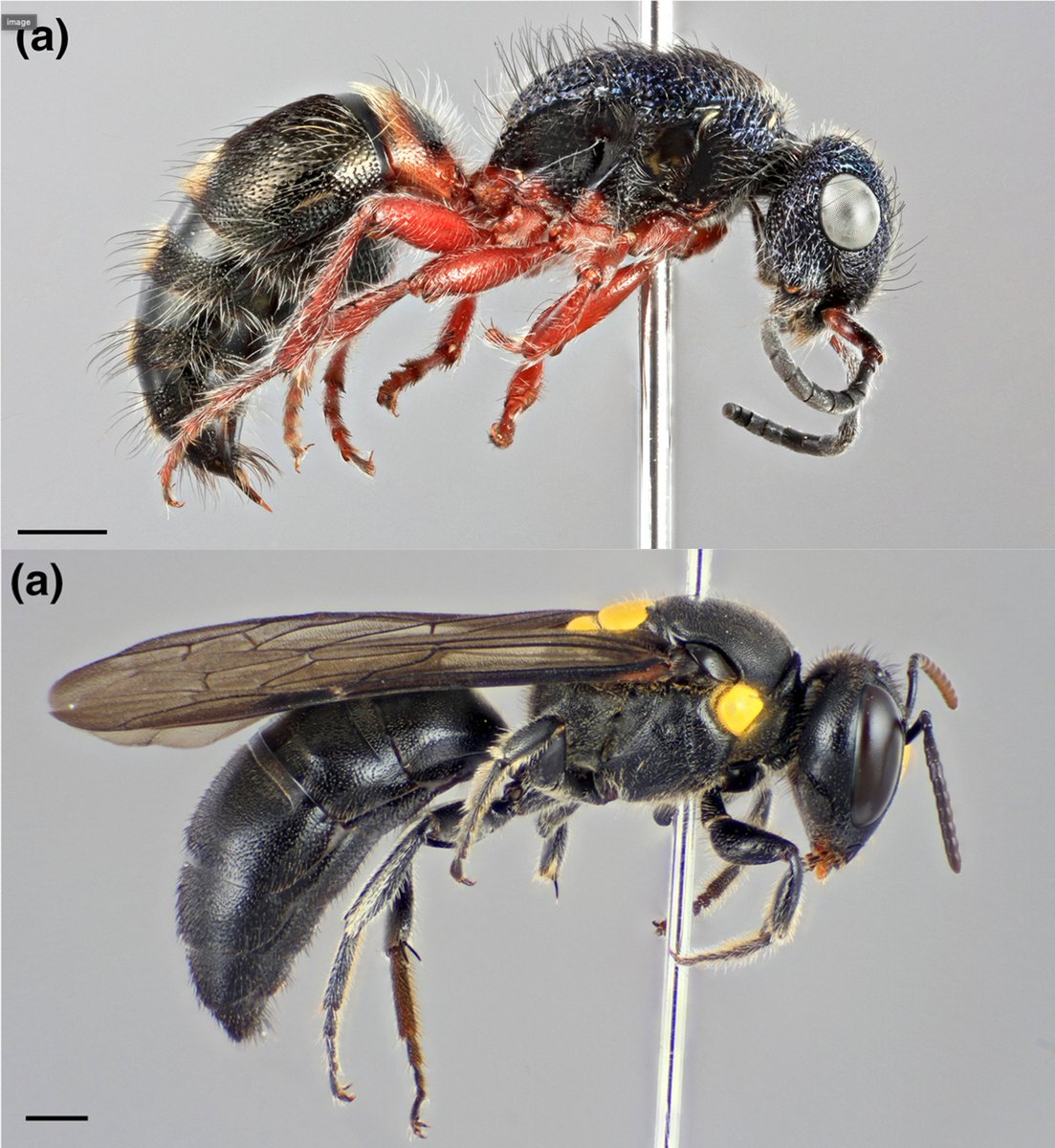
New species alert! @LRHearn et al. discovered + described the new species Ephutomorpha tyla parasitising nests of Amphylaeus morosus. The first record of a Hylaeinae host for #mutilidae!
The article at @Aust_Ent_Soc - Austral Entomology https://t.co/GyQZ6jDpN0 #wasplove