“This experience reminded me how valuable it is to have journals that put science and the scientific community first, and where the people behind the research matter just as much as the research itself.” - Sara Simonini. Publish in LSA!
https://t.co/2T71xJwQAC
New study reveals that PIKfyve inhibition activates Parkinson’s-linked LRRK2 through a novel mechanism involving PI3P, CASM, and Rab proteins.
@UTokyo_News_en
https://t.co/jBRc4lTjU0
This modular lentiviral platform enables multiplexed gene perturbation and tracking in vivo, revealing distinct hormone receptor dependencies in breast cancer and additive growth suppression while reducing animal use. @ReviewCommons
https://t.co/1UO8cCNQqg
Unsupervised explainable AI identifies ~2,000 oligonucleotide-usage zones in the human genome and predicts high-resolution chromosome banding from genome sequences, bridging genomics and cytogenetics. @nbio8100_kouhou
https://t.co/EIirIwokJ8
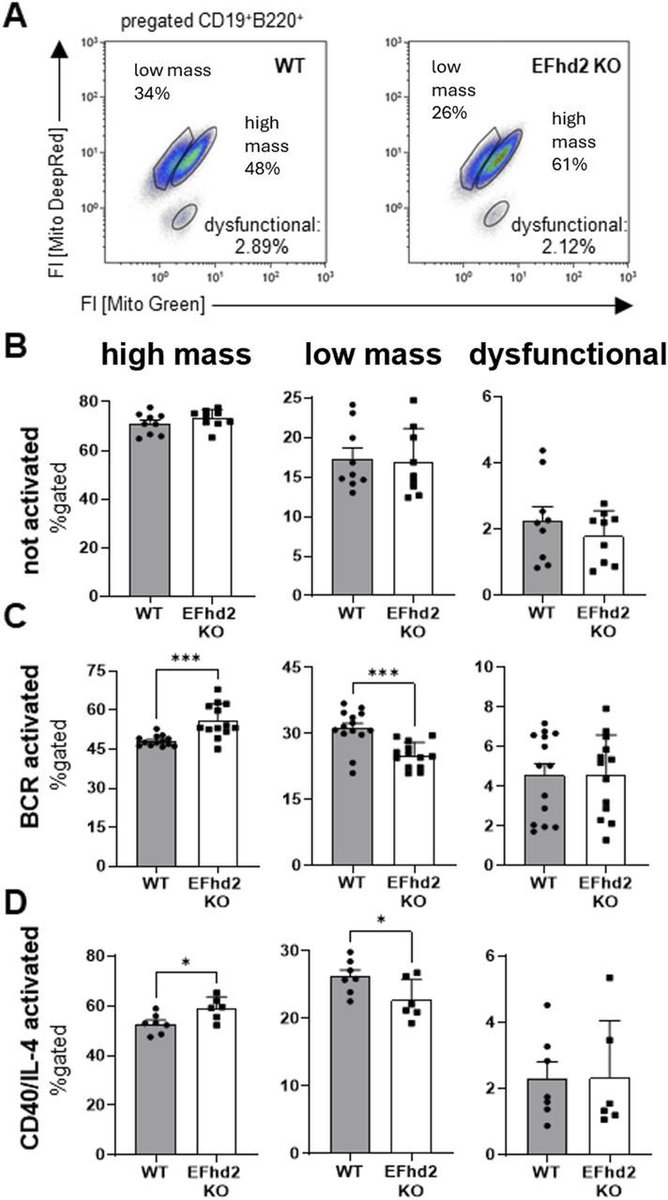
B-cell synapse formation boosts mitochondrial spare capacity. This requires microtubule stabilization and mitochondrial reorganization, both mediated by EFhd2-linking BCR signaling to cytoskeletal and metabolic adaptation. #BCR#Mitochondria#Microtubules https://t.co/WfufhD3wth
🧬 This study explores how SNORD116 affects DGKK expression and RNA modifications, offering insights into Prader-Willi syndrome.
@Columbia
https://t.co/ePNp7jVinS
Evolutionarily young transposable elements in mouse are a source of placenta-specific gene regulatory elements that generate high inter-species diversity, potentially fuelling fast placental evolution.
@ReviewCommons
https://t.co/Q546C7590V
The RNA-binding domain of the human GEMIN5 protein consists of an oligomerizing extended surface, including a serine-rich motif and a disordered acidic cluster that cooperatively regulate RNA binding. @emarsal2@cbm_csic_uam
https://t.co/e8Dk2snKyQ
In our November issue: An epigenetic signature predicts relapse in pediatric leukemia, how EGFR signaling fine-tunes intestinal progenitor cell growth, and a unique role for IL-1 signaling in pancreatic islets.
https://t.co/14uiU7QMCh
Read Dr. Bratu and colleagues’ article in LSA today, “Bruno 1 remodels P-bodies to protect select mRNAs during the early ER stress response” https://t.co/Vo577pEdb5
“We would not hesitate to recommend LSA to a colleague and look forward to submitting our future work here as well.”—Diana P. Bratu. Publish in LSA, a network that works for you. https://t.co/pqpzgGQMpb
This Commentary traces how failures along the data-information-knowledge-wisdom hierarchy mislead biomedical research and argues that rigor and falsification must govern human and machine judgment.
#DIKW#AI@dokhlab@MedicineUVA
https://t.co/u0OiDSi5eE
MT networks position cellularization furrows to accurately partition multinucleate S. arctica. U-ExM, perturbations and live imaging suggest shared patterns of cytoskeletal remodelling in eukaryotes. @ReviewCommons
https://t.co/zkz4CHWz76
🧬 How is chromatin information translated into developmental decisions?
Interpretation of H3K4me3 is essential for establishing embryonic patterning in Arabidopsis, linking chromatin state to key developmental decisions.
New research in @LSAjournal https://t.co/QZBFdZrXQ8
SARS-CoV-2 Nucleocapsid promotes recruitment of IRF & AP-1 transcription factors 🧬, RNA polymerase II, and eEF1A1 to pro-inflammatory gene promoters, revealing a previously unrecognized nuclear role for eEF1A1
@IGBMC👇
https://t.co/aZ7ajKuKVi
Take a look at this recently published paper in LSA:
Esc2 and Rad57 contribute to RNA polymerase II distribution at highly transcribed genes👇
https://t.co/1yPVT5it8U
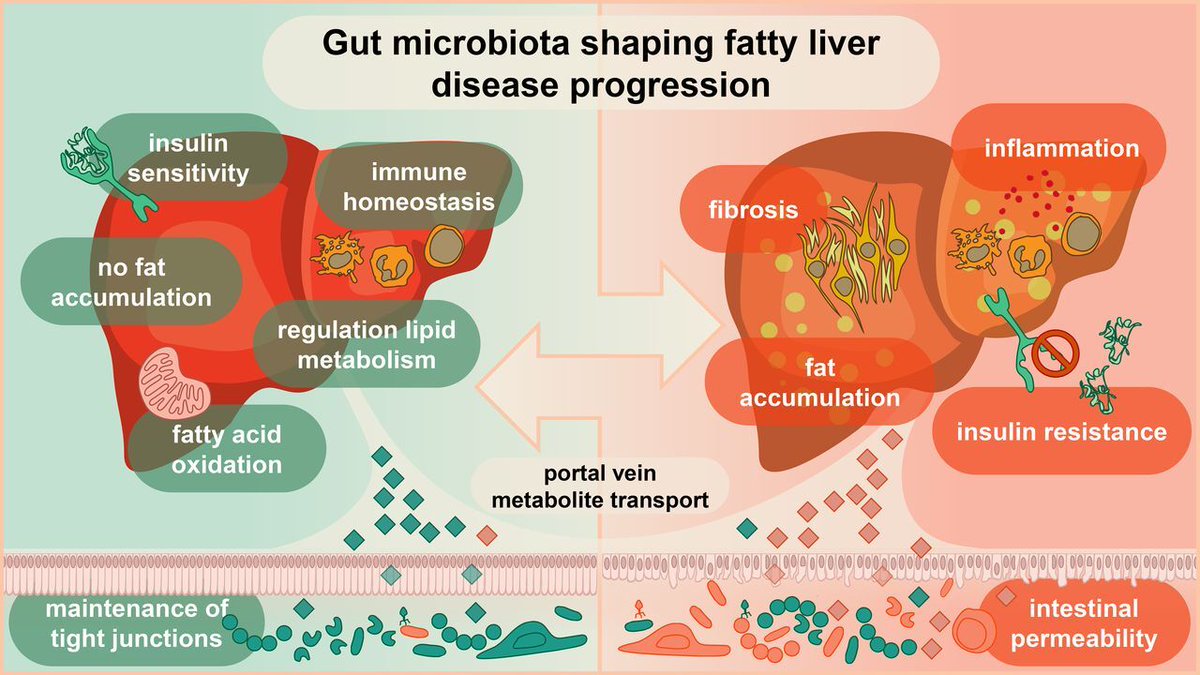
Gut microbiota and their metabolites shape MASLD progression by modulating intestinal barrier integrity, inflammation, metabolism, and liver signaling.
@IIMCB_Poland
https://t.co/JybbvuNqVh