🛥️CRUISING: Exploring climate change through storytelling | LSE Festival
This event brings together theatre and social science to explore one of the most urgent topics of our time, building on LSE IDEAS’ Geopolitics of Climate Change series.
The evening will feature a rehearsed reading of Dreambite Collective’s Cruising, a sizzling romantic comedy about climate activism and civil disobedience. The performance will be followed by a panel discussion with leading experts on climate change and members of the creative team. Together, they will reflect on the themes raised in the play, including climate change as a geopolitical and security challenge, the ethics and effectiveness of protest, responsibility and sacrifice (personal, political, and collective) in responding to the climate crisis and how storytelling and culture shape public engagement with planetary risk.
Bringing storytelling into dialogue with research, this event invites audiences to consider how culture shapes public engagement with climate change, and what new forms of conversation and action might be possible.
📆 Friday 19 June 2026 | 6pm - 7.30pm
⬇️Read More
https://t.co/E23km4ejfB
📝Who owns Latin America’s green hydrogen transition?
In this new China Dialogues piece, Gustavo Cardozo examines how China’s expanding role in the region’s hydrogen sector goes far beyond trade and investment. Through electrolysers, proprietary telemetry systems, state-backed financing, and emerging technical standards, Beijing may be helping to create long-term infrastructure lock-in before the regulatory debate has fully begun.
The piece compares Chile’s stronger European market anchor with the greater exposure of Brazil and Argentina, and argues that the question of green hydrogen is also a question of sovereignty, standards, and strategic autonomy.
🔗 Read more on LSE IDEAS’s China Dialogues blog
https://t.co/ae0VLDyH2s
🗓️ LSE hosts First Ladies and Gentlemen for high-level diplomacy training
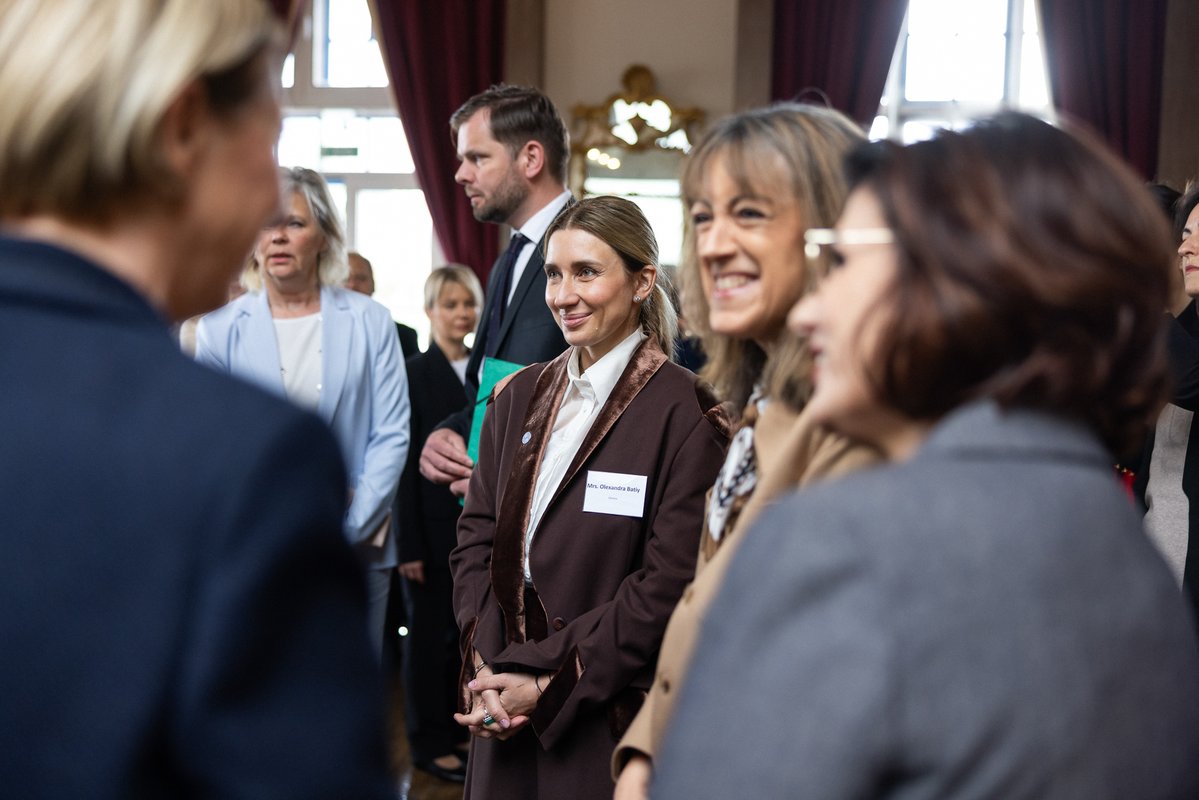
On 14 May 2026, LSE hosted the Summit of First Ladies and Gentlemen Global Platform for high level special training in diplomacy, bringing together First Ladies and Gentlemen from seven countries for a structured, expert-led programme on the role of soft power in contemporary diplomacy.
The training brought together First Ladies and Gentlemen from seven countries: Olena Zelenska (Ukraine), Doris Schmidauer (Austria), Aleš Musar (Slovenia), Marjolijne Frieden (Luxembourg), Armanda Begaj (Albania), Tamara Vučić (Serbia) and Eva Pavlová (the Czech Republic).
Olena Zelenska, First Lady of Ukraine, commented: “Even amid a full-scale war, Ukraine is not stepping back from its role on the international stage — it is expanding it. The training at the London School of Economics is yet another demonstration that a Ukrainian initiative is setting the standard: bringing together First Ladies and Gentlemen from across the world, shaping the agenda in soft power and diplomacy — and doing so in partnership with one of the most prestigious universities in the world.”
⬇️Read More
https://t.co/YgDuALyKM7
In Conversation with H.E. Federico Bianchi di Montano Antilia, EU Ambassador to Guinea-Bissau: A Two-Part Special Event - From West Africa to Digital Diplomacy
🗓️ Wednesday 3 June 2026, 10:30-12:00 and Thursday 25 June 2026, 17 – 18:30
Join H.E. Federico Bianchi di Montano Antilia, EU Ambassador to Guinea‑Bissau, for a two‑day conversation that links complex regional realities with the tools of modern diplomacy.
⬇️Register Here
https://t.co/sk1ztlKixe
In Conversation with H.E. Federico Bianchi di Montano Antilia, EU Ambassador to Guinea-Bissau: A Two-Part Special Event - From West Africa to Digital Diplomacy
🗓️ Wednesday 3 June 2026, 10:30-12:00 and Thursday 25 June 2026, 17 – 18:30
Join H.E. Federico Bianchi di Montano Antilia, EU Ambassador to Guinea‑Bissau, for a two‑day conversation that links complex regional realities with the tools of modern diplomacy.
⬇️Register Here
https://t.co/sk1ztlKixe
📢The end of humanitarian aid (as we know it?)
🗓️ 28 May, 10:00-12:00
This roundtable, bringing together policymakers and academics, aims to explore whether humanitarian aid is entering a new phase.
⬇️ REGISTER HERE
https://t.co/RDDcnQ3A5C
📢Stakeholder engagement – meaningful, manageable or misplaced? | FREE EVENT
This webinar explores meaningful stakeholder engagement in business, examining challenges, best practices, and strategies for effective collaboration with local actors, particularly in fragile and high-risk environments.
🗓️ 27 May, 1-2pm
⬇️Register Here
https://t.co/OXtlM6gFv7
🗓️ LSE hosts First Ladies and Gentlemen for high-level diplomacy training
On 14 May 2026, LSE hosted the Summit of First Ladies and Gentlemen Global Platform for high level special training in diplomacy, bringing together First Ladies and Gentlemen from seven countries for a structured, expert-led programme on the role of soft power in contemporary diplomacy.
Developed in collaboration with LSE IDEAS and its Women in Diplomacy project, supported by the Yalta European Strategy (YES) and Brooks Newmark, the training was structured around four sessions, each led by senior LSE faculty and researchers.
The training brought together First Ladies and Gentlemen from seven countries: Olena Zelenska (Ukraine), Doris Schmidauer (Austria), Aleš Musar (Slovenia), Marjolijne Frieden (Luxembourg), Armanda Begaj (Albania), Tamara Vučić (Serbia) and Eva Pavlová (the Czech Republic).
⬇️Read More
https://t.co/YgDuALyKM7
📢The end of humanitarian aid (as we know it?)
🗓️ 28 May, 10:00-12:00
This roundtable, bringing together policymakers and academics, aims to explore whether humanitarian aid is entering a new phase.
⬇️ REGISTER HERE
https://t.co/RDDcnQ3A5C
📢The end of humanitarian aid (as we know it?)
🗓️ 28 May, 10:00-12:00
This roundtable, bringing together policymakers and academics, aims to explore whether humanitarian aid is entering a new phase.
⬇️ REGISTER HERE
https://t.co/RDDcnQ3A5C
This past weekend, we gathered historians, educators and policy experts in Turda for the #RatiuForum Teaching Difficult Histories Workshop.
Our Key Takeaways:
- Challenges to teaching difficult histories
- Romania’s position as a borderland
- Education as a way to shape identity and address the past
- Blended teaching approaches to migration, borders, and cultural diversity
📑Time Domain: A New Dimension of the Battlefield, Revealed by the Experience of the Russo-Ukrainian War
The Russo-Ukrainian War has revealed a new, critical dimension of warfare centred on the competition of time rather than space – in particular, speed of adaptation and innovation cycles are decisive for battlefield success. In response, in January 2024 Ukraine established a dedicated Unmanned Systems Force branch despite initial opposition – now accounting for almost a third of enemy losses.
This Strategic Update from Oleksiy Honcharuk – Prime Minister of Ukraine 2019-2020 and Co-founder & Chairman of Uforce – explores how Ukraine’s tactical superiority depends on its capacity to evolve and sustain advantages in the Time Domain – a concept that NATO Allies, it argues, should be integrating into their military planning alongside maintaining the technological edge.
⬇️Read Here
https://t.co/STsXW5WMOt
📝How climate shapes the world, why science is an art, and why free data access and international collaborations are essential | Ulf Büntgen
On Wednesday 28 May 2025, at 15:24 local time, a substantial part of the Birch glacier in the Lötschen valley of the Swiss Alps detached and triggered a catastrophic rock-ice avalanche that obliterated most of the village of Blatten and nearby settlements (Büntgen et al., 2025a). An estimated 20 million tonnes of ice and rock travelled at a speed of up to 200 km per hour over 1200 m vertical distance to the valley floor and then nearly 200 m up the opposite slope of the valley. Preserved in Switzerland’s collective memory as the largest and most devastating ever monitored rock-ice avalanches, the Blatten disaster reveals the urgent need to improve research-based policy guidance for detecting, preventing, and managing multi-hazard cascades in steep terrain, including avalanches, debris flows, and glacial lake outburst floods. While continuous monitoring and effective risk management prevented mass casualties, most parts of the world lack the means and expertise to establish such early warning systems. This policy brief addresses the increasingly critical challenges that climate brings as it shapes our data-driven and globalised world, recommending pathways forward for policymakers to include harnessing both data and global cooperation.
⬇️Read Here
https://t.co/zhsE6E8Woo
📑From the Black Sea to the British Isles
March 2026
BY BUĞRA SÜSLER, JON-WYATT MATLACK, OLIVER GILL
This report summarises a high-level policy discussion convened by LSE IDEAS in partnership with the Foreign, Commonwealth & Development Office and the Embassy of Ukraine to the United Kingdom, held on 10 November 2025 at Lancaster House. Against the backdrop of the protracted war following Russia’s full-scale invasion of Ukraine, the discussion focused on the evolving security, trade, and political dynamics of the Black Sea region and explored policy instruments to support Ukraine and strengthen regional stability.
⬇️ Read Here
https://t.co/PKASGb1WoI
In Conversation with H.E. Federico Bianchi di Montano Antilia, EU Ambassador to Guinea-Bissau: A Two-Part Special Event - From West Africa to Digital Diplomacy |
🗓️ Wednesday 3 June 2026, 10:30-12:00 and Thursday 25 June 2026, 17 – 18:30
Join H.E. Federico Bianchi di Montano Antilia, EU Ambassador to Guinea‑Bissau, for a two‑day conversation that links complex regional realities with the tools of modern diplomacy.
⬇️Register Here
https://t.co/sk1ztlKixe
In Conversation with H.E. Federico Bianchi di Montano Antilia, EU Ambassador to Guinea-Bissau: A Two-Part Special Event - From West Africa to Digital Diplomacy |
🗓️ Wednesday 3 June 2026, 10:00-12:00 and Thursday 4 June 2026, 17:30 – 18:30
Join H.E. Federico Bianchi di Montano Antilia, EU Ambassador to Guinea‑Bissau, for a two‑day conversation that links complex regional realities with the tools of modern diplomacy.
⬇️Register Here
https://t.co/sk1ztlKixe
📢Stakeholder engagement – meaningful, manageable or misplaced? | FREE EVENT
This webinar explores meaningful stakeholder engagement in business, examining challenges, best practices, and strategies for effective collaboration with local actors, particularly in fragile and high-risk environments.
🗓️ 27 May, 1-2pm
⬇️Register Here
https://t.co/OXtlM6gFv7
📝Women in Diplomacy: Targets and Quotas
Although gender quotas and targets have been widely adopted and studied in national politics, their use in diplomacy has received far less attention.
This policy brief from the Women in Diplomacy project addresses that gap, assessing the use and effectiveness of targets and quotas in tackling women’s underrepresentation in diplomacy. It draws on available academic and policy literature, as well as the lessons learned and best practices gathered through dialogues carried over the course of 2025 with women diplomats, experts and practitioners.
⬇️Read Here
https://t.co/B8G7IaYVqr
What if capitalism’s deepest ill is not exploitation or domination, but #alienation?
Chiara Cordelli explores capitalism as a "rule of none" at this year's Brian Barry Memorial Lecture.
📆 Wed 20 May | 6.30-8pm
📍 The Old Theatre, #LSE
⬇️Tickets here
https://t.co/tqa1CwY0Dk
📝Apps at War: Army+, Reserve+ and the Rise of Digital Defence Governance in Ukraine
This research report – by Matthew B. Arnold, Viktoriia Roller and Khrystyna Zhyvogliad – draws on key informant interviews, legal analysis, and implementation reportage. It examines the policy problems the applications seek to address, assesses their contributions to national defence, and analyses which elements merit consideration by both NATO and EU allies.
This report was produced in partnership with the BRDO (Better Regulation Delivery Office), an NGO registered in Kyiv, Ukraine.
This paper is published as part of the Democratic Resilience in the New Age of War programme.
⬇️Read Here
https://t.co/kInLWrHejU