https://t.co/c7ddJDkWuz
Remembering Felix Baumgartner (1969–2025)
The skydiving and extreme sports legend who jumped from 128,177 feet and became the first human to break the sound barrier in freefall has passed away. Felix Baumgartner died on July 17 at the age of 56 in a paragliding accident over Italy.
Baumgartner’s life was defined by pushing human flight to its limits.
On October 14, 2012, he ascended nearly 24 miles (39 km) in a pressurized capsule carried by a helium balloon. From high in the stratosphere, he stepped out and plunged toward Earth, reaching supersonic speeds with only his spacesuit for protection.
He topped 843.6 miles per hour (Mach 1.25), becoming the first human to break the sound barrier in freefall. After four minutes and nineteen seconds, he deployed his parachute at 5,000 feet and landed safely in the New Mexico desert.
But the Stratos jump was only one chapter in his extraordinary career. Among his many other feats:
Crossing the English Channel (2003): Wearing carbon-fiber wings strapped to his body, Baumgartner leapt from a plane over Dover and glided 22 miles across the Channel in under 15 minutes—without any vehicle.
BASE jumps from iconic landmarks: From Malaysia’s 1,483-foot Petronas Towers (1999) to Rio’s Christ the Redeemer statue (2011) atop Corcovado Mountain, and Taipei 101 (then the world’s tallest skyscraper at 1,667 feet).
Two quotes capture Felix’s fearless spirit:
"Sometimes you have to go up really high to understand how small you really are."
"I believe in God, and I truly think God has a plan for everybody. For me, it looks like I’m becoming an astronaut—locking myself in a capsule, rising to 130,000 feet, sliding the door open, bailing out, and becoming the first human to break the speed of sound in free fall. That’s His plan. That’s probably my last call to accomplish. To me, the Red Bull Stratos project is the biggest thing I can do.”
Rest in peace, Felix. Your courage and passion will inspire generations of sky explorers.
https://t.co/Hf2WKNs0qK
From flying hot-air balloons to the edge of the troposphere to designing cutting-edge autopilots and altitude alarms for long-distance flights, Bruce Comstock’s “Life in the Air” has been extraordinary.
In a recent interview with LTA - Science and Flight Magazine, Bruce shared insights into:
• His record-breaking 1995 flight to 30,820 feet (almost 6 miles above ground level), braving extreme cold and thin air.
• The behind-the-scenes challenges of creating innovative ballooning technology for Steve Fossett’s legendary Pacific and two round-the-world flights.
• The evolution of ballooning, from humble beginnings to today’s sophisticated designs.
Bruce also reflected on the adventure and teamwork that defined his journey, crediting his early days and partnerships for pushing the boundaries of what’s possible in ballooning.
What part of Bruce’s story inspires you most? Were you present at any of the events depicted in the photos on the website? Let us know in the comments!
Wishing you all a Happy New Year, great blessings, and safe and enjoyable flights!
https://t.co/FFGHmXpjBC
On September 15, 2024, Spaceship Neptune-Excelsior made history, lifting off with a massive hydrogen-filled balloon instead of rockets! Rising from a floating spaceport off the coast of St. Petersburg, Florida, this uncrewed mission soared to 100,000 feet, well above 99% of Earth’s atmosphere.
This flight is a huge milestone for Space Perspective, showcasing the future of space tourism with major innovations in spaceport tech, spacecraft design, and safety.
Sir Richard Branson will co-pilot the upcoming crewed flight alongside Space Perspective cofounders Taber MacCallum and Jane Poynter.
Let’s see what the future holds for balloon-based space travel!
https://t.co/l33qpVPxQr
Did you know our journey of understanding the atmosphere began 250 years ago with kites, and today, we rely on satellites for weather forecasting?
In our latest LTA Science & Flight Magazine article, we take you through the incredible history of atmospheric exploration. It all began in 1749 with scientists in Europe using kites to measure the upper air—and yes, Benjamin Franklin’s famous kite-and-lightning experiment was part of this early journey!
By the 1780s, hot air and hydrogen balloons took us even higher, with scientists risking extreme cold and low oxygen to study the atmosphere. Despite the dangers, these early flights laid the groundwork for modern meteorology.
Did you know that in the late 19th century, French meteorologist Léon Teisserenc de Bort’s weather balloons led to the discovery of the stratosphere? And by the 1930s, with the help of radiosondes, we could finally transmit real-time weather data from the upper atmosphere!
Today, weather balloons, satellites, and radar systems work together to give us accurate forecasts. It’s amazing to think that it all started with simple tools like kites!
https://t.co/Yjr5psFyQE
The first attempt to cross the Atlantic in a hydrogen balloon ended early due to unforeseen weather changes, within the first six hours of the flight. This demanded a higher altitude than planned and use of more ballast early on, which would have made the Atlantic flight unsustainable.
https://t.co/CB1zGae9xO
On May 23, 1928, the airship Italia, piloted by Umberto Nobile, took off from King’s Bay, Norway, with a crew of sixteen, including three scientists and a dog. After a successful flight to Greenland and circling the North Pole on May 24, they decided to return to Spitsbergen. Facing severe ice, headwinds, and mechanical issues, the airship struggled for hours before crashing onto the Arctic ice on May 25. The crash resulted in one death, six missing crew members as the hull drifted away, and nine injured survivors stranded for 45 days on the frigid Arctic expanse.
#airship #Lighterthanair #LTA
https://t.co/DogKrBDP2g
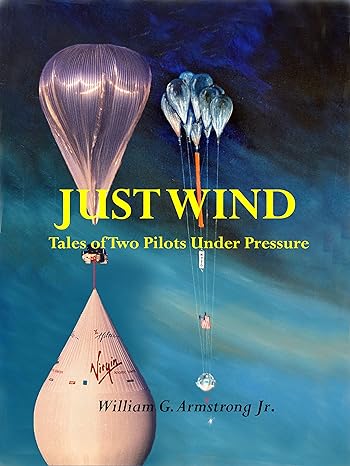
Dive into "Just Wind: Tales of Two Pilots Under Pressure" by William G. Armstrong Jr., now reviewed on LTA-Science and Flight Magazine.
This Kindle edition brings to life the daring adventures of ballooning pioneers Tom Gatch and Larry Newman.
Tom Gatch's Solo Atlantic Attempt: A gripping 1974 expedition with a 10-balloon cluster that ended in mystery.
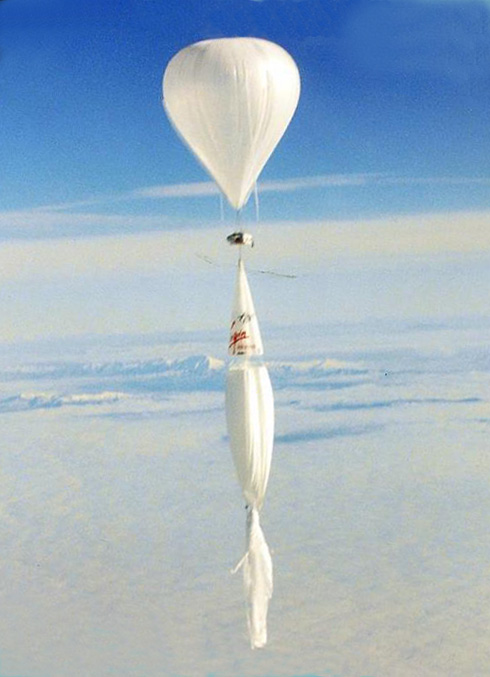
Larry Newman's Earthwinds Project: Ambitious 1990s attempts for a non-stop global flight, showcasing intense competition and technological advancements.
#LTA #Ballooning #Atlantic #TomGatch #LarryNewman #ClusterBallooning #WilliamArmstrong #StratosphericBallooning #HighAltitude #LighterThanAir #justwind
Armstrong, a seasoned balloonist and publicist, captures the essence of these high-flying journeys with humor, detail, and candor. A must-read for anyone intrigued by adventure and the resilience of the human spirit.
The English Channel Flight That Brought
Hot-Air Ballooning to the World
Click the link below for full story 🤔
https://t.co/hPptDHEFFO
In April 1963, five Raven Industries’ employees, drove in a trailer from Sioux Falls, South Dakota to Milwaukee, Wisconsin. From there, they flew in an Airforce tanker to England. Among them were Ed Yost, father of the modern hot air balloon, and Don Piccard, America’s first civilian gas balloonist to earn a balloon pilot’s license in 1947.
On this mission, the duo would be flying Ed Yost’s newly invented propane-powered hot-air balloon across the English Channel. Their launch site would be the town of Rye—a coastal town built 1,400 years ago and located about two miles away from the English Channel.