@robertdugoni "Her Cold Justice" is an intriguing tale of the criminal justice system.
👍👍 As a retired law enforcement officer, I believe it renders a strength and vulnerability of the system not often brought to light.
@histories_arch Henry Knox founded the Society of Cincinnati in 1783. Named after Lucius Cincinnatus (qv). George Washington was the first President General of the Society.
@DeltaSassy I am reminded of George Wickham refusing ordination and the preferred living, demanding £3,000 in lieu of the preferment, and then returning for the position after squandering the money. Of course, it was Darcy's fault.
1862, American Civil War: Union Army surgeon Dr. John Shaw Billings faces a crisis. His field hospital is overrun with soldiers suffering from chronic diarrhea, typhoid, and scurvy despite having adequate food rations.
The standard military diet: hardtack (dense wheat biscuits), beans, coffee, occasional salt pork. The soldiers call hardtack "tooth dullers" and "sheet iron crackers." Some have been eating this for months.
Billings notices something peculiar. Officers eating fresh beef requisitioned from local farms recover faster from wounds and rarely suffer the digestive issues plaguing enlisted men eating hardtack.
He starts an unofficial experiment. He requests extra beef rations for his sickest patients and reduces their hardtack allocation. Within two weeks, the chronic diarrhea cases drop by 60%. Wound infections decrease. Energy returns.
Billings documents this carefully and submits a report to the Army Medical Department: "Fresh beef should constitute the primary ration for soldiers, with flour products as supplementary only."
The Army reads his report. Files it. Continues ordering hardtack because it's cheaper and doesn't spoil.
Billings goes on to become Surgeon General and spends the rest of his career trying to reform military nutrition. Mostly fails because grain suppliers have government contracts and beef doesn't store well in field conditions.
His hospital records show it clearly: soldiers on beef-heavy diets had half the mortality rate of those on grain-heavy rations, even controlling for wound severity.
But logistics beat outcomes. The Army chose cheap shelf-stable grain over expensive perishable meat, and soldiers continued dying of diseases that fresh beef could have prevented.
The records exist. They're in the National Archives. Nobody teaches this in medical school because it's inconvenient for modern dietary guidelines that recommend grain as the foundation.
@OutLandAnatomy That's very interesting.
My grandfather served in the trenches during WWI. I asked him once if hardtack was really hard. He said that he could break one if he smashed it with the butt stock of his rifle.
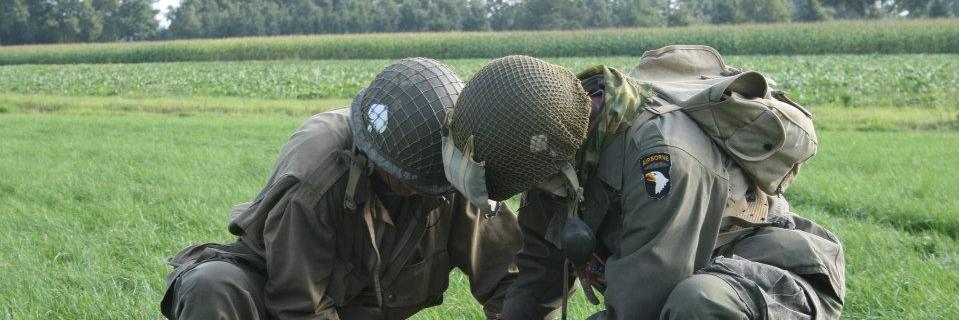
@Ikennect When I was with the 101st at Fort Campbell in 1973, my First Sergeant made those same jumps with the 82d. He also spent several years with SF. He was an outstanding soldier; 1SG Clifford Prespare. 🪖
@MikeyDiMercurio 4- at about 25 knots when we hit the east bank. The rivers were high tide. The boat landed on a flooded bunker about 15 meters inland. (More or less)
First Airborne PBR in the Army.
@MikeyDiMercurio 3- We're drifting close to the south Bank of Dong Nai. The coxn asks me to take us back to mid-channel. I fired both engines, steer towards Saigon River, Nat'l Policeman gets my attention, I turned my head left (turned helm to starboard), and went airborne