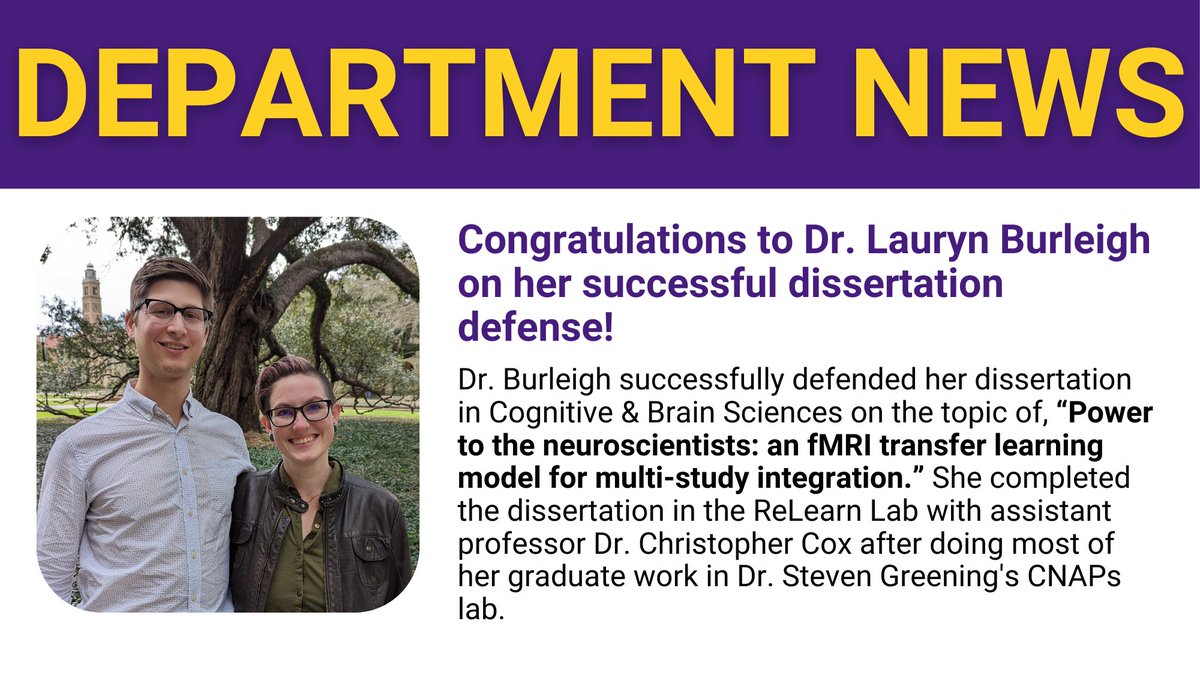
@EricDWilkey Thank you!! Actually, I wonder if my dissertation may be of use in your area. We implemented a domain adaptation algorithm for making group level inferences in classifying fMRI data. If something like this is of interest, we can chat more about it!
My paper is out! The 3 experiment psychophysio study looks at acquiring fear to perceived vs imagined stimuli and generalization b/t them. HUGE thanks to @DavidJohnBaker for spending nights and weekends learning stats + coding beyond our training. https://t.co/koRq8hOt20
A 🧵 on burnout
Yesterday I learned that when people are burnt out, their amygdala enlarges. For all you non-neuroscientists, here's what that means and why it's important. 1/
#AcademicChatter@AcademicChatter@CouragePhD
@svpino As a ML baby a few years in and using the spreadsheet method, this is incredibly helpful! Have also been in the Dunning Kruger dip of despair, feeling a need to know all models and hyperparameters before even hearing the problem. Needed a reminder that isn't logical. Thank you!
@mrzl29@neuromatch Angular style, neural networks, electrical circuit. I designed this piece thinking of a focus on cognitive neuroscience and computational models. Would love to see what you create! :)
Stared at a colleague's bash script this morning not able to figure out what it's doing only to realize it's written in python.
I know both. 🙃😅
#PhDlife
"Statistics is a branch of Math."
Nope. Statistics heavily uses math but isn't just math. Even for a very basic statistical concept like the p-value, the main challenges with applying it are philosophical and sociological, not the mathematics which is pretty straightforward.
After TAing an upper level cognitive neuro undergrad course, I noticed an upsetting result of huge class sizes is the lack of presentation and paper assignments. In 3-4 years, many students haven't had experience with either. Pure panic.
#AcademicChatter#Academia#ScienceTwitter