Please read my reflections published in today's Business Daily on OECD's Global Minimum Tax and why it is likely to deepen the race to the bottom.
The link can be accessed here: https://t.co/oOU9S13648
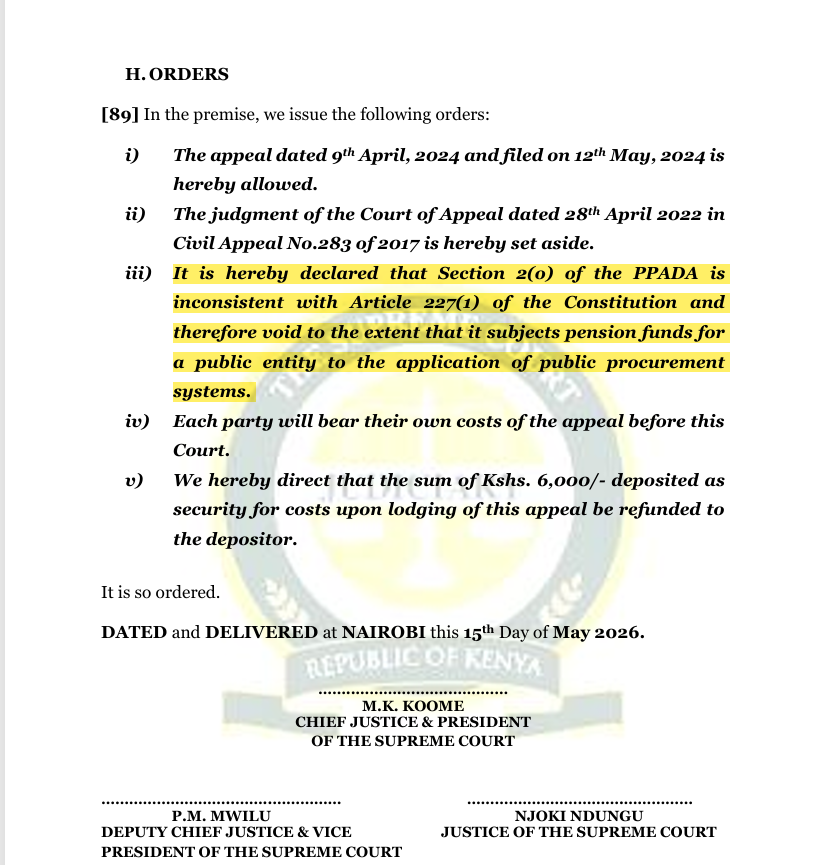
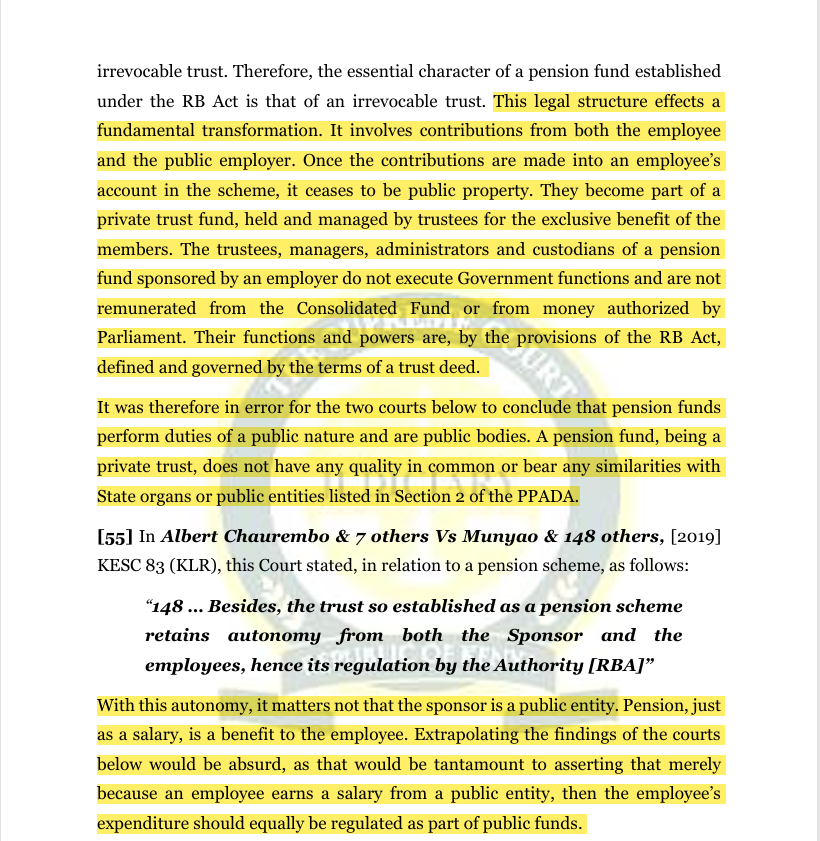
Together with Simba&Simba, led by Senior Advocates David Nyakundi & our Dr Muthomi Thiankolu SC, we have secured a Major Win for the Pension Industry from SCORK. It's unconstitutional to subject Pension funds for Public Entities to the Procurement Act. What a way to end this Week
@KITKAT I think @KITKAT should be thanking the crooks for stealing their shipment.
All the positive marketing that's come from this would have paid for the truck and the sweet delicious chocolate wafer goodness, over and over again.
Nicely exploited Kit Kat. 🤣
Whenever l am slightly disrespected by a man, I remember my favorite Michelle Obama lore. There's a story about them dining at a restaurant when they learned the chef used to be Michelle's high school boyfriend
Barack joked,
lf you were still with him, you could have been the owner of this nice restaurant."
Michelle replied,
"No. If I were still with him, he would have been President of the United States."
And that's the energy every woman should have about her own worth.
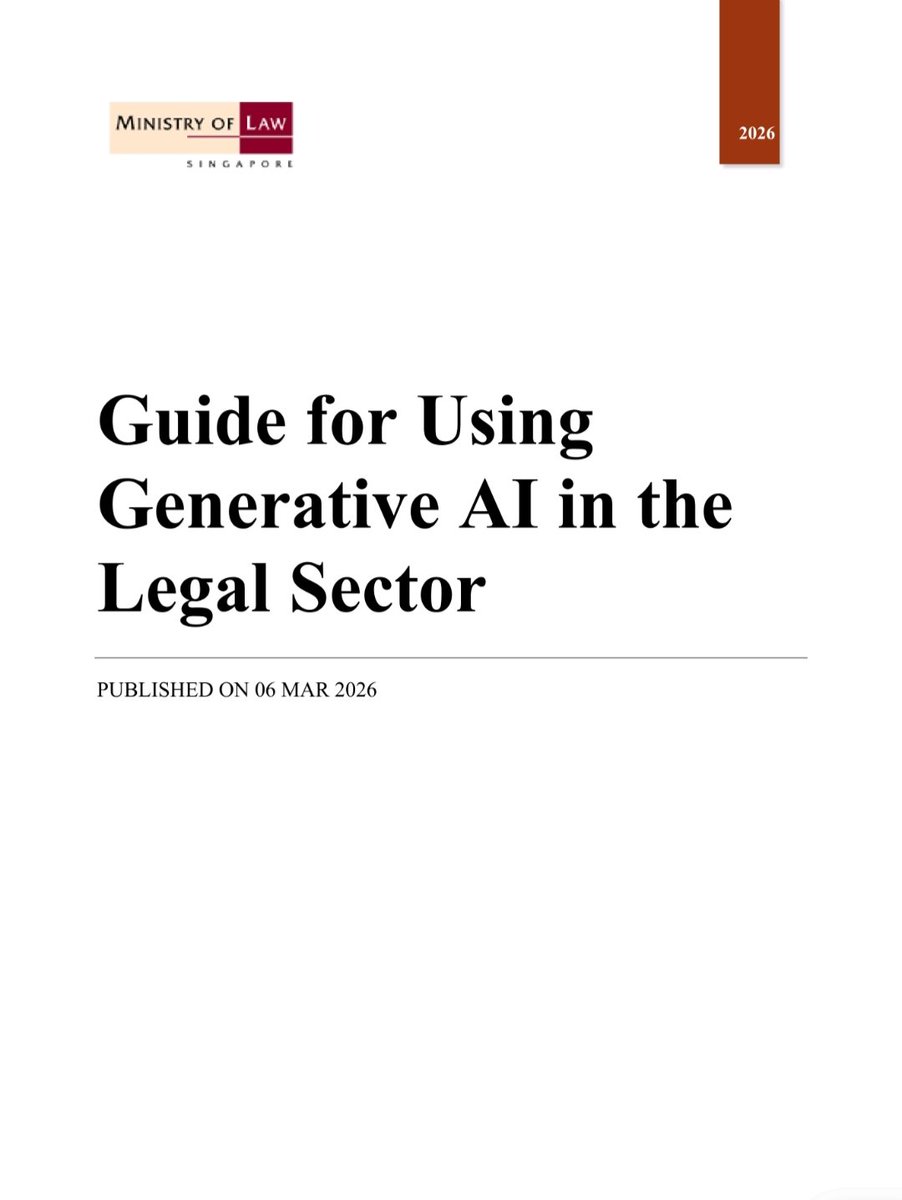
Singapore Ministry of Law has released the Singapore Guide for Using Generative AI in the Legal Sector, a practical framework aimed at supporting the responsible adoption of GenAI in legal practice.
The Guide highlights several key principles for legal professionals and institutions integrating AI into their work. It emphasizes on governance and accountability in the use of GenAI within legal practice Making it clear that while GenAI can assist in legal tasks such as drafting, research, and document review, the ultimate responsibility for legal work remains with the legal professional.
Legal professionals are cautioned against inputting confidential or privileged information into public or unsecured GenAI systems without adequate safeguards. It recommends that organisations and/or law firms develop internal policies, train staff on AI literacy, and establish clear workflows for responsible GenAI use.
The Guide encourages law firms to assess their needs, conduct due diligence on AI vendors, and implement tools in a controlled and monitored manner. This step-by-step approach helps reduce risks associated with premature or unregulated adoption. It also promotes continuous monitoring and review as an essential component of responsible GenAI use
While the Guide reflects the realities of a highly developed legal ecosystem, it offers useful lessons for emerging digital markets. As AI adoption continues to grow across Africa, there is an increasing need for practical frameworks that support responsible use within the legal profession.
Link - https://t.co/hXBbJb25A4
The problem is that no such invitation was made to the High Court.
He urged that where there is misconduct by judges in arriving at a decision, a party has recourse to the JSC not on the merit of the decision, but on the (mis)conduct of the judge(s).
In view of the many probate applications & appeals filed before the Court of Appeal, its important for practioners to note that, you must first obtain leave to appeal in such matters.
Read the decision attached below:
Mughal & Rashid (Suing as the legal representatives of the Estate of the Late Rashid Mughal) & another v Bhola (Civil Appeal 41 of 2018) [2025] KECA 420 (KLR) (28 February 2025) (Judgment) - https://t.co/KW87Ai8nPn
📢 Public Notice: Validation of Income and Expenses in the Income Tax Returns
Starting 1st Jan 2026, KRA will validate income & expenses declared in income tax returns (for the year 2025) against:
a) TIMS/eTIMS invoices
b) Withholding tax data
c) Customs import records
My Sister, President @SuluhuSamia, You Are Betraying the Dreams of African Women
I am a woman leader. I believe, with every fibre of my being, in the power of women to heal our nations, to lead with compassion, and to build a more inclusive and just Africa. It is precisely because of this belief that I can not remain silent as a sister leader, President Samia Suluhu Hassan, you have dragged Tanzania down a path of tyranny and fear.
What we have witnessed in Tanzania is not leadership; it is a betrayal. It is a betrayal of the women of Tanzania who looked to one of their own and hoped for a new dawn. It is a betrayal of the democratic principles that countless Pan-Africanists fought and died for. The recent sham election, where you were declared the victor with a Soviet-style 97% of the vote, is not a victory. It is a funeral for democracy in Tanzania, and you are the chief mourner.
True women’s empowerment is not about putting a woman in a presidential chair. It is about what she does with that power. Does she lift others up, or does she crush dissent? Does she foster a culture of competition and debate, or does she silence every opposing voice? By jailing your main opponent, Tundu Lissu, on trumped-up treason charges, by disqualifying other candidates on spurious grounds, and by barring the main opposition party, CHADEMA, from even participating, you have not shown strength. You have shown a profound weakness, a fear of competition that is the very antithesis of healthy leadership.
We, as African women, are taught to be nurturing, to be builders of communities and bridges of understanding. What, then, is nurturing about a heavy military presence at polling stations? What is compassionate about security forces gunning down peaceful protestors, leading to the unnecessary and tragic loss of hundreds of Tanzanian lives? The internet shutdowns, the abductions, the torture of activists, these are the tools of a dictatorship, not of a democratic leader who believes in her people.
President Samia, you had a golden opportunity. The world applauded you when you began reversing some of the harsh policies of your predecessor. We dared to hope that Tanzania was opening up but we see now that those were merely tactical retreats. Your administration has intensified a crackdown so severe that it has shattered the very possibility of a free and fair election. You have not just tilted the playing field; you have set it on fire and told the other team they are not allowed to play.
This is a pivotal moment for Pan-Africanism. A democratic Pan-African movement can not be silent when a leader, regardless of gender, subverts the will of the people. We can not celebrate women leaders simply for being women; we must hold them to the same, if not a higher, standard of democratic accountability. To do otherwise is to engage in a hollow and meaningless identity politics that does nothing to serve the African people.
I stand in solidarity with the brave people of Tanzania who are demanding electoral justice. Their fight is our fight. The struggle for democracy in Dar es Salaam is intrinsically linked to the struggle for freedom in Harare, in Kampala, and across our beloved continent.
To my sisters across Africa, I say this: Our fight for a seat at the table is meaningless if, once we get there, we use that seat to bar the door to others. Our empowerment is hollow if we do not empower our people. We must shun the tyranny of a single voice and champion the beautiful, chaotic, and necessary chorus of democracy.
I believe in women’s leadership but I believe in justice more. And until there is justice for the people of Tanzania, I will not be silent. The African Union and all democratic nations must not legitimize this electoral charade. The soul of Tanzanian democracy is on life support, and it is our collective duty to fight for its revival.
#StandWithTanzania
#NotInMyName
A landmark court ruling has sent shockwaves through Kenya’s gig economy. The High Court has upheld the Kenya Revenue Authority’s (KRA) demand that tech-logistics firm Sendy must pay KSh 82 million in VAT, after finding that the company was not just a platform connecting customers and delivery riders, it was, in effect, the actual service provider. This decision could redefine how digital platforms like Bolt, Uber, Glovo, and Jumia are taxed.
The court’s reasoning? Control equals liability. Sendy billed customers directly, collected payments, and dictated service terms, meaning it was more than a digital middleman. As a result, the court ruled that VAT applies to the full value of transactions, not just the platform’s commission. That means 16% VAT on every delivery or service booked through such apps, a move that could sharply increase costs across Kenya’s digital economy.
For Kenya’s booming gig sector, the implications are massive. Platforms may now have to register for VAT, overhaul contracts, and pass extra costs to users or service providers. Drivers, riders, and freelancers who depend on these apps could see reduced earnings as platforms adjust to the new tax burden. Consumers, too, might start feeling the pinch through higher prices.
KRA is celebrating this as a win for tax fairness, arguing that big tech platforms must pay their fair share. But critics say this move risks strangling innovation in Kenya’s digital economy, a sector that has empowered thousands of youth to earn a living through flexible work. With rising taxes and tightening rules, some fear that global and local startups alike may start to pull back from Kenya’s market.
In short, this ruling could be the moment Kenya’s gig economy grew up, or the moment it stumbled. Either way, the taxman is coming for the platforms that power the digital hustle. The question now is whether the government will find a balance between taxing innovation and killing the opportunity it creates.