@KurtSupeCPA If I was the mom, I’d pay or cover expenses for the caregiver, but still split my assets three ways or maybe give just a little more to the caregiver. I wouldn’t make a huge difference. One doesn’t know the distribution of assets for the daughter married to the surgeon.
@Served_Podcast He hit the ball in the context of play, so I don’t think he should have been defaulted. When forehands or serves, etc hit fans, there is no default. He was running, off balance and ending a point. This is nuts.
@HHuotui hey everyone, you can dislike me or disagree about what happened without being racist. the amount of racist comments/dms I’ve received in the last few hours is insane. Lastly, I ‘m not a cheater or a thief.
@Barnstorm1@DanWolken Agree. I don’t think he should have been defaulted. The ball was hit in the context of play and he was off balance trying not to fall.
@Auriel_zy They should each START the marriage contributing the same amount to the joint savings, such as $10K each (whatever they decide). Then contribute based on income and build a joint savings from there.
@bgtennisnation@mubadaladcopen@andyroddick To me, this was in the context of playing a point and he was off balance trying not to fall/injure himself, etc. I don’t think he should have been https://t.co/TwJorU1hLx’s like the folks in charge don’t have critical thinking skills and can’t evaluate diverse situations.
@jon_wertheim I don’t feel Med hit the ball recklessly. It was in the context of playing a point. He’s trying to avoid injury to himself by not running into the stands. He may have been trying to swat the ball away from other fans. I don’t think he should have been defaulted.
Neiman Marcus closed its downtown Dallas flagship yesterday. The store played a notable role in the history of desegregation in Dallas during the 1960s.
Previously, Black shoppers across the US could enter department stores, but they weren't allowed to try on clothes before purchasing without adhering to certain conditions. For instance, they had to try on clothes over their clothes, put on protective covers when trying on hats, or weren't allowed to make returns once they purchased clothes and brought them home. These policies stemmed from the racist fear that white customers would refuse merchandise previously worn by Black shoppers.
The downtown Neiman Marcus flagship was one of the first major Dallas businesses that broke with these practices. In 1961, the company desegregated its Zodiac Room, a swanky restaurant frequented by Dallas elites. Neiman Marcus later welcomed Black shoppers without restrictions. These victories were achieved through the efforts of Civil Rights activists, along with support from Neiman Marcus president Stanley Marcus, who was an early advocate for desegregation in Dallas. The Neiman Marcus store manager purportedly warned Marcus that he would ruin his business — and indeed, some shoppers closed their accounts — but he stuck with his decision.
At the time of the flagship's closure, the Main Street store had been open for 112 years.
Four Memphis-Shelby County Schools (MSCS) high schools have been recognized among Tennessee’s best in the 2026–27 U.S. News & World Report Best High Schools rankings, with Middle College High School earning the District’s highest ranking at No. 14.
Visit: https://t.co/BZenJgE40V
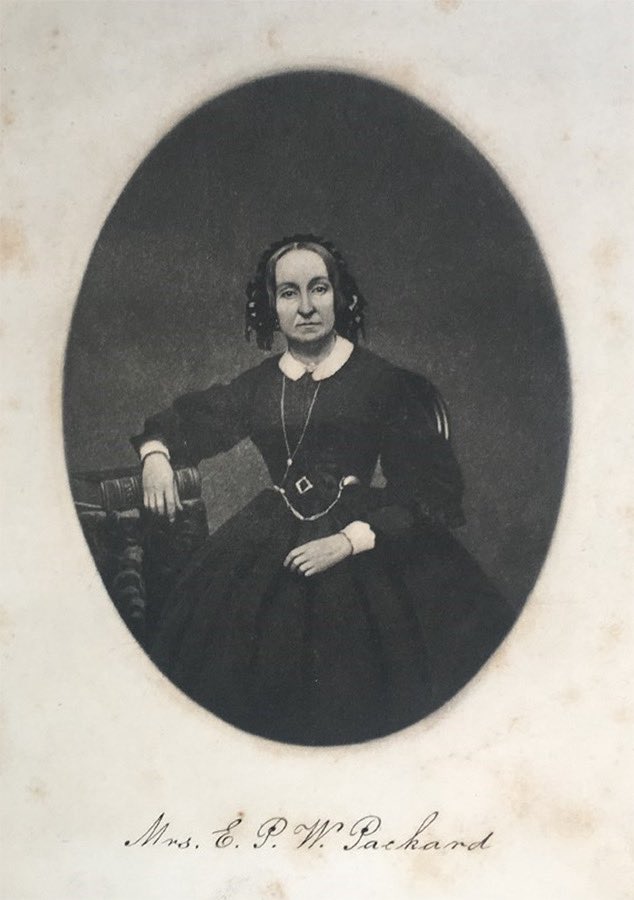
In June 1860, Elizabeth Packard kissed her six children goodbye.
She thought about the dinner she would cook later. She thought about the laundry. She thought about the quiet life of a mother in Illinois.
She had no idea that when the front door clicked shut, it would stay locked for three long years.
Her husband, Theophilus Packard, was a respected minister. To the neighbors, he was a man of God. Inside their home, he could not stand a wife who thought for herself.
Elizabeth liked to read. She liked to debate religion. She had her own opinions about life and faith. In the 19th century, a woman with a mind of her own was treated as a danger.
Theophilus decided to end the argument. He didn’t need a crime. He didn’t need a witness. Illinois law let a husband commit his wife to an insane asylum without evidence or a public hearing. He simply had to say she was “disturbed.”
One morning men arrived at her home. They did not listen to her logic. They did not care about her tears. They took her to the Jacksonville Insane Asylum.
Elizabeth was 43, perfectly sane, and suddenly a prisoner.
Inside she expected people who needed medical help. Instead she found a warehouse of “inconvenient” women: wives who argued about money, daughters who refused marriages they did not want, women who were simply too independent.
“This is not a hospital,” she realized. “It is a cage for the unwanted.”
Doctors tried to break her. They told her that if she admitted her husband was right and she was wrong, she could go home. They wanted her to say she was crazy for wanting her own thoughts.
She looked them in the eye and said, “I cannot buy my liberty by a lie.”
She did not give up. She wrote. She hid scraps of paper in the linings of her clothes. She tucked notes under floorboards. She recorded every abuse and every story of the women around her. She became a secret journalist inside a living nightmare.
After three years she was released. Her husband locked her in a room at home and planned to send her to another asylum in a different state.
This time friends helped her reach a judge. A trial was ordered.
The courtroom was packed. Theophilus was confident. He brought “experts” who claimed her religious doubts proved her mind was broken.
Elizabeth stood up. She did not shout. She spoke with the calm power of the truth. She explained her beliefs. She showed the jury that a different opinion is not a disease.
The jury needed seven minutes.
They came back with one word: Sane.
She walked out a free woman and found that her husband had taken the furniture, the money, and the children. She was alone and penniless.
Most people would have disappeared. Elizabeth did the opposite.
She spent the next forty years traveling the country. She stood before legislatures and demanded new laws. She said a woman’s mind is her own, and the law must protect it.
Because of her, states changed their laws. They made it illegal to lock a person away without a fair trial and a medical exam.
She turned private pain into a public shield for thousands of other women.
You can take a woman’s home, her money, and her children.
You cannot take her voice. 🌹
@CrazyVibes_1 I agree that travel is not as fun as it used to be for me for some of the reasons you state: the flying experience is so awful now and EVERYTHING is a hassle to get done due to no customer support.
@usta@DavisCup@BenShelton@AustinKrajicek I DONT understand the composition of the USA team. Even if Fritz and Tiafoe declined, what about Nakashima and/or Mickelsen?