So heartbreaking to hear the news. An inspiration to so many, including myself. I will continue to honor your name and your music. Rest easy Kavinsky 🇫🇷❤️
Her name is Gina Martin. She was at a music festival in London when a man pushed his phone between her legs and took a photo under her skirt. She reported it to the police immediately. They told her it wasn't a criminal offence. There was nothing they could do.
She went home and decided that was unacceptable. With no legal background, no political connections and no funding she launched a campaign to make upskirting a criminal offence in England and Wales. She petitioned. She lobbied MPs. She spoke publicly about what had happened to her. The government initially blocked the bill.
She kept going. The Voyeurism Act passed in January 2019. Upskirting now carries up to two years in prison. Scotland followed. Other countries are following. A woman at a festival with no lawyer, no funding and no political connections rewrote the law for an entire nation in eighteen months.
RIP Bonnie Tyler 😔💔🙏🏻
The iconic singer had recently fallen into a coma following a serious medical complication resulting from intestinal surgery.
With her powerful, raspy voice, she captivated the world. We say goodbye to a legend of the 80s and 90s.
In 2020, electrician John Kinney arrived at 72-year-old Gloria Scott's home in Woburn, Massachusetts, for what seemed like a simple job : fixing a broken light.
But once inside, he realized the light was the least of her problems.
Gloria lived alone in a badly deteriorating house. There were serious electrical and plumbing issues, damaged ceilings, broken windows and problems with running water. Raccoons had even been getting inside. She simply couldn't afford the repairs her home desperately needed.
John completed the electrical job, went home... and couldn't stop thinking about her.
So he came back.
He began repairing Gloria's house without charging her, then reached out to friends and people in the community for help. What happened next was extraordinary.
Electricians, plumbers, carpenters and complete strangers showed up. Others donated materials, food and supplies. Together, they repaired the plumbing and electrical systems, fixed walls and ceilings, replaced windows and worked on the roof, porch and backyard.
The group became known as “Gloria's Gladiators.”
It all started with one broken light and one electrician who decided that walking away wasn't an option.
I finished Trails In The Sky 1st Chapter and loved it!
It's a slow burn but it made me love the characters so much more and made the pay off at the end have way more of an emotional impact!
I understand now why this series is so beloved ❤️
I will be buying the sequel day one! https://t.co/v8G80LHjTN
JENNIE's stage at the Roskilde Festival in Denmark drew a massive SOLD-OUT crowd of an estimated 60,000 attendees as the festival's headliner and last performer of the day.
She wore pants to testify in court. A judge threw her in jail for five days. She never backed down.
November 9, 1938. Los Angeles Courthouse.
Helen Hulick, a 29-year-old kindergarten teacher, arrives to testify against two men who burglarized her apartment building. She's wearing slacks—something she'd done since she was 15. It's who she is.
Judge Arthur S. Guerin sees her outfit and halts everything. Not the trial. Not the case. Her pants.
"Return in appropriate attire," he orders. A woman's clothes, apparently, matter more than justice.
Hulick doesn't back down. She tells reporters exactly what she thinks of the order. When she returns in slacks again five days later, Judge Guerin gives her an ultimatum: wear a dress, or face contempt of court.
She chooses herself. Again.
Judge Guerin sentences her to five days in jail. She's handcuffed in open court and taken away in a denim jail dress.
The story ignites across America. Newspapers from Chicago to Atlanta run headlines about a Los Angeles woman imprisoned for her clothing. Letters flood the courthouse in protest.
Within days, the Appellate Court steps in. They overturn the contempt charge completely, ruling that what a witness wears has no bearing on justice.
Helen is released. When she returns to finish testifying on January 17, 1939, she wears a formal evening gown—not because she had to, but because the fight was over. She had already won.
But that's not the real story.
Within a few years, American women flooded factories for WWII efforts. Trousers went from radical to necessary to normal. The outfit that got Helen Hulick handcuffed in 1938 was standard issue by 1943.
What nobody knows is what came next.
Helen later married and became Helen Beebe. She didn't build her legacy in a courtroom. She built it in silence—teaching profoundly deaf children to hear their own voices.
She founded the Helen Beebe Speech and Hearing Center and directed it for 40 years. She trained generations of therapists. She gave countless children the ability to speak.
In 1985, Lafayette College honored her with a doctorate for that lifetime of impact.
Helen Hulick died in 1989, having spent five decades building something infinitely more powerful than one afternoon in court: proof that when you refuse to let others decide who you are, the impact ripples forward for generations.
Most people know her only as the woman who went to jail for wearing pants.
Almost nobody knows about the lives she changed after.
Both stories belong to the same person: someone who refused to let anyone decide what she was allowed to be.
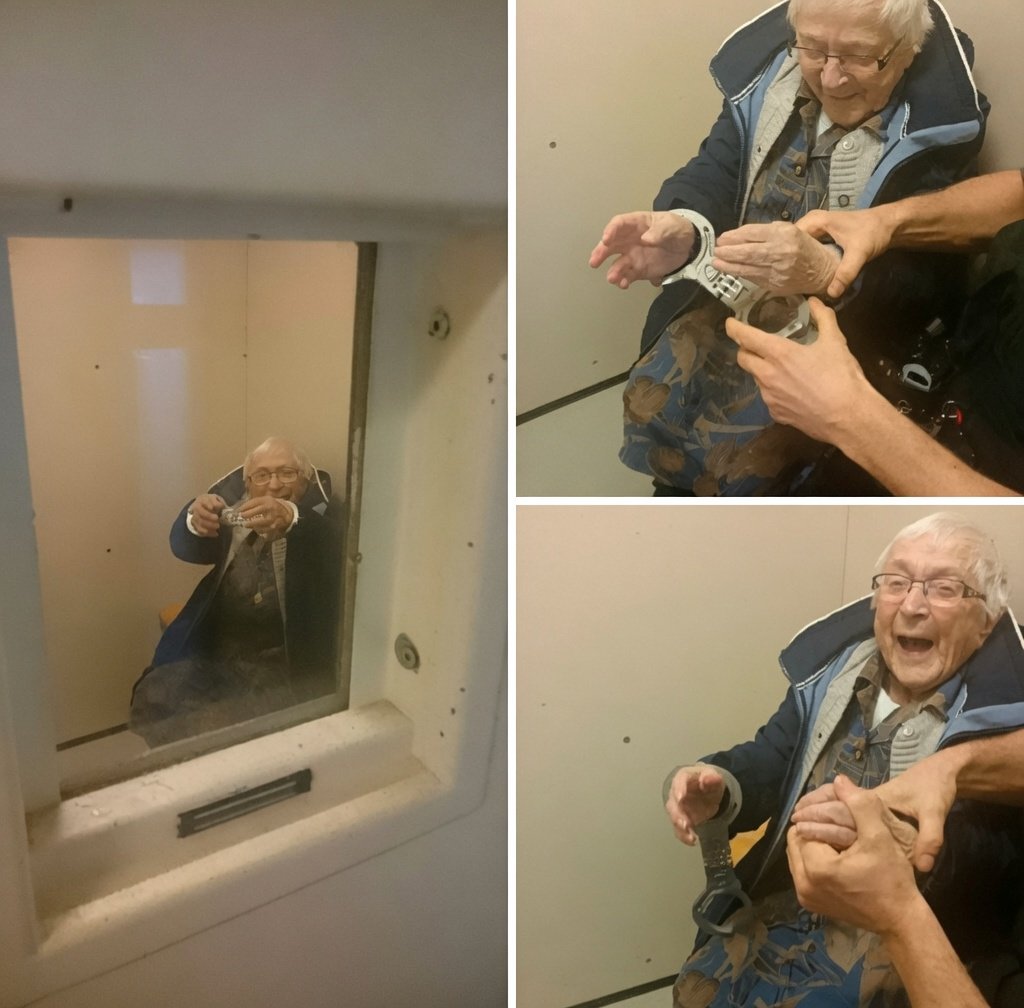
This 99-year-old true crime fan had always dreamed of being arrested. When the Dutch police found out that it was on her bucket list, they picked her up, handcuffed her, and threw her in the slammer. She enjoyed every minute of it
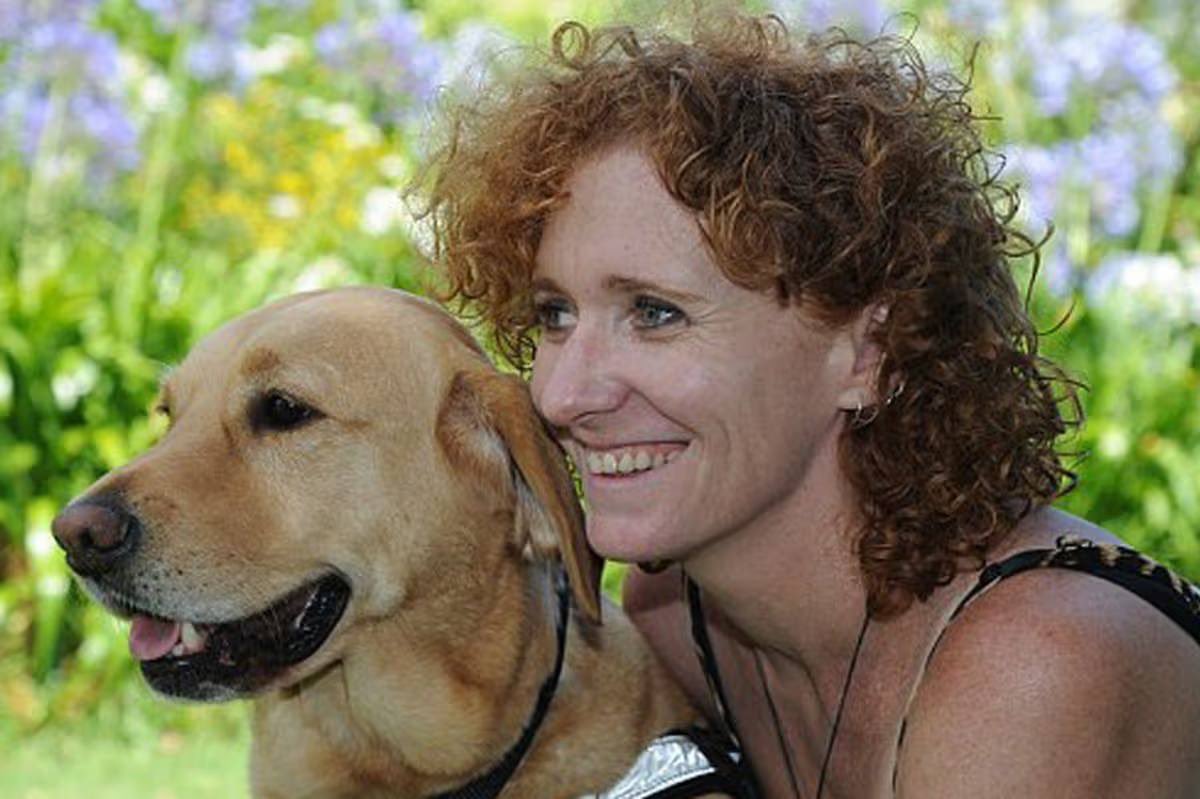
A woman who had been blind for 13 years bent down to kiss her guide dog, hit her head on a table, and woke up the next morning able to see again.
Lisa Reid, from Auckland, New Zealand, lost her sight at the age of 11 due to a tumour pressing on her optic nerve.
By 2000, she had been completely blind for over a decade, living with the support of her guide dog, Ami, and New Zealand's Blind Foundation.
On the evening of 16 November 2000, the 24-year-old bent down to kiss Ami goodnight and knocked her head against a coffee table. It didn't seem serious. She went to bed as normal.
When she woke the next morning at 9:30am, she could see. She kept it to herself for a few hours at first, content to play with Ami in the back yard.
Then she called her mother and read aloud a health warning from a cigarette packet down the phone.
Auckland Hospital eye surgeon Ross McKay confirmed she had regained 80 per cent vision in her left eye.
He had no explanation for the recovery and said he had never encountered a similar case in 25 years as an eye specialist.
"For some reason she's got her sight back, and don't ask me for an explanation, because I don't have one," he said.
Among the most emotional moments of her recovery was seeing her brother for the first time since he was a boy.
"He was a man, with a goatee and everything. My brother's a man," she said. When she saw her mother, she told her: "You look the same but older."
"It's the little things," Reid later reflected. "Like the colour of the grass, how blue the sky is, the things we all take for granted."
She went on to write a memoir about her experience, titled Angel Eyes.
🚨 THE TRUE FACE OF HEROISM IN VENEZUELA.
This photograph doesn't show politicians.
It doesn't show speeches.
It shows the men and women who have pushed themselves beyond exhaustion to save complete strangers.
Some pictures don't need an explanation.