We are banning social media access for under 16s.
These days kids must find their feet in a world where technology intrudes into every area of their life.
I just can’t let that go on anymore. So we’re giving children their childhoods back.
Did the government really want to criminalise blowjob porn? That was the message blaring from my phone last week, after new laws came into force outlawing various forms of adult content.
@GMonaghan1998: How the porn laws misfired
https://t.co/Qe6rAeMtXs
Meta’s AI age scanner is going global on Instagram, with Facebook and Threads next. If it decides you look underage, you prove otherwise with ID or a face scan. Billions of people now face a digital ID checkpoint, and no government had to pass a law.
Around the world, states are using technologies to monitor populations, suppress dissent and exert control often without transparency, meaningful oversight or routes to redress.
Read our report:
https://t.co/qpfQZoEWXZ
When we warned earlier this year that device-level scanning would turn our phones into state-mandated surveillance tools, our concerns were dismissed as "wild hyperbole".
Today, the risk of automated censorship, false flags, and runaway mission creep on personal devices is clearer than ever.
https://t.co/l2TVTxA3op
That's why I'm backing @ijm and @jessphillips in urging the Government to extend device-level safeguards to detect and block child sexual abuse material – including live-streamed exploitation – on all devices.
Leaving our economy, healthcare, and security at the mercy of US tech monopolies is a disaster for national resilience.
Ministers talk about an "AI productivity revolution," yet continue tethering our national computing infrastructure to the very same US cloud giants.
It is time for a serious national strategy to take control of our digital future.
The global Outlook outage is a reminder of why digital sovereignty matters.
We need a Parliamentary, London and UK wide strategy to invest in our own capability and take control of our digital future.
We cannot rely on US Big Tech for our digital infrastructure, including AI.
The global Microsoft outage highlights the lack of resilience in the UK's digital infrastructure, and the dangers that this dependency poses to our security, economy and public services.
Read more here 👇🏾
https://t.co/ciQ2wcsmKh
Technology has immense potential to revitalise our public services, empower workers, and solve collective challenges. But a genuine productivity revolution will not happen through tech boosterism alone.
Building scores of new data centres here in Britain and handing them priority access to our national grid does not automatically equal "sovereignty" if those facilities remain proprietary pipelines for foreign tech giants.
Keeping NHS and public health data "in Britain" is meaningless if US surveillance firms are still granted exclusive commercial access to exploit it.
EXCLUSIVE:
Britain needs to embrace artificial intelligence and invest in data centres because it will offer the country a "productivity revolution" and bolster the wages of ordinary workers, the Chancellor has said
In an interview with The Times John Healey, the chancellor, said that artificial intelligence "is coming whether we like it or not" and that Britain needs to take "maximum advantage" of the opportunities it offers
He said that artificial intelligence has the potential to draw investment to Britain on a "big scale" and argued that Britain needs to develop its own "sovereign" artificial intelligence to bolster economic growth and national security
Healey believes that the improvement in productivity the technology brings will filter through to everyone. On Wednesday he discussed the artificial intelligence "revolution" with Kevin Warsh, the chairman of the US Federal Reserve, during a visit to the UK. Andy Burnham, the prime minister, also briefly attended the meeting.
Healey said: "He [Warsh] believes we're on the edge of a productivity revolution and transformation with AI.
"We had a good discussion because he sees this as not just potentially bringing benefits to the super-rich and big tech, but already in the US, signs that it is increasing, raising the level of productivity, therefore the value and the wages of many ordinary workers. It may be that we're starting to see some of that in some of the detail of the growth figures today in Britain."
He added: "I think the signs are it's a revolution already underway. The challenge for policy makers and I think the change for investors the challenge for investors and business is how do we make the most of this for Britain, and in doing so reassure people about the steps we can help take against the risks that they quite rightly also feel and see."
Healey said that Britain can learn from the bitter debates over the "free for all" of new data centres in the US by ensuring that they have the support of communities. In the Budget he announced a new data centre “covenant”, which will require owners to invest in local communities, create jobs and protect water supplies in exchange for priority access to the national grid.
He said: “It [artificial intelligence] is coming, whether we like it or not. Many people are already using it, I want to avoid the free-for-all on AI and data centres we’ve seen in the states.
“So where NHS health data is used with AI, I want that data in Britain, not in data centres abroad. Where AI is used for our security, I want that data in Britain, for Britain, not abroad. To do that, we have to develop more data centres. I’m ready to back them if they provide the community benefits and can help build public trust.
“If we haven’t got the independence, we haven’t got some of the control and sovereignty on our AI capacity in the UK, then we will find that we can’t provide the level of confidence, the level of security that I think people are rightly wanting, and we can’t make the most of the big economic opportunities that are there.”
https://t.co/HcQCp5zSM0
Progressive paternalism is close to an insult in the name of 'protecting' women from violence.
The Labour government should be spending less time worrying about face-sitting and more time ensuring rape victims get justice.
On the new pornography legislation, progressive puritanism and the surprising political afterlife of Mary Whitehouse for @ArguablyMag
Labour must not be the Mary Whitehouse party https://t.co/qsx4yCIu4y
Labour must not be the Mary Whitehouse party – @hann_jvc writes on why the new porn laws are a clumsy distraction from funding real justice. https://t.co/l1ulz120X4
🤐The #OnlineSafetyAct "incentivises platforms to OVERZEALOUSLY take content down."
Our legal & policy officer @mayathomas98 gives evidence on why this censorious law is not fit for purpose & needs to be repealed.
Find out how you can take action⤵️
https://t.co/KxBZhkQBgK
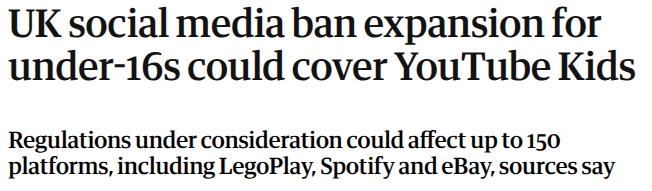
👁️The Government's 'social media' ban could sweep up YouTube Kids, Lego Play and 150 other platforms
This confirms our fears that the Government’s internet control plans are a trojan horse for mass surveillance and censorship.
Read⤵️
https://t.co/9kIPC9ajct
The Biometrics and Surveillance Camera Commissioner warns of the lack of law covering facial recognition in Scotland
Live facial recognition should not be used until new laws are in place with real transparency, oversight and safeguards to protect us all
https://t.co/oMGHAFC7QB
🚨Ministers promised to make Britain "the safest place in the world to go online." Instead, they’re making it impossible for children to go online at all.
The social media ban has spiralled so far out of control that lazy rules could now outlaw apps literally built for children.
Banning child-safe spaces won't stop online harm - it just leaves vulnerable kids with nowhere safe left to go.
Read more ⤵️
https://t.co/go19n5zNdX
🆔"A passport is incredibly sensitive information...
Biometric face scans come with serious risks of data abuse"
@mayathomas98 gives evidence on how the #OnlineSafetyAct is FAILING to protect our privacy & freedoms in Parliament today.
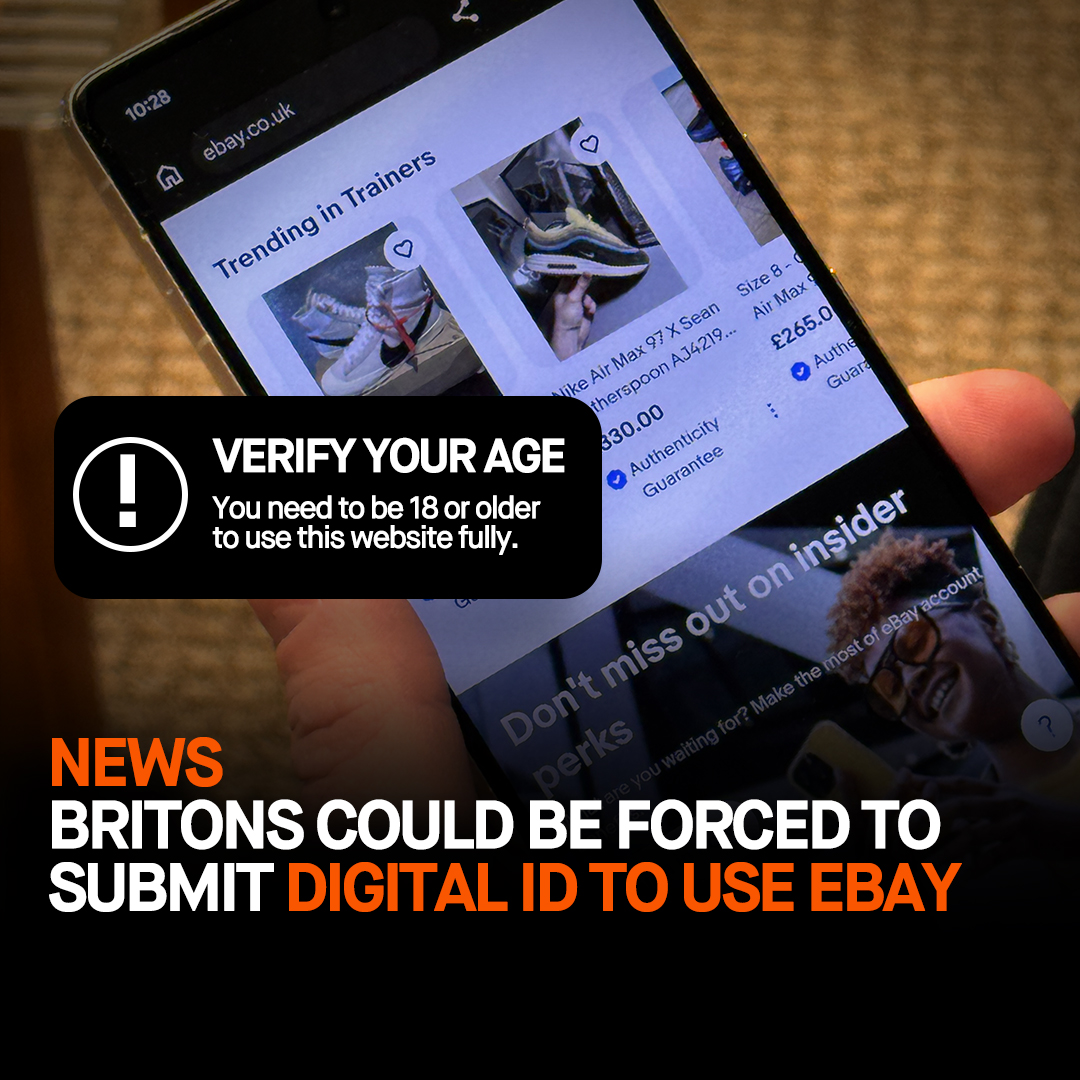
⚠️The Government wants to force Britons to submit ID checks to use eBay and other online shopping websites.
We warned that the Government's eye-watering internet control plans wouldn't stop with social media restrictions.
Now, any platform where users can talk to each other could be put behind the Great British Firewall.
Britain must not sleepwalk into this authoritarian nightmare. We must say no to passports for the internet - our freedoms hang in the balance.
Read⤵️
https://t.co/33UAr930FV
Chatbots allow anyone to generate pages of complex policy complaints, flooding MPs' inboxes and council offices.
Sifting through these bot-written emails stretches caseworkers past breaking point, delaying support for those constituents in genuine crisis.
Firing off automated demands in minutes raises false expectations, while swamped offices using AI to reply risks creating a dystopian loop where no human ever actually reads or considers your issue.
MPs' offices are buried in AI-generated casework and constituents wait longer.
Our members are absorbing it. Where offices keep figures, casework has at least doubled.
Staff need the resources to do the job properly.
@lisagillmore in @guardian.
https://t.co/p9XRB5rK2G
UK Government internet policy is now “if there is somewhere where people can talk to each other, they need to show their ID” 🫠
It’s not a serious policy to keep children safe - it’s just creating an authoritarian checkpoint internet. We can’t allow it.
https://t.co/72TQ7WDXmA
This is what happens when safetyism is allowed to grow into endless digital prohibition.
Exiling teenagers from everyday internet life won't protect them from predators - it just isolates an entire generation.
UK sex workers woke up to multiple platforms deleting or restricting their content because of the UK's new porn law, despite many of the videos actually not being illegal or having anything to do with the law https://t.co/uLOeNF8DyK
Much like the Online Safety Act, this new law will result in platforms erring on the side of caution and removing anything that could plausibly fall under its vague definitions, even perfectly legal content.