Hello Twitter! Our lab led by Prof. Stefano Cannicci studies crab and mollusk diversity, the impact of anthropic stressors on community dynamics and #ecosystem function and terrestrialization of crabs using behavioural, ecophysiological and phylogenetic approaches at @SWIMSHKU
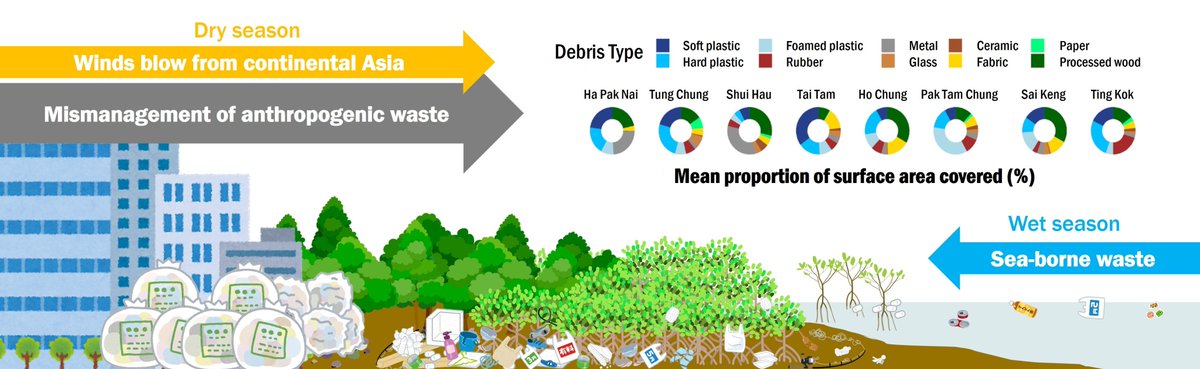
Implications: Our results confirm that land-derived debris from mismanaged waste, rather than debris coming from the Pearl River, is the primary source of anthropogenic debris threatening Hong Kong's mangroves. 🚮
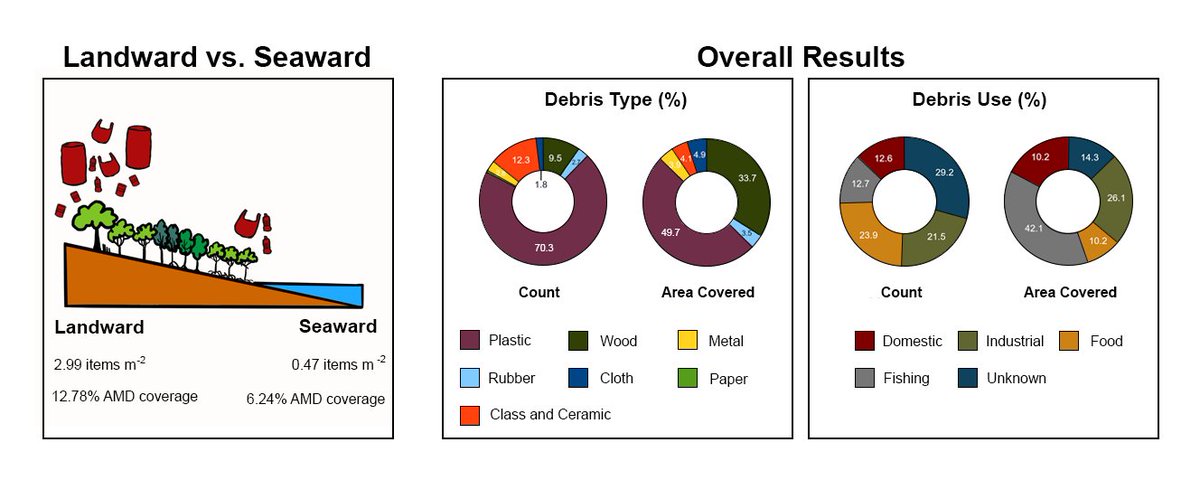
3⃣Landward Accumulation: Debris aggregation was highest in the landward zones, aligning with existing research and 4⃣ Seasonal Impact: In the dry season, more debris accumulated in both seaward and landward zones.
Our findings indicate: 1⃣ Spatial Variability: Debris abundance and distribution varied across zones, with plastic being the predominant material.
2⃣Top Contaminants: Both plastic and non-plastic domestic items covered the most surface area (largest potential ecological impact)
Out today fully open access in Marine Pollution Bulletin https://t.co/GXhykC1Vjm with fantastic colleagues @cnot_paleo_hku @SCannicci - we looked at the drivers of anthropogenic pollution in the peri-urban mangroves of Hong Kong @LabImeco@SWIMSHKU@BioSciUCT
🦀🐚🦞🐠 A brilliant keynote talk at @MeetingMmm6 by @sara_fratini. It was great to hear about the importance of genetic approaches in the #conservation and management of #mangrove fauna
Happy to say, that my PhD thesis is finally finished! A big thank you to my supervisor @BaydenRussell and co-supervisor @SCannicci for the opportunity to do a PhD in @HKUniversity and @SWIMSHKU, and for all the support along the way!
🚨Just published open-access🚨. Check out our new paper looking at how fine-scale environmental conditions and thermal tolerance of crab larvae 🦀🦀🦀influence their community dynamics in HK mangroves!
@SCannicci
@francesca_porri@LabImeco
https://t.co/CKhb7E50Fh
Congratulations to @GeogheganKevin for passing his PhD defense this week, with his thesis titled; "The present and prospective ecology of a rocky shore predator: foraging, physiology and their microbiome". Well done Dr Geoghegan! @SWIMSHKU@BaydenRussell @SCannicci @LabImeco
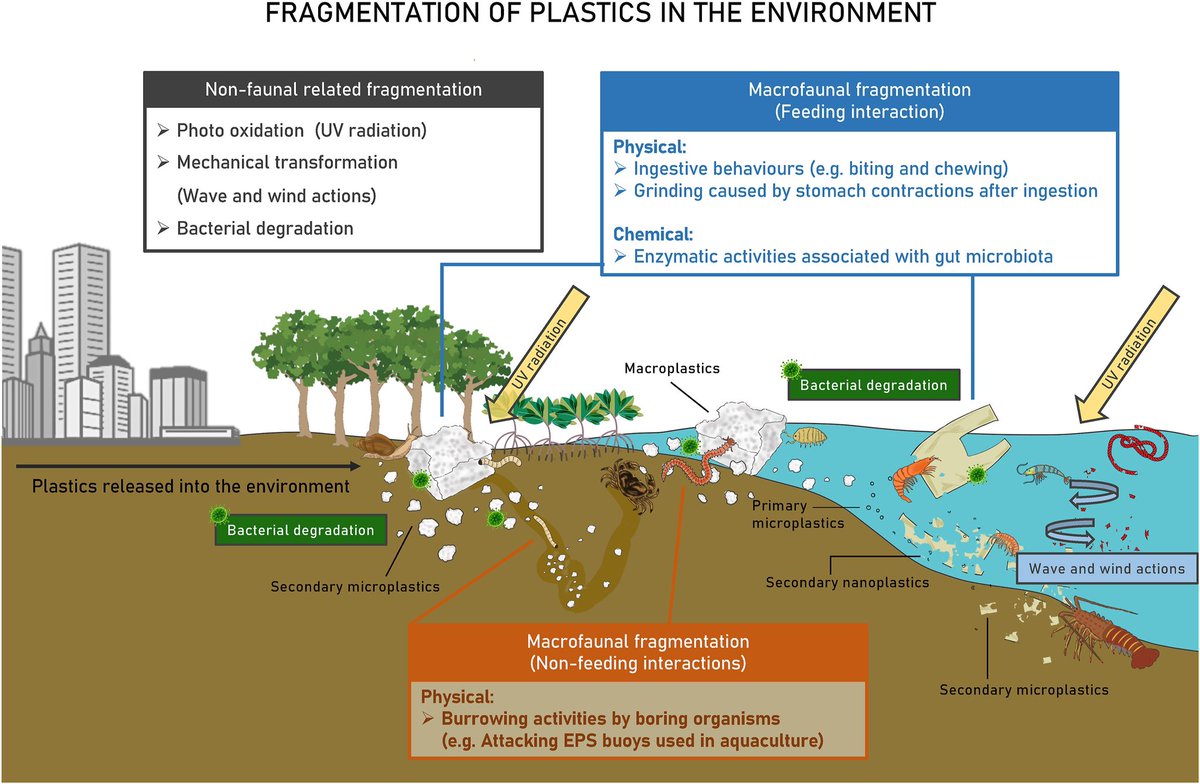
Fauna is playing a role in the plastic debris degradation
Free access to our new publication led by @mandydrms with @SCannicci and @LyleVorsprung
👇👇👇
https://t.co/fLZ7U95S2M
Honoured to be part of this review in @ELSenviron examining the roles that macrofauna play in the fragmentation of macro to micro and nano plastics! Led by @mandydrms with @SCannicci and @cnot_paleo_hku it’s available for free for the next ~40 days @LabImeco@SWIMSHKU
Happy #WorldWetlandsDay2022 a day to acknowledge the essential support these ecosystems provide for a healthy planet and society. So let’s work hard to protect these biodiversity reservoirs and their unexpected visitors
Lastly, field research such as this is never done alone, and is a team effort. The authors would like to acknowledge the @HKUSBS ecology and biodiversity and @SWIMSHKU community for their support and assistance in the field.
🚨Another new paper alert🚨 Out today in @STOTEN_journal led by @Yiing with @LyleVorsprung, @cnot_paleo_hku @SCannicci highlighting the plight of anthropogenic marine debris (AMD) pollution in Hong Kong’s mangrove forests. Available at https://t.co/LUydcNFrhG for 40 days 1/n
should be greatly reduced and we should prioritise reducing mismanaged waste from entering the waterways and other aquatic habitats. AMD in our ecosystems is a symptom, and the priority is tackling the source of the problem. 10/