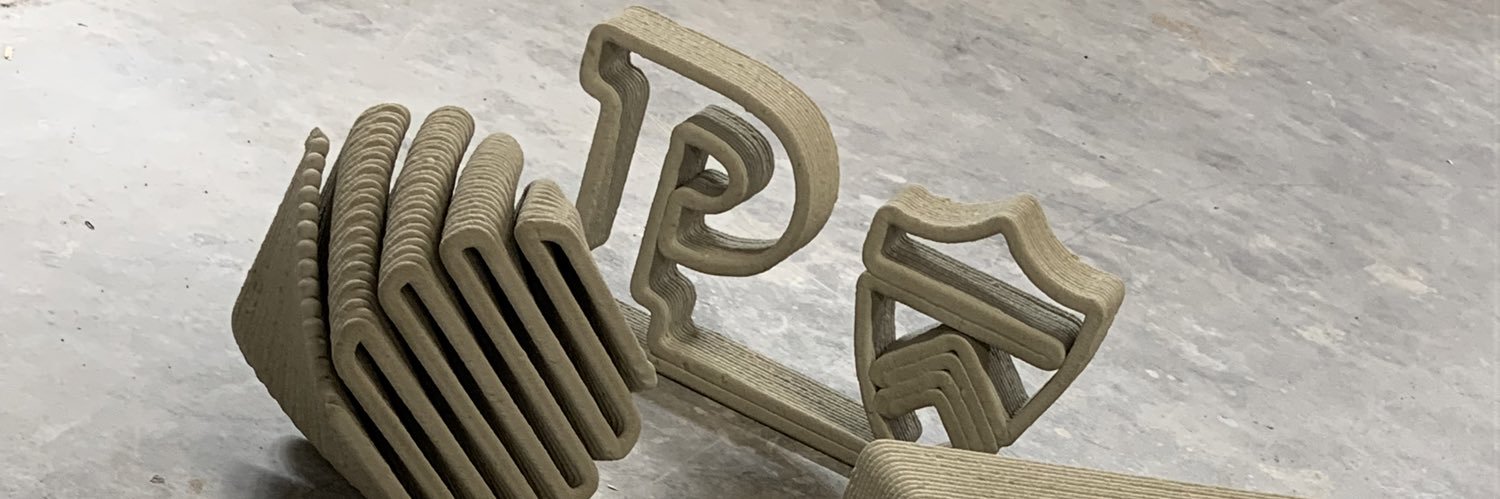
Architected Material and Additive Manufacturing (AM)2 Lab, Princeton CEE. We focus on mechanics and design of bio-inspired architected and resilient materials.
A new class of concrete and additive manufacturing is here. Two key contributions: 1) engineering new toughening mechanisms in concrete, “arrest-bridging-reenucleation” enabled by soft materials in layered concrete, 2) a multi-material AM technique from scratch. #princeton#CEE
NERC is coming to beautiful @EPrinceton this Fall!
Please see the CfP for papers and demos, as well as our call for Rising Stars in Robotics. Submissions due August 20 AoE.
https://t.co/Emvs1DMWRn
Mahsa Rabiei (G3 PhD) is presenting her work on pressure-based feedback control in robotic additive manufacturing of concrete is today’s Princeton’s Inaugural Humanity-driven robotics. @EPrinceton
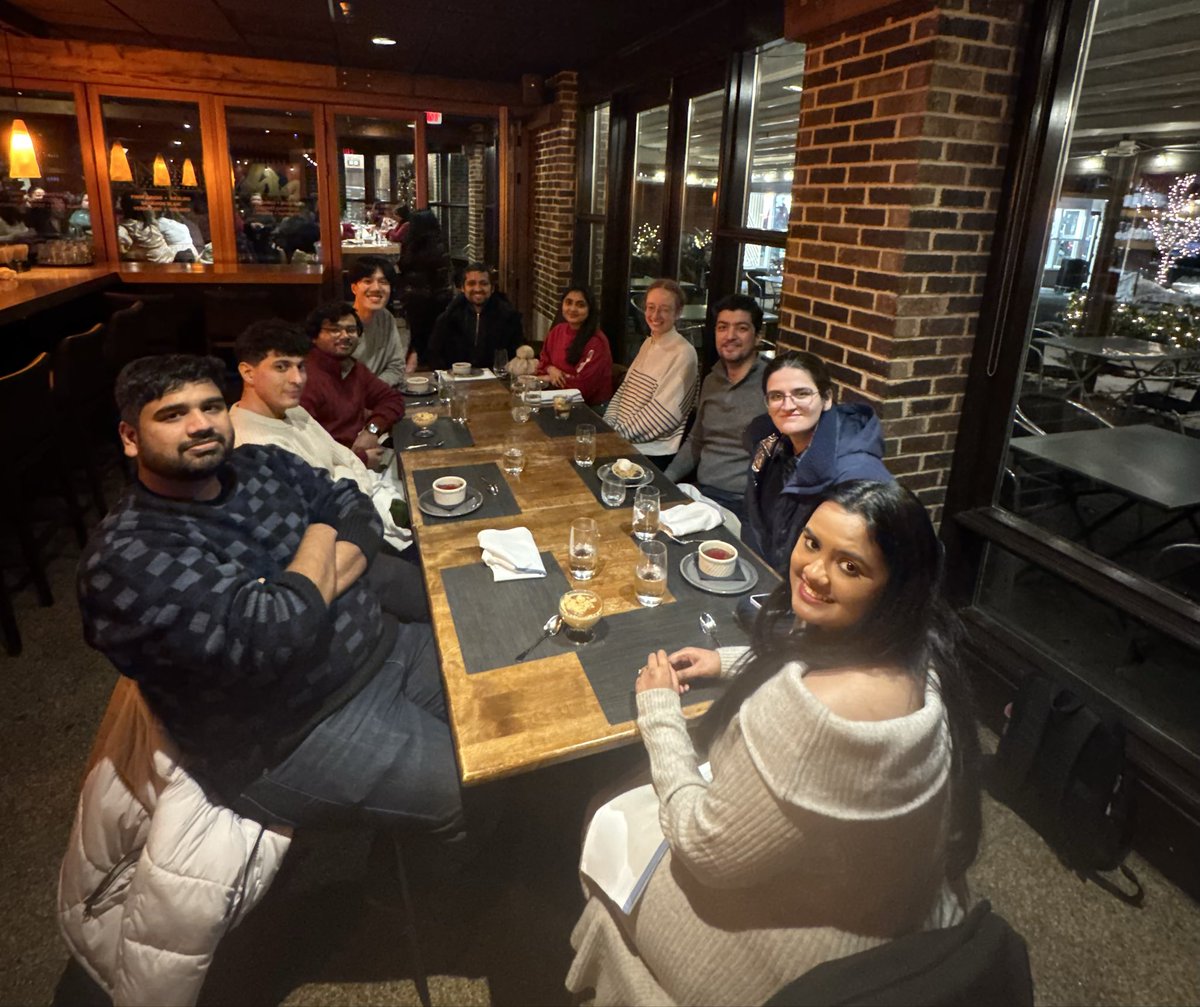
Happy holidays from Moini Lab! Another great year with these thoughtful secret Santas came to a nice end 🎁🎄 2025 came upon us w/ creativity in & inspiration for new paths in teaching & research, and marked new life adventures for some! Wishing everyone the best in 2026! 🎊🎉🥳
New paper on making use of back-pressure, to develop new types of feedback control in additive manufacturing, that directly deals w/ material uncertainty upstream vs. downstream computer vision feedback, releasing a need for path tracking: https://t.co/O7Dr4c3Sl2 #control#c3dp
Happy to share our lab’s new comprehensive framework, coupling phase-field & cohesive zone model within a variational formulation led by @aymannaj93, capturing fracture across interfaced multi-materials w/ implication in additive, heterogen., & architected mater. #fracture#c3dp
2024 on the last issue of AM w/ my PhD student Shashank concluded a great year, featuring how fundamentals of statistical & fracture mechanics can be used to define disorder & engineer fracture toughness, inspired by mechanisms in cortical bone:
https://t.co/IawGYYqBFR
#cement
Strength. Toughness. @moini_reza discusses the importance of these properties in the concrete that makes up our public infrastructure in this @NSF podcast. Watch it at the link below ⬇️https://t.co/LDofRf1NEy
This new crack-resistant cement created by @Princeton researchers was inspired by cortical bone, the tough outer layer of human bone that is made of tubular structures to resist fractures while keeping it light. Read about it in @FastCompany ⬇️ https://t.co/fcglKmImsn
Inspired by the architecture of human bone’s tough outer layer, engineers at Princeton led by PMI's @moini_reza have developed a cement-based material that is 5.6 times more damage-resistant than standard counterparts.
https://t.co/jBZ71OeXRr
Engineers at #PrincetonU focused on geometric design to develop a new kind of concrete material that resists cracking and could make for a more durable, promising solution in architectural structures. (via @Archinect) https://t.co/Ck7MbGAd71