Delighted to share the next story from the Paulsen lab! In a team effort led by @CandieDandie's first @YaleMBB grad student, Justin Sanders, we've uncovered a critical role for calmodulin in the TRPA1 pain receptor's calcium regulation. Check it out here: https://t.co/sqdIHDwH3j
🧠Pain sensors need to switch on fast—and off just as quickly.
In our new tour de force Nature Communications paper, we show that calmodulin plays a key role in shutting down the TRPA1 pain receptor - a finding that could guide new pain therapies.
📰 https://t.co/FjyCcElYoy
We had a great time at BPS 2025– learned a lot and made great connections. Congrats to Paulsen Lab grad student Isabel Romov for winning a Student Research Achievement Award! We celebrated at Disneyland. ‘Til next year!
@CandieDandie@YaleMBB 6. 1. Our work also raises interesting questions about whether endogenous TRPA1 modifications can perturb the TRPA1:calmodulin interaction to influence channel regulation. So many exciting questions to ask!
Delighted to share the next story from the Paulsen lab! In a team effort led by @CandieDandie's first @YaleMBB grad student, Justin Sanders, we've uncovered a critical role for calmodulin in the TRPA1 pain receptor's calcium regulation. Check it out here: https://t.co/sqdIHDwH3j
@CandieDandie@YaleMBB 5. Together, our work suggests that calmodulin pre-associates with TRPA1 in cells to facilitate proper calcium regulation. Perhaps calmodulin is a TRPA1 auxiliary subunit?
@CandieDandie@YaleMBB 4. Using a combination of biochemical, biophysical, and structural approaches, we characterized the TRPA1 DCTCaMBE:calmodulin interaction and found that it is driven exclusively by the calmodulin C-lobe with tightest binding observed at basal calcium concentration.
@CandieDandie@YaleMBB 3. This effect could be partially rescued by increasing the extracellular calcium concentration, suggesting that calmodulin binding to the DCTCaMBE is part of a multi-step long-range allosteric mechanism to control TRPA1 inactivation.
@CandieDandie@YaleMBB 1. We identified a highly conserved calmodulin binding site in the TRPA1 distal, structurally unresolved, cytoplasmic C-terminus (the DCTCaMBE). Genetic or biochemical ablation of calmodulin binding to this site slowed TRPA1 calcium inactivation 10-to-20 fold.
1. Calcium regulation is the primary TRPA1 regulatory mechanism that keeps its activity in check to sustain acute pain signaling and prevent aberrant signaling. This regulation is biphasic with initial channel potentiation followed by inactivation. Mechanism is unclear.
One of the unforgettable moments at the 2024 Ion Channels GRC was the closing lecture by Fred Sigworth. If you missed it, here it is.. https://t.co/4I5lPTGnzr
Our high-resolution (2.2 Å) in situ structural work reveals details of translational landscape, with various cofactors and antitumor drug/inhibitor, all directly within human cells!
https://t.co/ScWOAQRjTw
Scientists Discover a New Hormone that Can Build Strong Bones | UC San Francisco
Thank you @LauraKurtzman for a great summary of team effort with @dr_ambrosi https://t.co/jQS25Hphu3
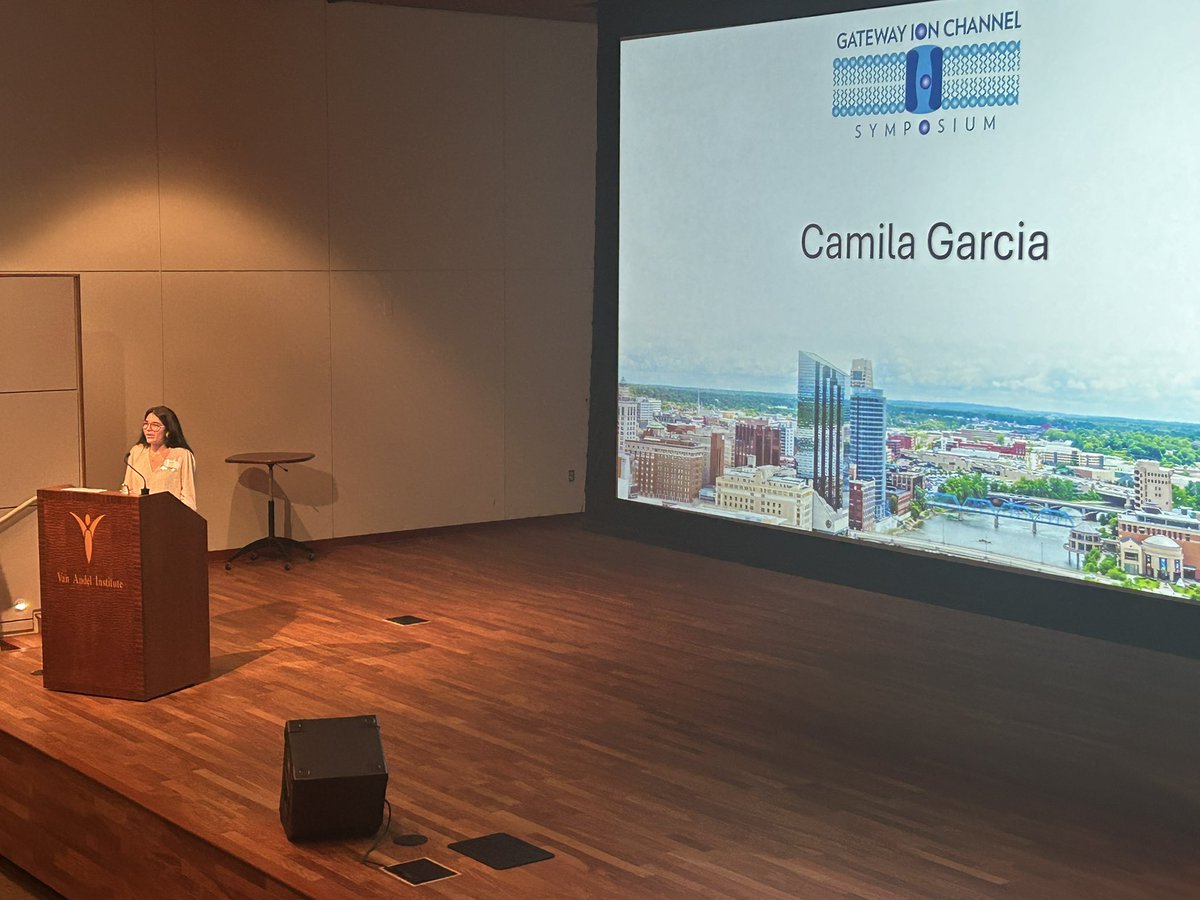
We had the BEST time at the inaugural Gateway Ion Channel Symposium. All three Paulsen Lab @YaleMBB 2nd year grad students gave talks (2 or 10 min) and posters. Trainee-centric & welcoming first meeting of their graduate careers. Can’t wait for the next one!
Congratulations to Drs. Justin Sanders and Avnika Bali!! They are the first two graduate students from the Paulsen Lab to defend their theses and move on to the next stage of their careers. We are so proud of them, and we can’t wait to see what they do next!
Congratulations to @SusanBaserga, elected to the American Academy of Arts and Sciences @americanacad. Dr. Baserga joins a prestigious group of members recognized for their achievements in academia, industry, policy, research, and science.
@SmilowCancer@YaleMed@YNHH@YaleMBB