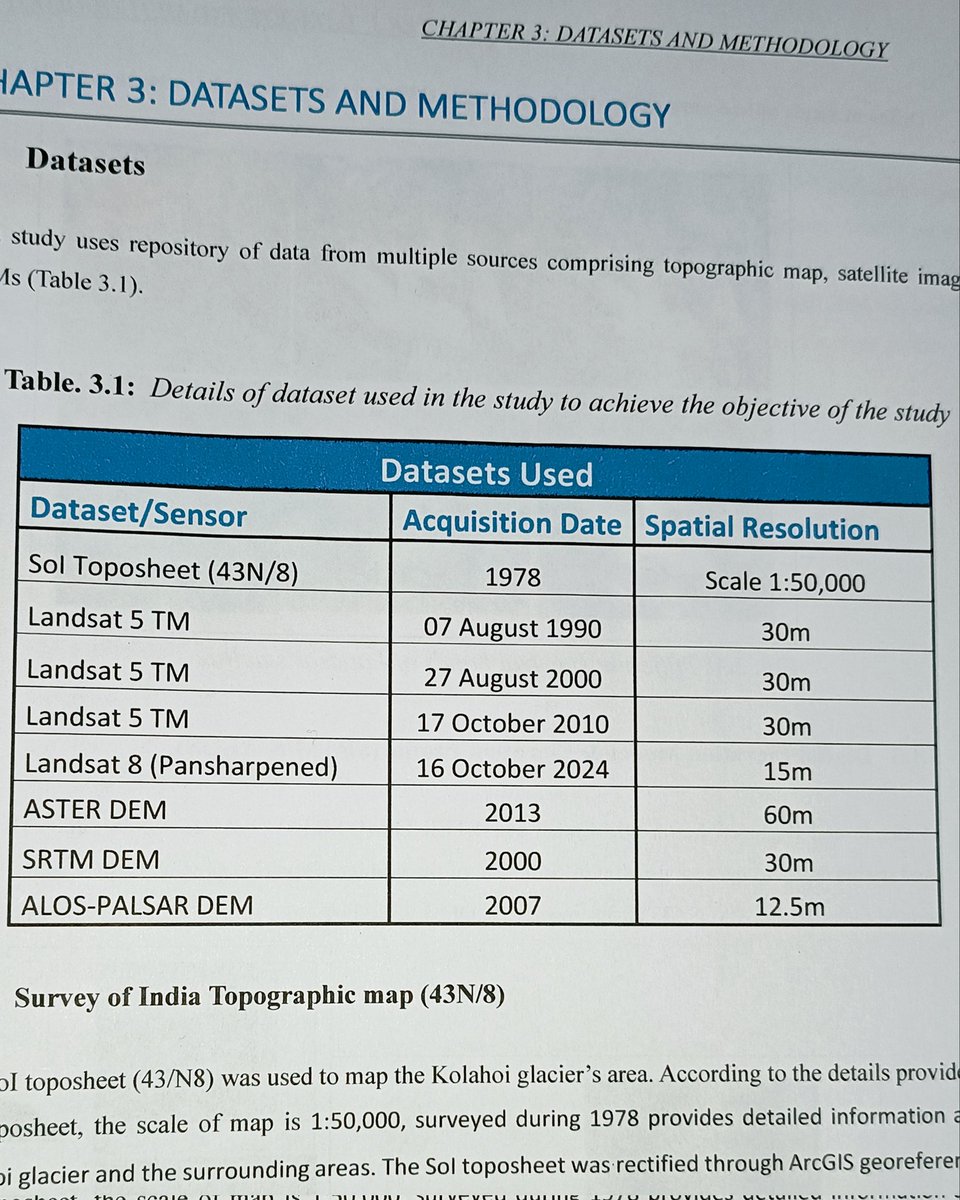
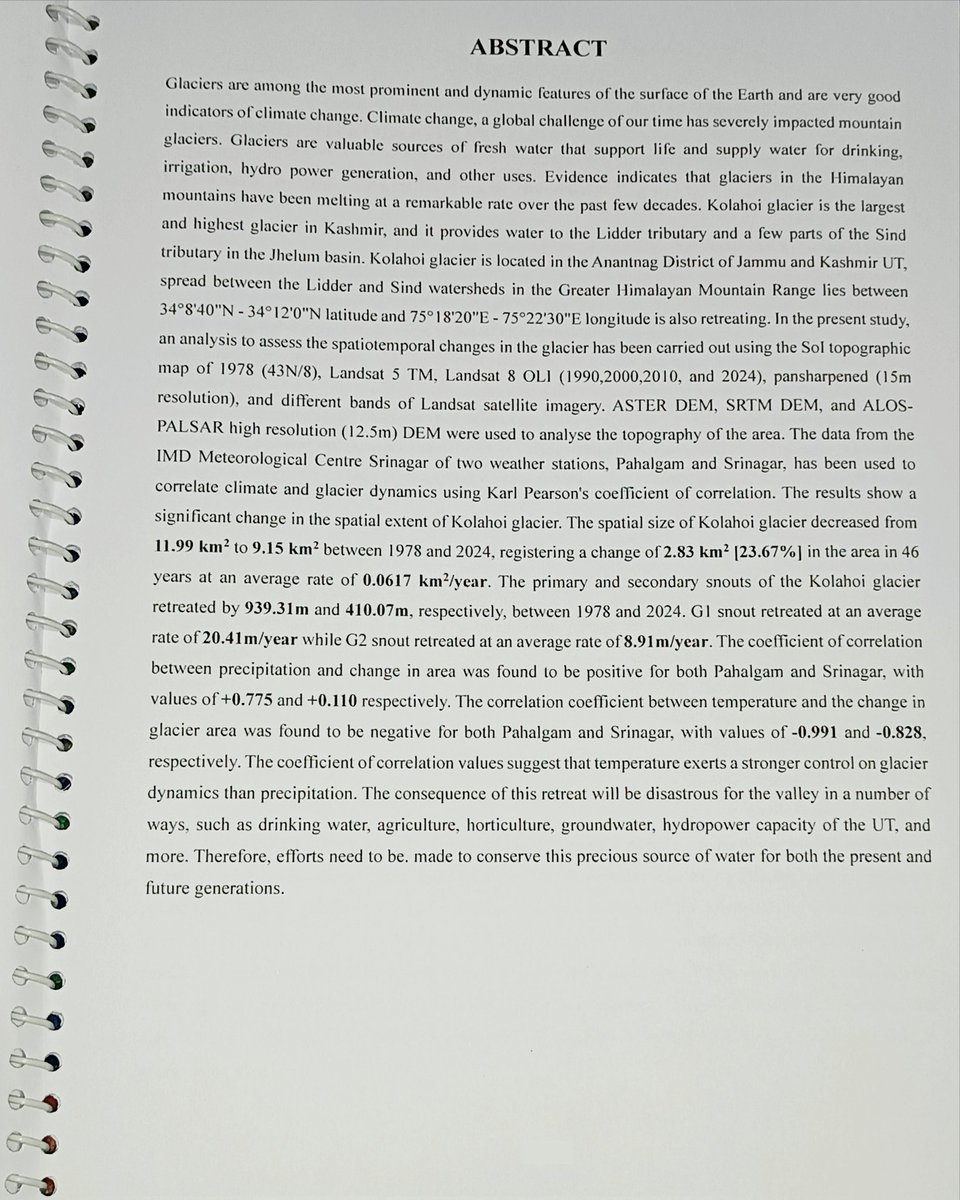
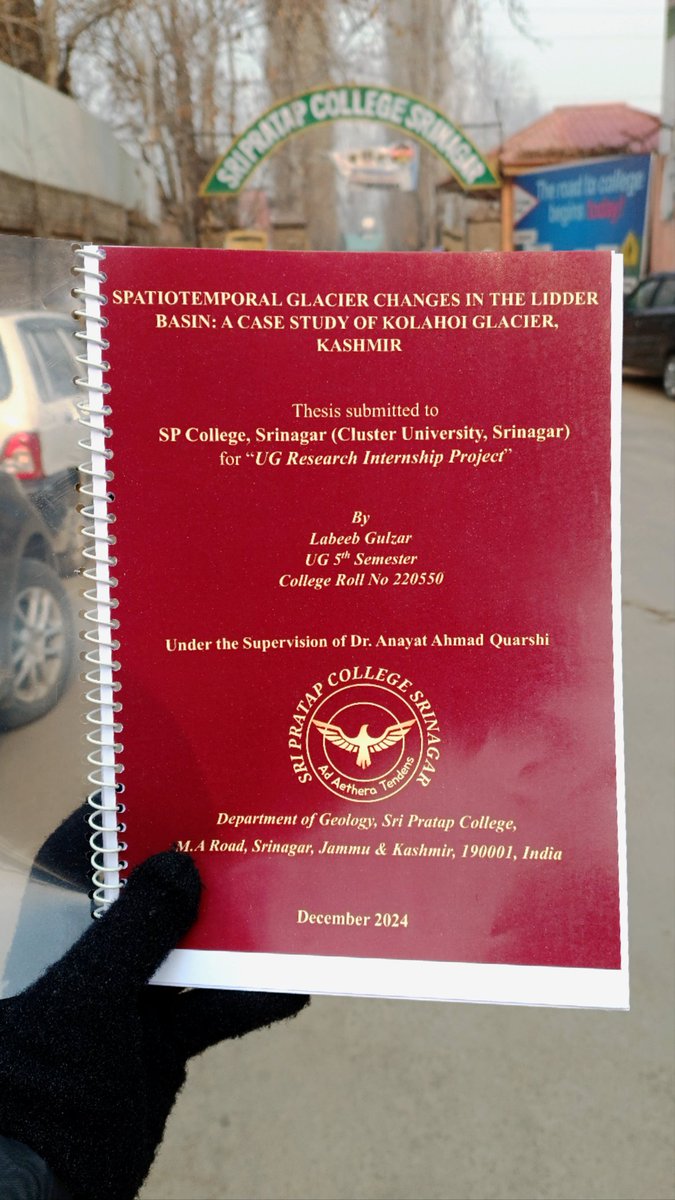
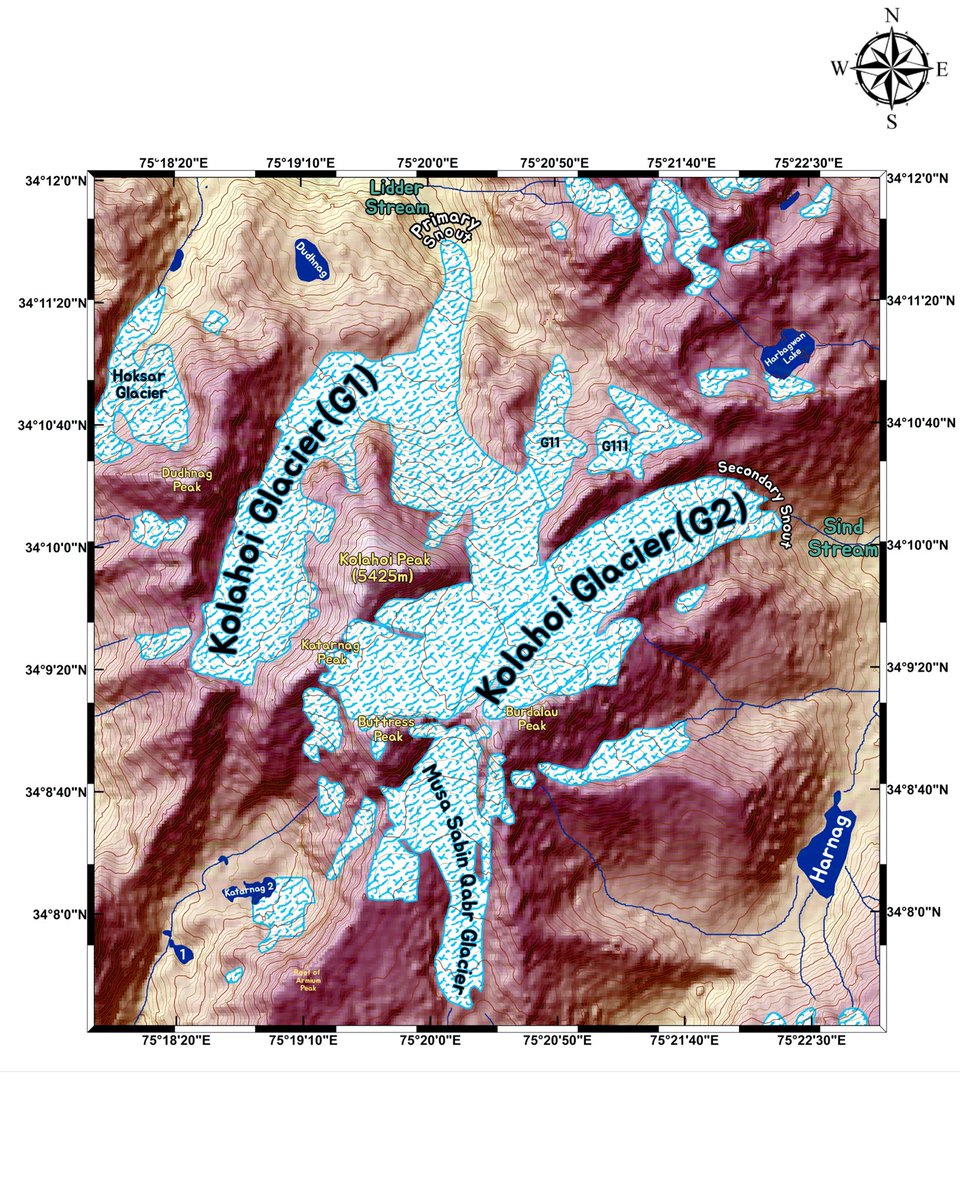
🗻 My UG research project about the spatiotemporal changes in the Kolahoi glacier. I was able to learn a lot from this internship-based research project. 🗻
(1/2)
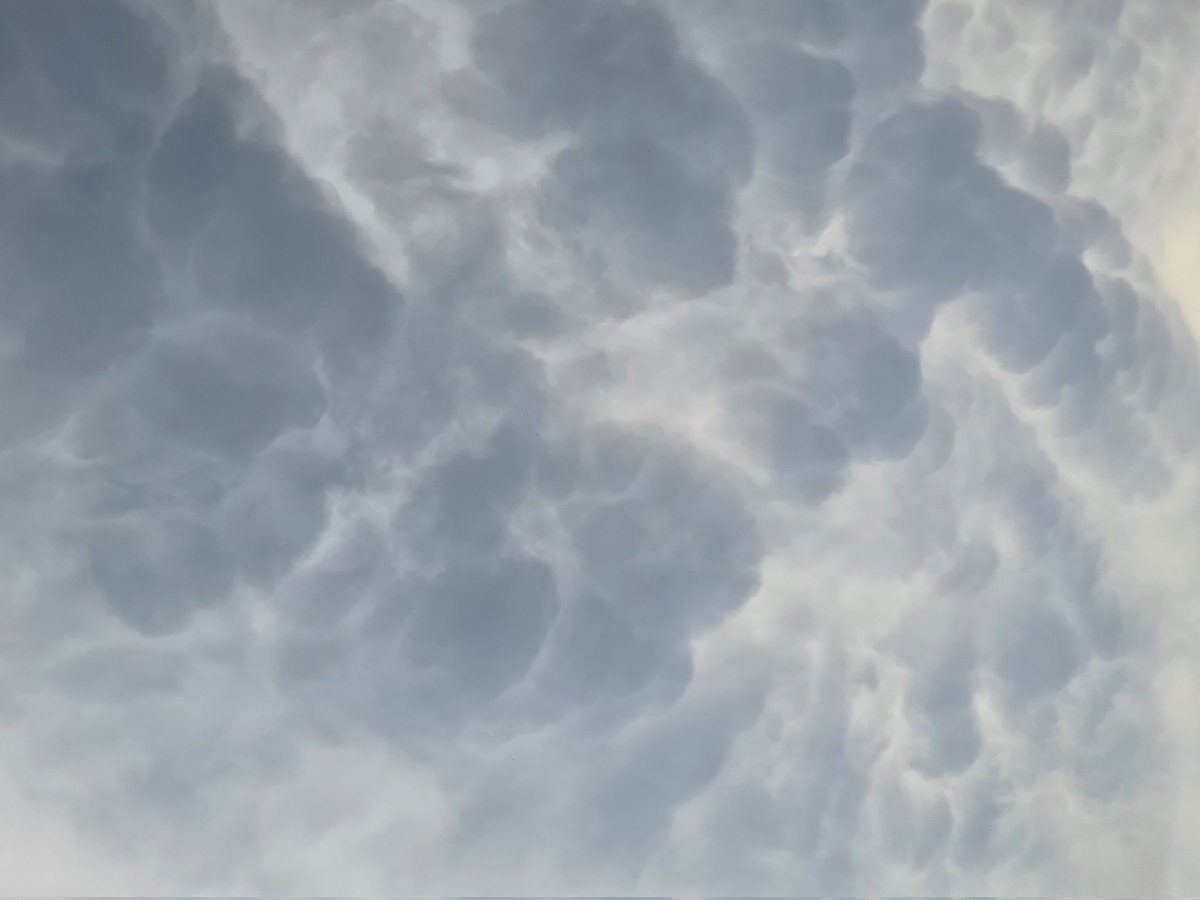
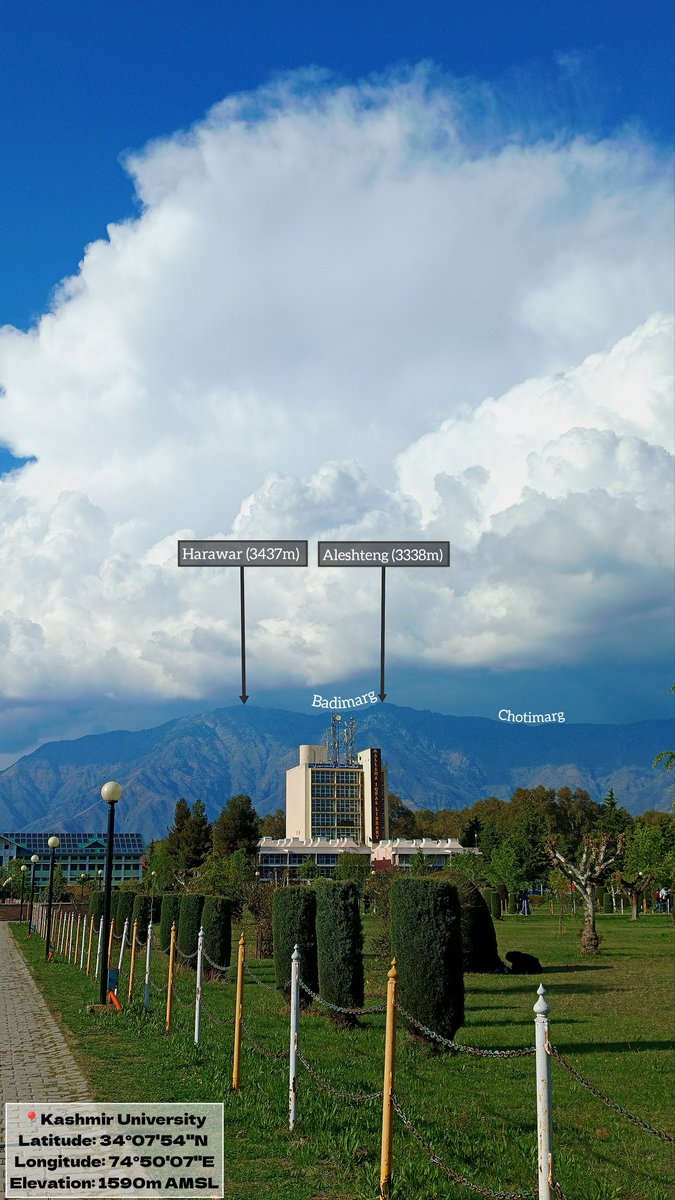
A powerful thunderstorm developed over Central Kashmir this evening and subsequently propagated towards parts of South Kashmir, producing heavy precipitation. Deep convective activity led to the formation of towering Cumulonimbus (Cb) clouds, with cloud tops reaching ≈ 10 km. ⛈️
From knickpoint retreat to channel incision, every drop of these Waterfalls narrates the dynamics of landscape evolution.
📍Babagil Waterfall
📍Noorkhah Waterfall
📍Namblan Cascading Waterfall
Earthquake Parameters:-
Location= Hindu Kush region, Afghanistan
Magnitude= 5.7
Depth= 180km
Distance from Srinagar 450km
Date and time= 04 April 2026 (9:42 pm)
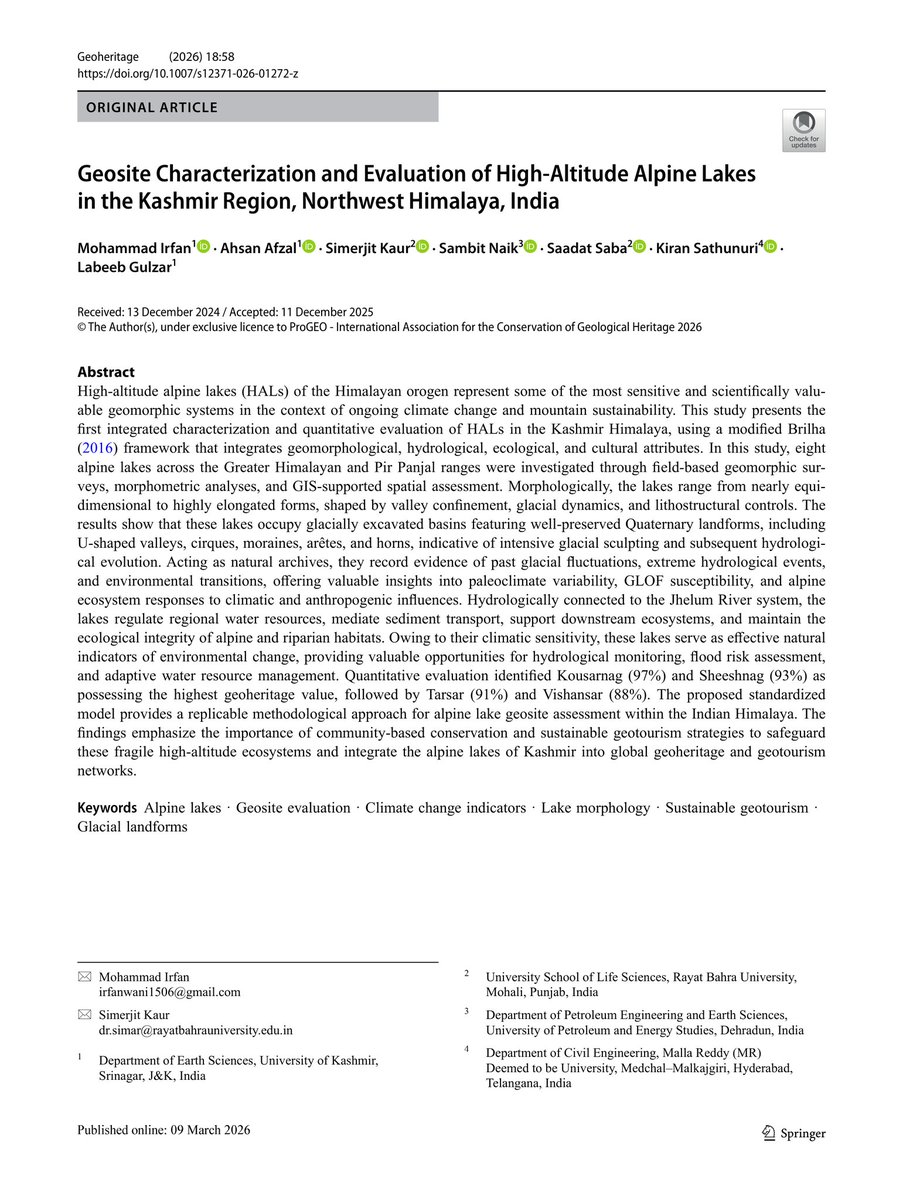
Alhamdulillah, I am happy to share that I am a co-author of the research article titled “Geosite Characterization and Evaluation of High-Altitude Alpine Lakes in the Kashmir Region, Northwest Himalaya, India,” published in the journal Geoheritage.
https://t.co/uCgodD1znl
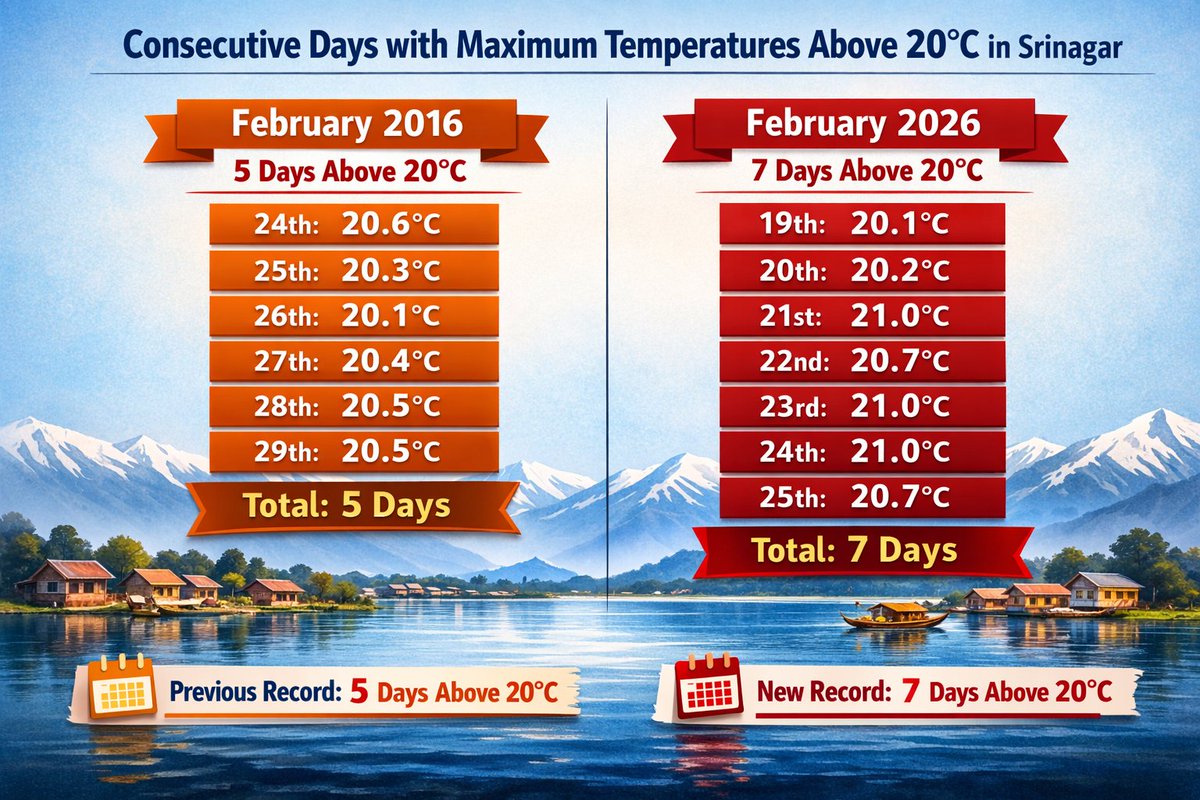
Srinagar Breaks February Warmth Record :
Srinagar has set a new February record, with seven consecutive days of maximum temperatures above 20°C. The previous record of five straight days, established in February 2016, has now been overtaken.
For perspective, Srinagar’s normal February maximum temperature typically ranges between 10°C and 12°C, making this prolonged spell of warmth highly unusual.
With the current weather pattern holding steady, the streak is expected to continue, meaning the newly set record could be extended further in the days ahead.
𝗥𝗲𝗰𝗼𝗿𝗱-𝗕𝗿𝗲𝗮𝗸𝗶𝗻𝗴 𝗧𝗲𝗺𝗽𝗲𝗿𝗮𝘁𝘂𝗿𝗲
#Climate Change
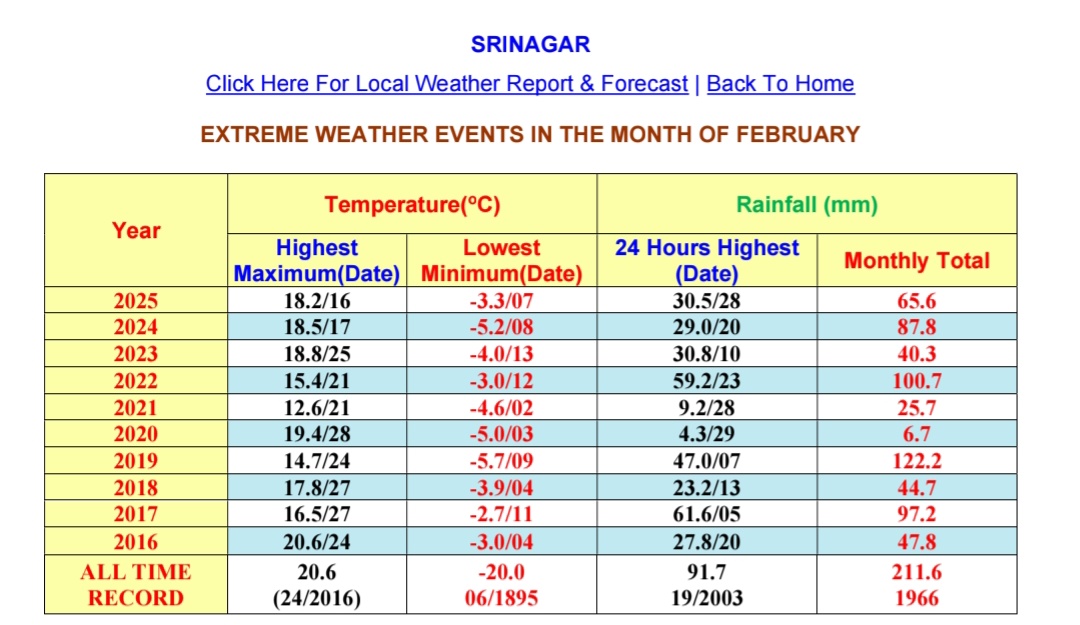
At 21.0°C, #𝗦𝗿𝗶𝗻𝗮𝗴𝗮𝗿 recorded its hottest February day ever, surpassing the previous record of 20.6°C set on 29 February 1940 and equalled on 24 February 2016.
With a maximum temperature of 20.1°C(9.7°C Above Normal), #𝗦𝗿𝗶𝗻𝗮𝗴𝗮𝗿 experienced its 3rd hottest February day in recorded history.
All-time Feb record: 20.6°C (24 Feb 2016 & 29 Feb 1940)
@JahangirSofi4@WajahatIqbal2@MukhtarNaj69419 Another serious concern is soil liquefaction, especially in areas with water-saturated loose sediments. During strong shaking, the ground can temporarily behave like a liquid, causing buildings to tilt, sink, or collapse.
(3/3)
@JahangirSofi4@WajahatIqbal2@MukhtarNaj69419 In addition, land-use and land-cover (LULC) planning is largely ignored, leading to buildings being constructed on unstable soils and hazard-prone zones.
The region lies in one of the highest seismic zones of India, making it highly vulnerable to earthquakes.
(2/3)