Bigger Models Don't Automatically Mean Better AI.
A powerful model trained on inconsistent or incorrectly labeled data can still produce unreliable results.
High-quality datasets help models learn meaningful patterns, improve consistency, and generalize more effectively.
How does AI know what it’s looking at? 👁️
Object detection goes beyond simply recognizing objects. It identifies what an object is, where it appears in an image, and how confident the model is in its prediction.
Here’s how the process works 👇
What if AI could see the world through your eyes?
Egocentric vision focuses on visual data captured from the wearer's perspective, helping AI understand hands, objects, and actions as they happen.
Computer Vision Is Moving Beyond Pixels.
Traditional computer vision relies on hand-crafted rules and specialized techniques. Modern Vision Language Models (VLMs) take things further by connecting visual information with language and context.
We benchmarked YOLO26-N, YOLOv12-N and RF-DETR-Nano on FPS, latency, VRAM and detection count. See which nano model is the best vision model for edge deployment, and when the extra memory of a transformer detector is worth it.
https://t.co/QSamJWjKLI
Discover the release of OpenAI's GPT-6 Sol and GPT-6 Luna. Learn how these new AI models bring the architectural breakthroughs of GPT-6 Astra to more accessible price points, offering massive gains in coding, computer use, and enterprise workflows.
https://t.co/jsvG4V0wrI
Discover the top computer vision model training platforms in 2026 that streamline annotation, automate QA, and enable fast deployment. Compare tools built for scalable, production-ready AI workflows.
https://t.co/zwOL3mKcKG
Explore the seven best multimodal annotation platforms in 2026 and learn how they handle video, audio, text, LiDAR, 3D data, AI automation, quality workflows, and enterprise annotation needs.
https://t.co/YOk3mK6jsv
Claude Opus 5.5 is Anthropic’s latest frontier AI model, designed for advanced agentic coding, reasoning, knowledge work, and complex long-running tasks. It delivers stronger performance, faster output, improved safety, and lower costs than Opus 5.
https://t.co/gRzHwkTuEY
Compare GLM-OCR and PaddleOCR side by side using LM Studio on receipts, math formulas, pie charts and curved-text logos. See which VLM OCR model performs better.
https://t.co/KkfBZiY9UT
Claude Sonnet 5.5 delivers a dramatic leap over Sonnet 5 across coding, knowledge work, computer use, and visual tasks. Explore benchmark results, real-world testing, pricing, performance, and what changes for developers.
https://t.co/sbN6iKhyms
Explore five reinforcement learning techniques for vision-language-action models: PPO, GRPO, RECAP, ConRFT, and DSRL, with results, training approaches, and practical use cases.
https://t.co/B5UHJrKuSZ
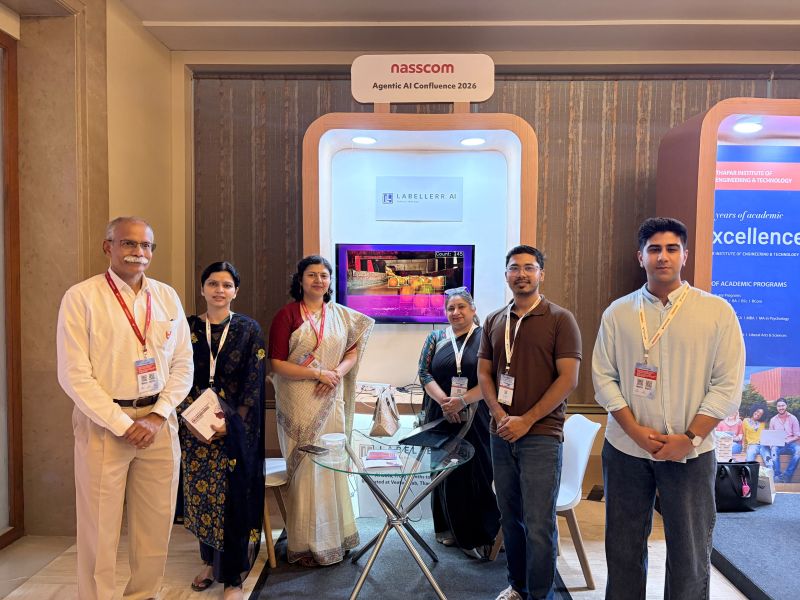
We had a great time at the Agentic AI Confluence 2026, organized by nasscom in Bengaluru!
Our team showcased the Labellerr annotation platform, built to help AI teams create high-quality training data faster.
Thank you to Nasscom for hosting such a thoughtful event.
We're proud to share that our CEO and Founder, Puneet Jindal, was featured in The The New York Times, which looks at how data annotation is creating new opportunities.
Read the full article in The New York Times
https://t.co/Cjbg1uecqF
AI just made automated dental diagnosis in real-world clinical examinations much easier.
This system uses a fine-tuned YOLO 11 model to instantly spot and track every cavity in real-time.
Full YouTube Tutorial: https://t.co/Zfn4XFvGjP
AI just made automated manufacturing inspection on real-world assembly lines much easier.
This system uses a fine-tuned YOLO 11 model to instantly spot and track every component in real-time.
Full YouTube Tutorial: https://t.co/SpY9LMGgYv
Discover how OpenAI's GPT-6 Astra is revolutionizing AI by moving beyond text generation. This deep dive explores its groundbreaking computer-use capabilities and how it acts as an autonomous digital worker for enterprise workflows.
https://t.co/yhJ6A7ejvF
Video object tracking lets AI systems follow objects across frames, not just detect them in a single image. This guide covers annotation types, tracking techniques, key challenges like occlusion, and how Labellerr streamlines the workflow.
https://t.co/k1YvBKMrDE
AI just made training physical AI robots on real-world construction tasks much easier.
This system uses a lightweight YOLO 11 model to instantly spot and track every action in real-time.
Full YouTube Tutorial: https://t.co/bFhTdMQODQ
Learn how to annotate video for YOLO object detection and tracking, from bounding boxes and tracking IDs to AI-assisted labeling and exporting into a YOLO training-ready dataset.
https://t.co/3XubRYmipN