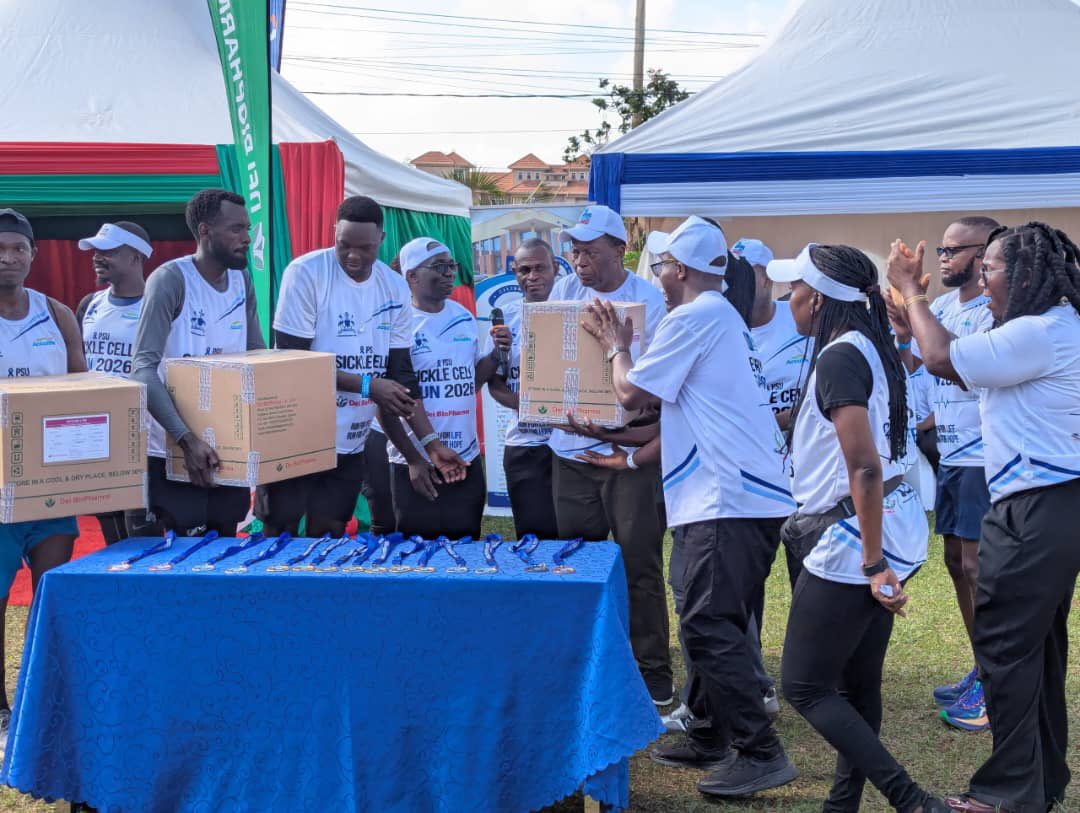
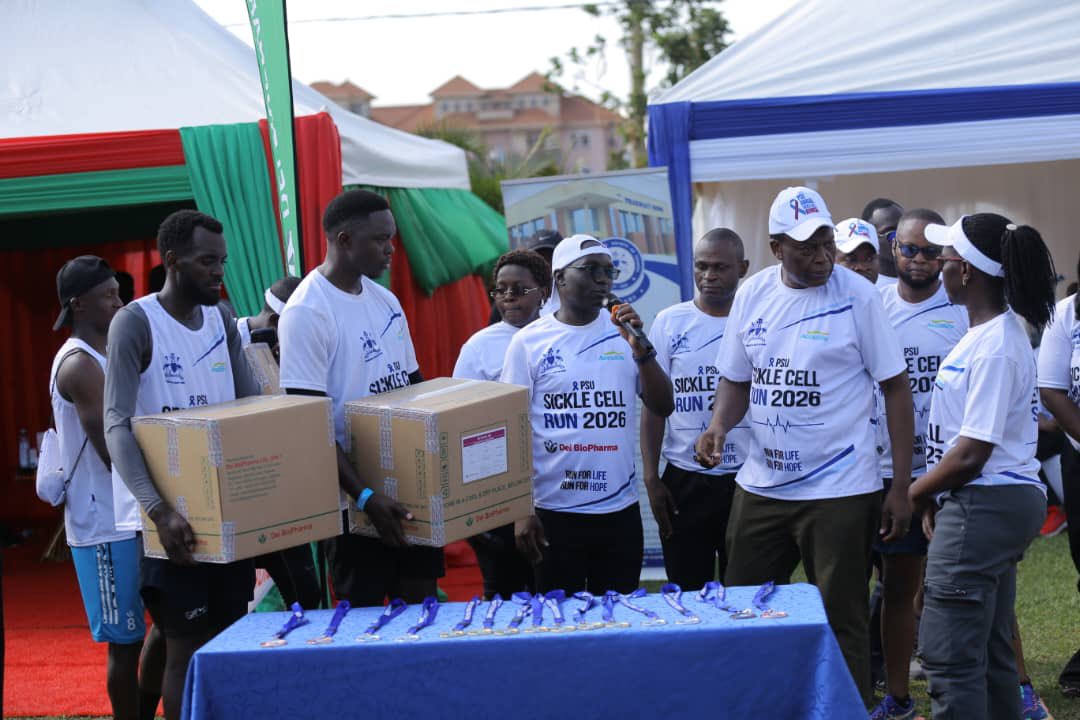
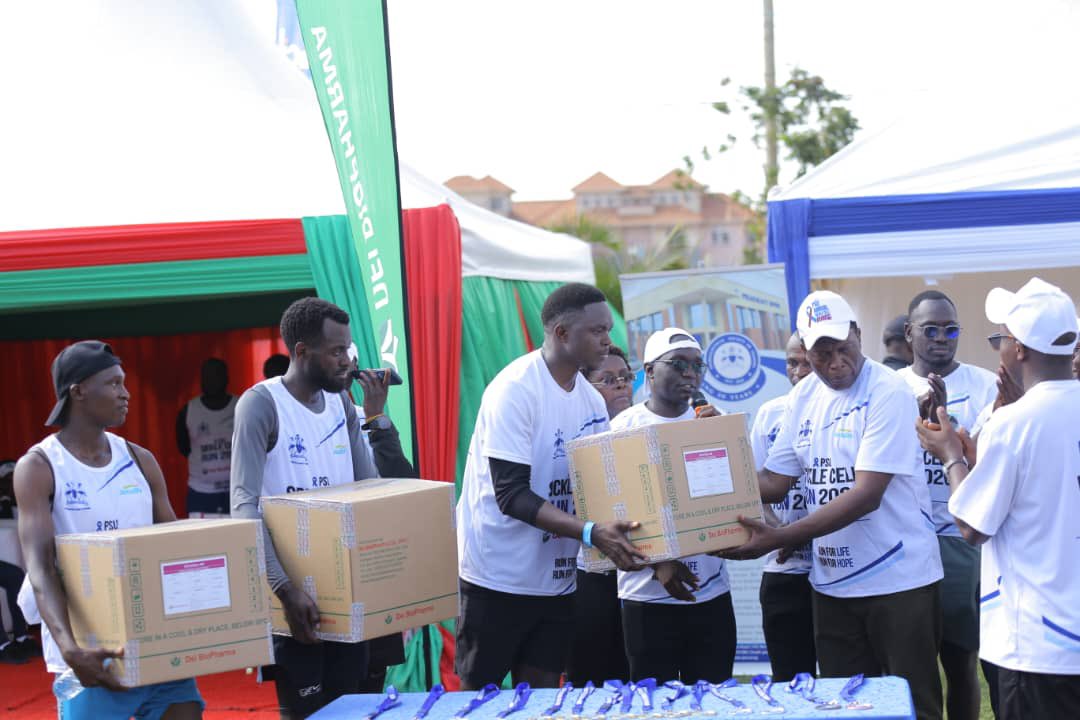
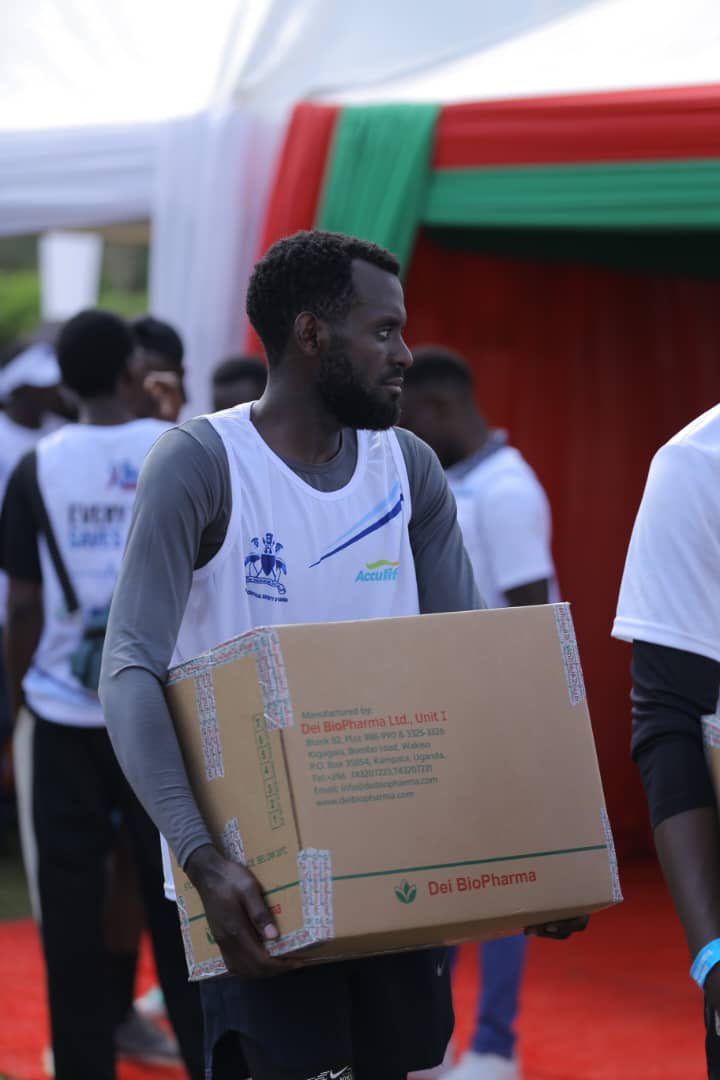
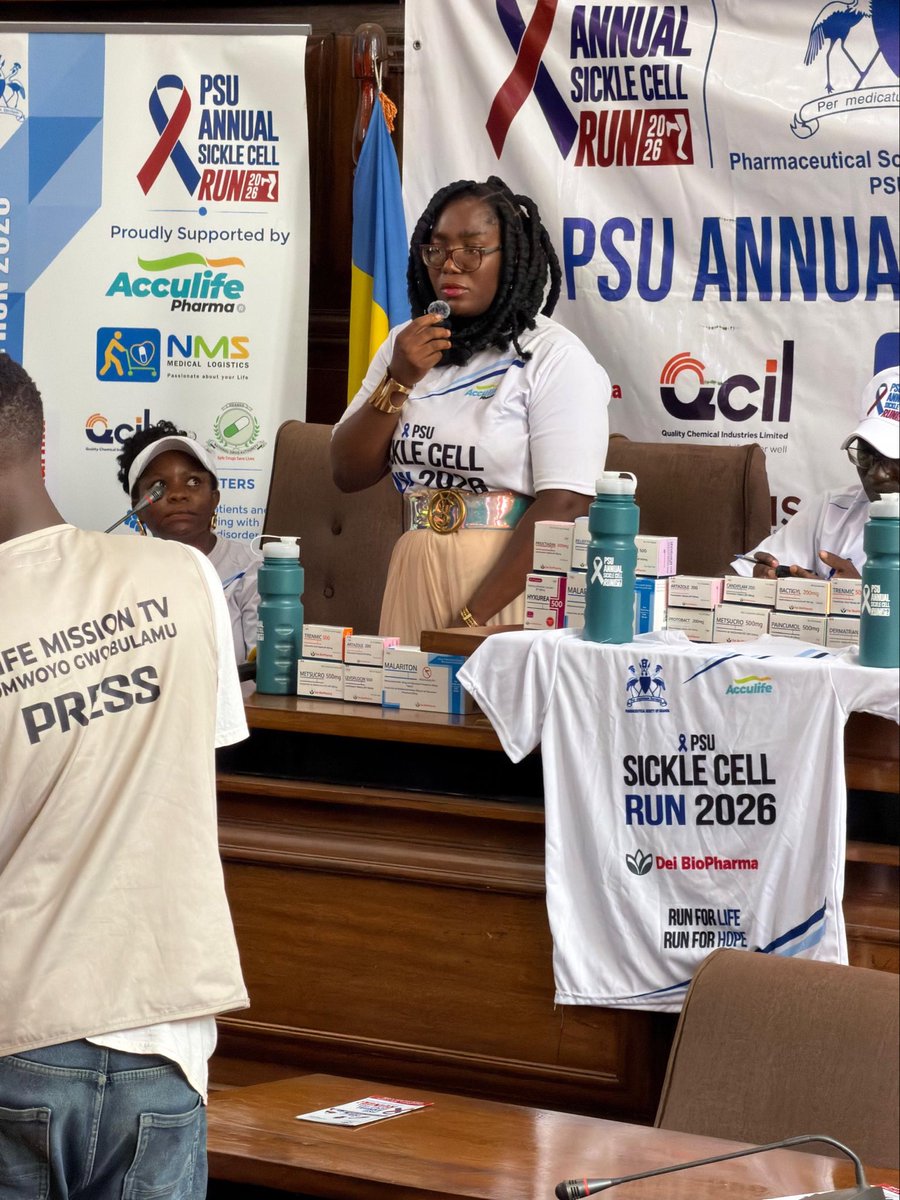
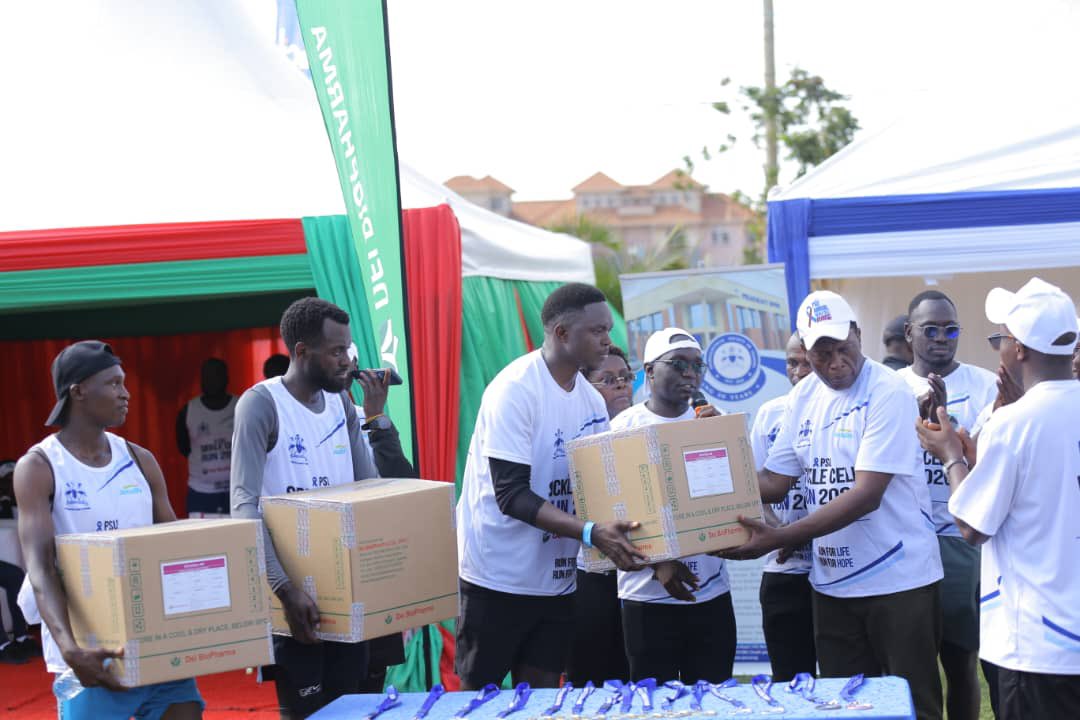
We thank Dei Biopharma in standing together with the Pharmaceutical Society of Uganda (PSU) @PSU_ug in the fight against sickle cell disease in Busoga region, donating 30,000 doses of Hydroxyurea manufactured by Dei Biopharma to this charity initiative. #PsuSickleCellRun
Hundreds of runners have participated in the Pharmaceutical Society of Uganda’s Sickle Cell Run, aimed at raising Shs120 million to provide Hydroxyurea to vulnerable patients living with sickle cell disease.
The organisers are targeting 60,000 doses of the medicine, with all proceeds from the run going towards supporting children who cannot afford treatment.
#NTVNews
📹 Mike Sebalu
While receiving the donation, Prof. Dr. Charles Olaro Director General of Health Services at the @MinofHealthUG applauded @DeiBioPharma for championing the fight against sickle cell disease and supporting efforts to improve care for affected communities.
#SickleCellRun
The 𝗣𝗦𝗨 𝗔𝗻𝗻𝘂𝗮𝗹 𝗦𝗶𝗰𝗸𝗹𝗲 𝗖𝗲𝗹𝗹 𝗥𝘂𝗻 𝟮𝟬𝟮𝟲 successfully concluded today, marking the first activity of Pharmacy Week 2026.
The Pharmaceutical Society of Uganda extends its sincere appreciation to all runners, speakers, volunteers, organisers, supporters and members who contributed to the success of the event.
✨𝗦𝗽𝗲𝗰���𝗮𝗹 𝘁𝗵𝗮𝗻𝗸𝘀 𝘁𝗼 𝘁𝗵𝗲 𝘀𝗽𝗼𝗻𝘀𝗼𝗿𝘀 𝗮𝗻𝗱 𝗽𝗮𝗿𝘁𝗻𝗲𝗿𝘀, whose collaboration, support and presence alongside PSU helped bring the day together and made the event more engaging, impactful and memorable.
Heartfelt appreciation also goes to the 𝗦𝗶𝗰𝗸𝗹𝗲 𝗖𝗲𝗹𝗹 𝗪𝗮𝗿𝗿𝗶𝗼𝗿𝘀 who shared their lived experiences. Their stories brought greater meaning to the day and reinforced the importance of continued awareness, advocacy and support for people living with sickle cell disease.
Pharmacy Week continues with;
✨𝗖𝗣𝗗 𝗦𝗲𝘀𝘀𝗶𝗼𝗻: 𝟮𝟰 𝗦𝗲𝗽𝘁𝗲𝗺𝗯𝗲𝗿 𝟮𝟬𝟮𝟲
✨𝗣𝗦𝗨 𝗔𝗻𝗻𝘂𝗮𝗹 𝗚𝗲𝗻𝗲𝗿𝗮𝗹 𝗠𝗲𝗲𝘁𝗶𝗻𝗴: 𝟮𝟱 𝗦𝗲𝗽𝘁𝗲𝗺𝗯𝗲𝗿 𝟮𝟬𝟮𝟲
All members are encouraged to participate in the remaining activities as we continue to learn, connect and strengthen the pharmacy profession together.
Every step counted, and every story mattered.
#PharmacyWeek2026 #PSUSickleCellRun2026 #PharmaceuticalSocietyOfUganda #SickleCellAwareness #PSUUganda
.@DeiBioPharma has donated 30,000 doses of Hyxurea to @PharmacistsUg to support the fight against sickle cell disease.
The donation follows the #SickleCellRun, which raises awareness and supports communities and families affected by sickle cell disease in the Busoga region.
.@DeiBioPharma donates 30,000 doses of Hyxurea to @PharmacistsUg to support the fight against sickle cell disease.
The donation follows the #SickleCellRun, which raises awareness and supports communities and families affected by sickle cell disease in the Busoga region.
❝The issue of patents really impacts access to medicines. We have seen medicines that once cost thousands of dollars become available for less than a hundred dollars through access programmes, generic competition and other measures. But as Uganda progresses towards middle-income status, we have to ask what happens when we can no longer rely on some of the preferential prices and transition flexibilities available to us today.
𝗔 𝗺𝗲𝗱𝗶𝗰𝗶𝗻𝗲 𝘁𝗵𝗮𝘁 𝘄𝗲 𝗰𝘂𝗿𝗿𝗲𝗻𝘁𝗹𝘆 𝗮𝗰𝗰𝗲𝘀𝘀 𝗮𝘁 𝗮 𝗳𝗿𝗮𝗰𝘁𝗶𝗼𝗻 𝗼𝗳 𝗶𝘁𝘀 𝗰𝗼𝗺𝗺𝗲𝗿𝗰𝗶𝗮𝗹 𝗽𝗿𝗶𝗰𝗲 𝗰𝗼𝘂𝗹𝗱 𝗯𝗲𝗰𝗼𝗺𝗲 𝘂𝗻𝗮𝗳𝗳𝗼𝗿𝗱𝗮𝗯𝗹𝗲 𝗶𝗳 𝘄𝗲 𝗱𝗼 𝗻𝗼𝘁 𝗽𝗿𝗲𝗽𝗮𝗿𝗲. That is why we need to look closely at our intellectual property framework and make sure the flexibilities available to protect public health can actually be used.
~ Dr. @DKibiraD | Executive Director @DumaicUG 𝘱𝘳𝘦𝘴𝘦𝘯𝘵𝘦𝘥 𝘧𝘪𝘯𝘥𝘪𝘯𝘨𝘴 𝘧𝘳𝘰𝘮 𝘵𝘩𝘦 𝘴𝘤𝘰𝘱𝘪𝘯𝘨 𝘴𝘵𝘶𝘥𝘺 𝘰𝘯 𝘜𝘨𝘢𝘯𝘥𝘢’𝘴 𝘪𝘯𝘵𝘦𝘭𝘭𝘦𝘤𝘵𝘶𝘢𝘭 𝘱𝘳𝘰𝘱𝘦𝘳𝘵𝘺 𝘧𝘳𝘢𝘮𝘦𝘸𝘰𝘳𝘬 𝘢𝘯𝘥 𝘪𝘵𝘴 ��𝘮𝘱𝘭𝘪𝘤𝘢𝘵𝘪𝘰𝘯𝘴 𝘧𝘰𝘳 𝘢𝘤𝘤𝘦𝘴𝘴 𝘵𝘰 𝘦𝘴𝘴𝘦𝘯𝘵𝘪𝘢𝘭 𝘮𝘦𝘥𝘪𝘤𝘪𝘯𝘦𝘴, 𝘦𝘹𝘢𝘮𝘪𝘯𝘪𝘯𝘨 𝘯𝘢𝘵𝘪𝘰𝘯𝘢𝘭 𝘭𝘢𝘸𝘴, 𝘈��𝘐𝘗𝘖, 𝘵𝘳𝘢𝘥𝘦 𝘢𝘨𝘳𝘦𝘦𝘮𝘦𝘯𝘵𝘴 𝘢𝘯𝘥 𝘜𝘨𝘢𝘯𝘥𝘢’𝘴 𝘢𝘯𝘵𝘪𝘤𝘪𝘱𝘢𝘵𝘦𝘥 𝘵𝘳𝘢𝘯𝘴𝘪𝘵𝘪𝘰𝘯 𝘧𝘳𝘰𝘮 𝘓𝘋𝘊 𝘴𝘵𝘢𝘵𝘶𝘴.
We need stronger safeguards against evergreening and secondary patents, a clearer and more practical Bolar exception that allows manufacturers to prepare for market entry before a patent expires, and streamlined procedures for compulsory licensing and government use. We also need systems that allow us to monitor patents, procurement and prices so that we understand how intellectual property rights affect what Uganda pays for medicines.
At the regional level, ARIPO also needs to provide stronger safeguards for public health. We need clearer identification of medicines in patent applications, meaningful opportunities for third parties to raise objections, and mechanisms that allow civil society and public health advocates to participate in the patent examination process.
Ultimately, this is about balancing the interests of innovation with the public health needs of our people. Uganda cannot prepare for the future by simply increasing the amount of money we spend on medicines while the prices of those medicines continue to rise. We need the legal, policy, manufacturing and institutional capacity to ensure that increased financing translates into greater access.❞
#AccessToMedicines @ITPCglobal
❝Uganda needs to prepare now for the changes that may come with its transition out of the LDC framework. We recommend strengthening the Industrial Property Act, closing gaps around secondary patents, making compulsory licensing and government use more practical, and clarifying Bolar provisions to allow manufacturers to prepare for market entry when patents expire.
At the regional level, ARIPO also needs stronger safeguards for LDCs, including automatic opt-outs for pharmaceutical patents, clearer identification of medicines in patent applications and meaningful opportunities for public-interest actors to raise objections. These reforms could help ensure that intellectual property rules support, rather than hinder, access to essential medicines.❞
~ Gloria Imodia | @DumaicUG presents recommendations drawing on key findings from the scoping study on Strengthening Intellectual Property Legal and Policy Frameworks for Access to Essential Medical Products in Uganda.
#AccessToMedicines @ITPCglobal
❝Uganda’s estimated need for medicines and health commodities in FY 2026/27 is about US$1.2 billion, yet the available financing is approximately US$555 million, covering only about 52–53% of the estimated need. Government has increased its contribution from about 30% in 2020 to approximately 48% today, with the Health Supply Chain Roadmap targeting a 70% government contribution by FY 2029/30.
But increasing financing alone does not necessarily mean we will have more medicines. If the amount of money increases while the price of medicines also increases, the additional financing may not translate into increased quantities. This is why we need to look at the cost of medicines, #LocalProduction and the sustainability of our procurement systems as we work towards greater #HealthSovereignty.❞
~ Dr. Daniel Mawerere @MinofHealthUG presenting on “Health Sovereignty, Local Production and Access to Medicines: Where Does Uganda Stand?”
#AccessToMedicines @ITPCglobal
#AccessToMedicines requires policies that enable local production, intellectual property rules that protect public health, sustainable financing, effective regulation and procurement systems that translate resources into affordable medicines.
The National Policy Dialogue has closed with a clear call to turn these discussions and recommendations into practical reforms that strengthen Uganda’s capacity to secure the medicines people need.
@ITPCglobal@KELINKenya@UNITAID
The availability and affordability of medicines do not depend on supply alone. Legal and policy frameworks, local pharmaceutical production, intellectual property, regulation and financing all shape whether people can access the health products they need.
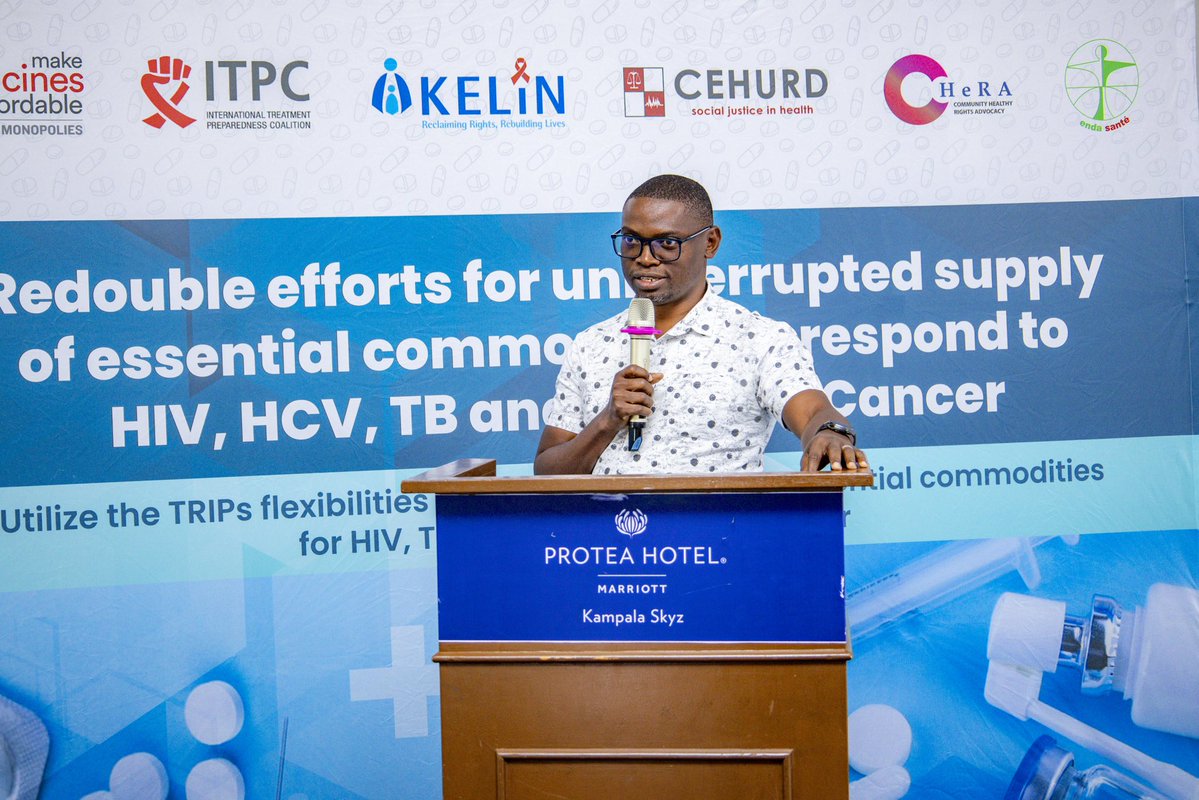
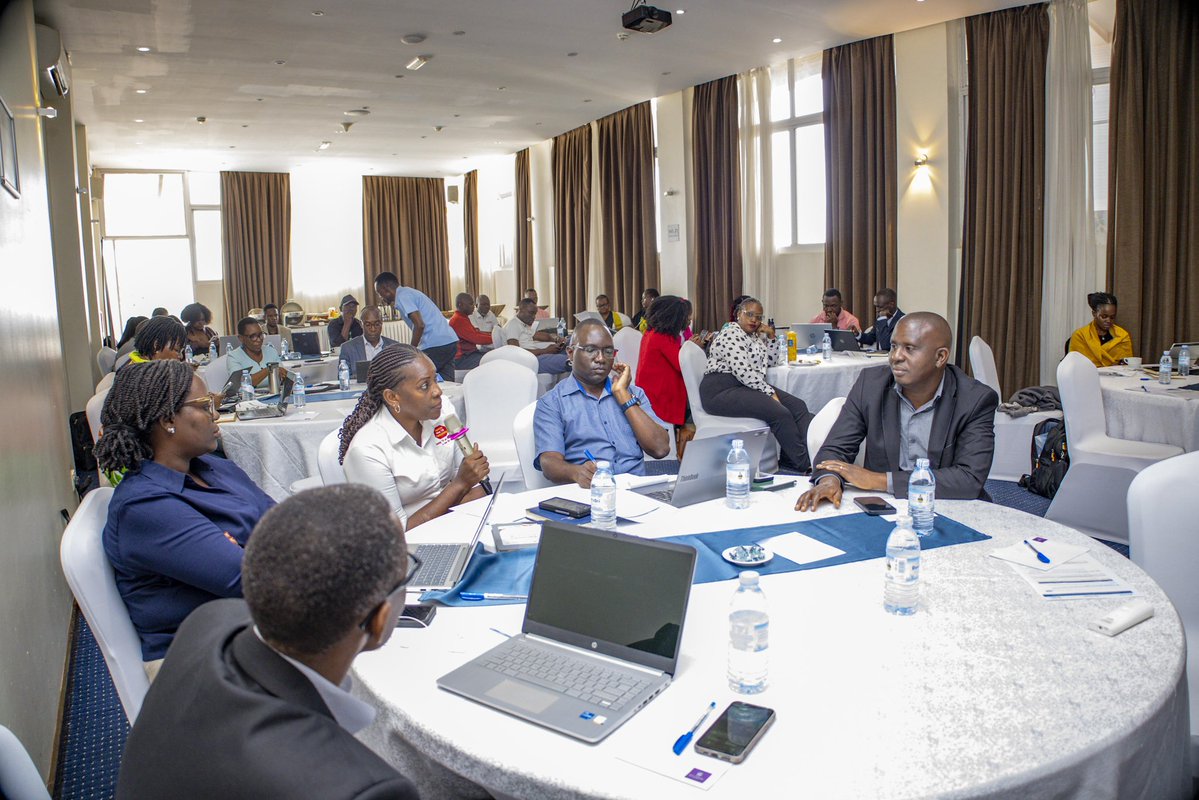
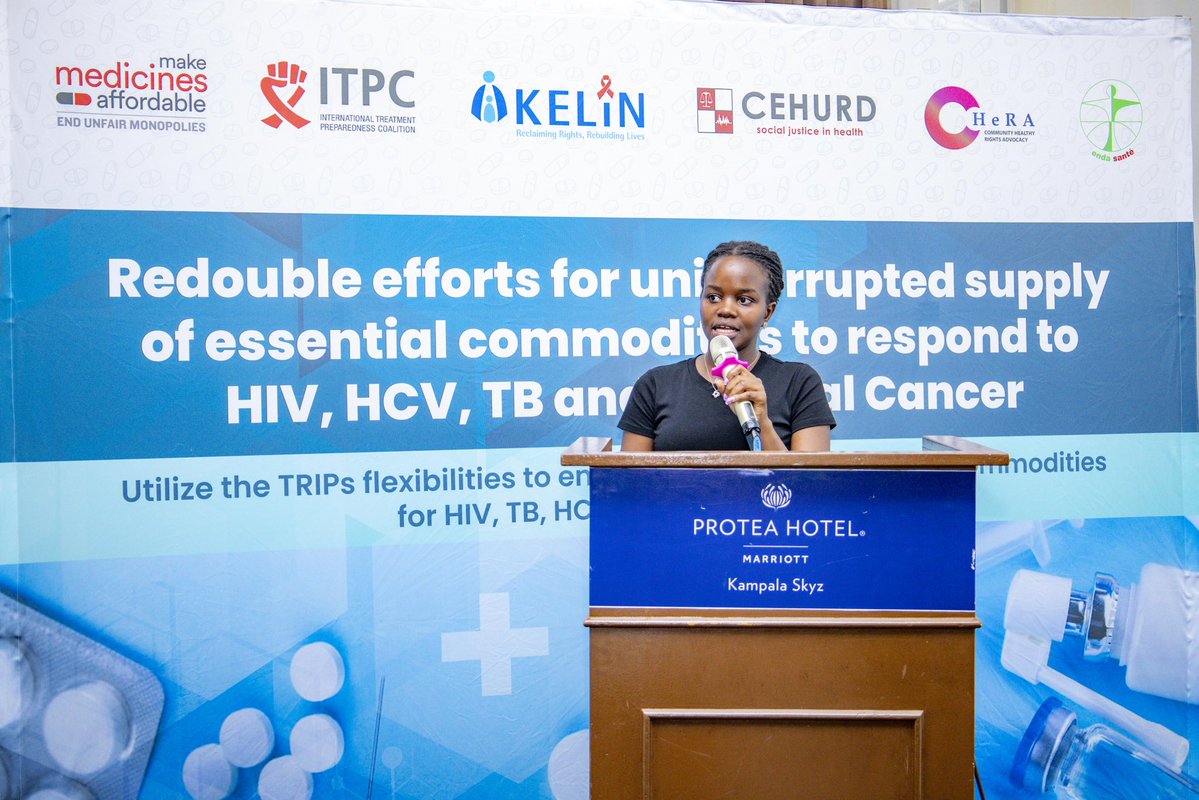
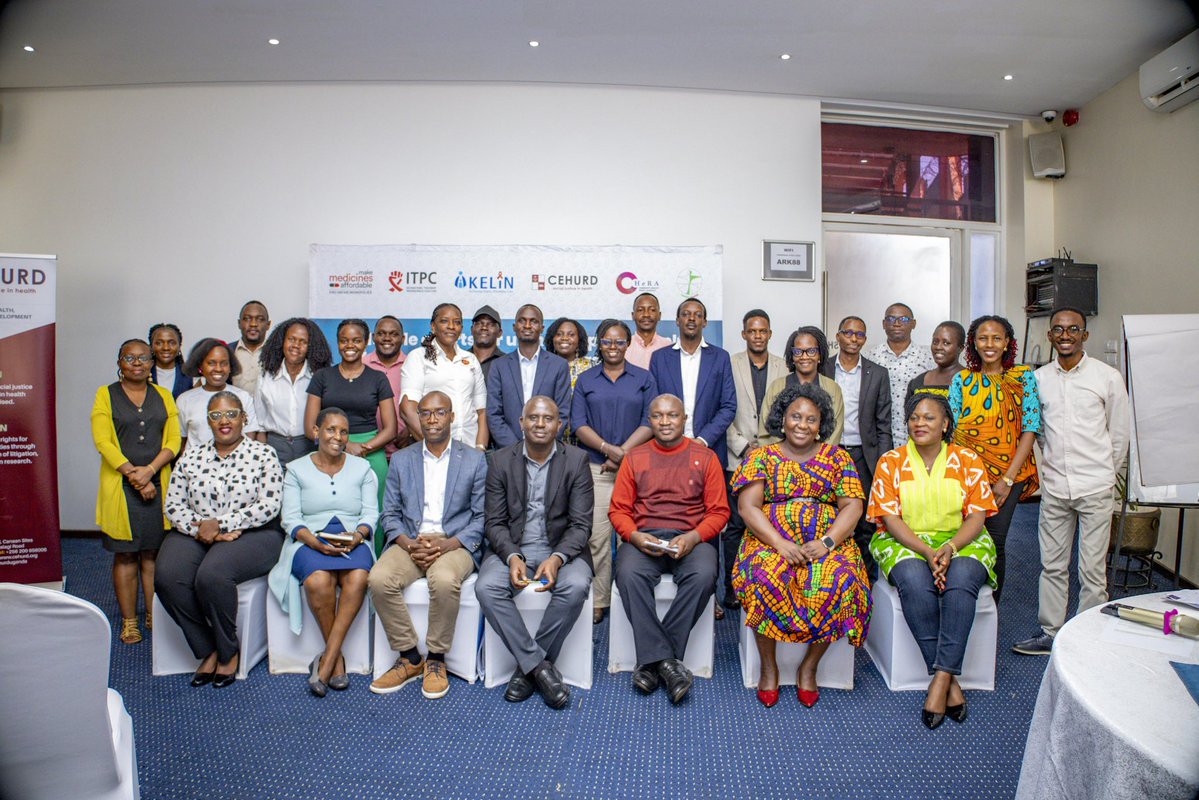
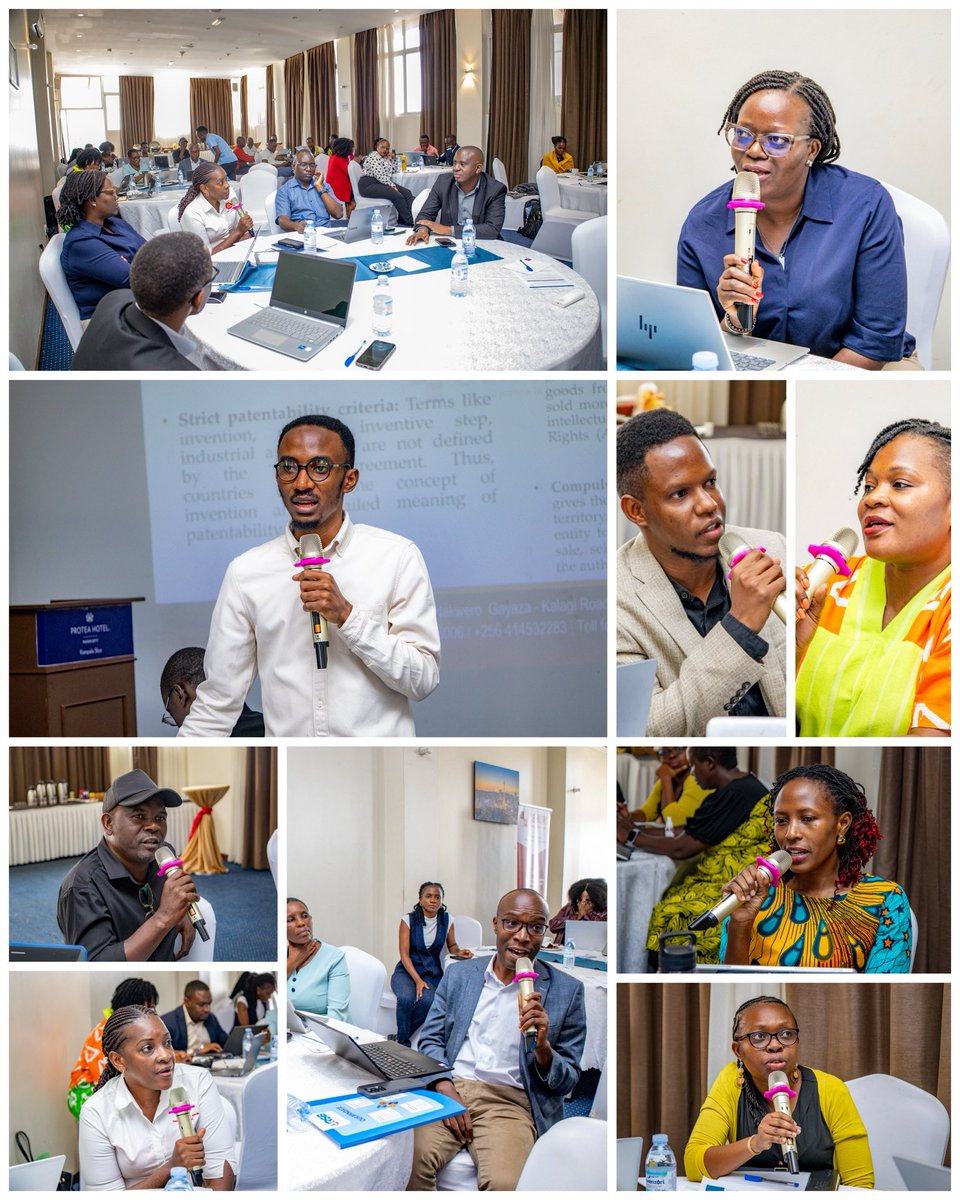
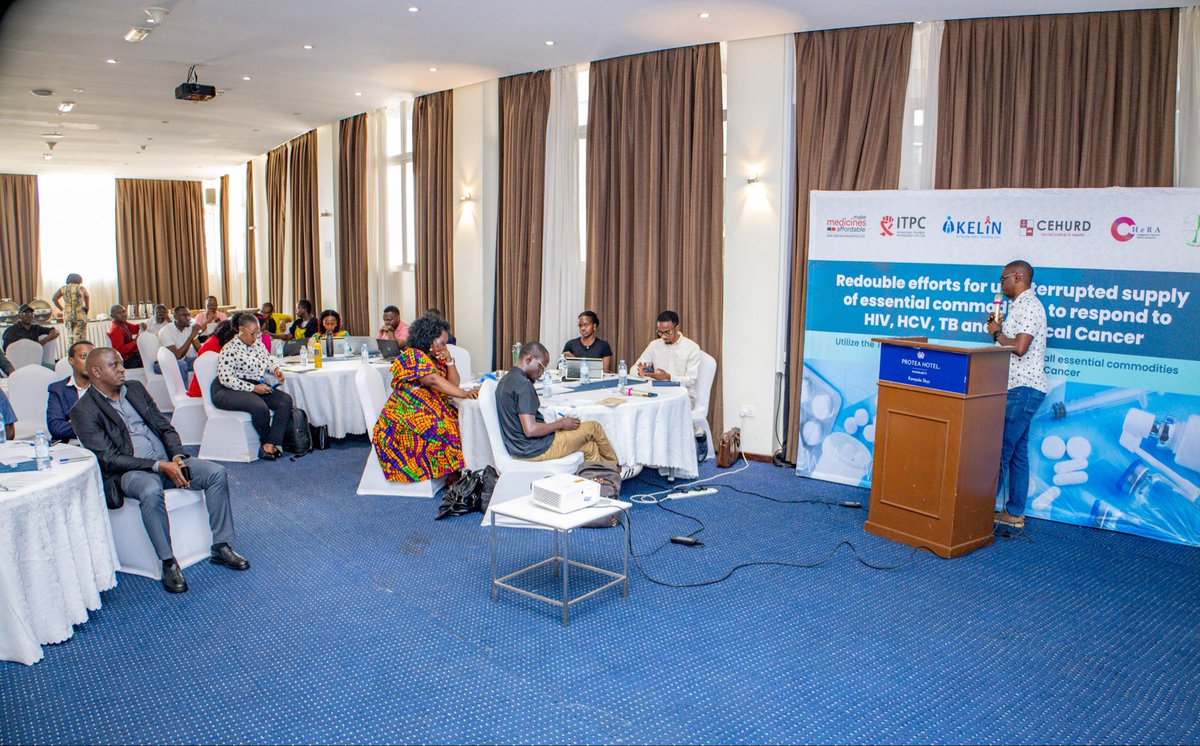
CEHURD, @KELINKenya and @ITPCglobal are convening a 𝗡𝗮𝘁𝗶𝗼𝗻𝗮𝗹 𝗣𝗼𝗹𝗶𝗰𝘆 𝗗𝗶𝗮𝗹𝗼𝗴𝘂𝗲 𝗮𝗻𝗱 𝗥𝗲𝗳𝗼𝗿𝗺 𝗖𝗼𝗻𝘀𝘂𝗹𝘁𝗮𝘁𝗶𝗼𝗻 in Kampala to build consensus on legal and policy reforms that can strengthen sustainable access to medicines in Uganda.
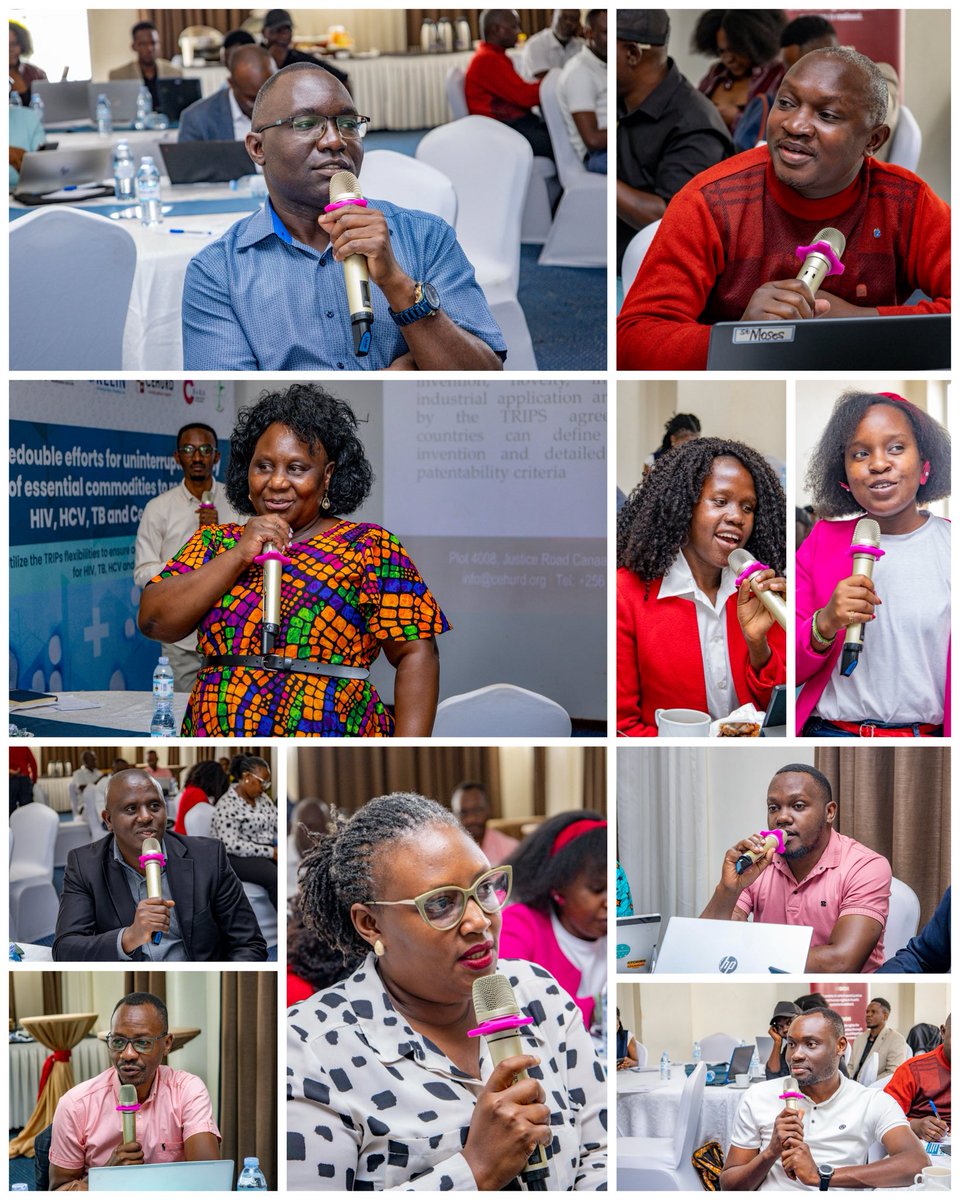
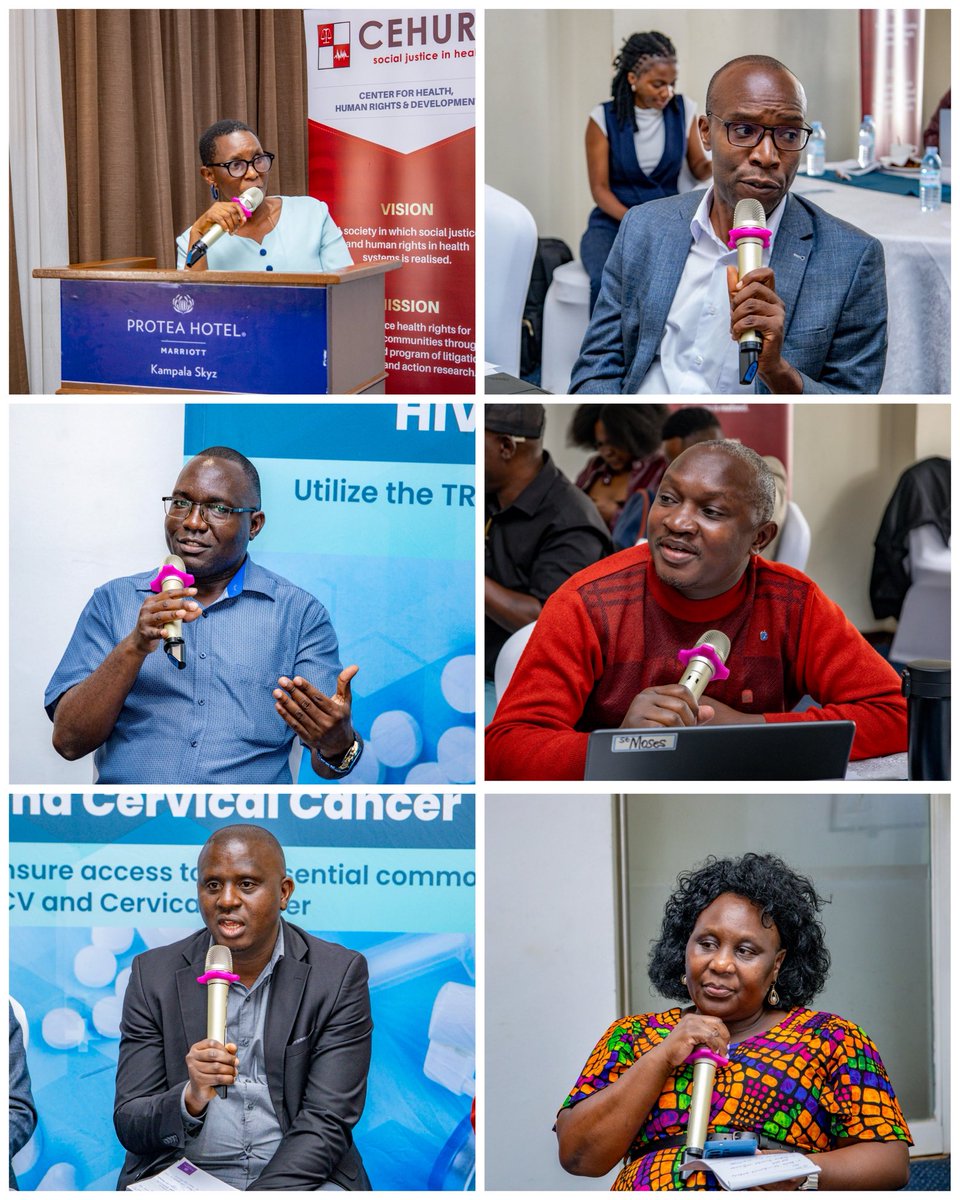
The dialogue is examining health sovereignty, local production and access to medicines, considering findings and recommendations from a scoping study, while bringing together government, regulators, manufacturers, civil society and other stakeholders to interrogate the legal, economic, regulatory and structural barriers affecting access to medicines.
The discussions will culminate in identifying priority actions and developing a national reform roadmap to guide efforts towards sustainable access to medicines.
#AccessToMedicines @ITPCglobal
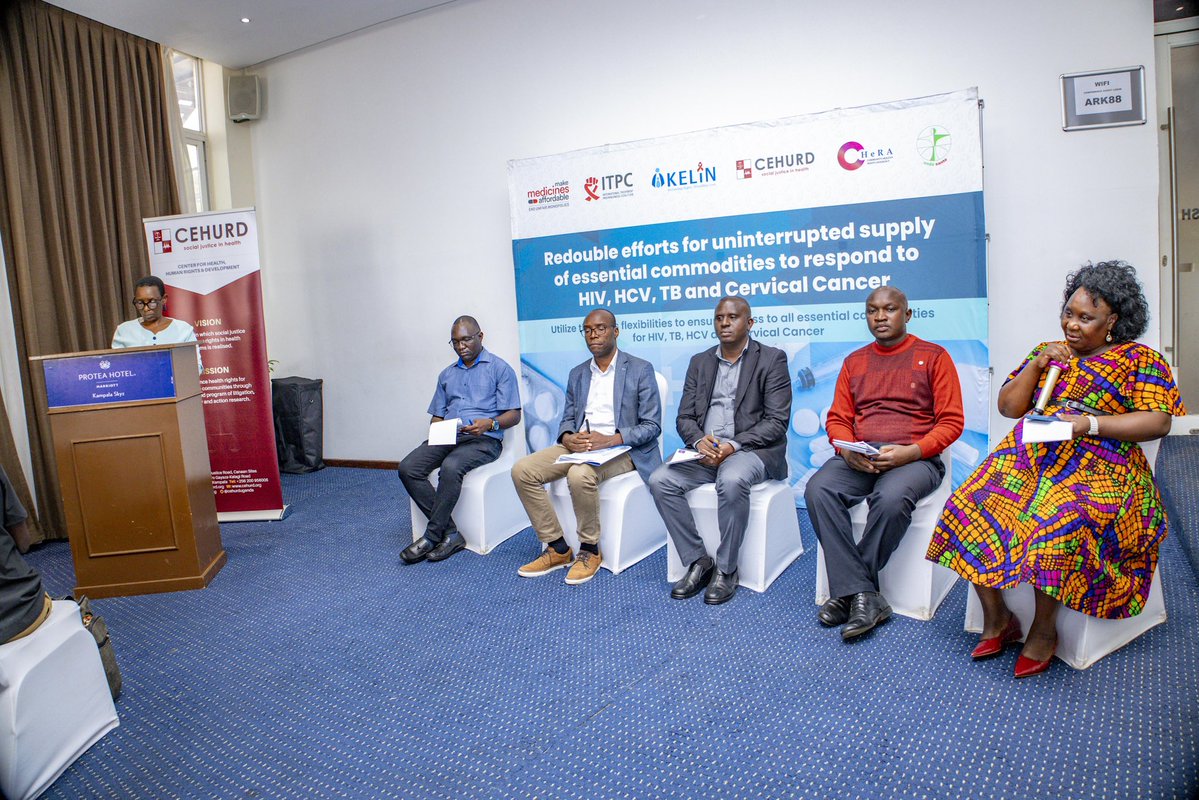
A Multi-Stakeholder Panel Discussion moderated by Ms @KyomukamaFlavia, ED, @NAFOPHANU || Taking Stock of Progress and Interrogating Barriers to #AccessToMedicines
Dr. Martha Grace Ajulong, Commissioner Pharmaceuticals and Supply Chain, @MinofHealthUG called for policy and legal reforms that support local pharmaceutical production, including technology and skills transfer, greater use of TRIPS flexibilities and a review of the Industrial Property Act. She also noted the need to strengthen implementation of the Health Supply Chain Framework and address financing gaps following reductions in external support.
Amos Ntumanya, Senior Inspector, @UNDAuthority explained that access to medicines goes beyond availability. It also depends on affordability, geographical accessibility, acceptability, safety, efficacy and quality. He pointed to lengthy registration processes and regulatory capacity as some of the barriers that need attention.
James Lubwama, @URSBH highlighted the importance of transparency within the patent system, noting that patent information is published and that stakeholders can access information held by the Bureau within the law. He emphasised that the disclosure function of patents provides an opportunity for government and other stakeholders to understand what has been patented and use that information to inform access-to-medicines interventions.
Dr. Adrian K. Ddungu @Labg_DZ, Uganda Pharmaceuticals and Manufacturers Association highlighted the challenges facing local pharmaceutical manufacturers, particularly financing, market access, affordability and the cost of technology transfer. He called for procurement approaches that provide local manufacturers with predictable market opportunities, creating greater incentive for investment and technology transfer.
Moses @jtalibita, Academia emphasised the role of academia in generating evidence to inform policy and supporting a regulatory impact assessment of proposed reforms to the Industrial Property Act. He also called for stronger links between researchers and practitioners, comparative research, knowledge translation and greater participation of academics in public policy consultations.
𝘛𝘩𝘦 𝘱𝘢𝘯𝘦𝘭 𝘱𝘰𝘪𝘯𝘵𝘦𝘥 𝘵𝘰 𝘵𝘩𝘦 𝘯𝘦𝘦𝘥 𝘵𝘰 𝘮𝘰𝘷𝘦 𝘣𝘦𝘺𝘰𝘯𝘥 𝘪𝘥𝘦𝘯𝘵𝘪𝘧𝘺𝘪𝘯𝘨 𝘣𝘢𝘳𝘳𝘪𝘦𝘳𝘴 𝘢𝘯𝘥 𝘴𝘵𝘳𝘦𝘯𝘨𝘵𝘩𝘦𝘯 𝘵𝘩𝘦 𝘴𝘺𝘴𝘵𝘦𝘮𝘴, 𝘱𝘰𝘭𝘪𝘤𝘪𝘦𝘴 𝘢𝘯𝘥 𝘧𝘪𝘯𝘢𝘯𝘤𝘪𝘯𝘨 𝘮𝘦𝘤𝘩𝘢𝘯𝘪𝘴𝘮𝘴 𝘵𝘩𝘢𝘵 𝘤𝘢𝘯 𝘵𝘳𝘢𝘯𝘴𝘭𝘢𝘵𝘦 𝘜𝘨𝘢���𝘥𝘢’𝘴 𝘦𝘹𝘪𝘴𝘵𝘪𝘯𝘨 𝘭𝘦𝘨𝘢𝘭 𝘢𝘯𝘥 𝘪𝘯𝘴𝘵𝘪𝘵𝘶𝘵𝘪𝘰𝘯𝘢𝘭 𝘵𝘰𝘰𝘭𝘴 𝘪𝘯𝘵𝘰 𝘨𝘳𝘦𝘢𝘵𝘦𝘳 𝘢𝘤𝘤𝘦𝘴𝘴 𝘵𝘰 𝘢𝘧𝘧𝘰𝘳𝘥𝘢𝘣𝘭𝘦, 𝘲𝘶𝘢𝘭𝘪𝘵𝘺 𝘮𝘦𝘥𝘪𝘤𝘪𝘯𝘦𝘴.
#HealthSovereignty
#LocalProduction
We thank the Pharmaceutical Society of Uganda (PSU) and the Jinja Municipality Council for bringing together the communities in Busoga region to run free sickle cell tests and create awareness about the spread of the disease in the region and interventions that communities can put in place to reduce the number of cases of sickle cell patients in Busoga region.
With just days to go until the PSU Annual Sickle Cell Run, Africa’s pharmaceutical entity, @DeiBioPharma , is honoured to sponsor this year’s run on 20 September 2026.
Let’s raise awareness, support people living with sickle cell disease, and champion better health outcomes.
UGANDA AND THE UNITED STATES SIGN STRATEGIC OBJECTIVE AGREEMENT(SOAG)
The Government of Uganda and the Government of the United States of America today signed a Strategic Objective Agreement (SOAG), setting the framework for cooperation in Uganda’s health sector for the period 2026 to 2030.
Finance Minister @henrymusasizi1 signed on behalf of Uganda while the Chargé d’Affaires at the United States Embassy, Mikael Cleverley signed on behalf of the US Government.
This agreement puts action to the Memorandum of Understanding signed on 10th December 2025 where the United States Government committed to provide support amounting to approximately USD 1.7 billion (about Shs 6.42 trillion) for prevention,detection and response to both emerging and existing infectious disease threats.
Speaking at the signing ceremony at @mofpedU,
Finance Minister, Henry Musasizi described the agreement as “another significant milestone” in the longstanding partnership between Uganda and the United States.
He said Uganda deeply values the US contribution to the health sector over the years, particularly in the prevention and treatment of HIV/AIDS, tuberculosis and malaria, management of disease outbreaks, public-health surveillance and strengthening health commodity supply chains.
“These interventions have saved lives, strengthened communities and enhanced Uganda’s capacity to respond to public-health emergencies,” Musasizi said.
A significant feature of the new arrangement is the intention by the US Government to channel the support directly to the Government of Uganda.
Musasizi welcomed the shift, saying it is consistent with Uganda’s objective of “strengthening country ownership, aligning external assistance with national priorities, and improving the effectiveness and sustainability of development cooperation.”
He stressed, however, that sustainable health outcomes require Uganda to strengthen its own financing of the sector.
“The Government of Uganda acknowledges that sustainable health outcomes require increased domestic financing,” he said, reaffirming Government’s commitment to progressively increase funding for the agreed interventions over the five-year period.
The partnership will go beyond disease-specific interventions to strengthen national systems and institutions, improve workforce capacity, reinforce accountability and enhance Uganda’s ability to plan, finance and deliver quality health services.
The Chargé d’Affaires at the US Embassy, Mikael Cleverley said the agreement represents more than a mechanism for partnership, adding that it’s a demonstration of US goodwill and confidence in the Government of Uganda leadership and the health sector.
He said the new approach seeks to empower Uganda to take greater leadership in public health through government-to-government financing.
Health Minister, Dr. Chris Baryomunsi welcomed the change from predominantly off-budget assistance towards government-to-government financing where @mofpedU will direct resources to the health sector.
He said Uganda continues to face a significant burden of both communicable & non-communicable diseases, acknowledging the need for more support.
Baryomunsi cited progress registered in the health sector such as decline in HIV prevalence from 18.5% in the late 1980s and early 1990s to 5.9% and the increase in life expectancy from about 43 years to 68 years among other indicators.
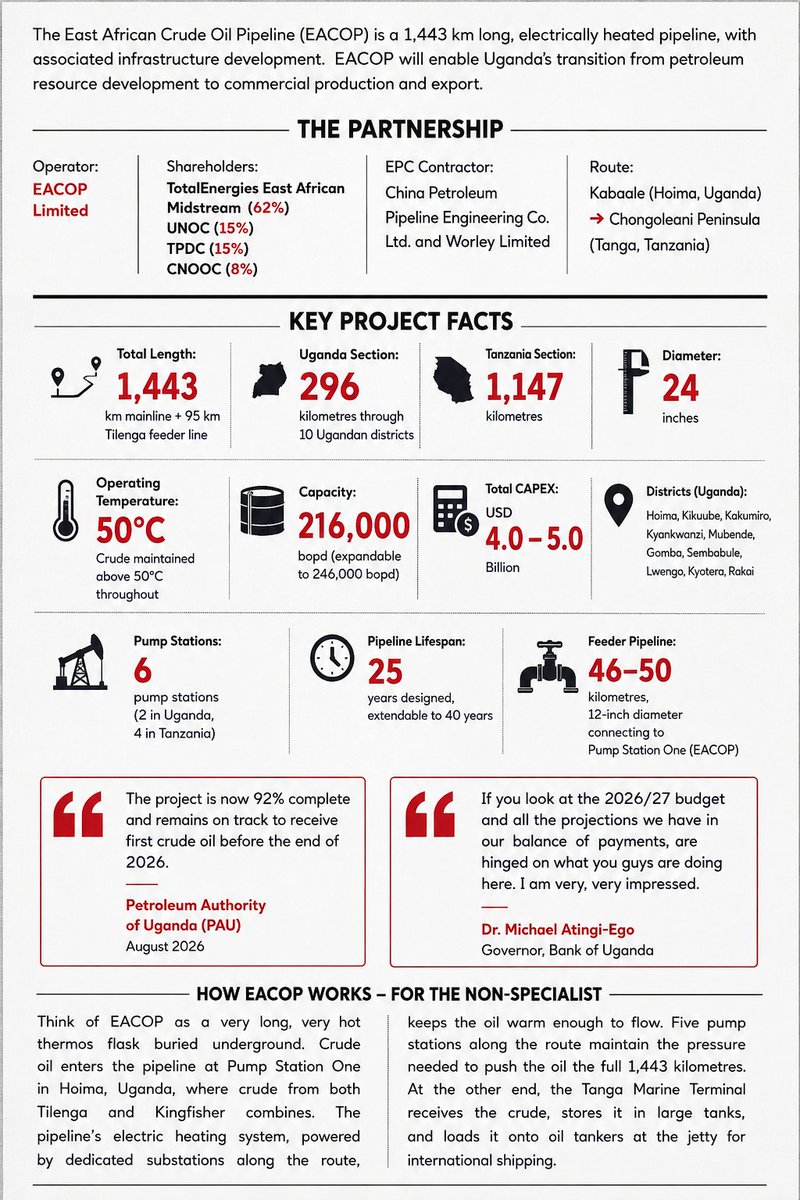
The East African Crude Oil Pipeline (EACOP) is a 1,443-kilometre electrically heated pipeline connecting Uganda’s oilfields in Hoima to the Chongoleani Peninsula in Tanga, Tanzania.
With a design capacity of 216,000 barrels per day, expandable to 246,000 barrels per day, the pipeline is being developed through a regional partnership involving @TotalEnergiesUG , @UNOC_UG , TPDC and @CNOOCUgandaLtd .
At 92% completion, EACOP remains on course for first crude before the end of 2026. The project is a major piece of regional infrastructure, supporting Uganda’s transition to commercial oil production and export while contributing to regional economic integration and development.
#UgandaOilJourney
#UgandaNamesItsOil
𝐔𝐠𝐚𝐧𝐝𝐚 𝐌𝐮𝐬𝐭 𝐔𝐬𝐞 𝐎𝐢𝐥 𝐑𝐞𝐯𝐞𝐧𝐮𝐞𝐬 𝐭𝐨 𝐁𝐮𝐢𝐥𝐝 𝐚 𝐃𝐮𝐫𝐚𝐛𝐥𝐞 𝐄𝐜𝐨𝐧𝐨𝐦𝐲
President Yoweri Kaguta Museveni has reaffirmed that Uganda’s oil resources must be used to build a productive and sustainable economy, rather than repeat mistakes made by some African oil-producing countries.
Speaking at the official naming ceremony for Uganda’s crude oil at the Kingfisher Development Area in Kikuube District, the President emphasised the importance of an integrated approach to petroleum development, with the refinery, energy generation, industrialisation and human capital development forming part of the broader strategy.
President Museveni highlighted the decision to prioritise the development of an oil refinery in Uganda, noting that refining locally would reduce transportation and transit costs associated with exporting crude and subsequently importing petroleum products.
He said the refinery would also help reduce Uganda’s petroleum import bill, which he placed at about US$2 billion annually.
The President further emphasised the importance of utilising associated gas rather than flaring it. Gas from the Kingfisher development is expected to support power generation of about 80 megawatts, while other petroleum products will support cooking and other domestic uses. This approach, he noted, will generate economic value while protecting the environment.
President Museveni commended the oil companies and Government institutions for working together to advance Uganda’s petroleum programme, stressing that the country must pursue development strategically and not blindly.
He said Uganda’s oil resources are finite and should therefore be used to create durable productive capacity that will benefit generations beyond the lifespan of the oil fields.
Future petroleum revenues, he explained, should support investments in power generation, transport infrastructure, railways, universities and other long-term national assets rather than increased consumption of imported luxury goods.
The President also highlighted the importance of continued exploration, noting that only part of Uganda’s petroleum potential has so far been developed.
He said the country still has significant exploration opportunities, including in other prospective areas, and that the objective should be to ensure that the first barrel of oil is not the last.
President Museveni recalled that at the beginning of Uganda’s oil journey, the country lacked sufficient local expertise in petroleum.
Government therefore deliberately invested in training Ugandans in petroleum-related disciplines, including through studies at international institutions.
He said the development of national expertise was essential to ensuring that Ugandans can effectively manage and benefit from the country’s petroleum resources.
The President described the naming of Uganda’s crude oil as an important milestone in the country’s petroleum journey, giving the resource a distinct identity as Uganda prepares to enter the international oil market.
The event at Kingfisher marks another major step in Uganda’s transition from petroleum discovery and development to commercial production and the utilisation of oil and gas as a catalyst for wider economic transformation.
#UgandaOilJourney
𝐌𝐮𝐬𝐞𝐯𝐞𝐧𝐢: 𝟔𝟎% 𝐨𝐟 𝐋𝐚𝐤𝐞 𝐀𝐥𝐛𝐞𝐫𝐭 𝐬𝐭𝐢𝐥𝐥 𝐭𝐨 𝐛𝐞 𝐞𝐱𝐩𝐥𝐨𝐫𝐞𝐝 𝐟𝐨𝐫 𝐨𝐢𝐥
President Yoweri Museveni says Uganda still has significant oil potential in Lake Albert, with 60% of the area yet to be explored.
“The 6.5 billion barrels of oil that were confirmed only cover 40% of the Lake Albert. We still have 60% to explore.”
Museveni also thanked @TotalEnergiesUG and @CNOOCUgandaLtd for working with Uganda, praising CNOOC for moving quickly and urging the other partners to do the same.
“I want to thank CNOOC here because they have moved very fast. I want the others to also work very fast.”
#VisionUpdates
Today, I concluded an oversight visit to the Kingfisher Development Area and presided over the Crude Oil Naming Ceremony, where I officially launched the name of Uganda’s crude oil as “Pearl Sweet.”
This marks an important milestone in our journey to develop Uganda’s oil and gas resources for value addition and economic transformation.