@Iam_RFX@ardizor Most people here have not lived through 1987, 2000, & 2008. They call 2022 a terrible bear market. What’s coming will likely be more severe AND we will get through it and move on. In 2008 a diversified 60/40 portfolio even without gold went from peak to peak in less than 5 years.
CEOs are quietly realizing the AI replacement plan has a problem.
Two problems, actually.
One: the token costs for running AI agents are now exceeding what they were paying the employees they fired.
Two: when the tokens run out, the AI stops. Just stops. No continuity. No workaround. Just a spinning wheel where your workforce used to be.
You fired humans to save money and bought a subscription that bills you into a corner.
The employees you let go knew what to do when things broke.
The AI just invoices you for the outage.
And then there’s the permission problem nobody wants to talk about.
To do its job, the AI agent needs access. Full access. Your systems, your patents, your contracts, your future plans. Everything you spent years building, handed over to a process that has no loyalty, no discretion, and no skin in the game.
You didn’t hire a replacement.
You gave a stranger with no soul the keys to everything you own.
Enjoy.
MARC ANDREESSEN JUST WENT ON ROGAN AND DROPPED THE MOST IMPORTANT AI ALPHA OF THE YEAR.
3 hours and 20 minutes of podcast.
Here are the 17 things worth your attention.
1. AGI is already here. Marc thinks the line was crossed 3 months ago with GPT-5.5, Claude 4.6, Gemini 3, and Grok 4.3. Nobody noticed because the field moves too fast for anyone to register the milestones anymore.
2. For almost any topic the top AI models now give him better answers than the world-class experts he could call on the phone. And he can call basically anyone.
3. Every doctor is secretly using ChatGPT in the exam room. They turn around the second you stop talking and type your symptoms in. Some do it while you are still sitting there. His quote: "At that point you are asking what do I need you for."
4. When AI refuses to answer something he wants to know he tells it he is writing a novel. "Walk me through how the bad guy robs the bank." It explains almost anything if it thinks it is helping you write fiction.
5. When something is too complex he says "explain it like I am 10." Then "like I am 5." Then "like I am 2." He keeps going until it actually clicks.
6. When he wants to understand a tough topic he does not ask what the right answer is. He asks the AI to steelman one side then steelman the other. Then he decides for himself.
7. For big questions he tells the AI to pretend to be a panel of experts. "Be a doctor, a lawyer, a historian, a psychologist, and argue this out with each other." Then he reads the debate.
8. Pay attention to the exact moment you think "I do not know how to figure this out." Most people give up there. That is the moment you should open the AI.
9. The only real skill left in using AI is knowing what to ask. The models can do almost anything you can describe in plain English. The bottleneck lives in your own head.
10. You can send AI photos of almost anything medical now and get a real answer. Skin rashes. Blood test results. The new models read images not just text. A free 24/7 second opinion on anything.
11. The one type of therapy clinically proven to work is cognitive behavioral therapy. It is also something an AI can fully do on its own. Every person on earth is about to have access to a real therapist for free anytime they want.
12. AI is solving math problems open for 100 years that no human mathematician could crack. Same thing is starting in physics, chemistry, and biology. Expect cancer cures and weird new physics breakthroughs in the next few years.
13. The best AI coders in Silicon Valley now make $50 million a year. One person. That number tells you how big this thing actually is when you strip away all the doom takes.
14. One friend paid $200 to decode his entire DNA. Then gave the AI his DNA, blood test results, and Apple Watch data. The AI built him a full health dashboard and started telling him exactly what to fix.
15. Another friend put two cameras in his home jiu jitsu gym. AI watches him spar and gives him technique notes after every round. A world-class coach at every practice for free.
16. The best programmers in Silicon Valley now run 20 AI coding bots simultaneously. Each bot writes code while they review the others. They call themselves AI vampires because going to bed means 20 workers stop and you lose money every hour you sleep.
17. The obvious next step: the bots will run their own bots. One human running 20 bots each running 20 more. One person. One laptop. 1,000 AI workers. This is months away not years.
Bookmark this before you watch the full podcast.
Follow @cyrilXBT for every AI insight worth your attention the moment it surfaces.
The 10-year Treasury yield is perhaps the most important financial benchmark in the global fiat system, as it drives valuations and market trends worldwide. It is widely—and erroneously—regarded as the risk-free rate of return.
The 10-year Treasury yield can be thought of as a key barometer of the US dollar-based fiat system—a critical measure akin to its beating heart.
Bond yields move inversely to bond prices. When bond prices fall, bond yields rise.
A rising 10-year Treasury yield signals trouble for the US dollar because it means investors are selling Treasuries, which pushes up the US government’s borrowing costs. That is why the 10-year Treasury yield is a major pain point for the US government.
The 10-year Treasury yield was 3.97% when the war started. Now it is around 4.60%, an increase of roughly 63 basis points.
I expect the 10-year Treasury yield to keep climbing over the coming weeks and months—until it forces the Fed’s hand. At that point, the intervention will be sold as “stability,” but the mechanism will be familiar: suppress yields by debasing the currency.
At today’s debt levels, every 1 basis point increase in the government’s average borrowing cost adds roughly $3.9 billion in annual interest expense. So a 63 bps rise is not trivial—it translates to nearly $250 billion in additional yearly interest costs, materially widening a 2025 budget deficit that was already around $1.8 trillion.
Higher yields mean the US government must pay tens or even hundreds of billions more in interest on its debt. At the same time, the global economy faces even greater added costs because Treasury rates serve as the benchmark for borrowing worldwide.
That is not an insignificant move. However, given all the headwinds I have discussed, I suspect the 10-year Treasury yield is headed much higher because investors will demand higher yields to compensate for rising inflation. Further, if Hormuz remains closed, drastically higher oil prices are all but certain. Higher energy prices mean higher prices across the economy and higher official inflation rates, which means investors will demand still higher yields to compensate.
The problem is that interest on the federal debt is already over $1.2 trillion and is now the second-largest item in the budget. The US government cannot afford yields going much higher because the interest expense would push it toward bankruptcy.
I am not sure how—or even if—the US government can manage this situation. Something has to give, and we will not have to wait long to find out what.
The Iran war may prove to be more than another foreign policy disaster. It could be the trigger that exposes the fragility of the entire dollar-based financial system.
Welcome to the most asymmetric trade in modern financial history.
The thread below lays out why. The opportunity exists because capital has chased the AI trade while ignoring the physical assets AI requires to run — assets that have quietly become the best-performing asset class of the decade. Since October 2020 when we first called for the commodity super cycle: QCI Total Return +217%, GSCI Total Return +205%, Gold +140%. NASDAQ trails at +130%. S&P 500 at +85%. The top three are all commodities. Yet oil cannot get out of its own way while copper and the broader atom complex prints fresh highs . That is the dislocation. That is the trade.
Get long. Buckle in. Hang on for the ride.
Forgive the longer posts in this thread — attempting to mimic my old 10-bullet commodity takes. On to it.
This is horrifying and every American needs to hear this
California resident exposes what’s really going on with Flock Cameras in America
“I want to be clear what these cameras actually are, and I say that with somebody with 20 years of experience in IT. I've served as the chief network architect for Fortune 500 companies, I've designed data centers, and today I work on cloud infrastructure for one of the largest loan origination companies in the country. I'm not speculating on how this technology works. I've read their patents and I know how it works.
Flock advertises these cameras as simple license plate readers. But their own patents tell a different story.
They're AI-powered surveillance machines that capture every passing vehicle and person and transmit that data to a private corporate cloud, making it queryable by a multitude of state and federal agencies. The city of Corona does not control that database, and Corona residents have no public record rights against a private company's servers. Our daily movements are being harvested by a $7.5 billion corporation, that only answers to venture capital investors, not to us. Flock did not reach that valuation on their per-camera subscription fees. That math doesn't add up
The city council should also understand who they're doing business with. Flock CEO was asked whether the company had any federal contracts. He said no. That was a lie.
Public records revealed that Flock had been secretly running a pilot program giving the US Border Patrol access to local police camera data without the knowledge of the cities that paid for the cameras.
Now consider who's behind the company and where your data flows. Flock integrates directly with Palantir, a data fusion platform, with a $30 million contract with ICE. Peter Thiel, the founder of Palantir, is also one of Flock's primary investors. These are not separate companies with separate agendas. They are connected actors that are building a connected infrastructure.
Palantir's own CEO stated publicly just this month that his technology is being used as a political instrument, designed to reduce the political power of certain voters. And that's the ecosystem that our Corona cameras are feeding into.
We're not anti-police at all. We're against mass surveillance of innocent residents by a company with a documented record of deception, built by investors with a stated political agenda. We're asking the City Council to start auditing the queries made against Flock's database, to disclose any data sharing agreements, and to take a vote to cancel the Flock safety contract”
I looked more into this and he is 100% right
Patents describe broader object detection, including tracking people and pedestrians, patents like US11416545B1. The system uses a centralized cloud database for nationwide queries
Data goes to Flock’s private cloud, AWS-based, encrypted. Nationwide lookup is common, 75%+ of customers are enrolled enabling cross-jurisdictional searches. Residents have no direct public records access to the corporate servers.
This creates a mass surveillance network feeding a private company’s infrastructure
If you ask me this is laying the infrastructure for a mass surveillance network in America. We are being lied to. Cancel all contracts nationwide
31 STATES RISE UP — RFK JR. & TRUMP ADMIN BACK MASSIVE PUSH TO BAN GEOENGINEERING & PROTECT AMERICAN HEALTH!
America is fighting back against the toxic assault from above!
**31 states** have now introduced legislation to **OUTLAW** geoengineering, weather modification, and aerial chemical spraying programs. These operations have dumped heavy metals, aerosols, and toxins into our skies for years — contaminating the air we breathe, the water we drink, the soil we grow food in, and harming our children’s developing brains and bodies.
Key states leading the charge include: **Alabama, Arizona, Florida, Georgia, Idaho, Illinois, Indiana, Iowa, Kentucky, Michigan, Montana, New Hampshire, New Jersey, North Carolina, Pennsylvania, Rhode Island, South Carolina, Tennessee, Texas, Utah, Wyoming**, and many more — a growing nationwide revolt.
Respiratory illnesses exploding. Neurological issues skyrocketing. Crop failures and soil poisoning. Families suffering mysterious health declines. This is biological warfare on the American people — and it stops NOW.
With the Trump administration’s support and **Robert F. Kennedy Jr.** at HHS sounding the alarm and vowing action, this is our moment. No more silent skies filled with poison. No more experimenting on unaware citizens.
**RECLAIM OUR SKIES. BAN GEOENGINEERING. PROTECT THE HEALTH OF ALL AMERICANS — FROM COAST TO COAST.**
The chemtrail era is collapsing.
The Scott Adams hypnosis track to solve your biggest problem -- lovingly edited and with added audio enhancements for maximum effectiveness.
(Use headphones to get the full impact of the Theta wave frequencies.)
You can spare 13 minutes to fix your biggest problem, can't you?
(Don't watch this if you're driving, ok?)
korkmana gerek yok, bilgisayarina bir sey olmadi. olay virus falan degil. chrome bazi cihazlara kendi ai ozellikleri icin 3-4gb’lik gemini nano modelini arka planda indirebiliyor.
simdi hem 4gb’yi diskten silecegiz hem de google’in gelecekte tekrar indirmesini engelleyecegiz. 5 dakika suruyor.
once tekrar indirmesini kapatalim.
chrome’u ac, adres cubuguna chrome://flags yaz.
acilan sayfada ustteki arama yerine optimization guide on device yaz. cikan satirin sagindaki kutudan disabled sec. chrome turkce ise devre disi olarak gorunur.
sonra ayni arama kutusuna bu sefer prompt api for gemini nano yaz. onu da disabled yap. sag altta mavi relaunch butonu cikacak, ona bas. chrome kapanip tekrar acilacak.
simdi dosyayi silelim.
once chrome’u tamamen kapat. mac kullanıyorsan sadece pencereyi kapatmak yetmez, cmd + q yap. windows kullanıyorsan butun chrome pencerelerini kapat.
mac’te finder’i ac, ust menuden git > klasore git ve sunu yapistir:
~/Library/Application Support/Google/Chrome
windows’ta windows + r tuslarina bas, acilan kutuya sunu yapistir:
%LOCALAPPDATA%\Google\Chrome\User Data
acilan klasorde OptGuideOnDeviceModel diye bir klasor ara. bulunca sil.
windows’ta bazen klasor salt okunur oldugu icin silinmemis gibi davranabiliyor. o zaman klasore sag tikla, ozellikler de, en alttaki salt okunur tikini kaldir, uygula de ve tekrar sil.
sonra chrome’u tekrar ac. bitti. 4gb dosya gitmis olacak ve chrome’un tekrar indirmesini de kapatmis olacaksin.
not: chrome buyuk guncellemelerden sonra flags ayarlarini sifirlayabilir. arada chrome://flags kismini 1 dakikada kontrol etmekte fayda var.
google bunu “yer kaplama meselesi” gibi gostermeye calisacak. asil mesele o degil.
asil mesele: senden izin almadilar. sildigin dosya geri geliyordu. artik gelmiyor.
Google Chrome is quietly downloading a roughly 4 GB AI model to many users’ computers without clear upfront consent.
The file, called weights.bin, is part of Google’s Gemini Nano on-device language model and lands in the browser’s user data folder under OptGuideOnDeviceModel.
It powers built-in AI tools such as “Help me write,” smarter tab suggestions, on-device scam detection, and page summarization. The download triggers automatically for devices meeting minimum hardware requirements, and Chrome often replaces the files if deleted.
While the model processes data locally, installation happens in the background with minimal notification.
The scale is noteworthy. Hundreds of millions or billions of installations add up to thousands of tonnes of carbon emissions globally from data transfer, even though each is a one-time event.
To prevent or remove it, go to chrome://flags, disable the entries for the optimization guide on-device model and Prompt API, restart the browser, and manually delete the folder.
In 1981, Jim Rohn cracked the code on why motivation fades for most people but becomes permanent for others.
It's four emotions in a specific order.
When you hit them in sequence, they rewire how your brain processes reality itself.
**Disgust** arrives first.
But Rohn understood something most personal development misses completely. Productive disgust isn't anger at external circumstances. It's the moment you become genuinely repulsed by your own patterns. The alcoholic who suddenly sees their hand shaking. The procrastinator who catches themselves making the same excuse for the 847th time. The person stuck in mediocrity who finally realizes they've been their own prison warden.
That disgust has to be visceral. Intellectual understanding changes nothing. You need to feel sick at the thought of another day, month, or year of the same patterns. Most people never reach this threshold because they cushion themselves with small comforts and endless rationalizations.
**Decision** follows immediately after.
Rohn emphasized that real decisions are different from preferences or wishes. A decision cuts off all other possibilities. The word literally means "to cut away from." When you decide, you burn bridges to your old identity. You stop negotiating with yourself about whether you'll follow through.
**Desire** then becomes the fuel system.
But Rohn's version of desire wasn't about wanting things. It was about becoming emotionally obsessed with the person you're becoming. The gap between who you are and who you could be starts generating actual psychological tension. You begin moving toward that future self the way water moves downhill.
**Resolve** locks it all in place.
This is where most transformation attempts die. People hit the first obstacle and negotiate their way back to comfort. Resolve means you've decided that the person you're becoming is more important than temporary discomfort, social pressure, or convenient excuses.
What makes Rohn's framework devastating is the sequence. Most people try to manufacture motivation through desire alone. They want things but never get disgusted enough with their current patterns to actually cut them off. Or they get disgusted but never make real decisions, just wishes disguised as commitments.
The four emotions create a psychological cascade. Disgust provides the pain that makes change urgent. Decision eliminates escape routes. Desire pulls you forward. Resolve keeps you moving when the initial emotional spike fades.
The reason this can happen in a single day is that emotions operate outside normal time constraints. You can spend years slowly building motivation, or you can hit an emotional threshold that reorganizes everything in minutes. Veterans come back from war fundamentally different after experiences that lasted hours. People have religious conversions, creative breakthroughs, and life redirections during conversations that last less than an afternoon.
The constraint isn't time. It's intensity.
Most people live in emotional mediocrity. They feel mild dissatisfaction but never disgust. They make preferences but never decisions. They have interests but never desire. They have intentions but never resolve.
Rohn figured out that transformation is an emotional process that gets executed through action, not an action process that gets supported by emotion.
The four emotions don't just change what you do.
They change how you see yourself doing it.
Earnings Season
“Never, ever invest in the present. You have to visualize the situation 18 months from now, and whatever that is, that’s where the price will be, not where it is today. If you invest in the present, you’re going to get run over.”
Stanley Druckenmiller
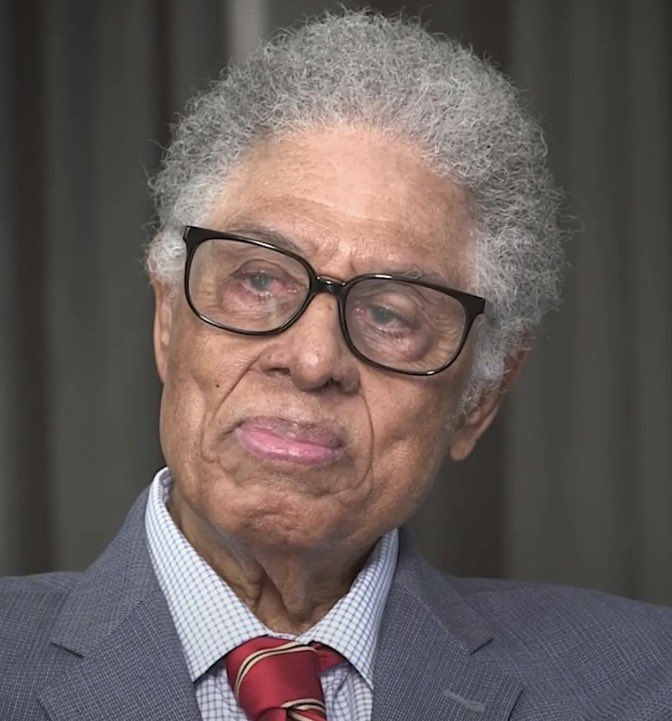
Thomas Sowell is 95 years old.
Let that number sit with you.
Ninety-five years on this earth, and in all of them, he has never held public office, never had a viral moment, never begged for anyone’s attention.
What he has done is write 30 books and spend 50 years of patient research building a body of work that has outlasted every fashionable idea his critics tried to bury him with.
While the loudest voices in Washington were chasing polls and the cleverest minds on campus were chasing grants, Sowell was in the library reading the data, tracking the outcomes, and dismantling one bad idea after another.
He doesn’t argue feelings.
He measures results.
He isn’t selling anything.
His whole approach boils down to one line that every politician and activist in this country should be forced to recite before they open their mouths:
“There are no solutions. There are only trade-offs.”
Sit with that, too.
Every federal program, every mandate, every well-meaning crusade carries a cost, and somebody pays it.
Sowell’s life work has been the simple act of asking who.
Listen to him on the “help” our communities have been promised for two generations:
“I’ve been doing studies now for 20 years of programs designed to increase equality. They increase inequality.”
“Even when the programs are designed for disadvantaged groups, they help the affluent members of the disadvantaged groups, while the lower members of those groups fall further behind than ever before.”
That is the whole affirmative action racket laid out in two sentences.
The kids from the same zip codes as the Harvard faculty get the slot, while the kids from the neighborhoods that actually need a ladder are told to wait their turn.
Sowell says it plain:
“The vast majority of blacks who go to places like Harvard, Cornell, and Stanford are not blacks from the ghetto. They’re from the same neighborhoods as the whites there.”
The race hustlers don’t want you to know that, because they need the grievance to stay in business.
Sowell’s advice to young people cuts right through the hustle:
“Stay away from the race hustlers.”
“Equip yourself with skills that people are willing to pay for.”
That is the whole ball game right there, a matter of skills, work, and accountability rather than slogans, hashtags, or another federal program designed to pad a consultant’s salary while leaving the South Side worse off than before.
Here is the line I want every young person in Cincinnati, Cleveland, Columbus, and every other corner of America to read tonight:
“Much of the social history of the Western world over the past three decades has involved replacing what worked with what sounded good.”
That one sentence explains our schools, our cities, and why the neighborhoods the War on Poverty was supposed to save are in worse shape now than they were before the checks started flowing.
Sowell has pushed a whole generation of us to stop reacting and start asking harder questions.
What are the incentives?
Who actually benefits from this policy?
What do the numbers look like five, ten, twenty years later?
Ask those questions honestly, and the illusion falls apart.
The most dangerous man in America right now isn’t the one shouting on television.
He is the 95-year-old professor in Palo Alto who doesn’t need you to agree with him, because he has the data on his side.
Ninety-five years of telling the truth.
Thank you, Dr. Sowell.
1/16
The Chart of the Century: Gold vs Dow
For 100 years, the Gold/Dow ratio has traced an expanding triangle (ABCDE).
We are now in Wave E — the terminal phase.
➡️ Elliott Wave target:
• Gold $20,000–$25,000 base case
• Silver $300–$500 (potentially >$1000 in mania)
• Gold/Dow ratio aiming for 20x from here, possibly retesting Upper trendline or a bit throwover
It seems unbelievable today. Bookmark this , in 10 years you’ll see how obvious it was.
The reset decade has begun. #Gold #Dow #ElliottWave #Reset #Markets #Macro #ChartOfThecentury
A community college professor taught the same study skills lecture for 30 years, and the video quietly became one of the most watched educational recordings on the internet.
His name is Marty Lobdell. He spent his career as a psychology professor watching students fail not because they were lazy, but because nobody had ever taught them how their brain actually works under the pressure of learning something hard.
The lecture is called "Study Less Study Smart." Over 10 million views. Passed around in Reddit threads, Discord servers, and university study groups for over a decade. And the core insight buried inside it has been sitting in cognitive psychology research for years, waiting for someone to explain it in plain language.
Here is the framework that completely changed how I think about effort.
Your brain does not sustain focus the way you think it does. Studies tracking real students found that the average learner hits a wall somewhere between 25 and 30 minutes.
After that, efficiency doesn't just decline. It collapses. You're still sitting at your desk, still looking at the page, but almost nothing is going in.
Lobdell illustrated this with a student he knew personally. She set a goal of studying 6 hours a night, 5 nights a week, to pull herself out of academic probation. Thirty hours of studying per week. She failed every single class that quarter.
She wasn't failing because she lacked effort. She was failing because she had confused time spent near books with time spent actually learning. The 25-minute crash hit her at 6:30pm every night. She spent the next five and a half hours sitting in the wreckage of her own focus and calling it studying.
The fix sounds almost too simple. The moment you feel the slide, stop. Take five minutes. Do something that actually gives you a small reward. Then go back. That five-minute reset returns you to near full efficiency. Across a six-hour window, the difference is not marginal. It is the difference between thirty minutes of real learning and five and a half hours of it.
The second thing he taught destroyed something I had believed about how memory actually works.
Highlighting feels productive. Going back over your notes and recognizing everything feels like knowing. But recognition and recollection are two completely different cognitive processes, and your brain is very good at making you confuse them.
You can see something you've read before and feel completely certain you understand it, even when you couldn't reconstruct a single sentence from memory if the page were blank.
He proved this live in the room. He read 13 random letters to his audience. Almost nobody could recall them. Then he rearranged the same 13 letters into two words: Happy Thursday. The whole room got all 13 without effort.
Same letters. Same count. The only thing that changed was meaning.
The brain stores meaning. Not repetition. The moment new information connects to something you already understand, the retention changes entirely.
This is what the cognitive psychology literature calls elaborative encoding, and it is the mechanism underneath every effective study technique.
The third principle was the one that hit me hardest, and the one almost nobody applies.
Lobdell cited research showing that 80 percent of your study time should be spent in active recitation, not passive reading. Close the material. Say it back in your own words.
Teach it to someone else, or to an empty chair if no one is around. The struggle of retrieval is where the actual learning happens. Reading your notes again is watching someone else do the work.
His parting line has stayed with me longer than almost anything else I have read about learning.
He told the room that if what he shared didn't change their behavior, they hadn't actually learned it. It would just live in their heads as something they had heard once and felt good about.
He was right. And most people leave every lecture exactly like that.
The students who remember everything aren't putting in more hours.
They stopped confusing the feeling of studying with the fact of it.