I have always been fascinated by propaganda.
Perhaps I cannot help it. I grew up in a mining village, and my dad was a miner. Learning to look behind the headline was part and parcel of our upbringing.
There was always some old sage in the club, at the pit gates or leaning over a garden fence who could explain why a headline had been written in a particular way, what had been left out and whose interests the story really served.
We learned that opinion polls did not merely record public opinion. They could also be used to shape it.
Television did not simply inform, educate and entertain. It could programme, condition and quietly establish the boundaries of respectable thought.
Hollywood gave us invaders and enemies wrapped in the red flag of communism. War films were frequently made with the support of the American military, which could provide equipment, locations and technical assistance while exercising influence over how the armed forces were portrayed.
The result was not always crude propaganda. Often it was simply a powerful story in which one side appeared heroic, necessary and righteous, while the political assumptions behind it passed almost unnoticed.
I will be more controversial and suggest that we can see a similar process in some modern historical dramas.
Following the rise of movements such as Black Lives Matter, television and film became far more conscious of diversity and representation. Much of that came from a legitimate desire to recover people and experiences that had been neglected or erased.
But there is also a danger in projecting the social ideals of the present backwards onto every period of history.
“Who controls the past controls the future. Who controls the present controls the past.”
Orwell wrote that as a Party slogan in "Nineteen Eighty-Four", but its truth extends far beyond the totalitarian state.
Television shapes how millions of people imagine the past. Visual storytelling has extraordinary reach, but it often trades complexity for drama. Audiences remember the costume, the romance and the dramatic scene long after the historical qualifications have disappeared.
Diverse societies and minority communities have always existed, including in places where popular history once ignored them. But their numbers, social positions and experiences varied greatly across time and place.
When period dramas flatten those differences, they can leave audiences with the impression that the past resembled the present far more closely than it really did.
The message becomes reassuring: our history was always your history, our society was always naturally inclusive, and the injustices of the past were merely unfortunate exceptions.
True or not, repeated often enough, the image becomes the history.
Comedy can be even more effective.
It has helped introduce audiences to different cultures and allowed the working class to laugh at itself. Characters such as Alf Garnett were funny, memorable and often more complicated than their creators intended.
Yet comedy also taught audiences how to interpret class, politics and organised labour.
Trade unionists, shop stewards and striking workers were repeatedly reduced to caricatures. Films and sitcoms presented them as lazy, unreasonable, corrupt, incompetent, oversexed or permanently determined to bring the country to a halt.
The *Carry On* franchise moved directly into contemporary politics with the 1971 release of *Carry On at Your Convenience*, a satire of trade unions and industrial unrest.
Of course, we laughed. Much of it was genuinely funny. Some of it still is.
But humour does not become politically neutral simply because it makes us laugh.
Those stories helped frame how generations understood the working class, trade unions, immigration, war, socialism and authority.
That is what makes propaganda so effective.
It is not always cold, brutal or Orwellian. It does not always arrive as censorship, intimidation or an official broadcast.
It can be warm, uplifting, familiar and enormously entertaining.
It can make us laugh. It can give us heroes. It can congratulate us on our tolerance. It can turn political assumptions into beloved characters, quotable lines and shared national memories.
Eventually, those assumptions stop looking like arguments and begin to feel like common sense.
Which brings me to these two clips.
In *A King in New York*, Charlie Chaplin presents the young radical as intellectually serious and potentially dangerous to those in power. Michael Chaplin’s child anarchist is intense, uncompromising and armed with political theory, cold logic and moral outrage.
Twenty years later, British television gave us Wolfie Smith.
Wolfie was the beret-and-Afghan-coat-wearing founder of the Tooting Popular Front, a supposed urban guerrilla movement whose membership could barely fill a telephone box.
He imagined himself as the Che Guevara of SW17, shouting “Power to the People!” across Tooting while dreaming of the glorious day of revolution.
Yet he was also work-shy, self-important, frightened of responsibility and surrounded by a hopeless band of would-be revolutionaries.
Wolfie was lovable. He was memorable. He was very funny.
But he also made revolution ridiculous.
That does not mean *Citizen Smith* was secretly commissioned by the establishment, or that John Sullivan was consciously producing propaganda.
Propaganda does not always require a central plan or a government official standing behind the camera.
Culture can reproduce the assumptions of its age without anyone issuing instructions.
A radical idea can be absorbed, softened and repackaged until the rebel becomes a national treasure and the rebellion becomes a catchphrase.
Both clips are funny. But they encourage the audience to see radical politics in very different ways.
Chaplin allows the radical to challenge power.
British comedy allows us to laugh at him until the challenge disappears.
And this is where social media becomes dangerous to established power.
The old gatekeepers have lost much of their control. People can revisit forgotten films, compare narratives, question official framing and encounter arguments that broadcasters, editors and political parties might once have kept outside the boundaries of respectable debate.
Social media can spread falsehoods, manipulation, manufactured outrage and entirely new forms of propaganda. No serious person should deny that.
But it also breaks the old monopoly.
It allows ordinary people to publish evidence, challenge official accounts, expose contradictions and speak directly to millions without first passing through an editor, broadcaster or political institution.
That is why governments around the world are so keen to put social media back in its box.
They speak increasingly of approved sources, trusted news, online safety and authoritative information. Some of those concerns are legitimate. Threats, harassment and incitement do not become harmless simply because they are posted online.
But power rarely limits itself to the worst cases.
When people are questioned, prosecuted or arrested over social-media posts, the issue is no longer only what was said. It is also who gets to decide which opinions are dangerous, which sources are trustworthy and which version of events may be circulated without consequence.
The old media order told us what had happened and explained what it meant.
Social media allowed millions to answer back.
Now the struggle is over whether that unruly conversation will remain open, or whether it will once again be filtered through institutions that claim the authority to separate truth from falsehood on our behalf.
The fight is not merely over freedom of speech.
It is over who controls the story, who defines reality and who gets the final word.
Propaganda once taught us what to think.
The new battle is over whether we will still be permitted to think aloud.
@PaulKnaggs, The Heartlands Tribune
Twelve hours. That's how long a public inquiry into Jeffrey Epstein's activities in Britain survived.
On Tuesday night, the victims minister told BBC Newsnight the Prime Minister was "looking into" an inquiry. Andy Burnham would meet Epstein's victims. He was "taking this very seriously."
By Wednesday morning, the line had changed. An inquiry is "not being actively considered."
No statement to Parliament. No explanation to survivors. Just a briefing, delivered before breakfast.
So what would an inquiry examine, that it needed strangling in its cot?
Flight logs show Epstein's jet landed at RAF Marham, a frontline strike base, in December 2000. On board with Epstein and Ghislaine Maxwell was a passenger recorded in the files as a single word: "female."
No name. No age. Nothing.
Twenty-five years later, this state can produce your browsing history in seconds. It compels the retention of every citizen's internet records for a year. But the flight log of a sex offender's jet landing at a military base? Wiped, we're told, inside ninety days.
Ninety-five MPs want an inquiry. Gordon Brown has written to six police forces. Two of the most powerful men in Britain have been arrested.
And this morning, Downing Street decided nobody should be appointed to find out who that woman was.
Burnham stood with the Hillsborough families when the state investigated itself reluctantly. Now it's his turn to choose... all victims deserve justice...
Full story: https://t.co/J01OUW5i6U
Who benefits from there being no inquiry?
#EpsteinList #andyburnham #mandelson
"You can buy your council house, so you’ll be a property owner, you may not be able to get a wage increase, but you can borrow’. And the borrowing was deliberately encouraged because people in debt are slaves to their employers.” -Tony Benn #morgages#CostOfLivingCrisis#Scam
The UN Had To Tell Britain, Women Have Rights
It took the United Nations to tell the British Parliament to obey its own Supreme Court.
Not a warning to a dictatorship. A statement to the British Government, this month, from Geneva.
Fifteen months after the Supreme Court ruled that sex means sex, 168 MPs, mostly Labour, tried to kill the guidance that makes the ruling mean anything in practice. Not one amendment. Not one fix. Just scrap it.
No Tory signed. No Reform MP signed. The Party that claims to speak for working class women handed their defence, gift-wrapped, to Nigel Farage.
The unions were worse. UNISON's general secretary told conference the Supreme Court "was wrong." A biomedical scientist is now suing Unite for telling her to "watch her language" over the words biological male and biological female. Nurses in Darlington had to build their own union from scratch because the ones they paid subscriptions to represented the man they'd complained about. They won anyway. £187,000 and an apology.
Then there's the group in balaclavas telling their activists to pick a target and "hit them repeatedly until they desist from their Transphobic views"
Set against all of that: 8,464 gender recognition certificates in the whole of the UK, against thirty-four million women who need a locked door somewhere.
Women's rights in this country were never owned outright. They are held on licence, issued by institutions that reserve the right to revoke it whenever a man claims the female identity.
Full story, evidence and every source linked here: https://t.co/fPmIDOIhIE
Whose union has said the word "women" this year?
#womensrights @RosieDuffield1
The internet has killed one of Westminster’s oldest tricks: say one thing today, deliver the opposite tomorrow, then deny the first promise was ever made.
A time when "Today's news became tomorrow's chip paper", and nobody had to worry. Now, today’s video becomes evidence, shared a million times.
This one didn't even reach the closing credits. Lucy Powell’s sales pitch for Andy Burnham lasted barely thirty seconds before collapsing under its own contradiction.
First came the borrowed radicalism. Burnham, she said, wants to “radically rewrite” the political and economic model of the past forty years, a model that put private interests before ordinary people.
Strong words. The sort designed to make working-class communities believe change is finally coming.
Then @bbclaurak applied the slightest pressure. Burnham has no mandate of his own and says he will broadly stick to Labour’s 2024 manifesto. How can he deliver dramatic change?
Powell snapped straight back to the approved line: “He is going to stick to our manifesto.”
There it is...
You cannot radically rewrite forty years of failed economics while remaining chained to a manifesto written inside the so-called fiscal rules, market discipline and corporate Labour politics.
One promise cancels out the other.
Either Burnham intends to break with the economic model that hollowed out our industries, weakened public services and transferred wealth upwards, or he intends to preserve the manifesto built around it.
He cannot ride both horses.
It took 30 seconds to expose the contradiction...
#AndyBurnham
From Starmer to Burnham: Labour’s Treachery Tradition
Westminster now tells a thrilling tale of plotters, rewards and long knives.
But the truth is, Keir Starmer did not need assassins. He destroyed himself.
Andy Burnham’s allies have entered government. Starmer’s loyalists have been cleared away. Those who once wielded the knife are suddenly appalled to discover that it has changed hands.
Starmer was not brought down by some political Brutus.
He broke his leadership pledges. Accepted more than £100,000 in gifts and hospitality. Courted BlackRock and Palantir. Restored Peter Mandelson to government despite his relationship with Jeffrey Epstein. Purged dissent while preaching unity.
He invoked his toolmaker father while opening Downing Street to billionaires, asset managers and corporate power.
The public rejected him long before Labour MPs found the courage to save their own seats.
We have seen this ritual before.
Those who turned against Jeremy Corbyn were rewarded with honours, peerages and establishment approval. Now Starmer’s supporters complain that Labour’s machinery of treachery has been turned against them.
Burnham promises unity. So did Corbyn. So did Starmer.
In Labour, unity is the hymn sung by whichever faction has just seized the organ.
The face in Downing Street has changed. The court has changed.
The people who own the castle have not.
Read more...
👇
https://t.co/GCAZt93UMB
#AndyBurnham #Starmer #Corbyn
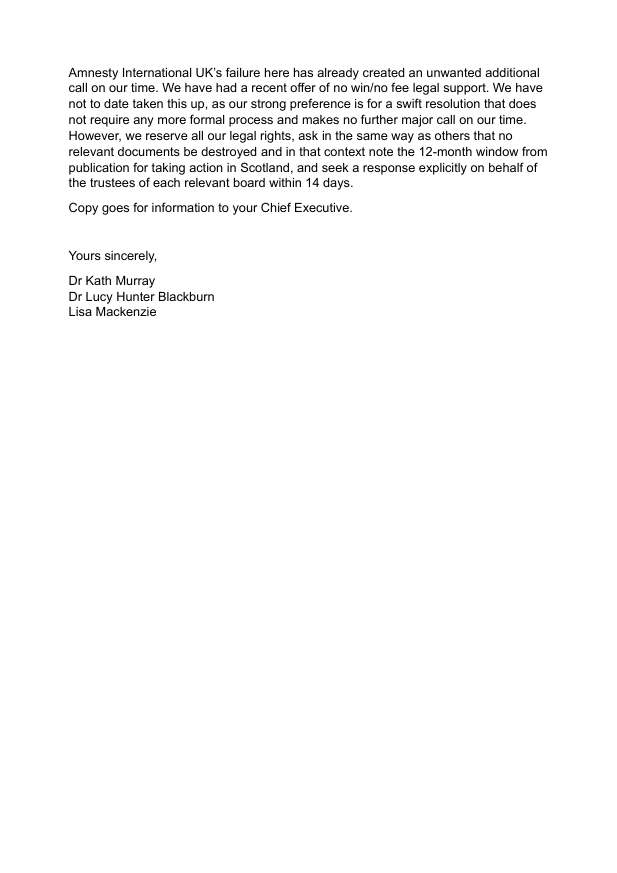
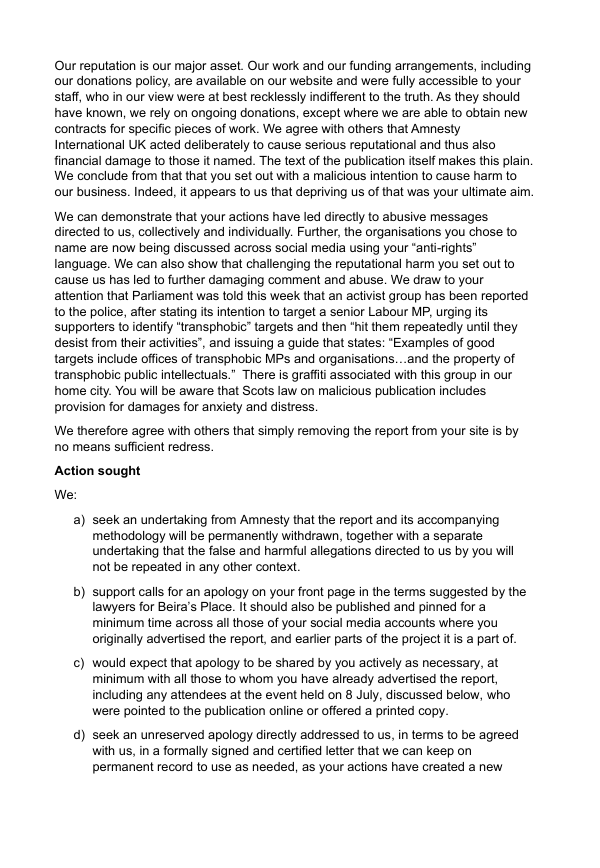
We wrote again late last week, setting out the steps we believe that Amnesty International UK should now take, and drawing attention to some further points that an external investigation should consider. https://t.co/PE4Cx1fVx0
Here's the bit they dont want you to think about... Clean energy made abroad is not energy independence. It is import dependence with a green label.
#AndyBurnham’s new Energy Secretary, Miatta Fahnbulleh, says home-grown clean energy will create jobs. She is right about the potential, but only if Britain manufactures the turbines, solar panels, batteries, cables, inverters and grid equipment here. Otherwise, most of the industrial prize goes somewhere else.
China already controls around 85 per cent of solar supply-chain capacity and 80 per cent of lithium-ion battery production capacity. Its grip is even tighter over solar wafers and battery anode materials. Those are the factories, skills and supply chains where the lasting jobs sit.
Once a wind or solar farm is built, it still needs workers to operate and maintain it, but far fewer than the armies employed to manufacture the equipment. So when ministers boast about green jobs while importing the hardware, they are counting installations here while the deeper industrial value is created abroad.
That is not an argument against clean energy. Britain needs more control over its power, greater energy security and freedom from volatile fossil-fuel markets.
But energy security cannot mean replacing dependence on imported oil and gas with dependence on Chinese panels, batteries and processed minerals. Britain must build the factories, train the workers, process the materials and own the infrastructure.
Otherwise the public will subsidise the transition, foreign manufacturers will collect the industrial reward, and ministers will pose beside imported machinery claiming they created British jobs.
Tell us again how this is ending #neoliberalism... Different face. Same economic model.
A green transition without British industry is not renewal. It is deindustrialisation powered by direct debit.
A new survey states "just 6%" of people in the UK say they would volunteer to fight for the country if it were invaded.
I am not sure why anyone would be shocked by these numbers.
For forty years, a shameless political class tried to strip away every notion of community and nationhood through seamless EU integration, treating the country less as a homeland and more as an open-border economic zone.
Now, the same establishment acts surprised when young people feel no pull of allegiance to a state that treats them as disposable.
Their life chances and opportunities have been radically reduced. They are locked out of homeownership, crushed by debt, and left watching as artificial intelligence threatens to dismantle what little security remains in the job market.
People will always fight for hope if hope is tangible and goals are achievable. But patriotism is not a one-way street. If you want people to put their lives on the line for a nation, you need to let them be actual stakeholders in that nation.
Until the working class own a real piece of the place they live, no amount of flag-waving will persuade them to die for someone else's bottom line.
A nation that offers its people nothing cannot demand everything from them.
@PaulKnaggs, @HeartlandsTrib
Taxes are not charity, and statecraft is not a tip jar.
When rich campaign groups ask to be taxed fairly, they are stating a simple economic truth: wealth must be redistributed through law, not individual benevolence. One wealthy person handing a check to the Treasury changes nothing if their peers continue to hoard statutory power and capital.
Yet when faced with growing calls to fix a broken tax system, Chief Secretary to the Treasury Emma Reynolds points to a voluntary donation page.
It is a response as absurd as it is cowardly. It pretends that systemic inequality is merely a personal choice, reducing the sovereign power of the state to a tin-rattling exercise for loose change.
On one side, you have working-class apologists doing the aristocracy's intellectual heavy lifting, convincing themselves that trickledown crumbs will eventually reach the dirt they toil in. On the other, wealthy liberals perform public virtue while flinching the moment anyone mentions enforcement.
Governments exist to write the rules, not to pass around a collection plate. Until ministers stop treating tax policy like a GoFundMe campaign, the working class will keep paying the price for the fortunes above them.
@PatMillsUK
Westminster has built a country where we spend more money on the planning paperwork for a single road than it costs other nations to build an entire mountain tunnel.
This isn't a system accidentally strangled by red tape: it is a highly lucrative industry. A vast priesthood of consultants and lawyers is making a fortune they have no interest in the work being done.
It is corruption by bureaucracy, and working-class communities are footing the bill for projects that never even see a spade in the ground.
The absolute paralysis of modern Britain was laid bare in a recent parliamentary committee. A single witness gave them the truth with both barrels, exposing the administrative vampires sucking public money dry while the work goes undone. The details are an insult to every community waiting for homes, decent transport, and cheaper energy.
Take the Lower Thames Crossing. The planning application alone has swallowed more than a quarter of a billion pounds. For that exact same amount, Norway actually constructed the world’s longest road tunnel. We spent it on paper, and we have not even turned a sod of earth.
This is a permission state eating itself alive.
Look at HS2, the most expensive railway line on earth. Part of the reason it cost so much is that we are spending £121 million on a specific "bat tunnel" to protect a few hundred bats living in a nearby wood, a wood the line does not even pass through.
Look at Hinkley Point C, the most expensive nuclear power station in human history. For eight years, developers locked in a multi-million-pound wrangle with regulators over installing an underwater "fish disco", an acoustic deterrent to stop fish swimming into the pipes. 20 years ago, we built nuclear fleets at a fraction of the cost. Today, we sacrifice national infrastructure to the gods of endless compliance.
The final absurdity is the plan to reopen just 3.3 miles of an existing railway line between Bristol and Portishead, a route already built but closed during the Beeching cuts. The planning application is 80,000 pages long. Over one thousand of those pages are about bats.
We have created a system that trades in paper while the real economy rots. The working class pay the price for this institutional cowardice. They pay for it in soaring energy bills, missing homes, broken transport links, and a country that cannot build the future it keeps promising.
Protecting the environment is vital, but drowning ourselves in paper is not environmentalism. A system that takes 80,000 pages to clear three miles of existing track is broken. It is not governance: it is managed decline with a clipboard.
It's the bureaucratic vampires drinking the country's wealth...