Two Iranians who crossed the Channel on small boats have been charged with plotting a terror attack against the Jewish community in Manchester.
Salam Ahmadyan, 36 and Rahman Salehi, 34, were arrested by counter-terrorism police in Manchester on Sunday, Sept 20, the day before Yom Kippur, the holiest day in the Jewish calendar.
🔗: https://t.co/rRD0K7GqQz
This tweet and headline is misleading. Abu Wadei cannot be deported due to Article 3 of the European Convention.
The Home Secretary currently has no choice but to grant him limited leave to remain.
Gazan migrant with reported links to Hamas facing deportation.
Abu Wadei, a Gazan asylum seeker who was involved in a Hamas-linked operation in Gaza and has reportedly called for the slaughter of all Jews, is apparently facing deportation after he was found to be living in Corby, Northamptonshire, and posting concerning online content.
Lee Barron, the Labour MP for Corby and East Northamptonshire, has reportedly called for Mr Wadei’s deportation.
When we identified Mr Wadei last year using facial recognition, we immediately contacted the Home Office, only to find that they had put him up in a hotel without even realising his Hamas connections. Not only was it left to us in the Jewish community to identify him, but only after we threatened to privately prosecute him was he charged with illegally entering the UK. We thought that the authorities might be trusted to take it from there, but when we wrote to the CPS calling for Mr Wadei to be charged with terrorism offences while he was still in custody on immigration charges, they refused.
Now, he’s here earning money online. Social media companies like TikTok have a responsibility to monitor accounts run by individuals who breach their policies. If they found reason to ban Mr Wadei the first time – and they were right to do so, given his record of violent rhetoric against Jews – they should not be allowing him to set up accounts for a second and third time. It makes a mockery of their policies.
There is a wider question of what this man is still doing in the UK, having been convicted of immigration offences. What is the point of imprisoning someone for being in the country illegally, and then when he completed his sentence allowing him to roam free? Our laws have become a laughing stock.
This is all the more significant in a week when the Home Secretary has announced that she will make it easier for Gazans to settle in the UK with no assurances being provided as to whether they may hold antisemitic views or have a history of terrorism.
Our country desperately needs to get a grip.
https://t.co/DoyXTE4x5h
Mike Tapp used to believe a reliance on overseas labour undercut the wages of British workers.
What changed your mind on this, Mike?
https://t.co/aZ5QiH4Lhd
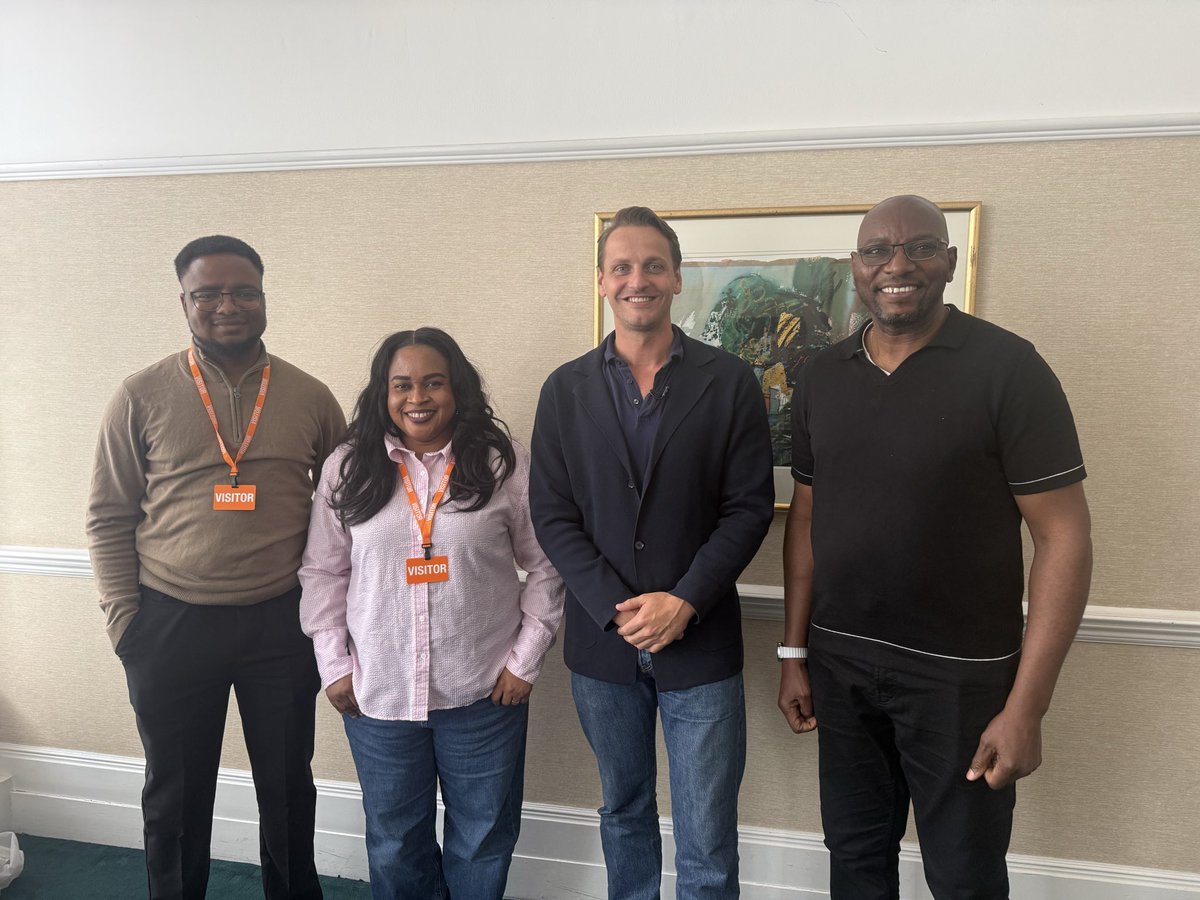
It was a pleasure to meet with fantastic care workers today, who have come from abroad to help look after our elderly and vulnerable.
We must exempt foreign care workers from the retrospective settlement extensions and we must introduce an umbrella care sponsor system - to end this exploitation of hard working decent people.
This case is emblematic of a longstanding failure by the British state to join the dots between migration and security. Whilst terrorism is one of the few activities that excludes an individual from humanitarian protection under the Refugee Convention, Mr X could have claimed to be a member of Hamas’ political wing which at the time was not proscribed.
Alternatively, the British government has long had a de-facto, never publicised, position of granting asylum or leave to remain to individuals it knows it cannot remove, such as those from conflict zones like Gaza, Sudan, or Eritrea to name just a few.
It is important to remember the centrality of asylum to Britain’s wave of jihadist terror and radicalisation.
A relatively small number of Islamist refugees, often members or supporters of the Muslim Brotherhood, fled from authoritarian regimes across the Middle East, particularly Egypt or Syria, arriving in London in the 1980s and 90s, making it a global hub for global jihadi salafism. In 1993, the Salafist Abu Qatada claimed asylum in Britain on a forged passport. Despite his heavy connections to jihadist violence including 9/11 and having claimed asylum on false pretences, Qatada could not be removed due to the risk he would not obtain a fair trial in Jordan.
He was eventually removed after a specific agreement was reached with Jordan to facilitate his trial. But others remain. Hani al-Sibai, an Islamist preacher, a key al-Qaeda inspiration, continues to reside in Britain, and criticises Syria’s president (and British ally) Ahmed al-Sharra as an apostate, inciting violence against the fledgling Syrian state.
Confronted with immense resourcing pressure, Britain’s security services have turned a blind eye to subversion of this nature, and lack the resources to monitor to any serious degree those with loose connections to terrorist organisations.
This is why Britain must adopt the precautionary principle, and limit their ability to reside in Britain in the first place.
Reviewing asylum grants for Islamist dissidents should be a priority for the Home Office, with revocations required for any who abuse British generosity to continue the behaviour that had them expelled in the first place.
A beefing up of Charity Commission powers is also necessary to impose serious consequences on organisations that host and facilitate extremists. We've written privately on how to do both of these things - get in touch to discuss further.
EXCLUSIVE: The former bodyguard of Ismail Haniyeh, leader of Hamas, was given asylum and citizenship in the UK — then “plotted” huge foiled terror attack targeting Jews in Europe last year
Mr X had legal anonymity for 100 years: Sunday Times quashed this
https://t.co/tPc4azc7df
We're at Labour conference. If you want to meet to discuss foreign policy and national security under Burnham get in touch in our DMs or email [email protected]
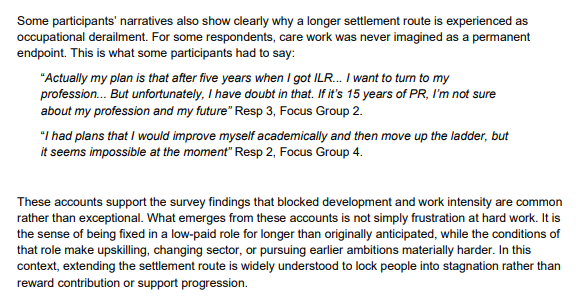
The recurring theme across all these ILR reports and consultations is the same: migrant carers want ILR precisely so they can leave care work.
Yet the entire campaign against the reforms is framed as being about protecting the care sector. It's deeply disingenuous.
David Lammy's progressive realism was an attempt to explain to Labour voters that there is a necessary trade-off between interests and values.
Miliband insists that no such trade-off exists - encouraging this kind of activism. This approach is not sustainable without vandalising the international partnerships that guarantee the safety and economic well-being of Britain and its people.
Excl: 10 union general secretaries including big affiliate Unison have signed an open letter to Andy Burnham calling on his government to end its "military collaboration" with Saudi Arabia amid concerns over the humanitarian crisis in Yemen: https://t.co/VKuANyytSp
In recent days Labour have tried to tie Reform to foreign misinformation.
This strategy might work in a straight fight, but it risks opening the door to what is perceived to be a more honest critique of the same state failures.
Labour lacks the dexterity to pivot between registers and will end up decrying those critiques as misinformation, regardless of their origin.
I cannot stress how much the Labour Party has emotionally and pyscholgically committed to the prospect of facing Reform at the next GE.
Theyre not ready for the Tories and, well...
A Labour Party that aims to represent the average person in Britain – to pass the Makerfield test – cannot succumb to an elite concept of misinformation that rejects the fears and concerns of ordinary people as the invalid construct of foreign information warfare.
Speaking as the head of the Secret Intelligence Service, the late Sir Alex Younger remarked that our adversaries "did not create the things that divide us — we did that to ourselves".
The problem for Burnham's new Centre for Information Defence is that state failure and hostile state information attacks produce remarkably similar end products.
A Russian information operation did not invent the reality that a terrorist, a rapist, or a paedophile who suffers an ECHR Article 3 risk in his home country cannot be removed back to it, nor that huge organised crime operations can fly tip without accountability, or that Britain cannot control its borders.
We question whether dis or misinformation are useful concepts. As @terrorwatchdog states, information “is very often neither wholly true or wholly false”.
Similarly, any Labour government that aims to pass the Makerfield test cannot succumb to an elite concept of misinformation that rejects the fears and concerns of ordinary people as the invalid construct of foreign information warfare.
If Burnham’s National Centre for Information Defence is going to succeed it needs to take a limited approach, focusing primarily on identifying sources and methods of disinformation, rather than weighing in on politically contested claims.
When it does, it should do so solely to steer the public away from violence and back towards democratic expression regardless of the veracity or legitimacy of the political claims involved.
Read our latest piece below:
The absence of peace in the Middle East is not, as Ed Miliband argues, the consequence of the failure to achieve a two-state solution. Rather, as the Houthi's latest advances exemplifies, it is a product of a failure of regional ordering.
In our latest piece we cover this, and argue that tying the UK-Israel relationship to an unrealistic ambition of the two-state solution is a mistake in an otherwise justified policy reset.
https://t.co/MYeSL10dFL
Earlier this month, Ed Miliband set out measures to reset the British-Israeli relationship.
Miliband was right to address the settlement issue. But tying the bilateral relationship to an unachievable two-state-solution risks damaging the strategically vital aspects that endure.
As Israel fails to meet the demands made on it, pressure will grow for Miliband to go further. The F-35 programme is already in the sights of campaigners.
To his credit, bringing twelve countries on board is a good stylistic example of the hyperactive foreign policy Britain needs. But for coalitions to endure they must have tangible realistic goals that bind their members.
Faced by Russian aggression, US withdrawal, and a more dangerous world, this is not a sustainable grouping. One of its members, Finland, is creating dependencies on Israel for air-defence.
Miliband argues that the absence of a Palestinian state is at the heart of regional disorder. This misreads the reality of the modern Middle East, where a lack of regional ordering is driven by state competition, not the absence of statehood for Palestinians.
It is striking that the twin challenges to UK household bills from the Hormuz and Red Sea crisis have little to no relationship with settler terrorism in the West Bank.
Read our full piece here:
Earlier this month, Ed Miliband set out measures to reset the British-Israeli relationship.
Miliband was right to address the settlement issue. But tying the bilateral relationship to an unachievable two-state-solution risks damaging the strategically vital aspects that endure.
As Israel fails to meet the demands made on it, pressure will grow for Miliband to go further. The F-35 programme is already in the sights of campaigners.
To his credit, bringing twelve countries on board is a good stylistic example of the hyperactive foreign policy Britain needs. But for coalitions to endure they must have tangible realistic goals that bind their members.
Faced by Russian aggression, US withdrawal, and a more dangerous world, this is not a sustainable grouping. One of its members, Finland, is creating dependencies on Israel for air-defence.
Miliband argues that the absence of a Palestinian state is at the heart of regional disorder. This misreads the reality of the modern Middle East, where a lack of regional ordering is driven by state competition, not the absence of statehood for Palestinians.
It is striking that the twin challenges to UK household bills from the Hormuz and Red Sea crisis have little to no relationship with settler terrorism in the West Bank.
Read our full piece here:
As we have long been arguing, the FCDO should be taking advantage of the American interest in migration issues and leveraging this against actors like the KRG who fail to take our concerns seriously.
A deep frustration I had in the Foreign Office is this smuggling operation is nearly entirely controlled by armed Kurdish organised crime gangs with deep connections and political ties back to the Kurdistan region of Iraq. However, despite the Kurdistan Regional Government being under a de-facto Anglo-American security umbrella since the first Gulf War, there has been an unwillingness to put this first in our relations with Irbil and Sulaymaniyah with heavy, heavy pressure for no dramatic increase in cooperation to help stop this. For Britain, the relationship as we know it should be on the line unless these authorities take this gravely seriously and we should enlist the White House in making this pressure very uncomfortable.
It is important for us not to overstate the case. There are interesting shifts in the relationship between Parliament and the Courts underway, with the latter increasingly respectful of Parliament's role.
But that is precisely why Burnham must put Parliamentary sovereignty at the front of his agenda. Without it, any kind of radicalism will fall at the first hurdle.
https://t.co/eGPQ5umcF9
In 2009, Peter Facey of Charter 88 described the animating purpose of his organisation: "the idea that the central state, the central government can actually deliver things, is actually quite dangerous".
Facey wanted to destroy the central state - even without knowing what would replace it. https://t.co/giiWgEJ6jP
Two pieces this week by @ThinkLabour and @martha_dacombe have examined the morass of laws that inhibit state action. Yet not enough is done to attribute this to its origins in a rights-based culture driven by organisations like Charter 88.
Writing back in 1922, Clement Attlee identified the 19th century "exaltation of the individual at the expense of society" as behind the social failures of the time.
On entering government some twenty-three years later, Attlee and his fellow ministers had no compulsions against using state power to build a New Jerusalem.
If Burnham wants to dismantle the unaccountable state and spread power across the country, he must - paradoxically - ensure it can be wielded at the centre.
Our latest: https://t.co/eGPQ5umcF9
@IPPR have recently put forward "The Case for a Politics of Reciprocism", tapping into the language of R.H.Tawney and Clement Attlee.
The problem is in the prescription however. IPPR call for the state to "offer people more rights and more duties". It is hard to see how this would stack up, piling weight upon an already creaking edifice.
As @OvePM has noted, Labour risks asking a smaller number of people to do more to diminishing returns.