@MarioNawfal A chokepoint doesn't need to be closed to disrupt global trade. Changing how ships are forced to operate is already reshaping maritime risk.
@jacksonhinkle Threatening to keep the Strait of Hormuz closed as political leverage only deepens the crisis. Freedom of navigation should never be used as a bargaining chip.
Sea power is not only measured by the ships a nation builds.
It is also measured by the people it prepares.
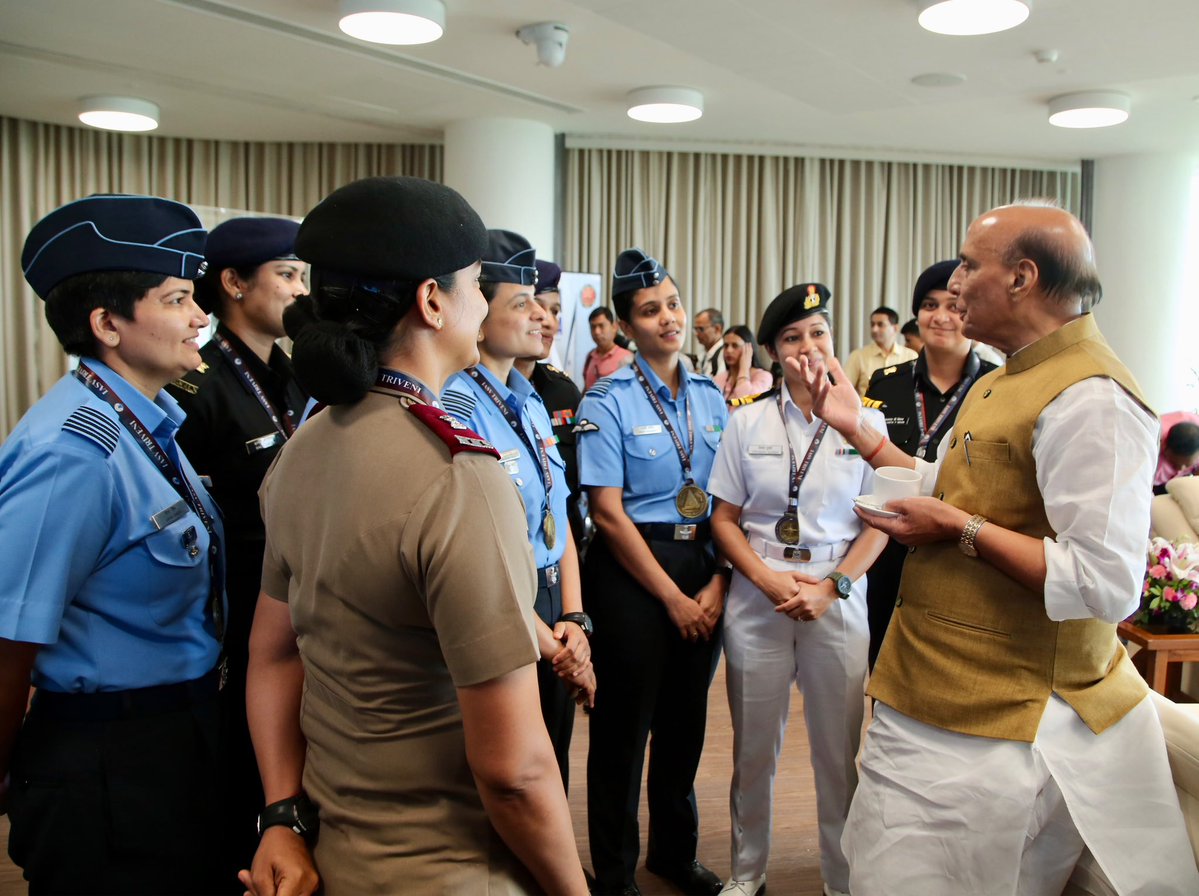
Congratulations to the officers of Samudra Pradakshina for demonstrating that maritime readiness begins long before any operational deployment.
Felicitated the nine women officers of the three Services, who returned home after successfully completing the first-ever Tri-service all-women circumnavigation sailing expedition ‘Samudra Pradakshina’ onboard the Indian Army Sailing Vessel (IASV) Triveni.
Applauded their courage and determination in successfully completing the 314-day voyage covering nearly 25,500 nautical miles across four oceans. The success of this expedition is a testament to Nari Shakti and an outstanding example of Tri-service jointness & synergy that will inspire every Indian.
https://t.co/PDoIpIZfvt
@DeItaone Stability is measured less by diplomatic statements than by commercial behaviour. Watch freight rates, war-risk premiums and vessel routing that's where confidence becomes visible.
When LNG exports are at stake, keeping cargo moving often matters more than political symbolism.
Qatar's use of the Iran-designated corridor is a reminder that commercial realities can outweigh geopolitical preferences.
The real question is not why this corridor was used today, but whether other LNG exporters will make the same choice tomorrow.
@RealBababanaras The financial cost is only part of the story. By officially acknowledging such significant damage, Tehran also acknowledges a vulnerability in one of the pillars of its strategic power. That may prove more costly than the strikes themselves.
@AJENews The Russia-Iran partnership looks increasingly transactional rather than unconditional. When Moscow struggles to secure its own strategic position, its ability to reassure Tehran inevitably comes into question.
The strikes did more than damage infrastructure.
Removing 230 million cubic meters of daily gas production capacity weakens Iran's ability to meet domestic demand, increasing pressure on its economy and reducing the energy cushion available during a prolonged conflict.
In modern warfare, targeting energy infrastructure is about constraining strategic endurance, not just destroying assets.
Crossing 10,000 active registered companies is more than a symbolic milestone.
It shows that businesses increasingly see Dubai as a place to manage regional and often global operations, not just as a tax-efficient location.
In a world marked by geopolitical uncertainty, legal stability, connectivity and access to Middle Eastern, African and Asian markets have become competitive advantages in their own right.
Saudi Arabia's diversification strategy is proving effective, but not absolute.
Yanbu and the SUMED system increase flexibility, yet they cannot fully replace the Bab el-Mandeb route for exports to Asia.
The lesson is broader than Saudi Arabia itself: reducing dependence on one chokepoint does not eliminate maritime risk. It redistributes it.
@Osint613 A shared Strait is harder to use as leverage.
If several Gulf countries jointly manage Hormuz, control over the world's most important oil route becomes less concentrated. That could reshape maritime security well beyond the current crisis.
@MarioNawfal The real impact may not appear in oil prices first.
It may appear in higher insurance premiums, stricter underwriting conditions and more cautious routing decisions. Maritime risk is often repriced long before physical supply is disrupted.
The battlefield is expanding from sea lanes to energy infrastructure.
Targeting oil facilities changes the equation. Even if shipping lanes remain open, the energy system itself becomes vulnerable.
Maritime security is no longer only about protecting vessels. It is now about protecting the infrastructure that keeps global energy exports moving
Iran doesn't need to close Hormuz to disrupt global trade.
Making commercial shipping unpredictable is enough.
If vessels are forced to reconsider their transit, insurers reassess risk, freight costs rise, and confidence in one of the world's most critical sea lanes begins to erode.
Maritime coercion starts long before a waterway is officially closed.
@OilandEnergy China's strategic partnership with Iran ends where energy security begins.
When oil supplies become uncertain, China looks for the safest option
In the end, energy security matters more than political friendship.
@business China's strategic partnership with Iran does not remove maritime risk. Its naval presence in Djibouti gives Beijing more options to manage it.
Iran is weaponizing one of the world's busiest sea lanes.
Four commercial vessels struck in just 24 hours.
When merchant ships become targets and shipping companies are forced to double captains' pay to secure transits, this is no longer a regional crisis.
It is a direct attack on the safety of civilian shipping and the stability of global trade.
The real target is freedom of navigation.
Closing both Hormuz and Bab al-Mandeb would not simply disrupt oil flows. It would demonstrate that strategic waterways can be used as instruments of coercion, forcing global trade to operate under the constant threat of disruption.
That precedent would extend far beyond this crisis.
Alternatives to Hormuz are no longer guaranteed alternatives.
If this maritime embargo translates into sustained action at sea, it would put Saudi Arabia's main bypass route under pressure. The issue is no longer a single chokepoint, but whether any Gulf energy export route can still be considered reliably secure.
Hormuz traffic remains muted
The latest #MarineTraffic data show traffic through the Strait of Hormuz remained subdued over the weekend, with 30 verified crossings between 17 and 19 July and continued variation in route selection. Although no new confirmed attacks were reported during the latest monitoring period, the security environment remains elevated and shipping patterns continue to respond to geopolitical uncertainty. Monitoring daily vessel movements and routing choices remains essential for understanding operational risk and the resilience of global trade flows.