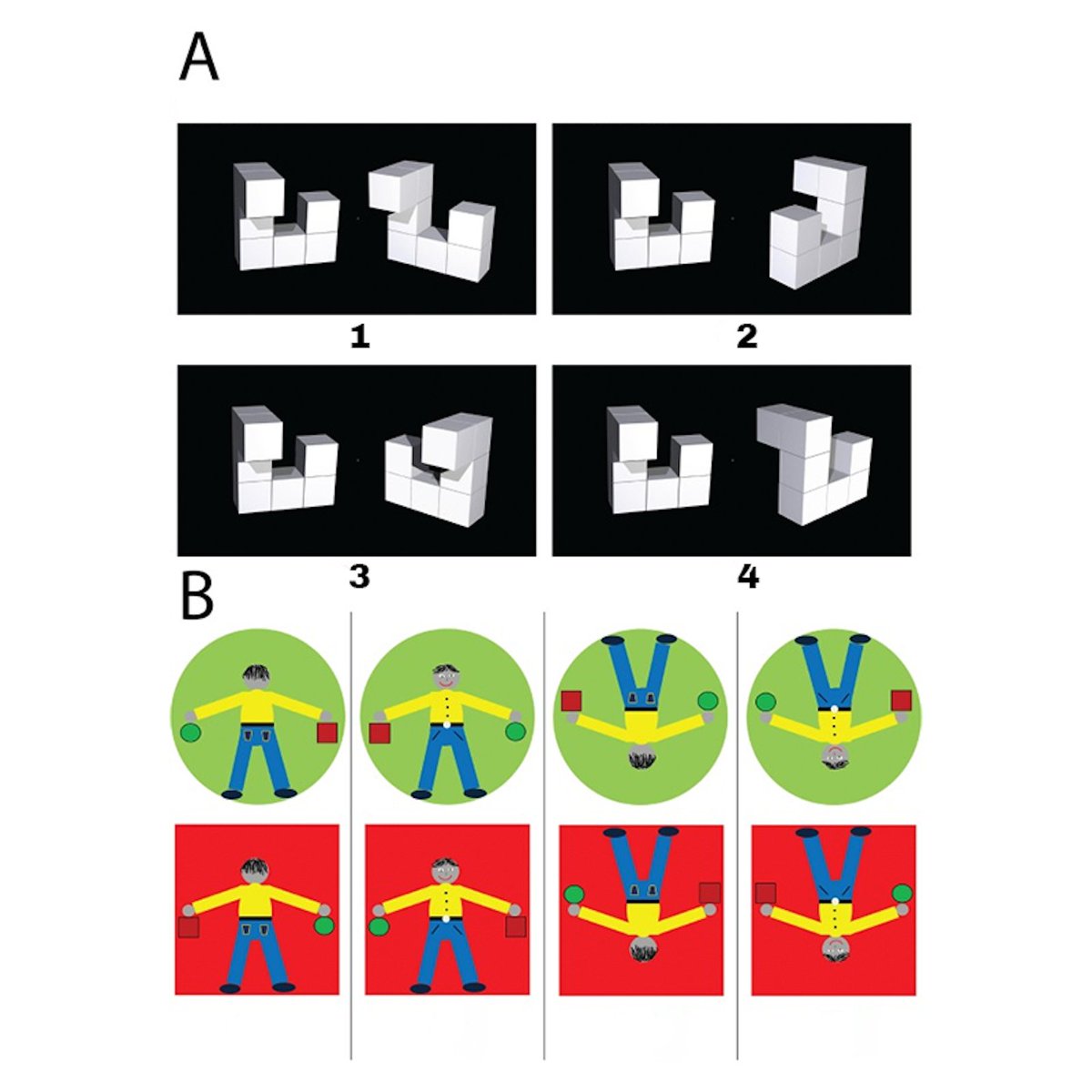
My new piece on mental rotation tasks and aphantasia is out on Nautilus.
It turns out that people without mental imagery (aphantasics) do very well at tasks involving mental rotation of 3D objects.
Better, in fact, than those who have the imagery.
How can that be?
@ProfJoelPearson@seeingwithsound But if the biofeedback signal could filter this out in real time then it should be possible. Whether it would train visual imagery ability or just voluntary control of pupil size is another question
@ProfJoelPearson@seeingwithsound This is an interesting idea! It would be tricky to pull off since the harder someone tries to modulate their pupil size with imagery, the more cognitive effort they exert and the more their pupils dilate regardless of the mental image.
Imagine a kookaburra. Can you picture it?
#Aphantasia is the inability to imagine in pictures and, until now, has been notoriously hard to detect. Now, @ProfJoelPearson and his team at @FMLabUNSW have developed a test and it's all in the eyes...
https://t.co/N71NoOlsrZ
New Science! ✨ Head on over to our webpage to check out the new study conducted by Lachlan Kay, Rebecca Keogh, Thomas Andrillion, and Joel Pearson at the University of New South Wales in Sydney Australia! 🥼
#aphantasia#imagination#visualimagery
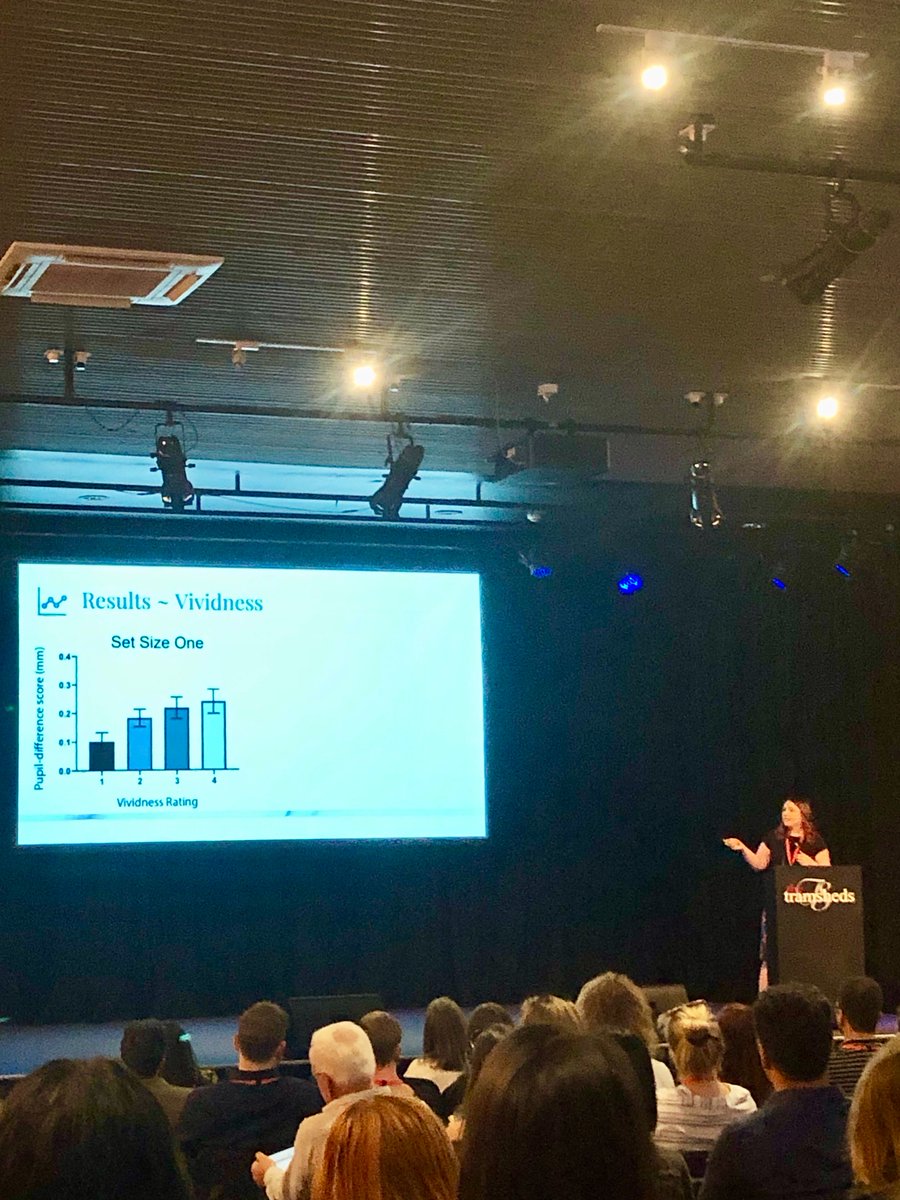
This new preprint was part of the super talented @LachlanKay1612 award-winning honours thesis 🎊 Inspired by all the really cool research showing that pupils respond to mental imagery, attention and vwm we wanted to see if pupil responses track individual diffs in visual imagery
The eyes have it: The pupillary light response as a physiological index of aphantasia, sensory and phenomenological imagery strength. New preprint from the dream team @LachlanKay1612@Becca_Keogh_PhD @thandrillon https://t.co/5V2FHwPli8
So proud of our neuroscience honours student @LachlanKay1612 for winning the Paxinos and Watson prize for his thesis: Pupillary Response as a Measure of Visual Imagery and Aphantasia! Very well deserved! 🧠🎊🍾