-- Ladytanya65 =Certified & licensed antique appraiser
-- contact me for all your appraisal needs
-- antique, vintage, modern or ancient I appraise everything
In 1903, Crayola introduced the Rubens Artist crayons. These crayons offered a wide range of high-quality, vivid colors, appealing to both professional artists and students. They reflected Crayola's dedication to nurturing artistic creativity, coinciding with a period of increased interest in the arts, particularly in schools. The Rubens crayons, part of Crayola's early innovations, expanded their product offerings alongside the iconic Crayola crayons. These artist-grade crayons contributed to Crayola's legacy of fostering artistic talent and creativity.
In 1888, Nobel was astonished to read his own obituary, titled "The merchant of death is dead," in a French newspaper. It was Alfred's brother Ludvig who had died; the obituary was eight years premature. The article disconcerted Nobel and made him apprehensive about how he would be remembered, inspiring him to change his will.
On 10 December 1896, Alfred Nobel died in his villa in San Remo, Italy, from a cerebral haemorrhage at the age of 63. Nobel wrote several wills during his lifetime, with the last one composed over a year before he died, specifying that his fortune be used to create a series of prizes for those who confer the "greatest benefit on mankind" in physics, chemistry, physiology or medicine, literature, and peace. Nobel bequeathed 94% of his total assets, 31 million SEK (approximately US$186 million or €150 million in 2008), to establish the five Nobel Prizes.
Owing to skepticism surrounding the will, it was not approved by the Storting in Norway until 26 April 1897. The executors of the will, Ragnar Sohlman and Rudolf Lilljequist, formed the Nobel Foundation to take care of the fortune and organize the awarding of prizes.
A young woman from the Ouled Nail (pronounced "willed nah-eel") tribe in Algeria, 1905.
The Ouled Nail origins are shrouded in mystery but some time in the 7th and 8th century, they converted to Islam along with the other Imazighen in North Africa. What distinguished the Ouled Nail from the other tribes was the status of their women (Nailiyat) who were financially independent from the men. They worked as dancers and sex workers in neighboring towns and cities and would be accompanied by the older Nailiyats.
While this line of work was quite common amongst the Nailiyats as it was steeped in tradition, dating back thousands of years, it was not forced or even expected of them; it was simply one practical avenue of accumulating capital. The Nailiyats would work anywhere from 5 to 15 years and use the money that they earned to purchase property, after which, they would seek suitors in hopes of settling down.
On the forehead of the Nailiyat shown in the photo above is the yaz symbol, which is also the letter Z in the Amazigh alphabet. The symbol also represents the Imazighen and can be found on their flag.
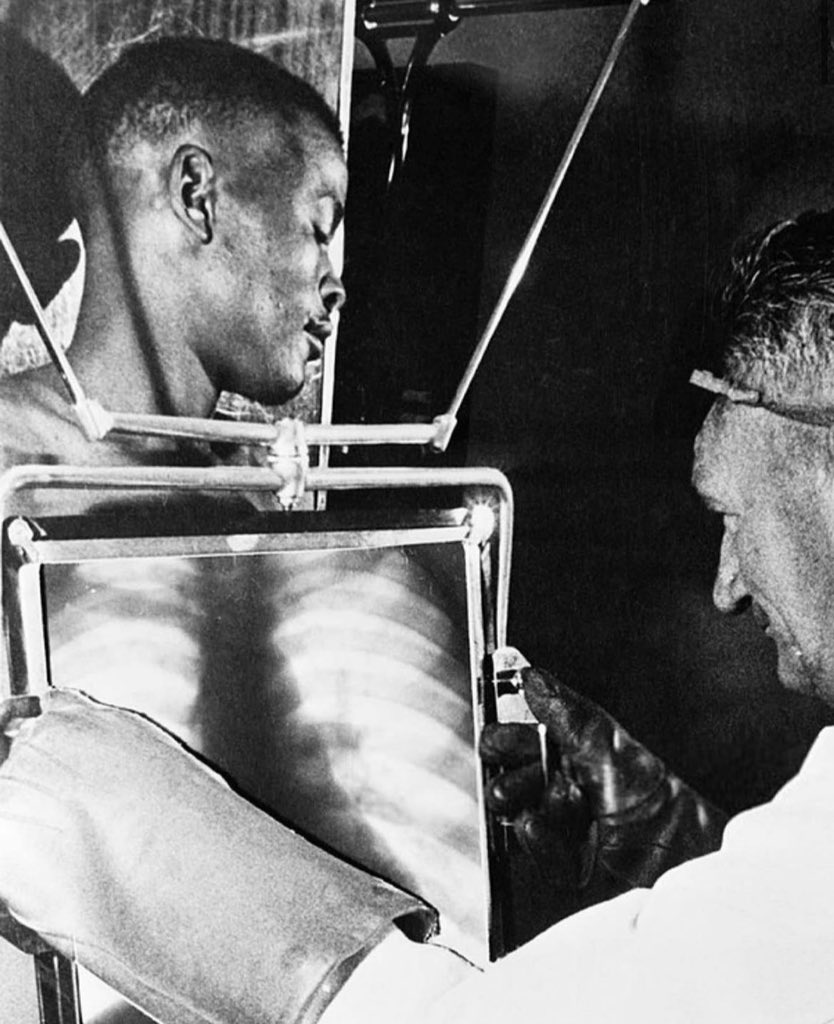
South African mine workers were x-rayed by radiologists at the end of each shift before leaving the De Beers diamond mines in Kimberley, South Africa, 1954. This was done to prevent even the smallest of diamonds from being smuggled out of the mine via the stomach.
Diamonds were first discovered in South Africa in 1867. The son of a farmer by the name of Daniel Jacobs collected what he thought were shiny stones along the bank of the Orange River. Other kids in the neighboring Villages would use the stones to play games. Soon, they caught the eye of a neighbor named Schalk van Nieker who offered to buy one for money. The boy's mother laughed and just gave it to him.
Nieker passed the stone around to a few people to see if it had any value. It soon ended up in the hands of a physician and amateur geologist by the name of W.G. Atherstone who came to the conclusion that it was a 21.25 carat diamond. Once the governor of Cape Colony purchased the diamond for £500, news began to spread throughout the region, and prospectors started to congregate in hopes of striking it rich.
Two Englishmen by the name of Cecil J. Rhodes and Barney Barnato decided to buy up the mines in the area. In 1888, they combined their holdings to create De Beers Consolidated Mines Limited, establishing its headquarters in Kimberley, South Africa.
Most of the people who ended up working in the mines were Black migrant workers. Most of their lands had been seized by British colonists, and they had no other means of making a living, other than to work in the mines for subsistence wages. Between 1897 and 1899, more than a thousand Black laborers died due to mining accidents and a host of disease-related illnesses.
The precursors to apartheid began to really take root in the city of Kimberley in which communities were divided up by ethnicities, and mixed marriages became outlawed. Certain public areas were reserved for "European Only," and the movement of African people was heavily restricted. Apartheid only came to an end in the early 1990s.
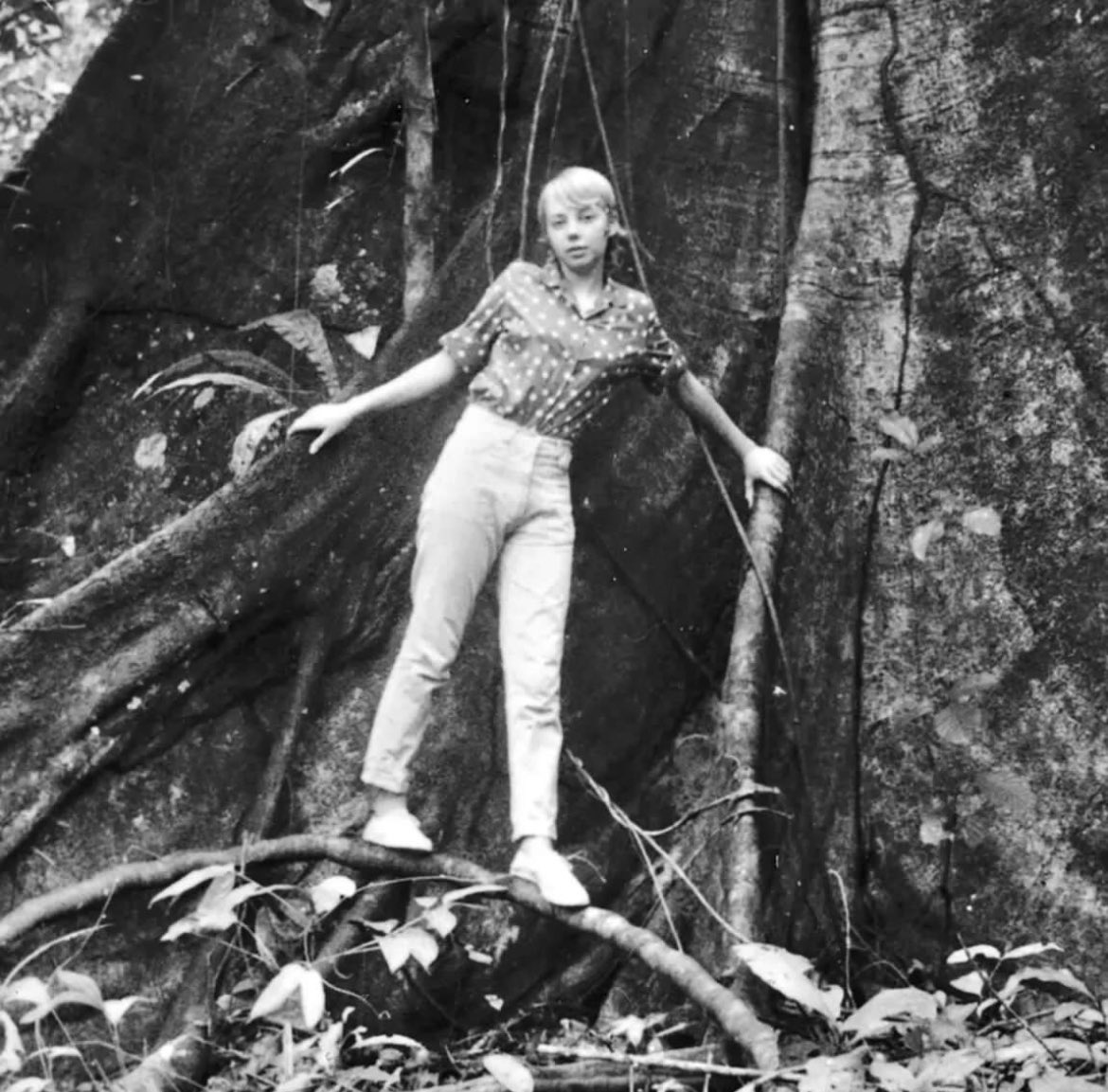
In 1971, 17-year-old Juliane Koepcke was flying over the Peruvian rainforest with her mother when she got sucked out of the airplane after it was struck by a bolt of lightning. She fell two miles to the ground, strapped to her seat.
"The plane jumped down and went into a nose-dive. It was pitch black, and people were screaming. Then the deep roaring of the engines filled my head completely. Suddenly, the noise stopped, and I was outside the plane. I was in a freefall, strapped to my seat bench and hanging head-over-heels. The whispering of the wind was the only noise I could hear. I could see the canopy of the jungle spinning towards me. Then I lost consciousness and remember nothing of the impact. Later I learned that the plane had broken into pieces about two miles above the ground. I woke the next day and looked up into the canopy. The first thought I had was: 'I survived an air crash.'"
Koepcke's first instincts were to try and find her mother, but she was nowhere to be found. After eating some sweets found at the crash site, Koepcke waded downstream and followed the river. After 10 days, she found a moored boat. She poured the gasoline from the boat's fuel tank onto her wounds, which were infested with maggots. She then spent the night in a makeshift shelter.
"I remained there, but I wanted to leave. I didn't want to take the boat because I didn't want to steal it."
The next day, she was discovered by loggers and was soon reunited with her father. She later discovered that her mother had initially survived the crash, only to die of her injuries several days later.
Like her parents, Koepcke went on to study biology at the University of Kiel in Germany, graduating in 1980. She received her doctorate from Ludwig Maximilian University of Munich and returned to Peru to conduct research in mammalogy, specializing in bats.
A very good example of a French early 20th Century Empire style library chandelier in gilded brass and charcoal polychrome with acorn finials top and base. Circa 1910, it is a wonderful example of its type. https://t.co/VJGHJ2zWMc
As the art market and museums sector come under growing scrutiny for their due diligence processes around potential colonial and Nazi-era loot, @ChristiesInc is opting to support the next generation of provenance researchers https://t.co/IzywVlbtLi