Flying B-17G, Lawley departed the target area with his bomb load still aboard after frozen release mechanisms prevented it from being dropped. Without warning, cannon shells tore into the cockpit, killing co-pilot 2nd Lt. Murphy & severely wounding Lawley. https://t.co/ShRJEllFuR
Every airfield has its heroes, and #RAF#Chelveston was no exception. Among these was 1st Lt. Edward S Michael of the 364th BS. In April 1944, he found himself Wounded, outnumbered and in a crippled aircraft, his efforts would earn him the Medal of Honour. https://t.co/cg1UTPAAau
In a third B-17, the ball turret gunner, S.Sgt. Lee ‘Shorty’ Gordon was captured after baling out of his stricken aircraft. His determination to ‘get home’, though, led to him escaping no less than a reported 5 times, even posing as a child in one attempt. https://t.co/lzaCyrdhZX
The 305th, who arrived here in early December 1942, were led by the tough and innovative Col. Curtis LeMay whose drive and leadership led to the rookie 305th, being known as the ‘Can do’ Group. https://t.co/qAkmjFaazC
In the second part of Chelveston’s history it is handed over to the #RAF and the first unit arrives. Gliders are preceded by the Central Gunnery School (CGS) and then followed by the US 60TG. The American’s ownership is nearing. https://t.co/uNp2VZzKDs
The beginnings of how this quiet stretch of countryside evolved from construction site to operational wartime airfield. RAF Chelveston opens its runways and the station starts its journey toward becoming an important Allied base. https://t.co/YQagw9EYhw
Whilst the threat of invasion had subsided by the end of 1941, attacks from German bombers were never far from the minds of those in command. With Sutton Bridge being one of the largest training airfields in England, it was rarely devoid of enemy attention https://t.co/zz7d5FED5P
By early 1940, with the squadrons gone, Sutton Bridge pivoted once more, becoming a hub for new recruits and small training flights, laying the groundwork for its next vital role as 6 Operational Training Uni https://t.co/eelQg8YDtJ
#AviationHistory#RAF#WW2
New on the blog: RAF Sutton Bridge – Part 1.
How did an isolated stretch of land become a key RAF site?
Discover the station’s early history, planning, and purpose.
https://t.co/Fn0dlMCqcX
On 31 Dec 1943, 2nd Lt. John Walter Crago, a young US pilot from the 55th FS, lost his life when his P-38 suffered trouble en route to a briefing at RAF #KingsCliffe. With engine smoke seen, he crashed near Woodnewton, aged just 26.https://t.co/TpPzdrYiU2 #WWII#RAFHistory
Tonight we remember the five young lives lost on 1 Dec 1943 — the children of the Robson family — when a returning RAF bomber mistakenly crashed into their farmhouse near Amble, killing little Sylvia, Ethel, Margery, William and baby Sheila. #raf#ww2 https://t.co/T66aqD39Yg
At 9.30pm on the evening of March 29, 1943, a Stirling bomber with seven young men aboard thundered down the runway of RAF Downham Market and into the dark skies above.
The aircraft and its crew, with an average age of 26, were never to return. https://t.co/pytY0gMKZ7
In Nov 1945 over the Kent coast at Herne Bay, the Gloster Meteor Mk III shattered the world air-speed record averaging 606 mph over an 8-mile low-level run! Piloted by Group Captain H.J. Wilson (with rival chief test pilot Eric Greenwood recording 603 mph. https://t.co/4dn84qOwkW
I know this has been posted everywhere already, but without the ITV presenters, it’s even more powerful. They gave their tomorrow so we may have our today. We’ve ruined the inheritance they passed down through their blood, sweat, and tears. We can and must now turn back the tide.
On this day in 1945 – high above the Kent coast, two sleek Gloster Meteor III jets raced over the sea at just 250 ft, smashing the 600mph barrier & rewriting the record books. One pilot, Group Captain H.J. Wilson, landed the world-record mark at 606.38mph https://t.co/cqrQff9DXr
On the night of 3/4 Nov 1943, Flt Lt Bill Reid fought through flak, fighters and blood loss to bomb Düsseldorf — flying his shattered Lancaster home with his navigator dead beside him. His courage earned the Victoria Cross. Read his story here. https://t.co/m9jn9PL0iK
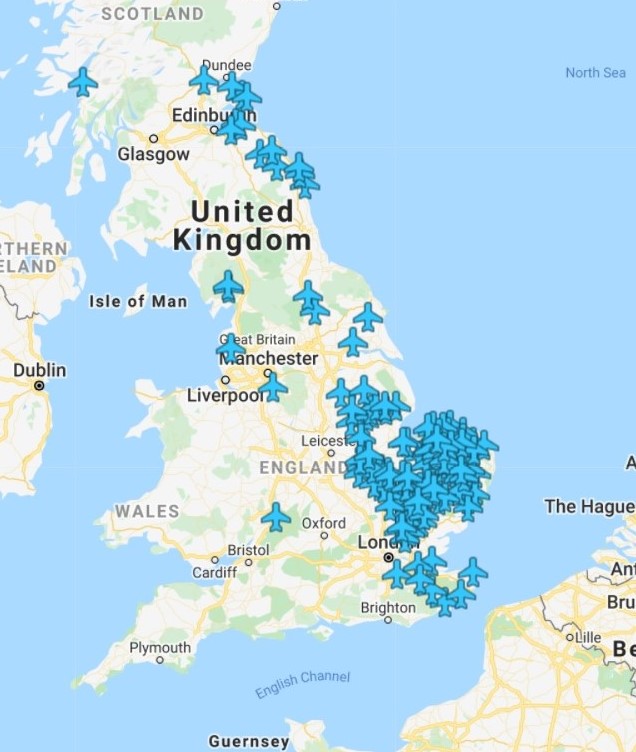
This is the brilliant map of the location of the airfields in England. From these airfields #WWII bombers began the long trip across the Channel headed for enemy territory. Map by @LaingHome
Dive into the heroic story of Captain Edwin “Ted” Swales VC DFC — RAF Pathfinder, SAAF officer and master bomber who led his crew from RAF Little Staughton in one of WWII’s most daring raids. A brilliant story of courage and sacrifice. https://t.co/x1eQPlctuN