Pharmacists have a saying: “The difference between medicine and poison is just one: The dosage.”
This similarity is evident in the Greek word “pharmacon”. While its most common usage is “medicine”, it's not hard to find usages that mean “poison”.
(1/2)
This is analogous to a Modern Greek letter: the final sigma ‘ς’, which only appears in the end of lower-case words and never elsewhere. For instance, “Sisyphus” is spelled «Σίσυφος», displaying all three forms of the letter.
(3/3)
https://t.co/kmtwUNVjeV
What a modern speaker of English might not have come across is that the letter “s” had, for several centuries, an alternative long form, used only in lower-case and never in the ending of words.
(1/3)
Thus, in the quoted text, the word that is spelled “senseless” in modern English is spelled “ſenſeleſs” instead.
(In modern times, the only surviving usage of the long s is the integral symbol.)
(2/3)
Most interestingly, a cursory glance at ancient Greek grammar reveals a noticeably similar phenomenon called the “[dativus ethicus](https://t.co/qb4tZ3zNr8)”.
(4/4)
In colloquial Greek, any action can be said to be done “at me” (the speaker), which then means that the speaker has an emotional investment in said action. Very commonly, this refers to the speaker considering this a personal affront.
(1/4)
Similarly, an informal greeting is “How are you doing at me?” indicating an emotional investment in the listener. (Again, a different context would give this phrase the meaning “What are you doing to me?”.)
(3/4)
As anyone who speaks Greek is aware, there is a difference between spelling and pronunciation.
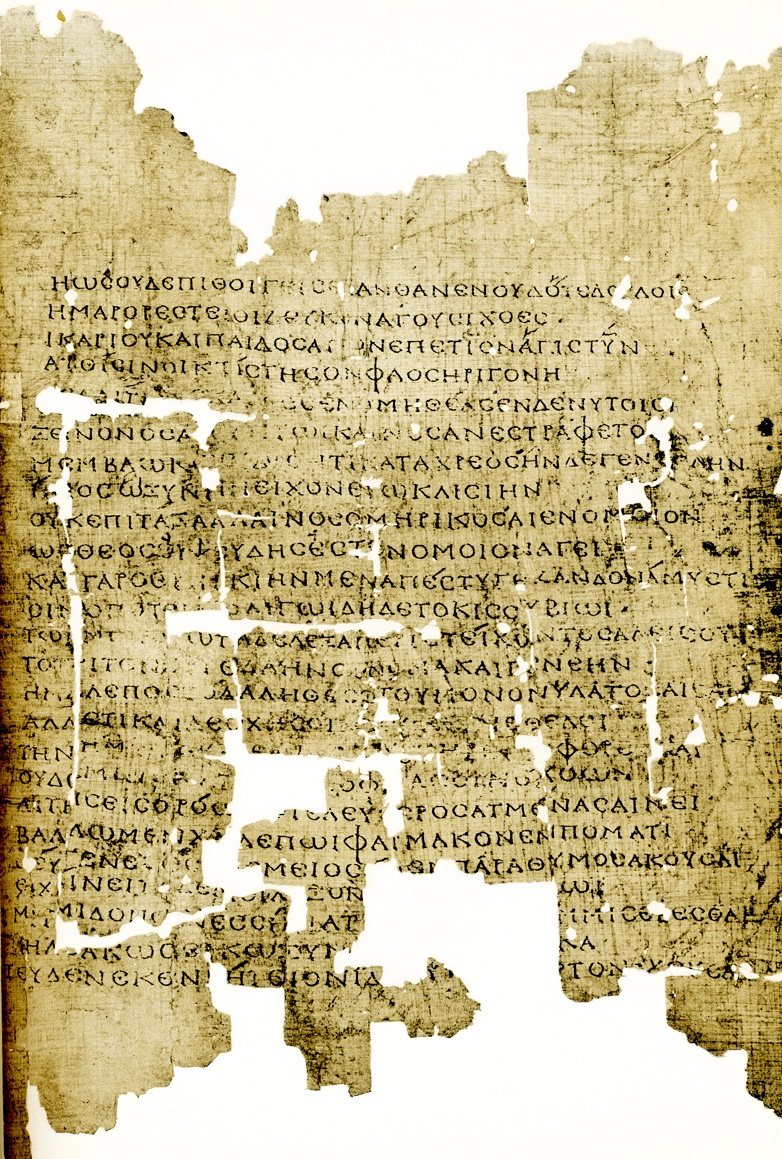
Back in the Renaissance, Western European scholars assumed that this discordance was of recent origin and due to "Turkish" influence, and so they created a new "restored" pronunciation of Ancient Greek based on their linguistic speculations. This pronunciation is still in use in most Western universitites.
However, since that time, as archaeology and the study of ancient inscriptions and papyri has progressed, we can now attest that what is often derisively labelled "Modern" Greek pronunciation in fact goes back over 2,000 years.
Christians do not call burial places “necropolises”, that is, “cities of the dead”, but “cemeteries”, which literally means “sleeping places”, places where one rests, awaiting the resurrection.
As it just so happens, the most ancient meaning of this word is “touchstone”, probably from an Egyptian word. From this, it came to mean “a rigorous test to determine whether something is true”; thence “interrogation”, and thence “torture”.
(2/2)
The Greek word “lithos” means “stone/rock”. It can be found in words such as:
* “lithosphere” as in “rock-ball”
* “coprolite” as in “dung-rock”
* “photolithography” as in “light-stone-writing”
* “monolith” as in “single-rock”
* “regolith” as in “blanket-rock”
and even “lithium”.
The Greek verb “phagein” means “to eat”. From this verb come several compound words:
“œsophagus”, as in “carrier-eater”
“sarcophagus” as in “flesh-eater”
“bactēriophage” as in “little-rod-eater”
“phagocytosis” as in “cell-eating”
“autophagy” as in “self-eating”
and many others.
A feeble person (esp. when this feebleness is a result of an easy and luxurious life) is in English called a “milksop”.
In Greek, the word for the same concept literally translates to “butter baby”—ostensibly due to butter being a bit of a luxury product when the word was coined