The word 儿 is the simplified form of the conventional character 兒.
儿 can be used as a component in word formation. Words containing this component generally refers to humans and their actions, for example 元 (yuán, ‘chief’), 兄 (xiōng, ’elder brother’)
#son#children#radical
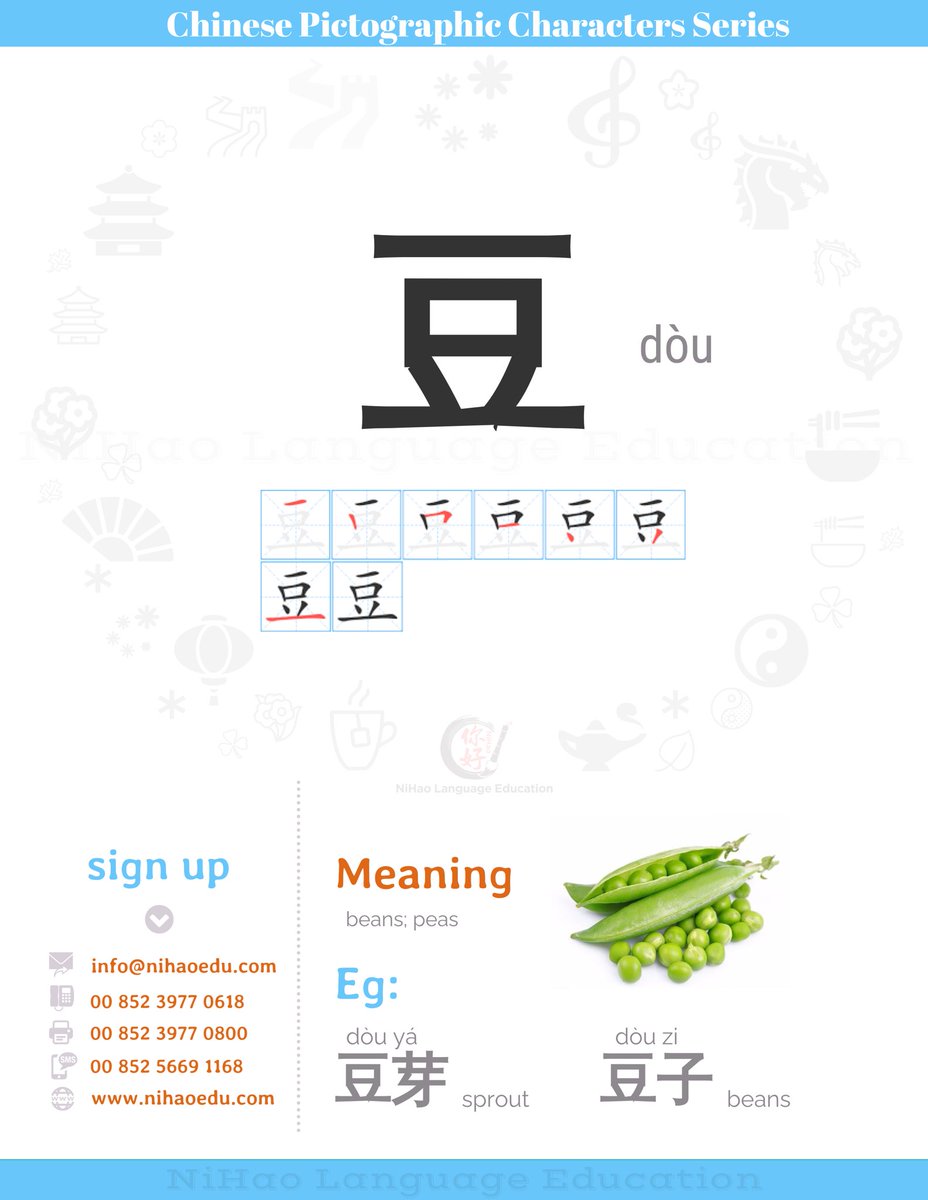
The word 豆now refers to most types of beans or peas.
豆 is used as a component in word formation. Words with this component are related to beans, for example 豌 (wān, ‘pea’), another example is 痘 (dòu, ’smallpox’).
#beans#chinesefood#tofu#chinesewords#nihao#hk#mandarin
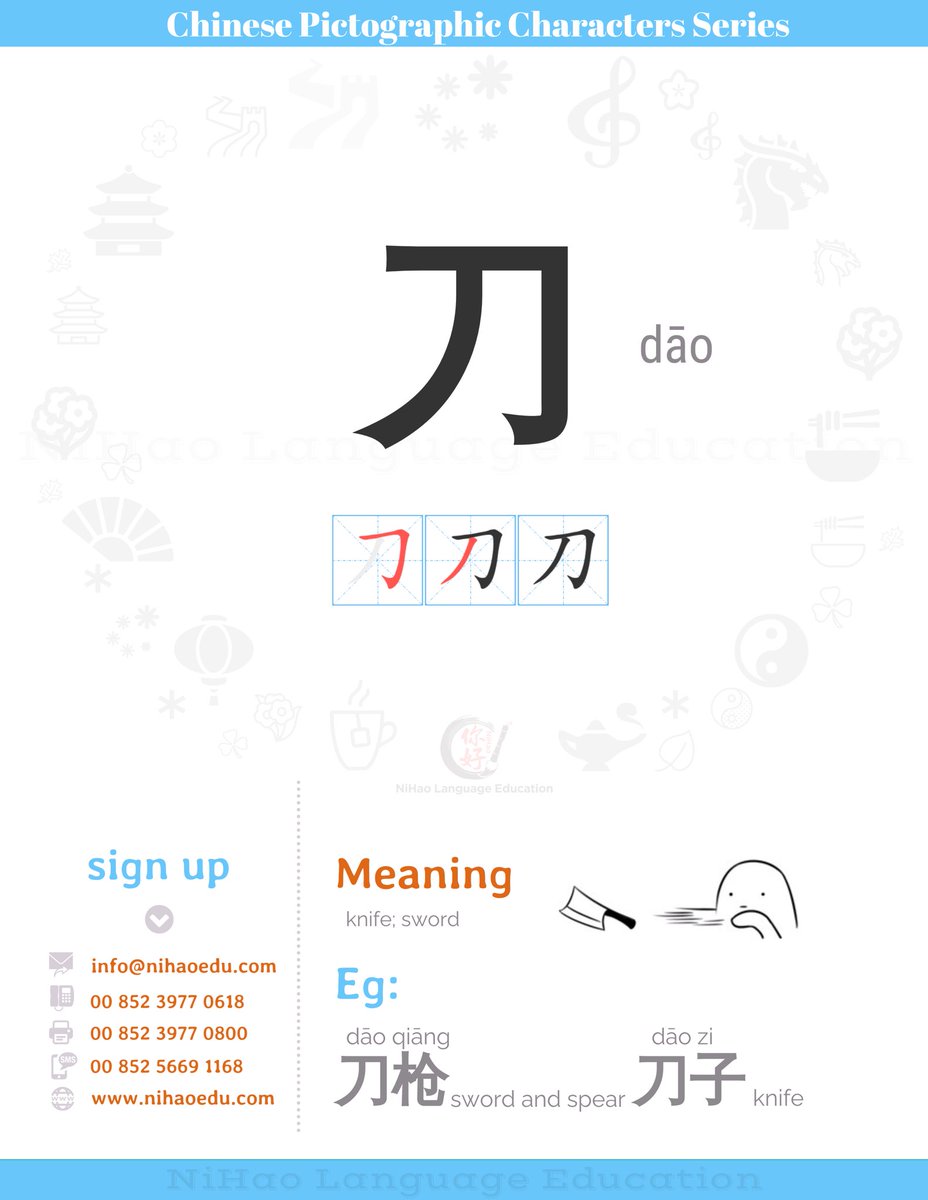
The word 刀 means ‘knife’ or ‘sword’.刀 is used as a component in word formation. Words with this component are related to its original meaning, for example 切 (qiē, ‘cut’), 剪 (jiǎn, ’cut with scissors’).
刀把 dāo bà
Handle of a knife
刀叉 dāo chā
#knife#wordcards#nihao
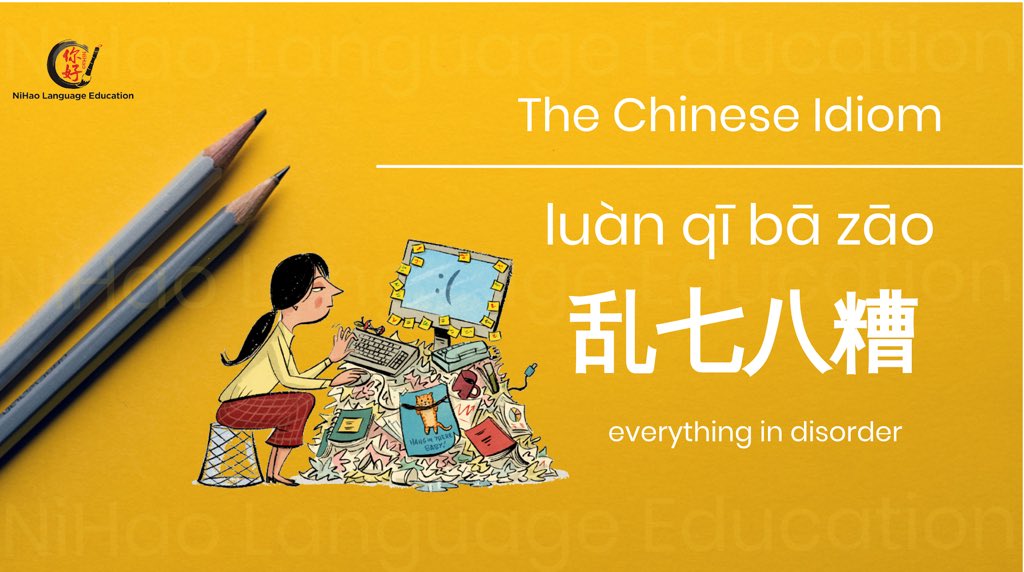
“一心一意”指心思专一,没有别的考虑。
‘Yìxīn-yíyì’means ‘wholeheartedly , without reserving any other thought���.
一: one 心: heart
一: one 意: will; intention; thought
例句:
A: 我好久没见到小王了。
B: 他一心一意地想学好英语,所以每天都在家看书,很少出去。
#idiom #nihao
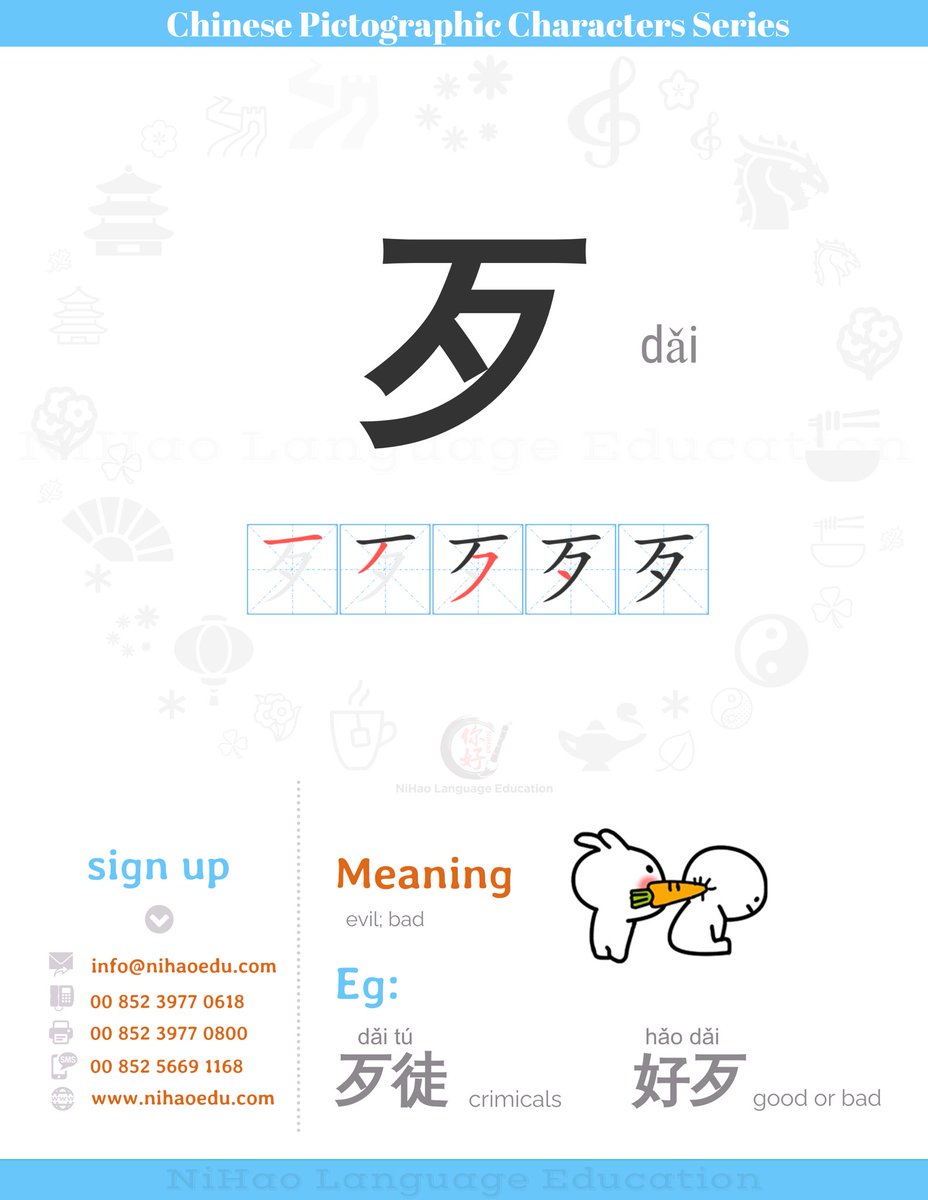
The pictogram of the word 歹 represents the bones of a dead person.
歹 can be used in word formation, often positioned on the left, to convey the meaning of ‘death’. Some examples are 死 (sǐ, ‘death’), 残 (cán,’incomplete’) ,殉 (xùn,’die while on official duty’)
#radical#China
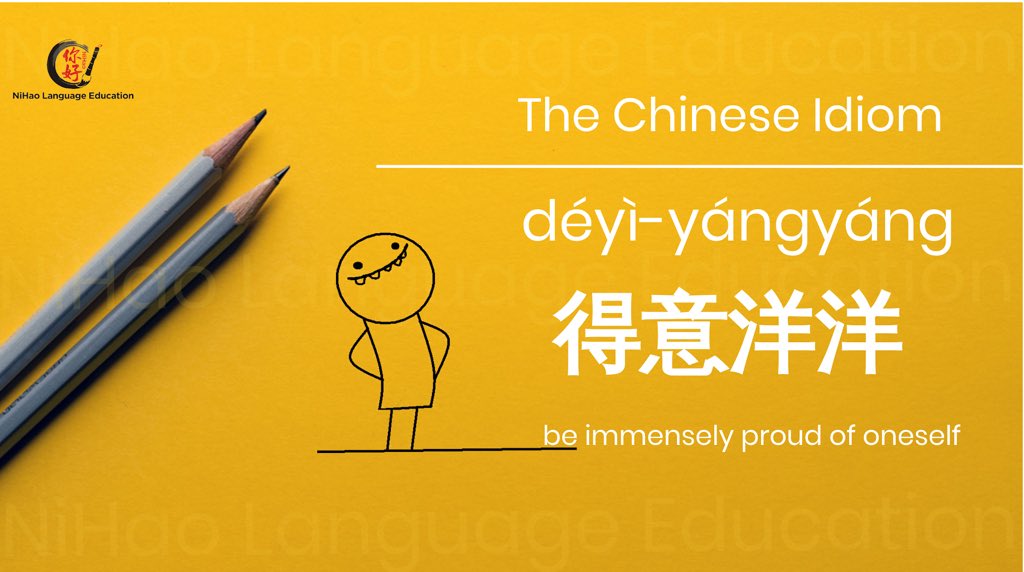
“得意洋洋”形容称心如意时神气十足的样子。
‘Déyì-yángyáng’is used to describe one is immensely proud of himself.
: complacent; proud of oneself
: self-satisfied
例句:
1. A: 为什么他看上去得意洋洋的?
B: 老师刚才表扬了他几句。
2. 他得意洋洋地给他的同事看他新买的车。
#Chinese#nihao
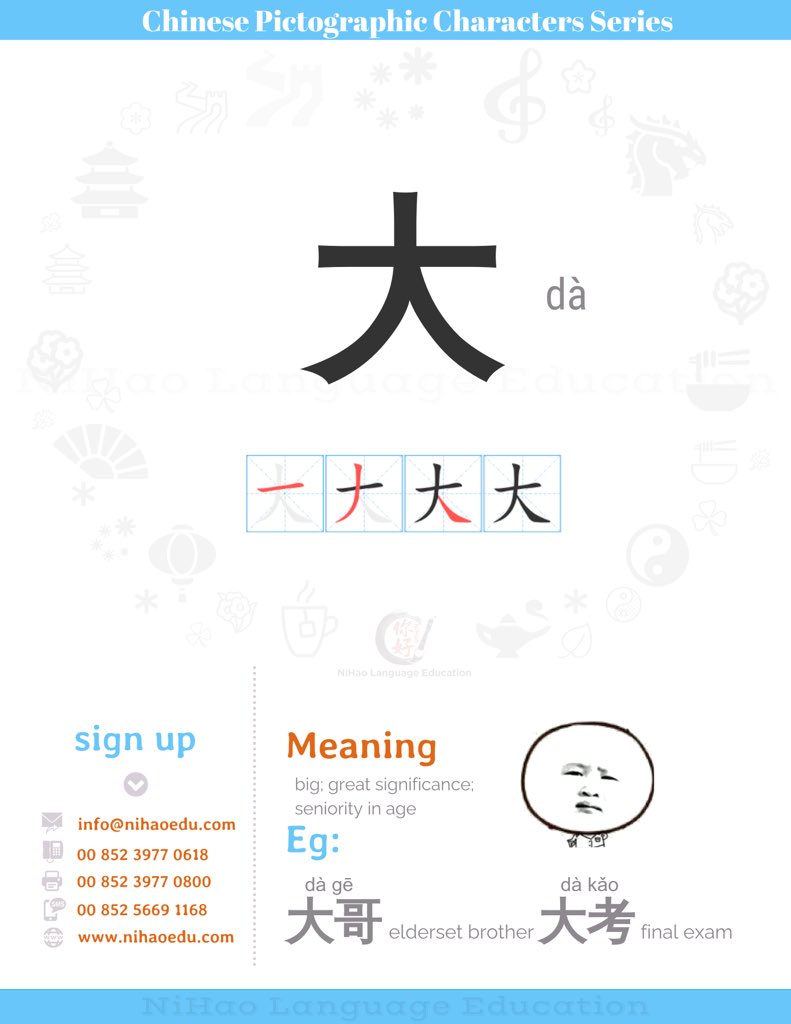
The pictogram of 大, meaning ‘big’ or ‘large’.
The word 大 can mean ‘seniority in age’, for example 大哥 (dà gē,’eldest brother’).
When used as a component in word formation. 大 may appear in different positions, for example天 (tiān, ‘sky’), 太 (tài, ‘very’)
#mandrian#studyinhk
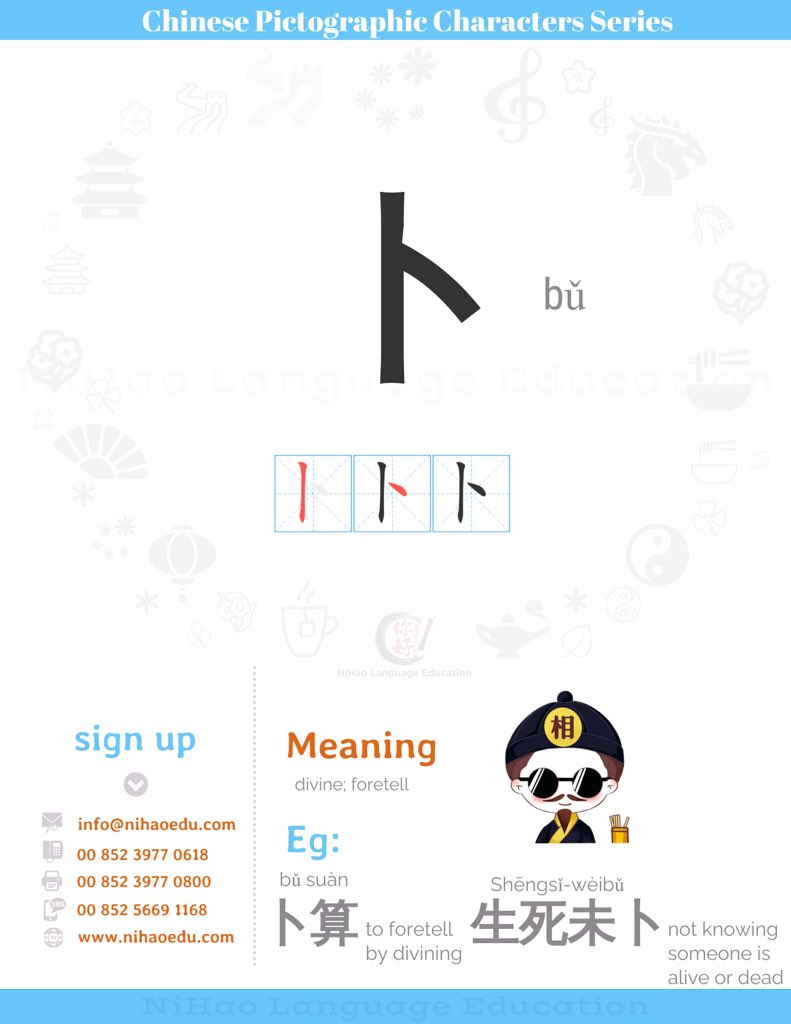
The word 卜 means ‘to divine’. The pictogram of this word represents such a crack.
The word 卜 can be used in phrases meaning ‘to divine’, for example 占卜 (zhānbǔ, ’to divine’),卜卦 (bǔguà, ‘to divine using the Eight Trigrams’).
#chinese#hk#mandrian#nihaoeducation#Central
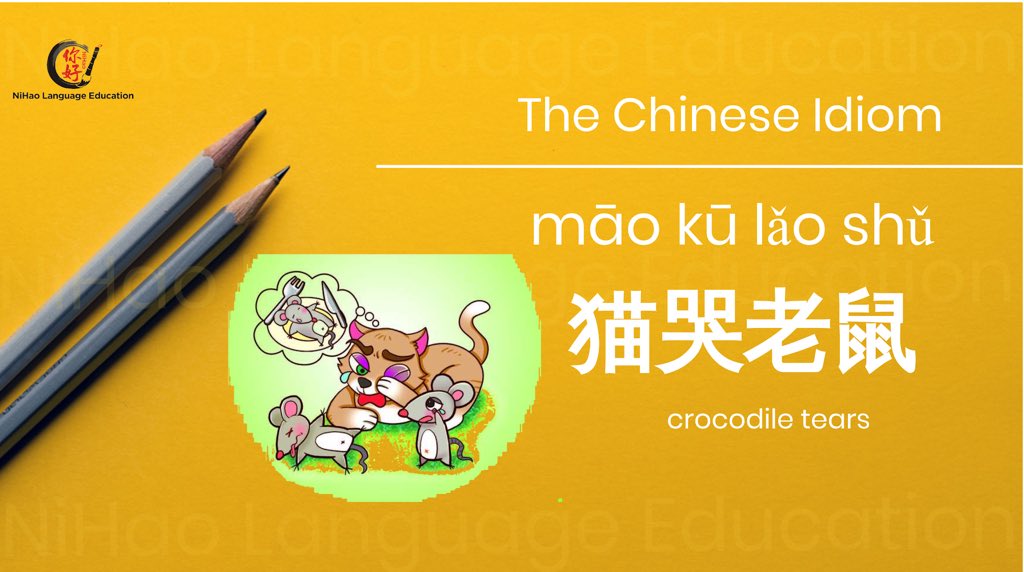
猫哭老鼠‘Māokū-lǎoshǔ’ is a metaphor for the act of pretending to be sympathetic or compassionate. It is similar to ‘crocodile tears’ in English.
例句:
1. A: 王经理听说你生病了,很担心你。
B: 真是猫哭老鼠,是他让我天天加班,我才累病了。
#languagelearning#nihaohk#mandrian
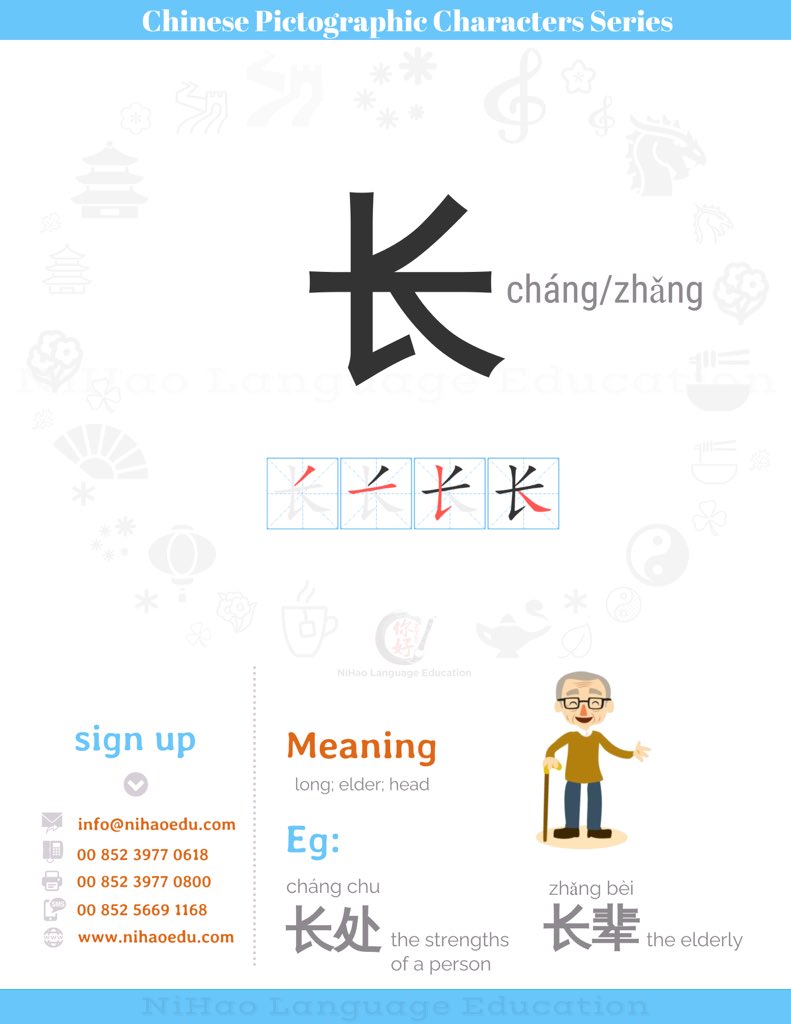
长 can be used as a word formation. As a component in word formation. As a component, it is often used to indicate pronunciation, for example 张 (zhāng, ’open up’),帐 (zhàng, ’ account’) and 帐 (zhàng, ’net’).
#radical#chinesewords#nihao#hk#studyinhongkong#lessonhk
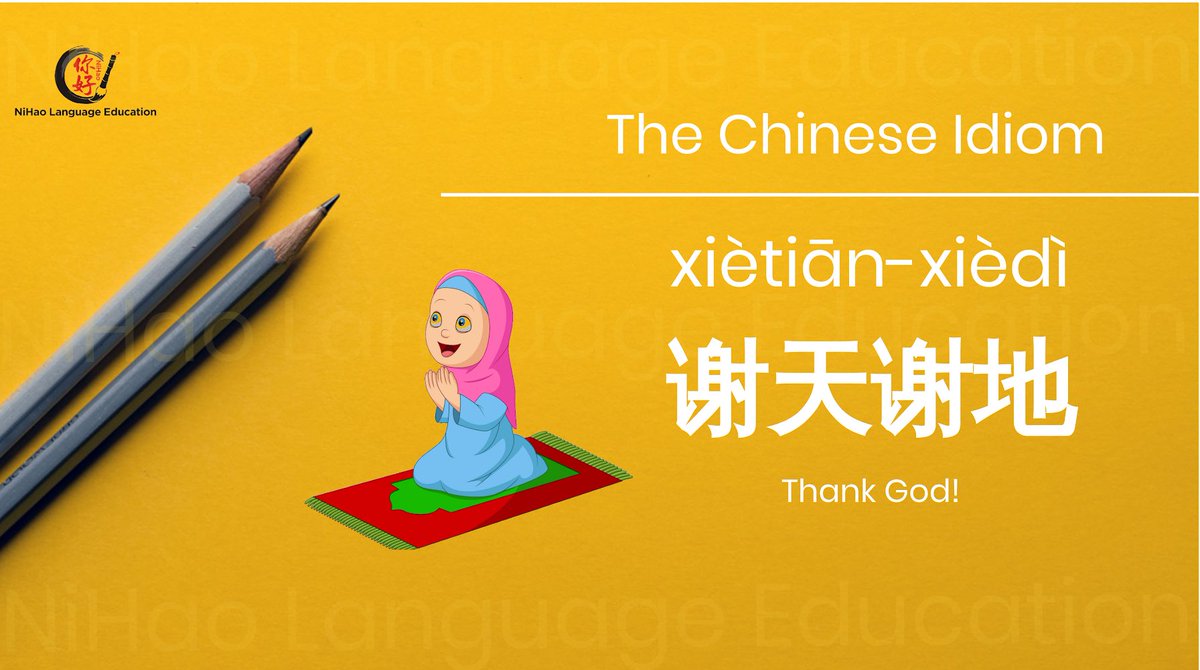
谢天谢地
‘Xiètiān-xièdì’means ‘to thank God’. It is used to express the gratefulness or gladness of having avoided something bad or getting a satisfactory result.
例句:
1. A: 谢天谢地,你总���来了。怎么路上花了这么长时间?
B: 对不起,今天路上堵得很厉害。
#grateful #chineseidiom