The newest paper from our group: Bioemulsifier from sponge-associated bacteria reduces staphylococcal biofilm (2024-08-15)
doi: https://t.co/EUYFyCcfn3
Another article published in @FrontYoungMinds, produced by Beatriz Ribeiro (Graduate student), Isabelle Rodrigues (Master student), Dr. @bfrancescol (Professor - UFF) and Dr. @MarinellaLapor1 (Professor - UFRJ)! This time it's about the #enzymes! 🧪🔬👩🔬
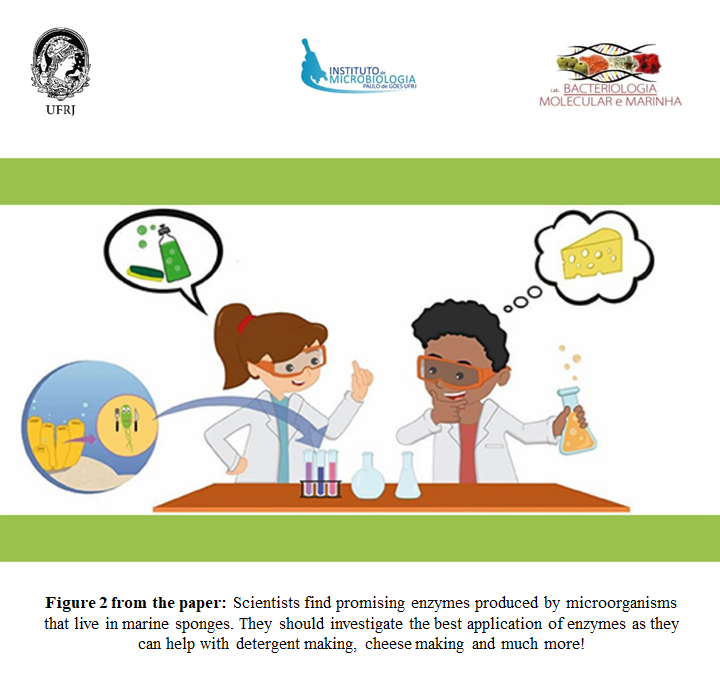
#MarineSponges host bacteria capable of producing #enzymes that help sponges digest nutrients! These enzymes can also be used in the food industry, such as in the production of bread and cheese, as well as in detergents and cleaning products. 🧪🫧🧼🍞🧀
This week, we disclose a recent paper published by @annaluiza_bc (Master's student), Mariana Anjo (microbiologist) and @WellFeCosta, in @FrontYoungMinds: a scientific journal with an easy-to-understand language, focused on children and teenagers, and with excellent content! 📝👦
These data were published in a previous article (https://t.co/TnSzeCkyhY) by our research group and adapted into simpler language, seeking to raise awareness of the problem of resistance and highlighting the need to address the serious health problem represented by superbugs. 🦠
Interesting work by PhD student Clodagh Carr from University College Cork in Ireland in collaboration with Prof. Bruno Francesco Rodrigues de Oliveira and Prof. Marinella Silva Laport from @LaportLab_UFRJ. 🦠🧬🌊🔍
https://t.co/CeJfRL80Vz
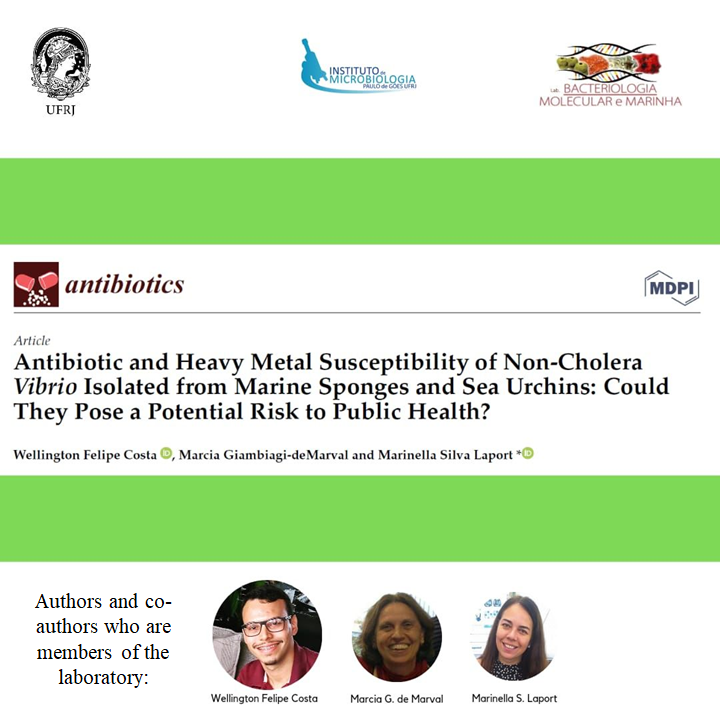
This information allows a better understanding of antibiotic resistance in aquatic environments and contributes to evidence that Vibrios associated with marine animals may represent a potential risk to public health. 🧫🦠🧬💊🔬🏥