@rabbriansamuel When the Church came into being by the act of the Holy Spirit, the ones present at that event were all Hebrews. Others have been grafted into the Hebrew blessing, not the other way around. Jewish believers in Jesus have actually returned to their roots in a very fundamental way.
The orphan lamb that Eduardo adopted in the spring has now, beyond all doubt, decided it is an alpaca. This is causing mild confusion across the flock and a great deal of quiet pride in Eduardo.
It began as plain survival. The lamb lost its mother, Eduardo had a vacancy in his heart roughly the size of a small herd, and he took the post without hesitation. He stood over it in the rain. He hummed to it, the soft alpaca hum, and the lamb learned to answer in a sound no sheep has ever made.
But a young animal becomes whatever it grows up beside, and this lamb has been studying the wrong tutor with total devotion. It has given up grazing like a sheep, head down and shuffling, and taken up grazing like Eduardo, lifting its head between mouthfuls to scan the horizon for threats it does not understand and could not fight if they came. It has tried to kush, folding its legs to sit the way alpacas do, which on a lamb reads less as dignity and more as a deckchair quietly collapsing.
And last week, in the moment Eduardo will treasure to the end of his days, the lamb met a startled rambler on the footpath, drew itself up to its full and unimpressive height, and tried, with everything it had, to spit. It does not yet possess the equipment. What came out was mostly hope.
The other sheep regard the lamb with the patient bewilderment of relatives at a long Christmas dinner. Eduardo regards it as the finest alpaca in all of Wales.
There is something genuinely true beneath the comedy. An animal is never only its breeding. It is also the company it keeps. Raise a creature alongside calm and care and unshakeable attention and it grows up shaped by exactly those things, even if it also grows up faintly ridiculous.
The lamb thinks it is an alpaca. Eduardo is not about to be the one who tells it otherwise.
Gerald built that entire imposing frame on nothing but plants. Grass, mostly. So before the vegans claim him as one of their own, read the small print, because he is carrying equipment you were simply never issued.
Gerald is a ruminant. He runs four stomach compartments, and the first of them, the rumen, is a vast fermentation vat heaving with trillions of microbes. Those microbes do the one job your gut flatly cannot. They break down cellulose, the tough fibre that makes up grass, which no human enzyme on earth can touch. You could graze a meadow from dawn till dusk and slowly starve. Gerald turns the same meadow into fuel.
And it runs deeper than energy. The microbes ferment the fibre, then get digested downstream themselves, handing Gerald a complete protein he never actually ate. Give them a trace of cobalt and that same microbial crew even manufactures his B12, the vitamin plants do not provide at all. He is, in effect, operating a private biochemical refinery that you were not born with.
So when someone waves grass-fed beef at you as proof that a body can thrive on plants alone, they have got the wiring backwards. Gerald did not flourish because plants are sufficient. He flourished because he owns the machinery to convert the inedible into the edible, and you do not.
Which leaves you exactly one honest way to be powered by plants. Put a ruminant in the middle. Let Gerald eat the grass you cannot, push it through the four stomachs you were never given, and concentrate a whole hillside of fibre into dense, complete, properly bioavailable food. Then eat Gerald.
That is what plant-powered looks like for an animal with one stomach and no rumen. It looks like a steak.
Your body needs a handful of nutrients it cannot pull, in usable form, from any plant. A grass-fed ruminant builds every one of them for you and asks nothing in return.
1. Vitamin K2, the MK-4 form. The grass only holds K1. The animal converts it into the K2 that drives calcium into your bones and keeps it out of your arteries. Weston Price chased this for a career and called it Activator X.
2. Retinol. True, ready-to-use vitamin A. The beta-carotene in a carrot still has to be converted, and plenty of people convert it badly. Liver and butter hand you the finished article.
3. B12. Found in no plant. Full stop. The ruminant is the only source.
4. CLA. A fatty acid with no real plant equivalent, sitting in grass-fed beef and butter and almost nowhere else.
5. The stable saturated fat your brain and your hormones are partly built from.
The cow eats the grass you cannot touch and quietly assembles the lot inside itself.
Then someone told you the food it made was the dangerous part of the meal.
A remarkable piece of salesmanship, in hindsight.
The whole CO2 hoax was born out of Al Gore misunderstanding that CO2 rises follow global warming: they do not precede it. This is because the Oceans are the largest store of CO2 & release it as they warm up. Same with carbonated (fizzy) water: try it.
March 19, 2026. Chicago, Illinois.
An 18-year-old college freshman walks down to the lake at midnight with her friends.
A pier. A lighthouse. The Chicago skyline. Maybe the northern lights if they're lucky.
She is a freshman at Loyola University. She is from New York. She is studying business.
She is the kind of girl who is always the first to hug you at the door, and the last to hug you goodbye.
She believes in God. She does Bible study. She volunteers for charity.
She is eighteen years old.
At the end of the pier, behind the lighthouse, a man is hiding.
He is dressed in all black. He is wearing a ski mask. He is holding a forty caliber handgun.
She walks ahead of her friends to the end of the pier and sees him.
She whispers to her friends, "someone is behind the lighthouse."
The man leaps out.
The girls turn and run.
He fires once. Into her back.
She falls on the pier. Her friends keep running because they have to.
When they come back, she is bleeding out by the lighthouse.
She is eighteen years old.
She is gone before the ambulance arrives.
Now you need to hear what happened BEFORE the lighthouse.
The man who shot her was never supposed to be in this country.
He crossed the border illegally in 2023. Border Patrol caught him.
And then Border Patrol released him.
Six weeks later, the same man was arrested again. This time in Chicago. For shoplifting.
Chicago could have called ICE. Chicago refused.
Chicago is a sanctuary city. Illinois is a sanctuary state. The law there forbids local police from cooperating with federal immigration officers.
So the man walked.
And then he didn't even bother to show up to his own court date.
A warrant was issued.
And nothing happened.
For almost three years, nothing happened.
He just lived in Chicago. With a warrant out for his arrest. In a city that had chosen, on principle, to not look.
Until the night he picked up a forty caliber pistol, put on a black ski mask, walked to the end of a pier, and waited behind a lighthouse for someone to kill.
Read that timeline again.
2023: caught at the border. Released.
2023: arrested in Chicago. Released.
2023: skipped court. Warrant issued. Ignored.
2026: an 18-year-old college freshman walks out to see the skyline.
The system had three chances.
The system used zero of them.
This is not me saying it. This is her family's lawyer, in a public statement:
"We are gravely disappointed by the policies and failures that allowed this individual to remain in a position to commit this crime. When systems fail, the consequences are not abstract. They are real. And in our case, they are permanent."
Permanent.
That is the word her family chose. Permanent. As in: she is not coming back.
An 18-year-old girl walked out to a pier in the middle of the night to look at the Chicago skyline with the people she loved.
She believed she lived in a country where you could do that.
The country she believed in failed her.
Not by accident. By policy. Written down. Signed. Defended.
Defended even now, while her parents bury her in New York.
She should be in class this morning.
She should be hugging her friends after Bible study.
She should be calling her mom from her dorm.
She should be alive.
A border that worked would have saved her. A city that called ICE would have saved her. A courtroom that chased a warrant would have saved her.
Three doors. All locked. From the inside.
By the people we elected to protect her.
Her name was Sheridan.
She was eighteen.
Don't let this country forget what was traded for a slogan.
And God bless every single American who refuses to call this normal.
There is now a serious, well-funded plan to vaccinate every cow on earth, twice a year, so it burps less politely. Bill Gates is behind it. So is the New Zealand government. Somewhere a marketing department is very proud.
The company furthest along calls its methane vaccine the holy grail of livestock emissions, a phrase that should make you reach for your wallet and check it is still there.
The pitch is gloriously simple. Train the cow's own immune system to turn on the microbes in her gut, so she belches less methane, with a single jab lasting months. Early results suggest a cut of ten to fifteen per cent. Trials run through 2027, launch around 2030, by which point the dream is a needle in the neck of every cow they can corner.
Pause on that. Not a feed tweak. A plan to medicate an entire species, forever, across the whole planet, to fix a problem with how we count its burps.
Because methane from a steady herd cycles out of the air within about a decade. It does not pile up like fossil carbon. A stable national herd adds no new warming whatsoever, whatever the headlines shriek. The cow was convicted by an accounting method, and the sentence is a lifetime of injections.
And follow the money, because it does the confessing for you. The cash floods in from billionaire climate funds and the food giants chasing their own supply-chain targets, the very people who need the cow to look guilty so their spreadsheets come out green. Not a penny from the farmer, who just inherits the syringe and the bill.
So the grass-fed cow, quietly turning rain and sunshine into food on land that grows nothing else, is now a wellness patient with a biannual appointment. Marvellous. The cow was never the emergency. The people insisting she is just happen to have a vaccine to sell.
In Japan, there is no janitor.
The children are the janitors.
Every day. After lunch. Twenty minutes.
Classrooms. Hallways. The toilets too.
Since 1947 it has been written into the national curriculum.
An official part of school. No grade. No exam.
You simply clean the space you use.
So the cleaning cloth sits on the supply list.
A six-year-old packs her own, folded, with her name on it,
the same week she first learns to hold a pencil.
She kneels. She wipes a floor that wasn't even dirty yet.
And long before she can spell the word,
her own two hands have taught her what respect is.
Then something strange happened. The world came to copy it.
Egypt runs it now, in thousands of schools.
Indonesia teaches it. So does Mongolia.
They flew their teachers to Tokyo to learn the secret,
and the secret was a wet rag in the hand of a child.
Think of the last time you watched a seven-year-old
clean a floor with no punishment, no payment, no shame.
Japan asks it of every child, every afternoon.
And it has never once called it a chore.
It calls it the first day of becoming a person. 🇯🇵
Keith has been hired. Not as a figure of speech. A neighbouring farm with a hillside disappearing under bramble has formally requested the one service Keith provides better than any machine, which is to eat the problem.
There is a real difference between a grazer and a browser, and it is the entire point of a goat. A sheep keeps her head down and crops the grass. A cow wraps her tongue round the sward and tears it. A goat looks up. Keith eats at every level, the bramble, the young scrub, the gorse, the nettle, the thorny climbing things other livestock leave well alone and that quietly swallow a hillside the moment grazing stops.
Let a steep British field go ungrazed and it does not drift gently into a wildflower paradise. It becomes a wall of bramble and a thicket of young blackthorn, a green desert that shades out the very plants the romantics imagine they are protecting. Send in a goat and he opens it back up, knocking the scrub down to a height the wildflowers and the insects and the ground-nesting birds can actually use again.
Keith has no idea he is a conservation tool. He believes he has stumbled upon the single greatest field in the recorded history of fields, an all-you-can-eat of precisely the spiky, bitter, climbing matter his gut was built for, and he is working through it with the unmistakable joy of a goat who has at long last been understood.
The farm recovers its hillside without a drop of diesel or a litre of herbicide. Keith gets the buffet of his life. The brambles get a rude and well-earned awakening.
It is, he would note if he could, the first job he has ever held that nobody is actively trying to stop him doing.
Everyone is reading the Supreme Court's Roundup decision as a fight about glyphosate. Much of MAHA called it a betrayal.
The more I studied the opinion, the more I concluded it is not really about glyphosate at all. 🧵
One of the most thought provoking speeches I've seen in a while.
@Miss_Snuffy on how raising a generation to see the world through oppressors and the oppressed is changing the West.
If you don't have time, bookmark it. It's worth every second.
WATCH:
RFK Jr. and Secretary Brooke Rollins just brought regenerative farmers to the Oval Office so President Trump could hear directly from them.
They made the case for why regenerative agriculture is critical to the future of American farming.
“Secretary Rollins and I just joined President Trump in the Oval Office with 4 of America’s leading regenerative farmers.”
“We wanted the president to hear directly from farmers who successfully transitioned from conventional agriculture to regenerative practices.”
“They can strengthen soil health.”
“Improve farm resilience.”
“Increase profitability.”
“And support rural communities.”
“The executive order President Trump signed today reinforces the administration’s commitment to partnering with American farmers.”
“Expanding the opportunities for regenerative agriculture.”
“And advancing the Make America Healthy Again agenda.”
In Tokyo, it is ordinary to see a seven-year-old board a train alone with a yellow safety cap and a perfectly folded permission form in a backpack.
Japan's school commute culture runs on trust layered over systems.
Many elementary students walk or take public transit without a parent — in surveys across major cities, the vast majority of first graders already go to school on their own or with classmates, not because parents are careless, but because neighborhoods, schools, and communities designed for it over decades.
Station staff know the regular faces.
Drivers watch the platform.
Older students quietly guide younger ones to the right car.
A child in a yellow hat stands on tiptoe to tap his IC card, serious and proud.
A shopkeeper near the school gate watches until the last straggler passes, then nods.
An American parent visiting Japan sees this for the first time and feels something complicated — then watches a local grandmother bow to the child, and understands it is village-scale care, not abandonment.
Safety built from habit, signage, and a whole town paying attention.
Some independence is not loneliness.
It is a community holding the edges so a child can walk the middle.
Your government will cheerfully let you:
- Drink until your liver waves a white flag
- Smoke forty a day for fifty years
- Inhale a kebab at 3am with a fistful of chips and a fizzy drink the colour of antifreeze
- Eat ultra-processed gunge until you're diabetic at thirty-four
- Swallow pills with a side-effects leaflet folded like a road map
- Get inked by a bloke called Spider in a garage that smells of Dettol and regret
- Hurl yourself out of a perfectly good aeroplane
- Climb a frozen mountain that kills experienced men every year
- Pay good money to swim with sharks
But there is one substance so dangerous, so reckless, that a grown adult cannot be trusted with it:
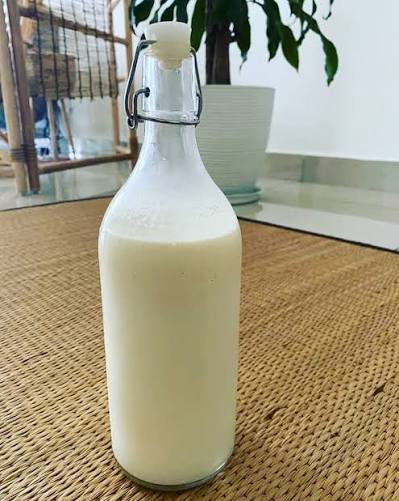
- Milk. From a healthy cow. On a clean farm. The next village over.
They'll wave you onto the skydive and the shark cage, then step in to save you from a glass of the stuff your great-grandparents drank every single morning of their lives.
Funny, that.
Communism through (my) ages:
1) When I was 15, a teacher told me "It isn't as bad as they say, and makes a lot of sense."
2) At about 19, college friends, "Socialism isn't communism."
3) At 20, on meeting my grandfather-in-law, "They are evil. We escaped in 1949."
4) At 30, "China is a wonderful developing Democracy"
5) At 35, I was sent to communist China on business. It was a crowded, smelly, dirty, factory of despair and hopelessness. This I saw with my own eyes.
6) At 36, "China doesn't count. Successful socialism is in northern Europe."
7) I moved to northern Europe when I was 40. It was much nicer than China, but also felt like I was living in the past. I had to wait 6 months for a hernia operation.
8) When I was about 45, the migrant crisis began. The socialist/globalist/pacifist allowed them entry into every country, regardless how many crimes they committed along the way. Just 20 minutes from my house, in Calais, I was shocked to see migrants jumping onto trucks, breaking open the doors, scattering the contents across the highway, then climbing in. They went through the Chunnel and got out in England.
9) At 52, the soft socialism around me had transformed into globalism. I was told I had to call people by their preferred pronouns, though it was a lie, and even if I didn't know what the preferences were. I quit.
10) I returned to the US, and am now 60. "Socialism" is no longer a dirty word here. People openly espouse the virtues of it. Politicians run as socialists and win.
Socialism has taken many forms, from the Bolshevism of Russia, to the CCP in China, the Nazis in Germany, Fascists in Italy, and the many forms of it found in Latin America. It is one of the two most destructive ideologies on earth. It is designed to deprive, despirit, and murder everything that comes in contact with it.
Socialism is a great lie at every level. It helps no one, not even those who benefit the most. This is because the cost is the imposition of one's will on everyone else, and that destroys the soul of the usurper and the life of the oppressed.
Socialism always fails on its own, but only after destroying almost everything in its train. It can also be conquered. Those are the options.
There are four hens in the back garden of a retired widower in Yorkshire, and there is, unmistakably, a government.
Beatrice runs it. This was never put to a vote. Beatrice is a four-year-old Light Sussex, and she holds office the way the genuinely powerful always have, by being first out of the coop every morning, first to the worms, and entirely beyond challenge. The other three understand the arrangement completely. None of them has ever seen it written down. None of them needs to.
A backyard flock, it turns out, is not a democracy but a small and rigid court, and beneath Beatrice sit the other three in their settled order.
There is Brenda, a Rhode Island Red, the deputy and enforcer, who administers the order of things with the joyless efficiency of a woman who runs the village hall committee and has firm views about how the urn is filled. Brenda does not aspire to the top. Brenda has seen what the top requires. Brenda is content to be second and to make absolutely certain everyone below her knows they are below her.
There is Pam, a blue hybrid of uncertain parentage, who occupies the middle and worries about it. Pam is the first to raise the alarm at a sparrowhawk, a falling leaf, the neighbour's cat, or a carrier bag, and she is right just often enough to be tolerated and wrong just often enough to be a trial to everyone. Pam means well. Pam means well at volume.
And there is Susan, the youngest, a flighty brown hybrid who arrived not knowing the order and learned it the hard way, one firm peck at a time. Susan is at the bottom. Susan has made her peace with the bottom. She gets the worm nobody else wanted and the perch nearest the draught, and she is, for all that, the happiest hen in the garden, because the foot of a settled order is a more restful place to stand than the middle of a contested one. Pam could learn a great deal from Susan. Pam will not.
The man watches all of this from the kitchen window with his tea and believes, in the manner of all constitutional monarchs, that he is in charge. He opens the coop. He scatters the feed. He digs the vegetable bed at quarter past six because Beatrice taught him to, though he would tell you it was his own idea entirely.
He thinks the garden runs on him. The garden runs on Beatrice. The man is, at most, the weather.
He lost his wife some years ago, and a daughter who could not be there every day brought him four hens instead, on the theory that a man does better with something to get up for. The theory was sound. He gets up at first light now, every morning, because four small dependents are counting on him, and because one of them, a white hen with a black collar, will put her head on one side and regard him in a way that has become, without his ever quite deciding it, the first conversation of his day.
He talks to them. He has stopped pretending he does not.
Four hens. One government. A worked vegetable bed, more eggs in a week than one man can get through, two dead rats so far this year, and a reason for a good man to be out in his garden at dawn with the dew coming up and the kettle on.
This is the smallest farm in England. It is also, by a quiet distance, one of the best run.
Eat the egg. Keep the hens. Mind the old men in their gardens. They are doing better than they let on, and so, in their settled and governed way, are the hens.
USA. A backyard. The sun was going down, and a man named Dale stood before a black iron drum, feeding it wood, the way you feed a fire that must not die before morning.
"Brisket," he said. "Gonna be a long one. You're welcome to keep me company."
Keep him company. He said it the way a man mentions the weather. But I heard the truth beneath the words, the way you hear a temple bell beneath the wind. He was not inviting me to a meal. He was asking me to stand a vigil. To hold the sacred fire through the dark with him, two men against the whole of the night, so that something worthy could be born by dawn. My heart rose like a banner going up a pole.
I bowed, deep enough that he would feel the weight of what I was accepting. He nodded back and adjusted a vent.
He gestured at a folding chair. "Sit if you want, man. Gonna be a while."
I did not sit. A sentinel does not sit while the fire still lives. He looked at me a moment, then nodded slowly, the way you nod at a thing you have decided not to worry about. I took that nod as the first honor of the night.
Where I come from, when a thing of great worth is being made, you do not leave it. You stand the whole night beside it. You do not fill the silence with talk, because the silence itself is the labor.
So I stood. I said nothing. He said nothing. We watched the smoke leave the drum and climb into the purple sky, and for the first time in this loud and generous country, I felt completely understood.
After an hour, without looking at me, he pressed a cold can into my hand. I received it in both palms and bowed my head a fraction, the way one receives a canteen passed down the line between sentries who both know the night is far from over. I did not drink quickly. One does not drink quickly on watch.
A neighbor wandered over with a beer, saw me standing at attention beside the drum, and asked Dale, low, if I was doing alright.
"He's good," Dale said. "He's keeping me company."
He had vouched for me. Before his own people. I would have walked into the fire for him right then.
After two hours, he spoke. Once.
"Smell that bark setting up?"
I closed my eyes and breathed in, and I will tell you honestly, my chest went tight. Because it did. It smelled like patience. It smelled like a thing no king and no army could hurry, however mighty. "I do," I said, and I said it like an oath.
We did not speak again for a long while. A dog came and lay across both our feet, choosing neither of us, guarding the both of us. The stars came out over the fence and the cheap string lights and the plastic chairs, and I thought, with my whole heart, that there are grand temples in this world holding less holiness than this tired man's backyard.
Near midnight his wife leaned out the door. "Dale, you two have been standing there four hours. You know you can sit down, right?"
"We're good, hon," Dale said.
We're good. Four words. He had spoken for the both of us, claimed me as his brother of the watch, and waved away all comfort in a single breath, and he did it without once taking his eyes off the fire. I have heard generals give long speeches that carried less.
A fire kept alone is only a chore. A fire kept together is an oath.
When the meat was finished, near dawn, he cut the very first slice and laid it in my hands. The guest. The man who had done nothing but stand beside him and honor the work.
I have eaten at tables that cost a season's wages, served by men trained from boyhood. None of it ever fed me the way that one slice did, handed over by a weary man at sunrise who had decided, hours before and without a single word, that I was worth keeping the watch with.
I do not know Dale's family name. I would stand the whole night for him again tomorrow, and count myself honored.
I am a samurai. Tonight, my army won.
Japan beat Tunisia, four to nothing, and I watched it in a bar full of strangers from countries that were not playing. By the second goal I had stood up so many times that the Mexican man beside me simply stood with me now, on principle, without checking why.
I must be honest about something. They are called Samurai Blue. The team. So all night, every time they scored, the whole bar turned and looked at me, the actual samurai, as though I had personally sent these men onto the field. I did not correct them. A commander does not explain himself during a battle.
The Tunisian was crushed. His team lost, badly, and he sat with his head down, and this is the part I think about. I had just beaten him. My army had crushed his. And yet I could not enjoy it while he was sad. So I put my arm around the man my country had just defeated, and I told him, with great seriousness, that his team had fought with honor.
He did not speak Japanese. I do not speak Arabic. It did not matter. He understood that the winning samurai had chosen to sit with him in his defeat, and he wept, and then he laughed, and then he bought me a beer, which made no sense, he had lost, I should have bought HIM the beer, but you cannot argue with a man who has decided to be generous in his grief.
The American, of course, had no team left in the tournament and had simply adopted Japan twenty minutes ago. By the third goal he was the loudest Japan fan in North America. He kept yelling "LET'S GO SAMURAI" directly at me. I raised my cup each time. We are blood now. He does not know my name. He thinks I coach the team. I have decided not to ruin this for him.
By the end, four men who began the night as strangers stood in a circle, arms around each other, two of us happy, one of us heartbroken, one of us American, and all of us, somehow, exactly the same amount of alive.
The Tunisian gave me his scarf. I gave him my respect. We will never meet again. I will keep that scarf until I die.
My army won tonight. But I did not walk home thinking about the goals. I walked home thinking about the man I beat, who bought me a beer anyway. That is the one I will remember. The scoreboard forgets. The beer he bought me, I never will.