This isn't a great dynamic, obviously for people looking for work, but also because someone has to pay for the health care spending generated by more health care jobs.
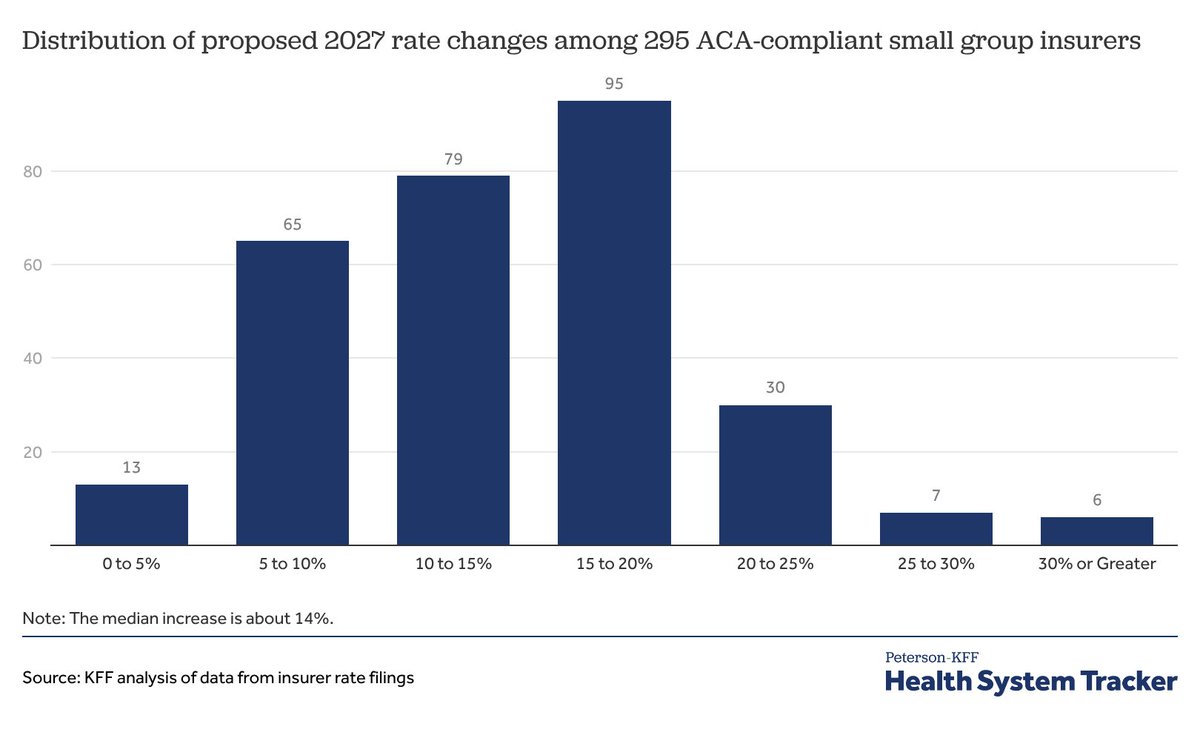
New: Many small businesses could see double-digit health insurance premium increases in 2027
Insurers point to high prices for hospital care and specialty rx drugs, as well as increasing utilization and risk pool deterioration as factors driving premiums up
Will a Medicaid enrollee who suffers from seizures and addiction, and became homeless after losing his job, be able to navigate the process to prove he's too frail to work? That's the kind of question hanging over the implementation of a new Medicaid work requirement. @K_Hought
Some states that have long wanted to pass Medicaid work requirements planned to excuse people without steady housing from the rules. But the federal government said that’s not happening. @K_Hought reports⤵️
https://t.co/vDbNra8xQE
The essence of incrementalist healthcare policy (over the past 80 years) has been making complicated trade-offs.
The popularity of Medicare For All in some quarters comes from pretending (for a while) that those trade-offs don't exist.
Medicare for All is the only health reform policy that truly fits on a bumper sticker. Incremental policies are inherently more complicated to explain. The ACA did much more than ban pre-existing condition exclusions, but that part was easy for people to grasp.
Medicare for All advocates talk about universal coverage, no premiums and out-of-pocket costs, administrative savings, and eliminating insurance profits.
Opponents talk about higher taxes, more government control, and giving up your current insurance plan.
All of that is true.
It has been widely reported that at the direction of OMB, CDC will not renew its main HIV prevention grant for community-based organizations (CBOs). New KFF analysis provides a snapshot of where, to whom, and at what level the CBO grants were distributed. https://t.co/xvVP0z5r2T
Dr Al-Sayeed’s win today means we will be getting a lot of questions about Medicare for All at KFF. But we are far from a policy debate about how it might work, be paid for, what the tradeoffs might be. For now M4A is rallying cry; it would not actually be the Medicare program.
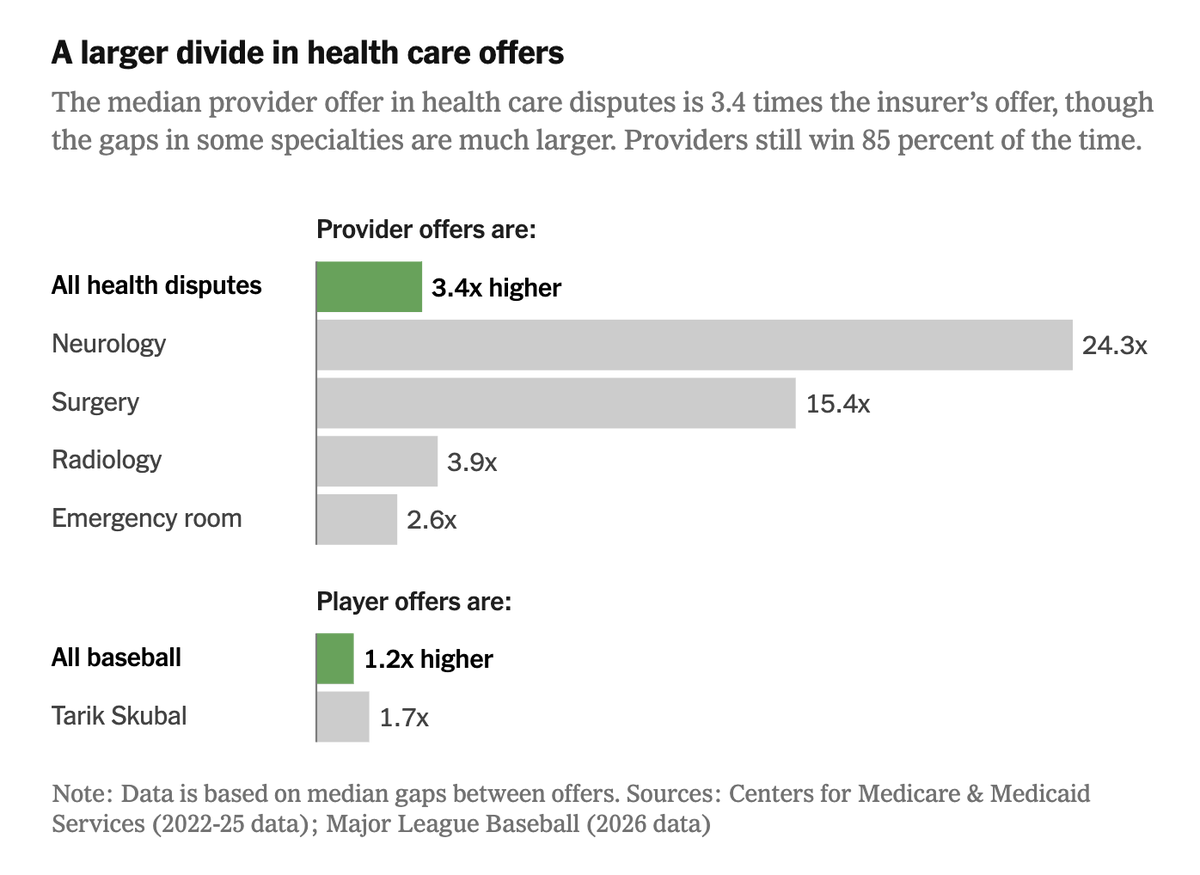
Surprise medical billing was largely fixed for patients. But, the process for resolving how much out-of-network providers should get paid by insurers is objectively quite a mess.
Congress copied baseball's arbitration system when it set up a law to fix surprise medical billing. But it's turned out really differently. @sarahkliff and I went deep on baseball to find out why.
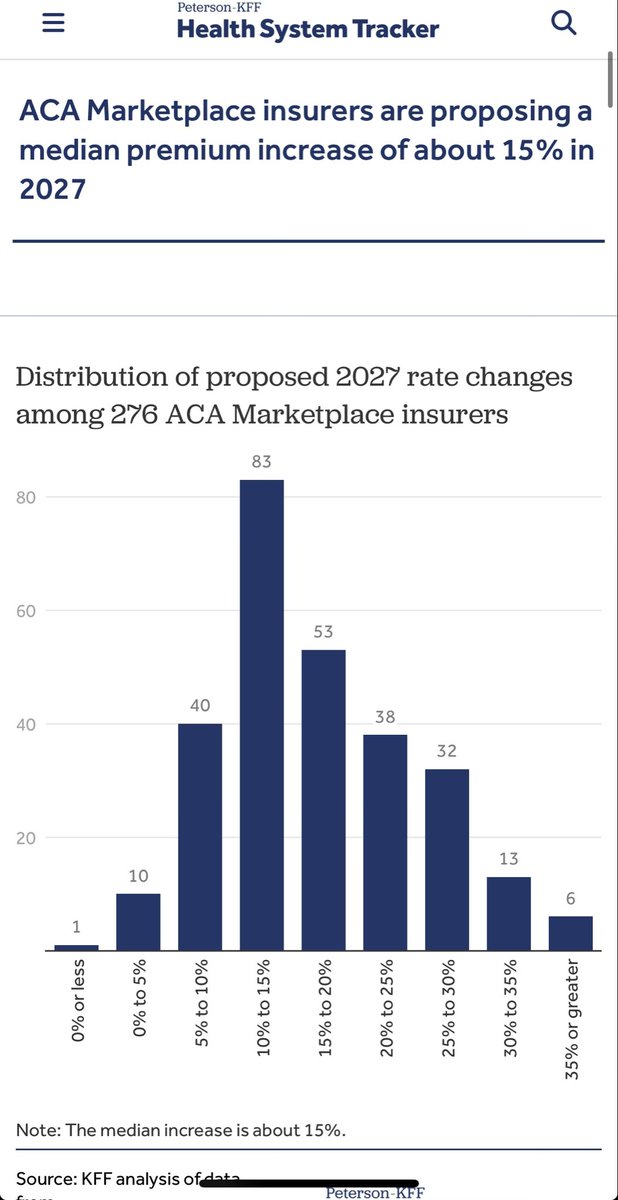
Insurers are requesting a median 15 percent ACA marketplace premium hike for next year, per rates posted by CMS. Second highest requested rate change since 2018, after last year. https://t.co/Z8p2Xee8UQ
NEW NATIONAL DATA
ACA marketplace insurers are increasing premiums by double digits - a median of 15% nationally.
We just updated our analysis with data released Friday for all 50 states and DC
The Lumbee Tribe won federal recognition last year, ending a 137-year struggle and opening the door to building its own health system. Living in North Carolina’s sickest county, its people are divided on how to do it.
https://t.co/GMihfSqMdo
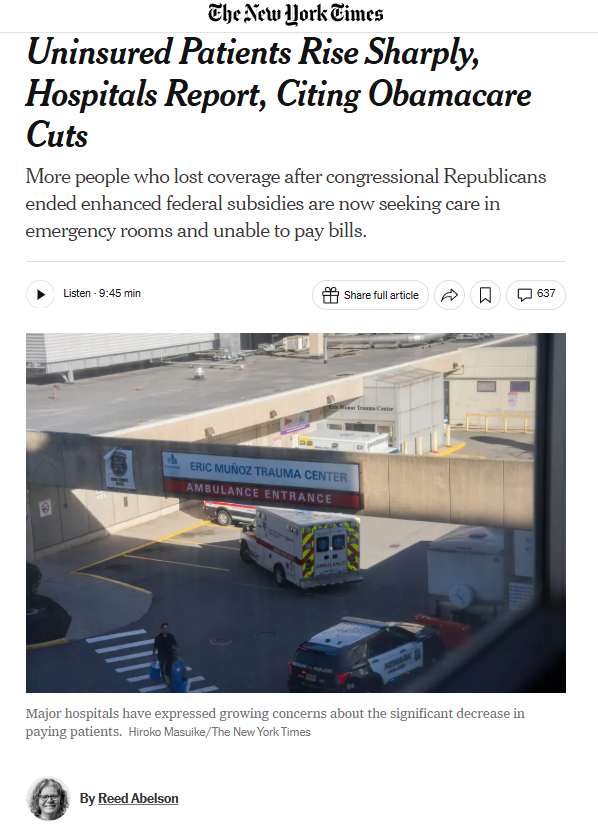
More uninsured patients are showing up at hospitals with enhanced ACA premium subsidies expired. That trend will likely accelerate in the years ahead as additional ACA and Medicaid cuts kick in.
https://t.co/2cQ45aLMeh
We don't have real-time data showing the number of people uninsured with enhanced ACA premium subsidies expiring, but these reports from hospitals of more patients unable to pay their bills is a pretty good indication of what's happening.
@ReedAbelson@nytimes
As we head into the midterm elections, health care costs remain a top concern for voters. What do they want candidates to address?
KFF’s Ashley Kirzinger shares insights from recent KFF polling.
New KFF brief: Medicare’s proposed cuts to 340B drug payments would hit safety-net hospitals while benefiting for-profit hospitals, among other differences: https://t.co/G8kxp2ONoc