My conversation with Steven Bartlett for his Diary of a CEO Podcast was published 11th June. Encouraged as I write today to see that it's had a good number of views: https://t.co/Bec8caT7a1
Although there is much more in retrospect that I wish I'd said, this dialogue with Steven is one of the most meaningful I've had in years of such appearances -- but I'm not responsible for the title! Although we do talk about Antarctica, its place in the overall conversation is small and there's much else that matters to me much more. Meanwhile, deep gratitude to all who have sent me good wishes for my surgery later this week which looms very close. I'm living and breathing my new book right now and I just last night finished writing Chapter 20, but this is all such an upheaval that it would be pointless to dive into Chapter 21 until after the procedure. When I'm writing I usually have quite a relentless work ethic but I think I'll take the rest of today off, chill with Santha and see if we can find a good movie to watch.
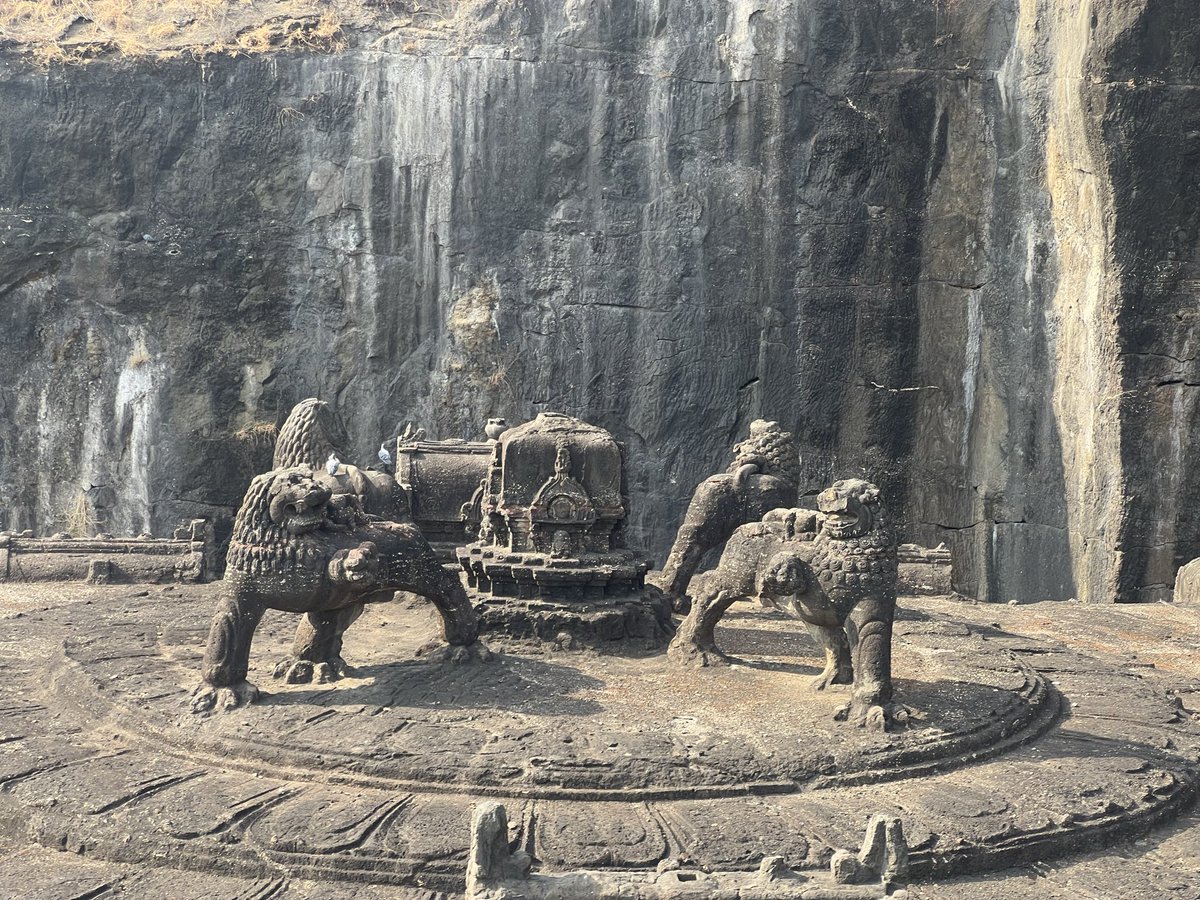
Kailasa temple from the top. They would have had to start from the top down and either carved these first or left space bc they knew they were going to.
Here's some megaliths I bet you haven't seen before
Exploring behind Temple of the Moon in Cusco I stumbled upon these fantastic bedrock cuts.
Three questions:
Who? How? And why?
I'll take your answers in the comments.
Link to the full vid below👇
Masuda-no-Iwafune (Spaceship Stone) in Asuka, Japan was clearly left unfinished.
You can see sections were being created in the stone for removal.
It was worked from the top down, breaking off smaller worked pieces a bit at a time.
@drentenvdb in the last shot is 6’4
Was this wall in Athens (known as the Hill of Pnyx) that features 200+ ton interlocking mortarless blocks engineered by a lost civilization that predated the Greeks?
Suspicious Cyclopean Site in Norway.
(found by @HaasSteyn )
the story goes that this is a blast furnace made for iron smelting?? This is traditionally just done with brick constructions. Why create this for a small town iron processing operation?
Moreover, it's made from larvikite, a form of syenite, a hard felsic intrusive igneous rock adjacent to granite but deficient in quartz
My take:
The builders were short of refractive bricks for some practical reason and decided to improvise/ recover old skills.
Although cyclopean builders (both european and south american) are not a lot great at metallurgy and seem to be lacking versus other competidors.
Ironically, cyclopean masonry is quite good at building kilns (providing the rock is adequate) for it does not use mortar or any other aditive that might burn.
Still, it would be way cooler if this was an actual thing from the bronze age lost deep in Norway. That's what I prefer it to be.
I still haven't heard a credible explanation for what I found at 10,800 ft in the Andes Mountains.
Cuts into bedrock? Puddles of melted stones and quartz? Trees turned to stone?
I don't know what caused this. Nobody I've asked does either.