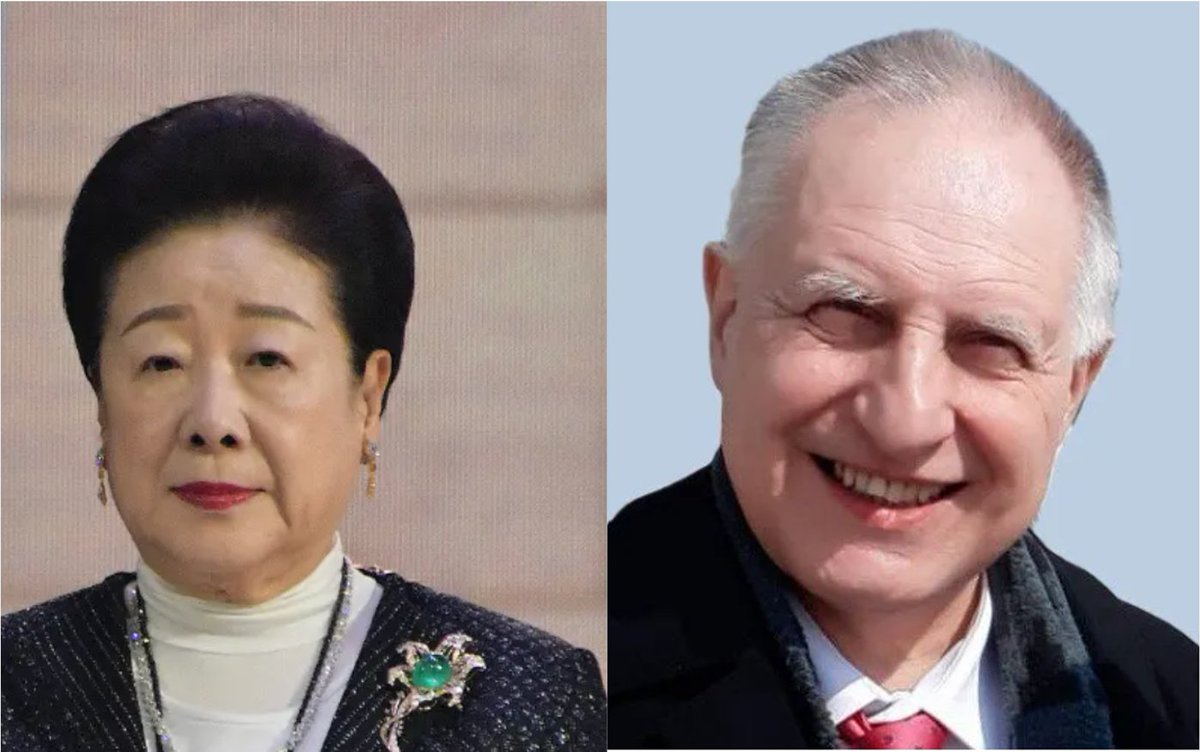
Dr. Juraj Lajda gives compelling reasons why Dr. Hak-ja Han should win the Nobel Peace Prize. He was imprisoned for three years in communist Czechoslovakia and, after that, continued to stand for freedom. He praises Dr. Han for her strength and courage as she stands for peace while in prison. He compares her to Dr. Martin Luther King, Desmond Tutu, and Mother Teresa. As this article reads, "Throughout history, the prize has continually elevated leaders who utilized non-violent transformation in seemingly impossible environments." This article is one of the best I've read about the Mother of Peace.
https://t.co/pBmuBMX57x
Japan ❤️
In this moment, everything changed for me. What began as a simple embrace became something far deeper, a moment where I felt the heart of God beat through mine. No words could fully explain the love, compassion, and healing that filled my soul that day.
@monarchreport25 The faith leaders are a part of individual and family lives in every part of the world. Their hearts beat with the people they serve. Theirs is a critical role in every nation. To restrict them is to cut the heart out of society.
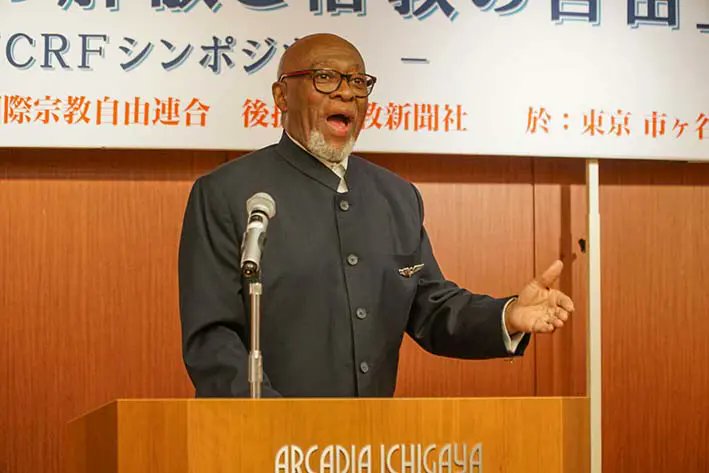
American and Japanese religious leaders are calling out the Japanese government over the Family Federation dissolution.
On April 27, the International Coalition for Religious Freedom (ICRF) held a symposium in Tokyo.
U.S. Archbishop George Stallings did not hold back.
He called it "madness" for the Japanese government to presume it knows better than believers how their church should operate.
His warning on donations was pointed: when the government, not the individual, decides how much someone can give to their faith, that government becomes a "monster."
Then he addressed every religious leader in the room directly.
"If the government can dissolve the Family Federation, you're next. We must pray together, stand together, and never let the government's actions go unchallenged."
Pastor Kurose of Tokyo West Baptist Church called the closure of churches and seizure of property "exactly what communist states have done," labeling it a national crime.
He urged believers: "Record your experiences for the future. Future generations will surely render proper judgment."
Buddhist leaders in attendance described Japan's religious world as being in a "devastating state," calling the High Court's decision "judicial suicide."
A Family Federation church leader from Shinjuku, Okamitsu Kunkei, reported that members can no longer hold weddings or funerals at their own facilities.
"The desire to perform life's most important ceremonies at one's own place of faith is a fundamental, intrinsic human right," he said.
This is not just a story about one religious group.
A democratic government dissolved a religion, seized its property overnight, and blocked believers from their own sacred spaces.
Can they decide how much devotion is too much, or where believers may gather to pray?
Source: https://t.co/S6PcoRgWDR
Detention of religious leaders continues in South Korea. Some are calling it a purge.
Among those detained, the most urgent concern is the health of Dr. Hak Ja Han, president of the Family Federation.
She fell three times in one month inside a detention center, and underwent surgery.
228 days since detention.
172 days in a cell.
56 days hospitalized.
Three surgeries.
Heart: she underwent surgery for cardiac arrhythmia before detention. Prosecutors detained her before recovery was complete.
Eyes: operated on amid risk of blindness from glaucoma and macular degeneration. The court granted three days of medical release. Guidelines recommend one to two weeks. The defense applied for an extension. Denied. She was returned to her cell.
Shoulder: she fell three times in one month inside detention. Pain spread through her body to the point where painkillers were no longer sufficient. The injury to her left shoulder was only discovered after her third temporary release, when she finally received a thorough examination at a hospital.
No adequate examination had been conducted inside the facility.
Her lawyer told the court: "It is too hard to endure each day. She does not even have the strength to chew rice."
The defense requested two months for rehabilitation. The court granted one. That deadline falls on May 30.
She and her defense team repeatedly raised alarms about her deteriorating health. Those warnings were dismissed.
She needed consistent nursing care and medical treatment. Inside the detention center, she received neither.
The neglect produced exactly what they warned against: further deterioration.
The world is watching South Korea detain religious leaders, deny them medical care, and call it justice. The question is no longer about law. It is about religious persecution and the abandonment of human rights
A second-gen member flew in from America to encourage the Family Federation in Japan.
Born in Japan and raised in the U.S., he carries both worlds with him.
He spoke about how unimaginable Japan's situation looks from the outside, and shared his heart to do something for Japan.
His presence is a reminder that Japan is not standing alone.
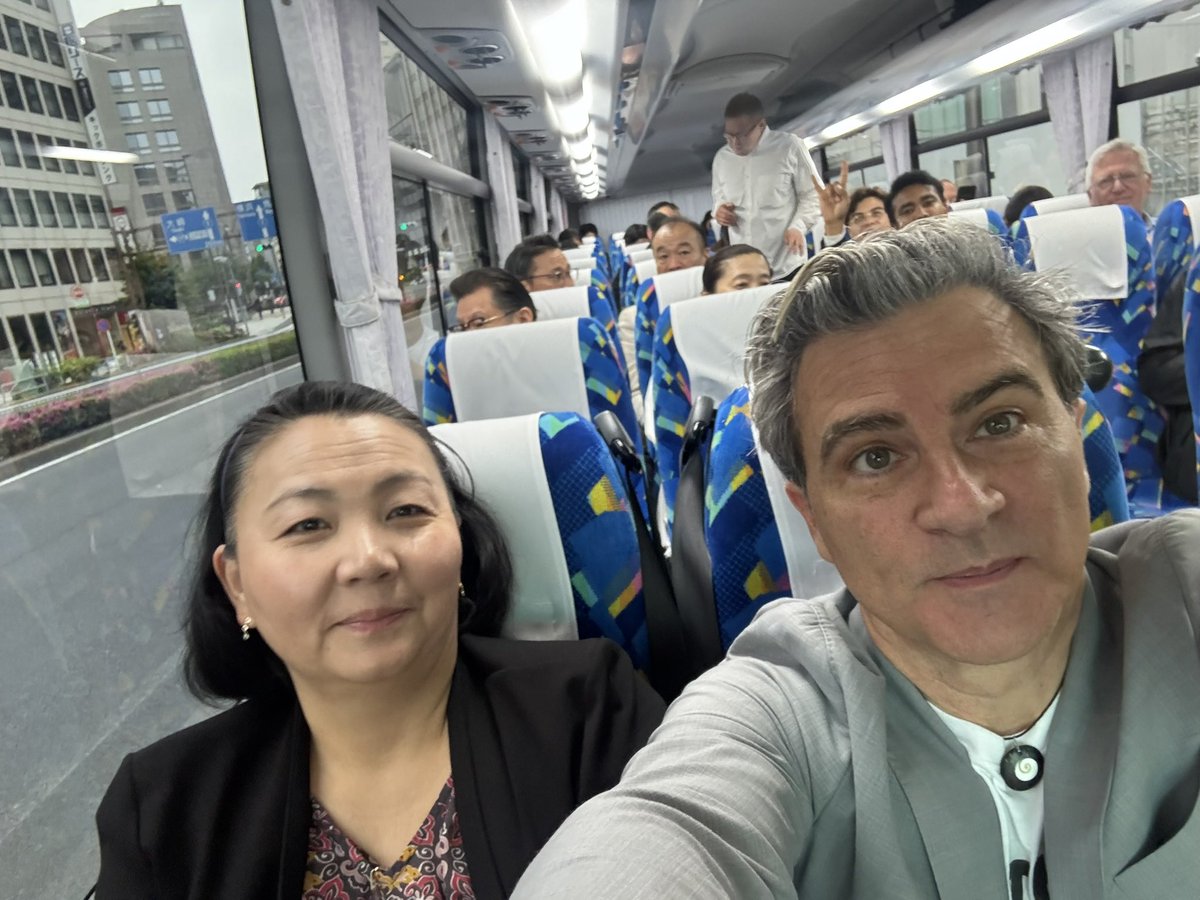
This time, around 150 members made the trip from America to stand with Japan. In Tokyo, they will raise their voices to defend religious freedom in Japan.
Full Video
https://t.co/CloNsSQNZP
+ 100 American second-generation believers have arrived in Tokyo in response to the dissolution of Japan's Family Federation.
They came to stand with Japan in defense of religious freedom.
According to sources, Dr. Hak-ja Han, 83, underwent shoulder surgery under general anesthesia at approximately 1:00 PM KST today, April 14.
The procedure began earlier than scheduled and concluded at around 5:30 PM.
The surgery was completed successfully and she is currently recovering.
The surgery took place during an ongoing medical hospitalization authorized by Seoul Central District Court.
On March 27, the court granted her a temporary suspension of pre-verdict detention, a legal mechanism allowing defendants with serious medical conditions to receive treatment outside custody.
She has been hospitalized continuously since that ruling.
The authorized hospitalization period is set to expire on April 30.
A 83-year-old woman has just undergone major shoulder surgery under general anesthesia.
When that authorization expires, she faces return to the same detention facility her legal team has described as the source of repeated falls and cardiovascular deterioration.
The question is not complicated.
Is sending a post-surgical patient in her condition back into that environment, one that already damaged her health, something any medical standard would permit?
SHARE: Massimo lays it out in this article, about why Dr. Han deserves th Nobel Peace Prize since being nominated by Jan Figel.
Take a minute, read it and pass it on.
https://t.co/NzBBSNsMQQ
#NobelForMotherOfPeace
This is the 83 year old Great Grandmother known as the Mother of Peace, who leads with love and respect and gratitude:
"I crossed the Pacific and stepped onto American soil. Speaking in the eight largest cities of the US, I announced that the era of women was near and what it means for men, women and God. On the first day, the people of Washington, DC, thanked me deeply. They had thought of me only as “the wife of Rev. Sun Myung Moon from Korea,” but now their perception changed. I was now, “Hak Ja Han, who represents us, and represents the aspirations and value of all women.” I planted in their hearts the seeds of female leadership that is necessary to complete the salvation of the world."
"Mother of Peace" Dr Hak Ja Han Moon
https://t.co/Ja0xvVXnqU
#GodsTrueLove #ReleaseTheMotherOfPeace #GodsDreamOneFamily #ReligiousFreedom
Hak Ja Han's state of health is critical, under no condition should she be returned to the detention center. Her health will only become worse. Yet that seems to exactly be the cruel goal of the South Korean administration in a cynical twist of legal maneuvering.
U.S. House Speaker Mike Johnson addressed the origins and meaning of the phrase “separation of church and state,” noting that it stems from Thomas Jefferson’s 1802 letter to the Danbury Baptist Association rather than the Constitution.
He emphasized that Jefferson sought to shield religious practice and conscience from government overreach, not to exclude faith from influencing public policy or civic life.
Johnson cited George Washington and John Adams to support his view that the founders regarded religion and moral virtue as indispensable foundations for a free republic, fostering self-discipline, civility, and respect for the rule of law.
This perspective enters a longstanding American debate over the role of religion in government, law, and public discourse. Johnson’s interpretation highlights the founders’ belief that faith strengthens democratic institutions by cultivating the personal and civic character essential for self-governance.
In an era of cultural and political polarization, when the boundaries between religious liberty and state neutrality remain sharply contested, statements from senior officials like the Speaker illuminate competing understandings of how faith and freedom should intersect in a pluralistic society.
When high-ranking leaders revisit core constitutional principles, it directly influences how citizens interpret the relationship between religion and governance.
Do you believe the founders intended religion to actively inform public policy and civic virtue, or should contemporary readings favor a stricter separation to safeguard diverse beliefs and prevent any one faith from dominating public life?