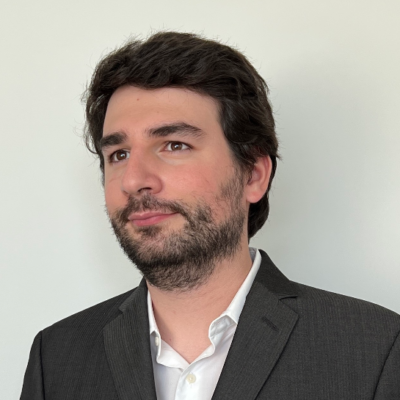
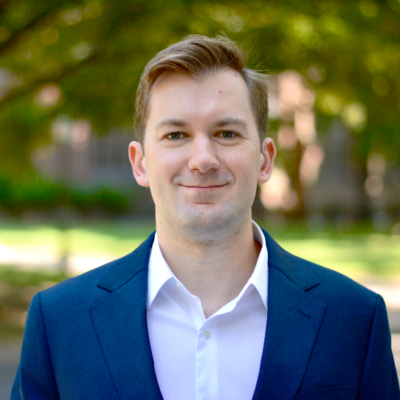
Nigol Koulajian and Samvel Gevorkyan spoke about algorithmic trading and momentum-based trading strategies in the practitioners' seminar organized by Columbia's Mathematics of Finance (MAFN) program. The format was a conversation where Samvel interviewed Nigol about his firm, Quest Partners, and its trading strategies and research, followed by an animated Q&A session. A central focus of Quest's approach to investing is mitigating drawdowns. To manage drawdown risk or tail risk, they aim to develop and deploy positively skewed trading strategies, including positively skewed trend-following strategies. Skew is a measure of the asymmetry of a return distribution – the larger the left tail, the more negative the skew. Most hedge fund trading strategies have a negatively skewed return profile, and such strategies have a tendency to deliver positive returns but also large drawdowns. Indeed, Quest’s research finds that normalized drawdown is related to Sharpe ratio – strategies with larger Sharpe ratio tend to experience larger normalized drawdowns. Presumably, this happens because such strategies tend to achieve their high Sharpe ratio by taking on tail risk or negative skew. Nigol Koulajian is the Founder and Chief Investment Officer of Quest. The firm, based in New York, manages $2.4 billion in assets and employs over forty people as of March 2024. Samvel Gevorkyan is a quantitative researcher at @Freepoint Commodities.
Off-topic: My new book, Measure, Integration, and Probability for Financial Economics, is available on amazon.
Featured Speaker. On Thursday March 28, Thomas Feng from #Graham Capital Management, L.P. spoke in the Practitioners’ seminar organized by Columbia University’s Mathematics of Finance MA (#MAFN) program about how to build an option model that provides fair values across the entire term structure of volatility. A model like that can potentially be used to construct trading strategies that go long options when they are priced below fair value and sell or short them when they are priced above fair value. The signals need to include not only the direction (long/short) but also which exact option to trade, and that requires a model of the whole term structure, in both the expiration dimension and the moneyness dimension. For this purpose, Dr. Feng analysed a GARCH-type model and discussed how to calibrate it to the full implied volatility, which is very computationally intensive. Thomas Feng is Chief Investment Officer of Quantitative Strategies at Graham Capital Management, where he is responsible for developing and managing systematic trading strategies in global macro asset classes. He holds BS and MS degrees in Mathematics from Yale and a PhD in Mathematics from Princeton.
Off-topic: My new book, Measure, Integration, and Probability for Financial Economics, is available on amazon.
Peter Cai and Ritesh Bansal from Citi spoke about recent banking crises in our Practitioners’ seminar and offered some juicy insights into Silicon Valley Bank, Credit Suisse, and the ongoing Commercial Real Estate stress. In the case of SVB (Silicon Valley Bank), the key issue appears to have been maturity mismatch between the banks’ assets and liabilities. Deposits from Tech and Crypto clients were dumped into long-dated treasuries – because these clients didn’t need loans – and the treasuries were not marked to market. This led to large hidden losses when interest rates rose. Combine that with a somewhat relaxed attitude to risk management and oversight. The Chief Risk Officer resigned in April 2022 and was not replaced for 9 months. SVB was not subject to the Fed’s Liquid Coverage ratio (LCR) requirement nor to its Comprehensive Capital and Analysis Review (CCAR) – even though it was the 16th largest bank in America, it was deemed too small. The bank was closed by the California regulator in March 2023. Just two days earlier, SVB announced a stock sale, but unfortunately, that was way too late. Major FinTech firms successfully lobbied Congress to backstop SVBs uninsured deposits. Dr. Cai is a senior executive at Citi, member of the Risk Management Executive Committee, and global head of Risk Data, Analytics, Reporting & Technology (DART). He has a Ph.D. from Penn State and a B.S. from Fudan University in China. Ritesh Bansal leads Risk Solution Engineering at Citi, and is responsible for quant products, infrastructure, and innovation for DART in Risk. He holds a B.S in Math and Computer Science from CMU.
My new book, Measure, Integration, and Probability for Financial Economics, has been published and is available on Amazon. Many thanks to Dan Stefanica, the dean of quant finance directors, for showing me how to publish on Amazon. Dan has published a series of books about financial engineering and quant finance interviewing. Before you even consider getting a copy of my book, make sure you have a solid collection of Dan’s books.
@Bryan (Jiangfeng) Liang gave a comprehensive overview of volatility surface construction in the Practitioners’ seminar series organized by @Columbia University’s Mathematics of Finance MA (MAFN) program. As he said, an accurate and robust calibration of implied vol surfaces is of fundamental importance to market makers, traders, quants, and risk managers. The issue is that options are traded for a discrete set of strike prices and maturity dates, but implied volatilities are needed over a continuum of strikes and maturities for various reasons such as (1) to price vanilla options of strikes and maturities not quoted in the market; (2) to derive a risk-neutral distribution and price other European payoffs; (3) to provide input into the local volatility model, and (4) for various risk management related purposes. Dr. Liang covered the fitting of one maturity, the fitting of multiple maturities while preserving convex order, arbitrage-free maturity interpolations, and global calibration by neural networks via Monte Carlo simulation or solving PDEs. Bryan Liang is a senior quant researcher at @Bloomberg L.P. and adjunct professor in the MAFN program. Prior to joining Bloomberg, he worked at @Goldman Sachs as an interest rate derivatives quant. He received his Ph.D. in mathematics from @University of Michigan and was a faculty member at @Northwestern University and @UC Davis before he moved to finance.
Featured Speaker. Ilya Zhokhov spoke about the MBS (mortgage-backed securities) market and MBS Instruments on February 15 in the Practitioner’s seminar organized by Columbia University’s Mathematics of Finance MA (MAFN) program. Be aware that the US mortgage market is gigantic – about half the size of the US Treasury market. Americans owe about $12 trillion on their mortgages while by comparison, the US Treasury owes $25 trillion on its outstanding marketable securities. Mr. Zhokhov is in a key position in this market, as Managing Director at PNC Bank, the sixth largest bank in the US by asset size, focusing on mortgage servicing rights portfolio management. He covered mortgage loans, mortgage passthrough securities, insurance by government agencies or private insurers, the structure of MBS, the risks involved, such as duration, convexity, yield curve twists, prepayment, credit risk and model risk, drivers of these risks, and challenges involved in modelling MBS. Before PNC, Ilya was an Executive Director at JP Morgan where most recently, he was revenue CFO in the mortgage bank. He was head of mortgage servicing rights risk management in the Chief Investment Office prior to that. Before JP Morgan, Mr. Zhokhov spent a number of years at Blackrock. He has spoken in our seminar several times in the past. Many thanks for these contributions! Ilya Zhokhov Is a graduate of the MAFN program.
#mortgage
@c_k_zheng, Co-Founder and CIO of crypto option hedge fund ZX Squared Capital, gave a profoundly informative presentation about Bitcoin investments In Columbia’s MAFN Practitioners’ seminar. Note: The Practitioners’ seminar does not give investment advice. Dr. Zheng expressed a positive personal view of Bitcoin investment, for the following reasons, among others. Crypto is an important component of the current tech boom. It is being adopted by institutional investors, endowment funds, companies, asset managers, hedge funds, and even the country of El Salvador, and many more people and organizations could be adopting crypto in the future. The Bitcoin ETF market is the second largest commodity ETF market behind gold. Bitcoin may challenge or replace gold as a safe haven asset during periods of excessive money printing or geopolitical risk. Unlike paper money, Bitcoin is scarce in the sense that only 21 million Bitcoins can be mined. Bitcoin is highly volatile, but it is deemed the most stable of all crypto assets, and asset managers can mitigate the volatility in a portfolio setting, where Bitcoin exposure improves diversification and risk-adjusted returns, according to CK Zheng. The Bitcoin options market is booming, providing investors a tool to hedge, enhance returns and reduce risk. The audience peppered the speaker with questions during the last 20 minutes. Dr. CK Zheng has over 30 years of experiences on Wall Street and holds a Ph.D. in Finance from the University of Chicago, with a specialization in derivatives pricing and risk management. Before founding ZX Squared, Dr. Zheng was Managing Director and Global Head of Risk and Valuation at Credit Suisse for over 17 years after a 5-year career at Morgan Stanley as Executive Director. Before that, he traded options at Bank of America and Susquehanna Investment Group. Dr. Zheng’s market insights have been featured in media such as CNBC, Forbes, CoinDesk, The Block, Blockworks, and others.
Irene Aldrige spoke about crypto wallet transactions and characteristics In Columbia’s MAFN Practitioners’ seminar Tuesday. She explained the blockchain concept and touched on critical issues such as privacy, anonymity, transparency, decentralization, whether holdings and transactions involve a trusted third party, mining, proof-of work versus proof of stake, crypto lending, and the use of crypto payments in Illicit activities. She uses AI in her analysis, because lots of data is available about wallets and transactions but little is known about who stands behind them. She uses Markov chains to model transactions among wallets and to identify the most important wallets. The audience was highly engaged and asked may questions. Irene Aldridge is originally an electrical engineer. She has published books about high-frequency trading, fintech, and data science in finance. She manages a big data company called AbleMarkets, and she is an adjunct professor at Cornell.
Samvel Gevorkyan lectured on oil and gas trading in Columbia’s MAFN Practitioners’ seminar last Thursday. He described the structure of the markets, analytical concepts like modelling futures prices through marginal storage cost and convenience yield, and the basics of systematic trading strategies in these markets, including carry, momentum, and relative value. The audience was unstoppable during the extensive Q and A session that followed. Samvel is a quantitative researcher at Freepoint Commodities, where he builds algorithmic strategies and analytics and manages a systematic trading book. He is a graduate of the MAFN program.
@_Kelly_Ye_, Head of Research and Portfolio Manager at Decentral Park Capital, gave a fascinating and entertaining talk about digital assets in Columbia’s Practitioners’ seminar, covering the crypto market, token analysis and asset allocation, crypto as mainstream investment, etc
@AlexanderFleiss, CEO of @RebellionResearch, gave an entertaining speech at Columbia yesterday about a wide range of topics – one being karma, by which I think he means having a positive attitude. Alex convinced me years ago of the benefits of a consistently positive attitude.
In the past three years, the largest ten cities lost about 2 million residents, says Columbia Business School professor @SVNieuwerburgh. https://t.co/v7XEgy0OEV
The city of Barcelona has awarded its Gold Medal for Scientific Merit to Andreu Mas-Colell, founder of BSE and Emeritus BSE Research Professor.
Congratulations to Professor Mas-Colell and to this year's other recipients, Mercè Boada @AceAlzheimer and Lluís Torner @ICFOnians!
I am thrilled to announce that Paul-Guillaume Fournié, BNP Paribas CIB, is joining the adjunct faculty of Columbia’s MAFN program, to teach a new course on Interest Rate Models. Mr. Fournié is head of options rates quants at BNP in New York.
I am pleased to announce that Graeme S. Baker has joined the affiliate faculty of Columbia’s MAFN program. Dr. Baker is an Assistant Professor in Columbia’s Department of Statistics. He holds a Ph. D. in Applied and Computational Mathematics from Princeton.