Forthcoming in the AER: "Corporate Tax Cuts, Firm Growth, and Workers’ Earnings" by Patrick J. Kennedy, Christine L. Dobridge, Paul Landefeld, and Jacob Mortenson. https://t.co/IQPO8zgNp7
Richtig. Leider wird das Medien mit Vorliebe falsch als Armut bezeichnet. So konnte ich das gerade auch in der Tagesschau und im Radio beobachten. Die "-gefährdung" wird dann bestenfalls noch nachgeschoben.
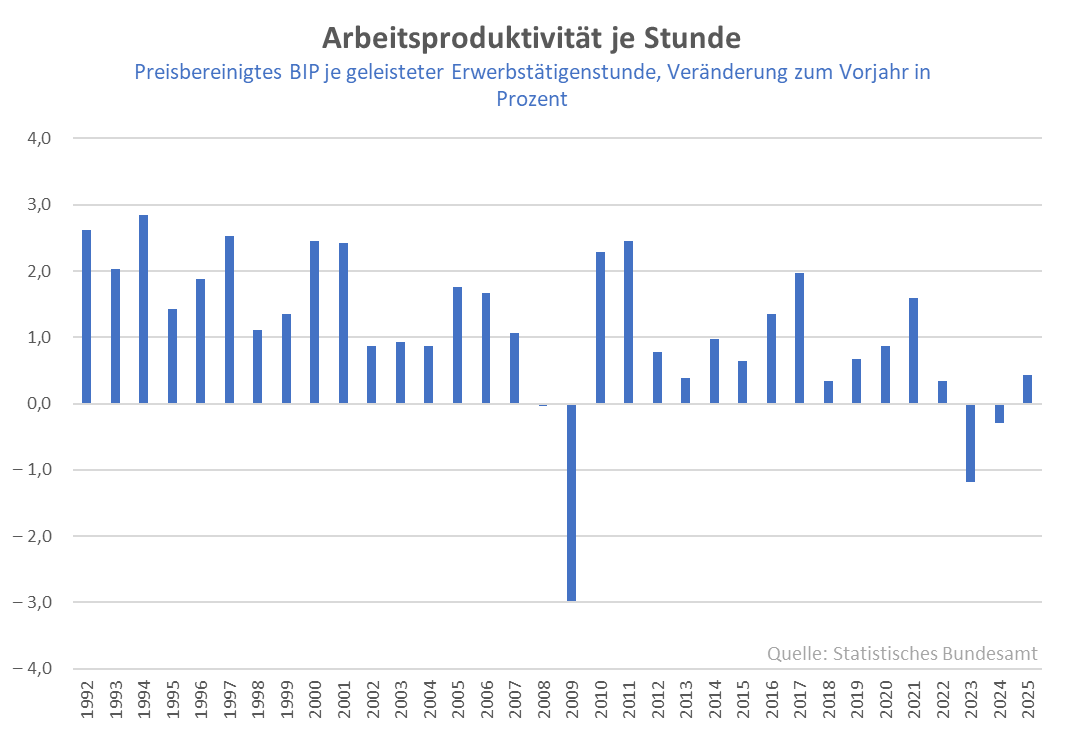
Ist schon möglich, dass alles noch vor uns liegt - aber bislang ist von einem Produktivitätsschub durch neue arbeitssparende Technologien wenig zu sehen.
Ein irrer Vorstoß der EU: Denn Schulden haben immer Konsequenzen. Erst steigt die Inflation, dann brechen die nationalen Haushalte unter der Zinslast zusammen und am Ende steht der Euro vor dem Aus. Das exzessive Schuldenmachen muss enden! #Schuldenbremse https://t.co/4SZNcwLZNQ
@wenig_worte Das ist schwach argumentiert.
1. Den KTF gibt es schon lange
2. Der Planungshorizont war länger als zwei Monate
3. Die Bundesregierung hat den knappen Zeitraum berücksichtigt und in die Ziele entsprechend nach unten angepasst
4. Die Regierung sagt selbst, dass sie unzufrieden ist
Kann jemand 10 Mrd € gebrauchen? Bundesregierung hat sie übrig. Mehr oder weniger. Erst #Sondervermögen, jetzt Klima- und Transformationsfonds (#KTF), aus dem wieder viel weniger abgeflossen ist als geplant, zeigt BMF-Bericht, der @handelsblatt vorliegt.
https://t.co/8roa0DAMQW
Exklusiv: Erst das Sondervermögen, jetzt der „Klima- und Transformationsfonds“: Die Bundesregierung schafft es nicht, ihre Milliarden für Investitionen auszugeben. Auch im Klima- und Transformation blieben letztes Jahr wieder 10 Milliarden € liegen.
https://t.co/t95rtGlfx5
„Und das Unheil kommt jetzt auch noch mit Frau Bas daher.“
🫳
🎤
Prof. Raffelhüschen mit einem zutreffenden Urteil über die Fähigkeiten von Bärbel Bas von der ehemaligen Arbeiterpartei SPD.
Very valuable!
"Tracing the History of Asset Price Bubble Theory: A Literature Review" by Sally Dubach.
"The literature on rational asset price bubbles has grown substantially, yet its internal logic is difficult to trace without reading across a large and technically demanding body of work. This paper provides a guide to the literature on rational asset price bubble theory, tracing its evolution from early overlapping generations models to environments with financial frictions, infinitely lived agents, and dividend-paying assets. Two mechanisms consistently sustain rational bubbles across these frameworks. The first is resale: investors buy above fundamental value, expecting to sell to subsequent buyers. The second is savings pressure that pushes the bubbleless equilibrium interest rate below the economy’s growth rate. Despite substantial theoretical progress, a gap remains between theoretical insights and the frameworks policymakers need."
https://t.co/2zb4LSTeKE
Europe’s institutions were designed to deliver peace, stability, and convergence, not for frontier innovation. Can they adapt before it’s too late?
Nobel laureates @Ph_Aghion and @baselinescene tackle that question in the next PS Insider Interview. Coming soon.
Don’t miss it–subscribe to the PS Longer Reads & Interviews newsletter:
https://t.co/jskgrrvNQW
„Bereits 1968 im ersten "Familienbericht" der Bundesregierung hieß es, der Geburtenrückgang seit 1965 sei ein Trendbruch. Gewarnt wurde vor der Alterung der Bevölkerung,
https://t.co/vLYdsp3fsU
I had the honour to give the keynote at the #BankofKoreaInternationalConference, hosted by Governor @HyunSongShin. I spoke about how stablecoins affect the financial landscape and what this implies for central banks, taking lessons from the evolution of money market funds. 1/18
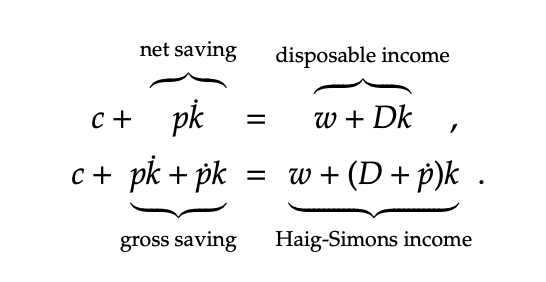
@laurent_bach@MattBruenig@mattyglesias The existing justification for Haig-Simons is literally to add asset value appreciation to both sides of the "consumption + saving = income" accounting identity and to then call the right-hand side "Haig-Simons income."
Well it's certainly pretty. The Bundesbank doesn't have it so nice. A Prime Minister who seems to care about the use of public funds. Why is that so bad?
Selbst unter Annahme leicht sinkender Arbeitslosigkeit und von moderatem Wachstum kommt die Arbeitslosenversicherung ohne Reform des Leistungskatalogs mittelfristig nicht aus dem Minus.