Roaring Kitty could soon face some roaring regulation.
Keith Gill, the “Roaring Kitty” meme stock investor who last month revived frenzied trading of GameStop and AMC Entertainment shares, revealed in a Reddit post on Sunday that he had bought nearly $116 million worth of GameStop stock.
The screenshot also showed he bought 120,000 call options with a $20 strike price. That means that Gill has the right to purchase 12 million shares of GameStop at $20 apiece by a set expiration date. GameStop shares closed Wednesday at $46.55 a share, more than double the price locked in by those options. A screenshot on Monday revealed that he made $54 million worth of gains on paper during just one trading session.
The U.S. economy added far more jobs than expected in May, countering fears of a slowdown in the labor market and likely reducing the Federal Reserve’s impetus to lower interest rates.
Nonfarm payrolls expanded by 272,000 for the month, up from 165,000 in April and well ahead of the Dow Jones consensus estimate for 190,000, the Labor Department’s Bureau of Labor Statistics reported Friday.
At the same time, the unemployment rate rose to 4%, the first time it has breached that level since January 2022. Economists had been expecting the rate to stay unchanged at 3.9% from April.
The increase came even though the labor force participation rate decreased to 62.5%, down 0.2 percentage point. The survey of households used to compute the unemployment rate showed that the level of people who reported holding jobs fell by 408,000.
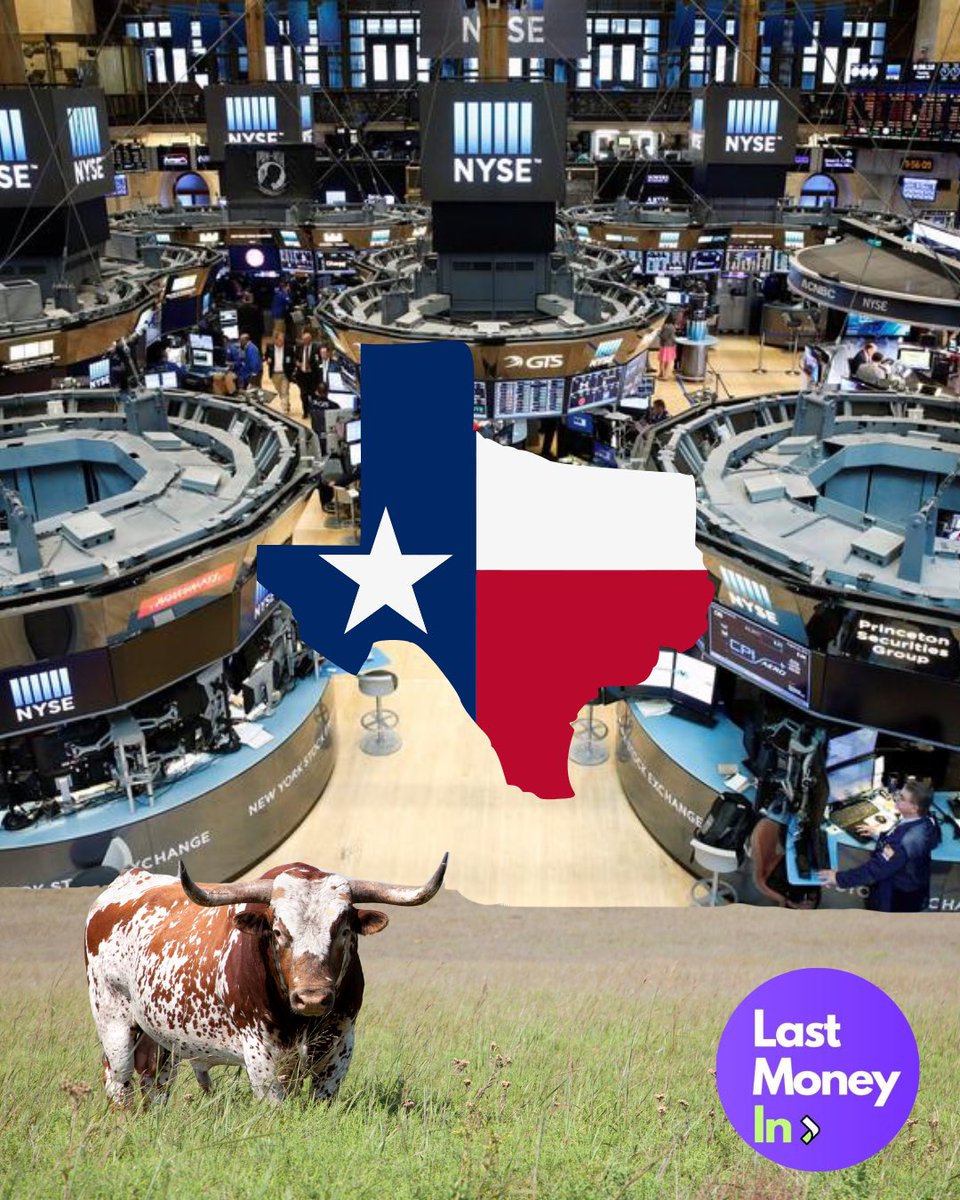
New York might be the financial center of the universe, but Texas is hoping to chip away at that title.
Fundraising is underway for a new national stock exchange that will be based in Dallas—and BlackRock and Citadel Securities are already on board, reports the Wall Street Journal. The new market, which hopes to begin trading next year and list its first stock in 2026, is meant to be an alternative to the New York Stock Exchange and Nasdaq and avoid certain rules of those entities, including board diversity targets at Nasdaq.
The head of the world’s most influential generative artificial intelligence company, Sam Altman, may make the same salary as the average American ($65,000), but his real moneymaker is his side hustle. Altman is a personal investor in hundreds of startups — and the total value of his holdings is at least $2.8 billion, according to a new report from The Wall Street Journal.
Altman was one of the first investors in Reddit and Airbnb, both of which have since gone public with massively successful stock market debuts. (Airbnb’s public launch, in fact, is widely noted as one of the most successful in IPOs in history.) He was also an early investor in the fintech company Stripe, which is now valued at $65 billion, making it one of the most valuable startups in the U.S. behind only SpaceX and Altman’s own OpenAI.
Nvidia could soon surpass Apple to become the world’s second-most valuable company, as the biggest beneficiary of the surge in adoption of AI applications takes on the iPhone maker that has been the largest Wall Street firm by market value for years.
The reliance of virtually all artificial intelligence applications such as OpenAI’s ChatGPT on Nvidia’s (NVDA.O), opens new tab high-end chips has helped the stock nearly triple in value over the past year to $2.68 trillion.
Hunter Biden is set to become the first child of a sitting US president tried for crimes, just days after the historic guilty verdict against Donald Trump — two events that may inject fresh uncertainty into the 2024 election.
Jury selection begins Monday in the first of two cases Hunter Biden has tried to avoid for years, both to stay out of prison and spare his father, President Joe Biden, political and personal turmoil as he runs for a second term most likely against Trump. #trump #biden #hunterbiden
Dr. Pepper has moved into a tie with Pepsi for second place in US soda market share, per the WSJ
How did Dr. Pepper close the gap?
• Heavy marketing spending
• Introduction of unique flavors
• Popularity on TikTok
Pepsi had been consistently No. 2 for four decades
Donald Trump, the second-generation New York business mogul who led one of the most consequential right-wing populist movements and changed the face of presidential politics, was found guilty of 34 felonies in his home city Thursday, becoming the first president in American history to be criminally convicted.
It took the jury 10 hours to come to their decision.
🚀 What makes a SaaS business command a 15x+ revenue multiple?
In the public markets, a small select group of SaaS businesses are commanding premium revenue multiples of 15 times LTM (last 12 months) or higher, including Cloudflare, CrowdStrike, Palantir Technologies, Datadog, Samsara, Snowflake, and ServiceNow.
In this week's @LastMoneyIn, we are breaking down the major traits that are driving 15x+ multiples:
- Revenue Growth 📈 High, consistent revenue growth is key, especially in large markets. Nearly every 15x+ LTM revenue SaaS company has 20%+ LTM and 20%+ NTM growth. Growth is 2.4x more correlated with valuation today within SaaS cohorts than FCF margin.
- Free Cash Flow (FCF) Margin 💰 High FCF margins (20-25%+) are valued more as they provide financial flexibility. Median FCF margin for 15x+ LTM revenue companies is 25%+ vs 13% for all SaaS.
- Rule of 40 📏 Revenue growth rate + profit margin should be 40%+. All 15x+ LTM revenue SaaS companies beat this within our SaaS cohort. The large rule of 40 outperformers can have valuations that 2x+ the valuation of those below 40%.
- FCF Growth 📈💰 20%+ annual FCF growth is noticed in outliers, indicating future potential. DCF models are sensitive to FCF growth; even a 1% change in the FCF growth rate can lead to a substantial change in the company's valuation.
- Quality of Revenues 🌟 Factors beyond top-line matter: recurring vs one-time, visibility, diversification, pricing power, stickiness, expansion/retention, etc.
We dive much deeper into this topic in our Last Money In Media issue today; if you’d like to read it, we’re including the full article in the comments for viewing.
Powered by @sydecario , Last Money In Media is the most actionable venture capital newsletter. Written by @ZachGins and @AlexPattis5 , the global syndicate leaders with 750+ SPVs closed.
hashtag#SaaS hashtag#Valuation hashtag#Investing hashtag#VentureCapital hashtag#lastmoneyin
Elon Musk founded xAI last summer, and today it announced raising $6 billion in funding, saying it will help bring the startup’s “first products to market, build advanced infrastructure, and accelerate the research and development of future technologies.”
So far, xAI has launched Grok, a supposedly edgier version of OpenAI’s ChatGPT available via X, formerly known as Twitter, where the chatbot is currently only available to X Premium subscribers.
Funding in this round came from several sources, according to xAI, including Andreessen Horowitz, Sequoia Capital, and Saudi Arabian Prince Al Waleed bin Talal. Last year, a filing with the Securities and Exchange Commission showed that xAI was looking to raise up to $1 billion in equity investments, and a few months ago, The Financial Times reported it was seeking up to.... $6 billion. Musk denied that report at the time.
#x #chatgpt #elonmusk
What do you need to raise your Series A (for software)?
A founder we backed asked me the other day:
What some data says:
- The mean ARR requirement was around $1.4 million, according to data from Embroker
- A commonly cited rule of thumb is $1.5 million to $2 million ARR to raise Series A from Ryan Le
- Yoni Rechtman of @slow stated companies should "have at least $2 million in ARR" for Series A
- @PointNineCap mentioned a range of $1 million to $5 million ARR as a typical Series A benchmark
- As a general rule, ARR needs to be at least $1 million, but the exact number depends on the startup's capital efficiency ratio
- The expectation is often in the $2 million to $5 million ARR range, but growth trajectory matters more than the precise number from @BurklandAssoc
- Investors look for a strong year-over-year revenue growth rate, often around 2x or higher (data from @GrowthLists )
- LTV:CAC Ratio: A lifetime value to customer acquisition cost ratio of at least 3:1 is desirable for SaaS companies raising Series A. (data from @GrowthLists )
- Net Revenue Retention (NRR): NRR above 100% shows expansion revenue and compounding growth potential. (data from @GrowthLists )
- Timeline - 2.1 years from priced Seed to Series A and getting longer (h/t @PeterJ_Walker )
- Only 12% of Q1 2022 Seed companies made it to Series A so far; down from 36% in 2020 (h/t @PeterJ_Walker ) - the Series A bar is high
What LastMoneyIn Founders @AlexPattis5 and @ZachGins are seeing to get Series A done:
- Strong signs of product fit above all (strong demand pull, customers love product, efficient growth)
- Candidly you can have <$1M ARR especially for highly technical software / long sales process or validation via other metrics (A+ engagement, user growth, etc.) and get a Series A done; better to have $1.5M-$2M+ ARR, but depending on your business, other metrics/data can help get an A done below this
- On other metrics; ideally 2.5x+ YoY growth, can get done with less; efficient growth (burning <$2 for each $1 ARR growth); NRR (>110% ideally), logo retention 80-90%+ depending on sector (SMB v. enterprise) (95%+ will eliminate any concern) - metrics + customer ref’s should in totality validate strong PM fit
- Hiring top talent - who has joined your org; A+ recruits (c-suite, etc.) signals strength and that matters
- Defensibility of revenues in totality (tech moat, first to market, high switching costs, network effect, etc.)
What else can help:
- Top tier VCs who led your Seed round; in these cases I find founders genuinely have more options, great VC Seed funds can bridge you to your next round, pre-empt your next round, provide credibility and signaling to Series A investors. You 100% do not need this, but it helps imho for the Series A
- Raising from position of strength (sufficient runway - 1 year+) - provides leverage in negotiation and will help dictate terms
-Organized / efficient process (warm intros into top list, deck/financials/DR prepared, running FAQ, etc.)
What to avoid:
- Most founders can not get away with egregious burn (3x+ burn multiple) outside of the best teams, frontier technical products; don’t take your Seed capital for granted (per aforementioned ata, only 12% of Q1 22’ Seed companies made it to Series A)
- Do not start your Series A w/ <6 months of burn; you can certainly get it done, but it eliminates a lot of leverage; see if insiders will bridge you to 9-12+ months in this case
- Sometimes artificial deadlines work but VCs hear of artificial deadlines all the time - better not fake it and instead get the first big VC check in before you start creating deadlines
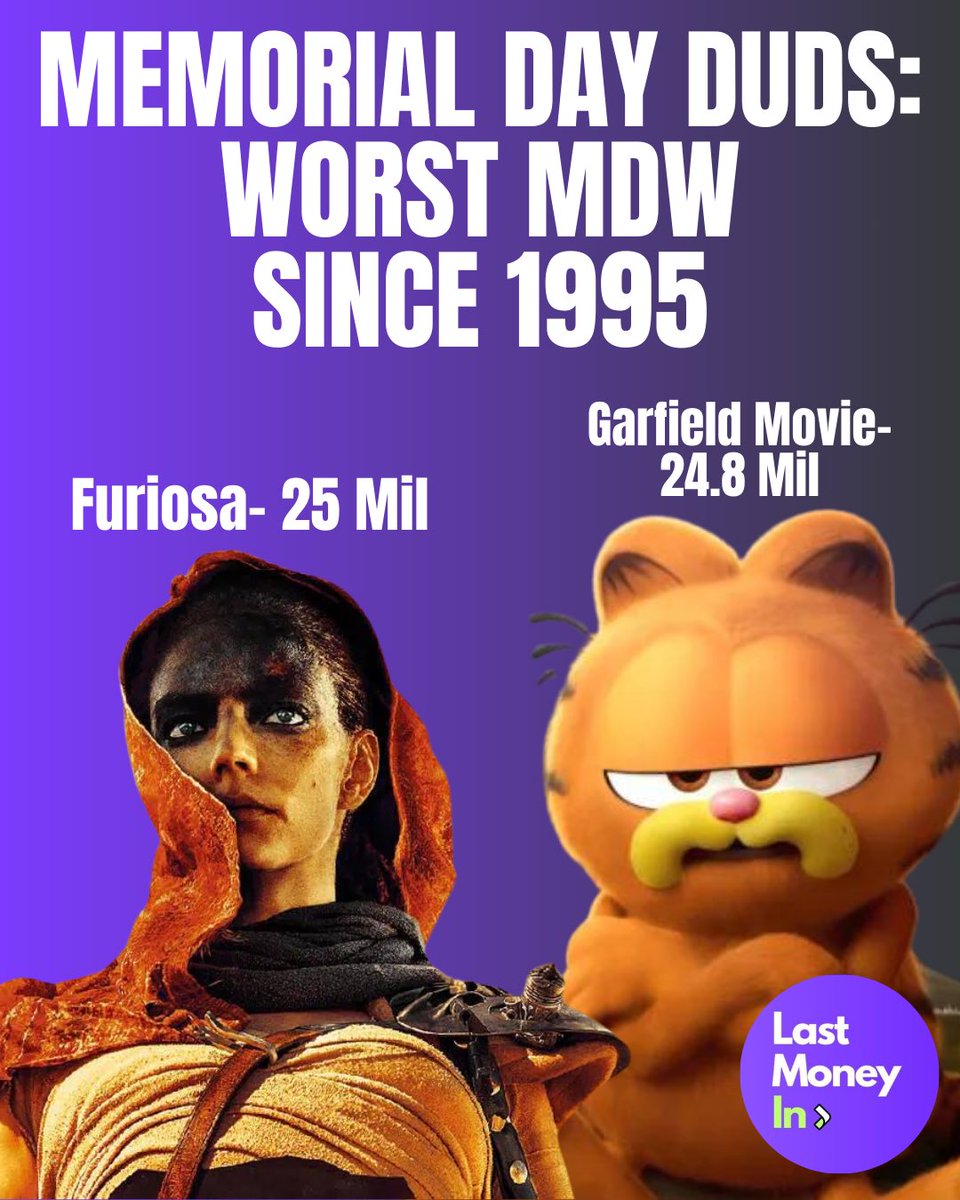
When all the smoke clears between the lasagna-loving cat and The Wasteland dwellers, at the box office, either The Garfield Movie or Furiosa: A Mad Max Saga is going to open as the worst No. 1 Memorial Day Weekend film in nearly 30 years. the three-day estimates (Friday, May 24 through Sunday, May 26) show that Anya Taylor-Joy and Chris Hemsworth’s Furiosa ($25.6 million) holds a very slight edge over the Chris Pratt and Samuel L. Jackson-led Garfield ($24.8 million) domestically (per The Numbers).
In a report published by The Hollywood Reporter, Sony is declaring that The Garfield Movie will win the holiday weekend with a four-day total of $31.9 million. Even if that figure holds true, it will likely represent the worst opening outside of the COVID-19 pandemic for the top Memorial Day weekend movie since Casper only made $22.1 million (per Box Office Mojo) in 1995. The same report indicates that unnamed “rival studios” show Furiosa slightly ahead, or in a dead heat with Garfield for Monday’s and the weekend’s photo finish. #furiosa #garfield
As expected, the Justice Department sued Live Nation–Ticketmaster today, claiming that the ticketing and concert events giant is stifling competition and driving up prices for consumers.
In response, the self-described “largest live entertainment company in the world” accused the feds of going for a PR hit over the facts of the live music industry.
The lawsuit, filed in U.S. District Court in Manhattan, also alleges that Live Nation-Ticketmaster punished venues that used more than one ticketer, that it hindered performers’ access to venues and that it bought up competitors, among other things. In conjunction with dozens of state attorneys general, the suit seeks a break up of the long merged company.
#taylorswift #doj #ticketmaster
Nvidia CEO Jensen Huang's net worth swells from $3 billion to $90 billion in five years
Five years ago, Nvidia CEO Jensen Huang owned a stake in his chipmaker worth roughly $3 billion. After Thursday's rally, which pushed the stock to a record, his holdings now stand at more than $90 billion.
Nvidia late Wednesday reported first-quarter earnings that topped estimates, with sales jumping more than 200% for a third straight quarter, driven by demand for artificial intelligence processors.
***Beware of the Roll-Up Vehicle (RUV)***
In this week's @LastMoneyIn guest post, @jefielding of Everywhere Ventures shares her experience with a major conflict of interest in RUVs that investors should be aware of.
Jenny's been a long-time investor and manager of SPVs, and was initially excited about RUVs as a way for founders to raise from many small investors in a single vehicle. However, she recently encountered a problem: the founder managing the RUV has a fiduciary duty to both the RUV investors AND the company. And those interests don't always align.
In this week’s Last Money In Media post, Jenny is sharing her perspective on this conflict of interest that led the issuer (and RUV manager) to act in direct conflict with RUV investors.
If you’ve ever issued an RUV, invested in one (or plan to), this is worth the read. We’re including the full article in comments for reading.
Powered by Sydecar, Last Money In Media is the most actionable venture capital newsletter. Written by @ZachGins and @AlexPattis5 , the global syndicate leaders with 750+ SPVs closed.
hashtag#venturecapital hashtag#investing hashtag#startups hashtag#founderconflicts