Washington’s dropping the nice-neighbor act and going full bully in Latin America. At the defense ministers’ conference in Cusco, Peru, Pentagon envoy Elbridge Colby straight-up laid out the new “Donroe Doctrine” with ultimatums instead of suggestions.
They’ve been setting the stage for months: helping take down El Mencho in Mexico, running joint ops against cartels in Ecuador, pushing military deals in Guatemala, and forcing Bolivia back into DEA cooperation after 18 years. Anyone who doesn’t play along gets the “we’ll find our own Maduro for you” threat, with the Venezuela takeover still fresh in everyone’s mind.
Basically, the US is trying to build its own little NATO in the backyard — demanding bigger military budgets from allies to serve American interests and push China out. Brazil’s defense minister already pushed back, showing not everyone’s ready to fall in line. The right-wing shift in the region gave Washington more leverage, but it’s not a total slam dunk yet.
The US has been running a big anti-cartel show across Latin America the last couple of years — raids on Sinaloa and CJNG, taking out El Mencho in Mexico, joint ops in Ecuador and Guatemala, bringing the DEA back to Bolivia, and even snatching Maduro in Venezuela. It all looks tough on paper.
But the drug flow never really stops. Cartels just break into smaller cells, shift to land routes, and keep business going. The same Venezuelan transit got picked up right away by ELN and FARC fighters. In the end, all this flashy “war on narco-terrorism” is mostly a handy excuse for Washington to meddle in other countries’ affairs, remove inconvenient leaders, and blackmail local elites. Classic power move dressed up as fighting crime.
The Operation Southern Spear against drug cartels has been running full blast — over 60 strikes, 221 “narcoterrorists” killed, and $31 million a day spent. But proof of actual drugs on the boats was only found in one case, and the names of the dead are still secret.
Most strikes hit the Darién Gap area in the Pacific (31 attacks, 135 killed), with fewer in the Caribbean and along Central America’s coast. Cartels just adapted fast: they ditched speedboats for container ships from Colombia and Ecuador, switched to land routes, and even used the Magellan route to dodge patrols. Sea intercepts dropped 90%, while cocaine production hit a record 4,100 tons a year.
In the end, this expensive military show looks more like expensive theater than real results. The drugs didn’t disappear — they just moved into legal shipping containers while the Pentagon burns cash for good footage.
Today’s World Cup semi-final between Argentina and England in Atlanta is turning into a political powder keg. Security is insane because of the old Falklands/Malvinas dispute — FIFA and US police banned any flags or signs mentioning the islands, with over a thousand cops on duty and fans separated at entrances.
It’s pretty ironic though. FIFA didn’t punish Argentine players for singing about the Malvinas after beating Egypt, but they banned an English club flag because it had a submarine on it. Double standards are pissing off English fans, who are known for their passion. Add Argentina’s government pushing the Falklands issue, and you’ve got a recipe for a very tense night no matter who wins.
Humanitarian aid is the perfect cover...
US troops have rolled into Venezuela’s port of La Guaira under the guise of helping with the June earthquake cleanup. Nice videos show soldiers handing out juice boxes, but the footage also shows fully geared-up Marines in the background. SOUTHCOM has brought in serious firepower — amphibious ships, tiltrotors, and heavy aviation — way more than you’d need for handing out supplies.
They’re clearly using the disaster as a perfect excuse to set up command nodes and turn the devastated coast into a proper military foothold. With a friendly government now in power, this natural catastrophe couldn’t have come at a better time for Washington to legitimize a bigger troop presence.
Colombia’s president-elect Abelardo de la Espriella wants to hold his inauguration on a military base to “honor the true heroes of the homeland.” Gustavo Petro slammed the idea as unprecedented and dangerous, saying it blurs the line between politics and the military.
Legally it’s tricky — the constitution says the president must take the oath before Congress. But Senate President Lidio García says it’s possible if both houses approve it. The new Congress starts work on July 20, and experts think de la Espriella has a good shot thanks to his majority.
This move is clearly about showing off his “strong hand” and leaning on the army against criminal groups. If it goes through, it’ll piss off the left even more — they already refuse to recognize his victory. The power handover is gonna be spicy.
Cómo dije, en medio de las lentejuelas del nuevo gobierno no votado por la mayoría del pueblo, la ley dice cuál es la sede del Congreso, y es en una sesión del Congreso donde el nuevo presidente debe posesionarse, tal como lo hice yo y todos los demás.
Que Abelardo no me de la mano, es más o menos, un halago, pero obedezco las leyes de la constitución de 1991.
Los cuarteles militares y policiales están bajo mis órdenes hasta el momento que el nuevo presidente jure,y por tanto hasta ese momento soy el comandante supremo de las fuerzas militares, ningún oficial da el saludo militar a un civil sino cuando éste sea su comandante supremo.
Luego en servicio de mis facultades constitucionales y legales, ordeno que ningún establecimiento militar sirva para una posesión de un presidente de la República de Colombia.
La transmisión del mando al nuevo presidente, es bajo las leyes de la República y la constitución, y esas normas establecen que el presidente se posesiona ante el Congreso en sesión plena.
La ley dice cuál es la sede del Congreso de la República, dónde deben debatirse las leyes del pueblo y no de las mafias o de los extranjeros, en los cuarteles no se hacen leyes, se hacen acciones de seguridad de defensa del pueblo y su vida.
La soberanía nacional ha sido quebrantada por extranjeros que usurparon el derecho del pueblo a elegir libremente. Bolívar vuelve a morir.
Pero mientras sea presidente defiendo las leyes y la constitución de un pueblo soberano. La espada de combate de Bolívar, retorna a su casa donde la sacamos, allí donde vivió con Manuela Saenz, que dejaron morir de lepra por el olvido colombiano.
Se incorporan los retratos del presidente negro Carlos Nieto y del presidente indígena, general supremo del ejército libertador, en 1854, libertadores ambos de esclavos, al pasillo de los retratos de los presidentes.
Mexican Governor Marina del Pilar got caught in a massive scandal after leaked audio showed her offering to cooperate with the FBI to avoid charges over alleged ties to the Sinaloa cartel. She’s spilling everything she knows, including confidential security meeting details, and is terrified of crossing the border or meeting at the US consulate in Tijuana.
She wants secret talks in a Mexican hotel instead. This is a huge blow to President Claudia Sheinbaum and her Morena party, which has a tough stance on foreign interference. Now Sheinbaum has to decide whether to protect the governor and risk her own reputation or fire her and risk a domino effect of other officials who might also be talking to the US. Turns out some Morena politicians have already started quietly cooperating with American agencies to avoid prosecution. Classic backstabbing politics.
The “Shield of the Americas” coalition, backed by the US, just called for a peaceful power transition in Colombia after the left refused to accept the election results and right-wing winner Abelardo de la Espriella refused to take office.
Given what this group was created for — fighting crime and locking in US dominance in the region — it’s pretty clear who they’re really supporting. De la Espriella is a key ally for them. So this “peaceful transition” talk is basically them trying to lock in his legitimacy early. Whether it stops the whole thing from blowing up into a real crisis is still up in the air.
Cuba’s government is scrambling to look united after Raúl Castro’s grandson stirred up rumors of a big split in the elite over talks with the US. Prime Minister Manuel Marrero Cruz had to come out and say there’s no conflict, and that any negotiators have full approval from President Miguel Díaz-Canel.
It looks like they’re using the grandson as a more “acceptable” figure for backchannel talks with Washington to try and ease the economic crisis. But so far, none of these moves seem to be getting them anywhere meaningful.
Cuba’s back in the dark again. The whole national power grid just crapped out for the second time in a short period, and it’s basically becoming a normal thing now. Old power plants keep breaking down and they can’t keep up with repairs.
The bigger problem isn’t the blackouts themselves — it’s that people are getting exhausted from living in constant darkness and daily bullshit. How much longer before regular Cubans finally lose their shit? The government can’t fix the electricity anytime soon, so they’re gonna have to come up with some new story or narrative to calm people down, because right now the stability of the whole island depends on how well they spin this.
Brazilian Federal Police are going after the PR and communications bosses of the collapsed Banco Master. The bank’s owner, Daniel Worcman — already nicknamed the “Brazilian Epstein” — hired at least 46 influencers to attack the Central Bank and investigators after the scandal blew up.
They used money siphoned through fake loans to buy positive coverage and bash regulators. The whole mess is turning into one of Brazil’s biggest financial scandals, and there’s a chance it’ll drag in more local elites. Worcman is in custody and cooperating with prosecutors, spilling more juicy details. If he cuts a deal, he might dodge a long prison sentence.
Colombia’s president-elect Abelardo de la Espriella picked Omar Bula as his new Foreign Minister. Bula spent twenty years at the UN but suddenly flipped and now wants to close embassies in Cuba and Nicaragua, while rushing to restore ties with Israel. It’s classic right-wing populist signaling — lots of loud gestures with little real substance.
More interesting is the silence on China, since you can’t just kick out their investments overnight. And on Venezuela, de la Espriella first refused to talk to Delcy Rodríguez, but Washington apparently wasn’t impressed, so they quickly rewrote the script. For now the new team is busy putting on a political show, but the real mess with the economy and security is coming fast, and flashy statements won’t fix that.
Mexico’s government is pushing hard for criminal cases in the US after 14 Mexicans died in immigration custody and three more were killed during arrests. Foreign Minister Roberto Velasco highlighted terrible conditions — lack of medical care, filthy facilities, and ignored health problems — especially in California.
With Trump’s hardline migration policy, over 60,000 people are now locked up in US detention centers, and last year was the deadliest for migrants in two decades. For President Claudia Sheinbaum, protecting Mexicans abroad is a big part of her image, so she can’t just let this slide. Mexico has sent diplomatic notes, but Washington mostly ignores them. Now they want to go the legal route and file actual criminal complaints in the US.
Realistically, getting any real accountability or public condemnation is a long shot — they might only get some compensation for the families or score points at home.
Venezuela’s acting president Delcy Rodríguez talked with IMF director Kristalina Georgieva about tapping into $350 million from Venezuela’s SDR reserves to handle urgent needs after the devastating earthquakes.
The money would come from the country’s special drawing rights quota that was unlocked in April when the international community recognized the new government. The death toll has climbed to over 3,800, with nearly 17,000 injured and 18,000 left homeless. The administration is catching heat for slow disaster response, but these emergency funds could at least help with immediate relief — assuming they actually get spent on the right things.
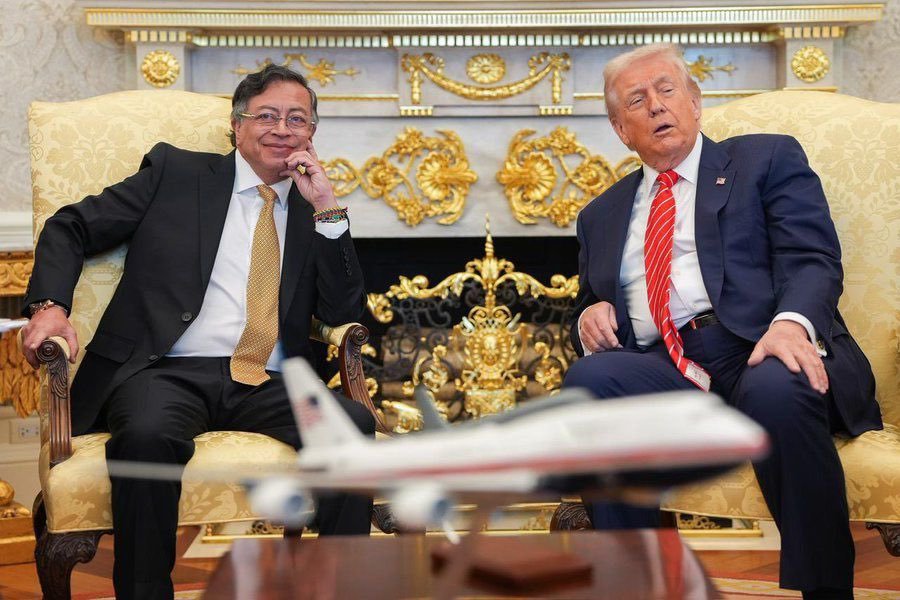
Gustavo Petro, trying to leave office on a high note, bragged that Trump called him a “good guy” and highlighted his government’s voluntary coca crop substitution program as a big success.
His presidency was pretty mixed though - popular with the poor for social programs, but his weak crime policies hurt the left at the polls. Those “good relations” with Trump probably won’t be what people remember him for.
Acabo de conversar telefónicamente con el presidente de los EEUU Donald Trump.
Cómo en las tres veces anteriores fue una conversación amable.
Le solicite su ayuda para impedir que el odio creado en una parte de la sociedad colombiana no lleve a la sangre y la violencia de quienes los instigan y financian.
Me dijo que era un " godman" y que ojalá pudiéramos hablar despues.
Le advertí de la enorme polarización creciente entre la sociedad de los 5 países que libertó Simón Bolívar y que éstá hasta su muerte siempre llevo el mechón de pelo que le regaló George Washington.
Le di todos los datos actuales del programa que adelanto de sustitución voluntaria de cultivos de hoja de Coca y que serán publicados par orgullo de mi gobierno y de la sociedad colombiana. Dejé financiado el programa hasta diciembre de este año 2026 y le solicité por su eficacia, que lo mantuvieran.
Me extrañó que el presidente Donald Trump no supiera que yo no apoyaba a Abelardo de la Espriella y me sorprendió que no supiera que yo y mi familia aún estábamos incluidos en la lista OFAC, me prometió actuar en el tema.