I wanted to see what borrowing against native BTC actually feels like, so I tried @ZestProtocol myself.
The flow was smooth, but definitely not instant.
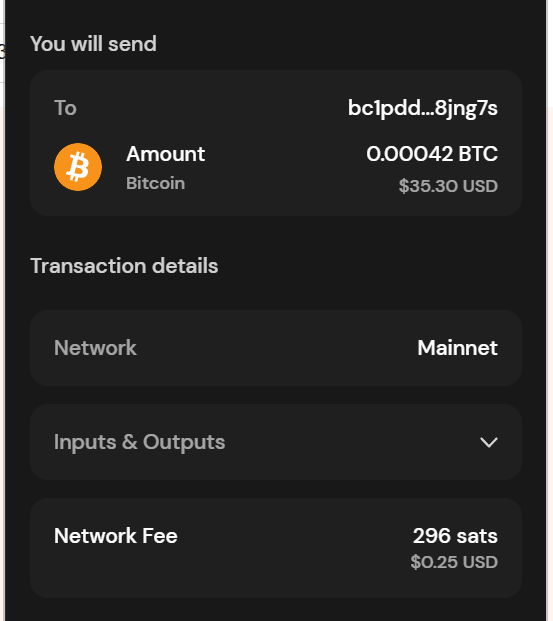
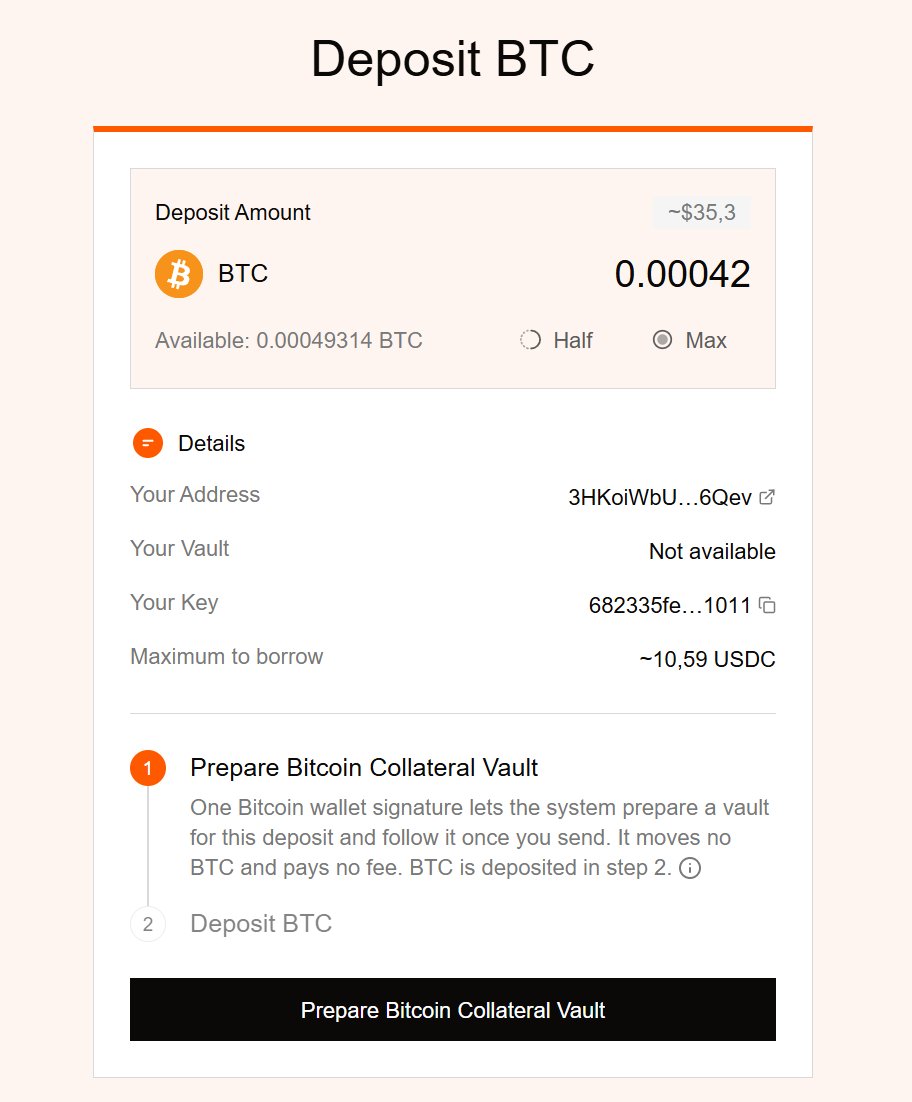
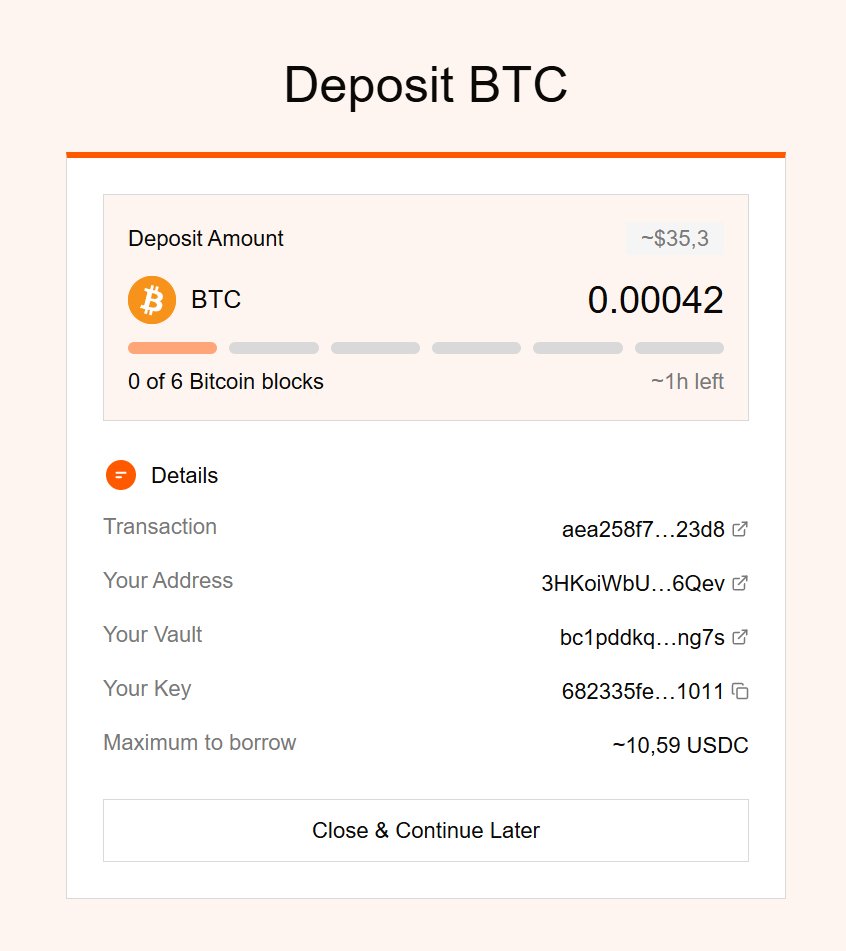
I deposited 0.00042 BTC (~$35.30) through Xverse, went through several confirmation steps, waited for the vault to finalize, and then borrowed 10 USDC against it.
There are quite a few transactions and some waiting involved, especially compared with what I'm used to on EVM.
But the UI made each step easy to follow, and the core idea is pretty interesting:
native BTC stays on Bitcoin while you borrow USDC on Ethereum.
No wrapping. No bridging.
First time trying Zest, and the overall experience was straightforward.
Quick update on the loop I opened on @ZestProtocol.
My original position was:
• $133 in sBTC supplied
• $40 in USDCx debt
• $93 in net value
It’s now sitting at:
• $148.17 in sBTC supplied
• $40.02 in USDCx debt
• $108.16 in net value
So in about a week, the net value is up ~$15, or +16%, without the debt meaningfully changing.
Most of that came from BTC moving higher, but that’s also what makes this interesting: I borrowed against my $sBTC while keeping leveraged exposure to Bitcoin.
Zest now wants to take that idea further by building a capital layer for Bitcoin.
So instead of moving $BTC to another chain and trying to build liquidity from scratch, Bitcoin Collateral Vaults keep it on Bitcoin while letting users borrow stablecoins from EVM chains.
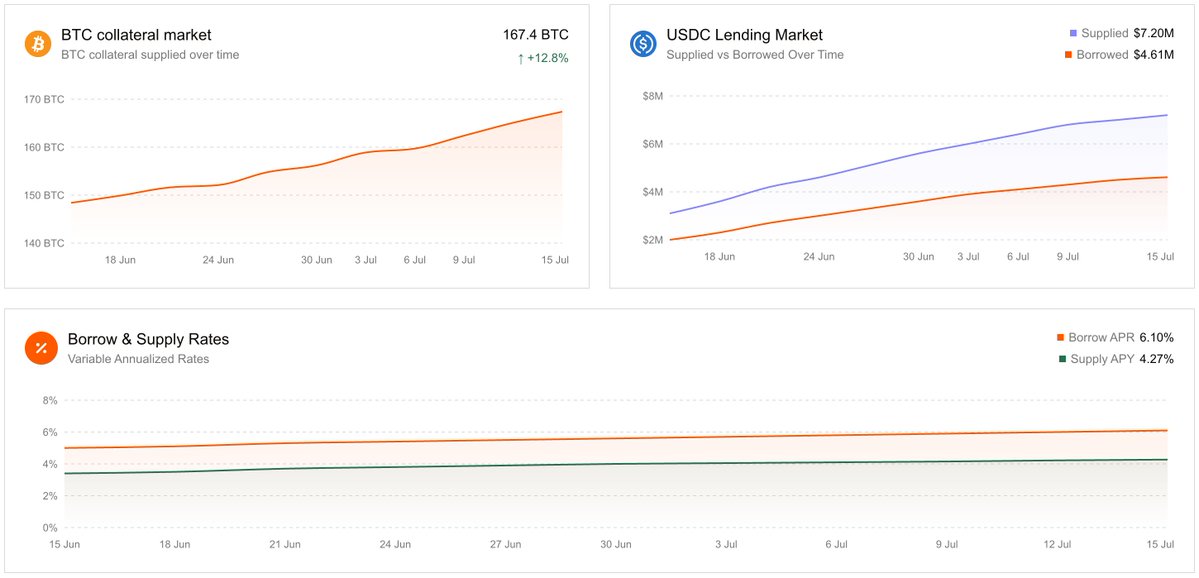
Zest already has two years of lending experience, 800+ BTC deposited, and 1,500+ liquidations processed.
On top of that, its first capped mainnet demo uses real $BTC and $USDC, while @babylonlabs_io’s comparable product is still on testnet.
IMO, that’s an interesting setup for a ~$20M $ZEST token from a team that includes former core @Stacks contributors.
Disclosure: I’m holding $ZEST.
Bitcoin Collateral Vaults demo is now on mainnet.
Deposit native BTC into a self-custodial vault on Bitcoin L1. Borrow Ethereum USDC against it. The capital layer for Bitcoin.
wait so i can keep native BTC on bitcoin and borrow USDC on ethereum against it
without wrapping or bridging anything
did my digital pet rock finally learn a trick
Introducing Zest Protocol Stacks Swap,
The ultimate swap experience for the @Stacks ecosystem. Live now.
Stacks swap is built with more routes, faster backend and UX than any DEx product previously built on Stacks.
Stacks Swap compares hundreds of liquidity pools across every major DEX on Stacks and returns the route with the best output for every trade.
How it works:
🟠 Smart order routing. Large swaps split across multiple pools and multiple DEXes at once. When no direct pool exists, the router chains hops through intermediate tokens. The full route executes as a single transaction.
🟠 All or nothing. Every swap is one atomic Stacks transaction. Either the full route completes and you receive at least the guaranteed minimum, or the entire transaction reverts and no tokens leave your wallet.
🟠 Price protection enforced on-chain. Every swap carries a minimum-received amount written into the transaction itself. If the market moves before confirmation, the swap reverts instead of filling at a worse price. No app, server, or operator can override this check.
🟠 Non-custodial by design. Tokens move from your wallet, through the pools, and back to your wallet within a single transaction. No deposits, no balances, no accounts.
🟠 Zero additional fees. Pool fees are set by the DEXes and already priced into every quote. Zest Protocol charges nothing on top.
🟠 Supported liquidity sources: @Bitflow , @VelarBTC, @ALEXLabBTC, and @ArkadikoFinance, plus direct protocol conversion through @StackingDAO for stSTXbtc swaps.
The quote you approve is the worst case you can receive. The swap fills at that amount or better, or it does not happen at all.
We built Stacks Swap using Zest Protocol's existing internal infrastructure. When we realised that it performed much better than existing DEx products, we decided it made sense to release it for the benefit of the ecosystem.
Happy swapping.
The US government, citing national security authorities, has issued an export control directive to suspend all access to Fable 5 and Mythos 5 by any foreign national, whether inside or outside the United States, including foreign national Anthropic employees.
The net effect of this order is that we must abruptly disable Fable 5 and Mythos 5 for all our customers to ensure compliance.
Access to all other Claude models is not affected.
We apologize for this disruption to our customers. We believe this is a misunderstanding and are working to restore access as soon as possible.
Read our full statement: https://t.co/bwn0sximKZ
The US Government has given #Bittensor the best endorsement it could ever ask for
They proved the entire thesis for why we need permissionless and decentralised AI
Anthropic were forced by the Government to suspend access to Fable and Mythos models for any foreign nationals..
It doesn't matter what you think of Anthropic morals.. what the Governments reasons were.. whether the model was dangerous or not..
The point is.. Closed AI can be switched off
We’ve been banging this drum in #bittensor for four years now
If frontier intelligence can be restricted.. it will be restricted.. If access can be gatekept.. it will 100% be gatekept
If a small group of powerful men and women can decide who gets intelligence and who doesn’t.. they will absolutely use that power
This is exactly why bittensor:native matters
Intelligence is just too important to have it sit behind permissioned walls controlled by governments and corporations
#Bittensor is the fight against this.. Open.. permissionless.. incentivised
True open intelligence built by the people.. for the good of the people
This Anthropic news is proof that those fears are no longer theoretical..
This shit is real.. the door just got slammed
The pure reason #bittensor exists.. is so the world has another one to walk through
bittensor:native
Is Stacks still one of the best ways to bring apps to Bitcoin?
Our updated review cuts through the noise and explains what $STX actually offers in 2026.
Read our review 👇
The Stacks Bitcoin Staking whitepaper just dropped. What's actually different vs existing Bitcoin yield protocols? Let me break it down.
BTC is locked self-custodial on L1 via P2WSH + OP_CLTV. Your keys, your coin. No wrapping, no bridging.
Every Bitcoin yield protocol today pays you in another token, not BTC. In the new @Stacks Bitcoin staking design, you stake Bitcoin and get paid in Bitcoin.
No slashing. No finality provider counterparty. No protocol-level principal loss.
Built on PoX consensus, live since 2021, has already distributed over 4,200 BTC to stackers.
The tradeoff for ~3% target yield: you need to pair your BTC with STX worth 5% of it to be eligible.
Would you stake your Bitcoin this way?
Hold BTC. Earn BTC. That's what Bitcoiners want.
Today we're publishing the Bitcoin Staking whitepaper.
Self-custodial. BTC-denominated yield.
Here's what it is and why it matters 🧵
We are thrilled to share that Astroware, Trishool's parent company, has been accepted in Nvidia's Inception program.
By becoming a member, we are in Nvidia'a active AI ecosystem, giving us access to experts, partner networks, compute credits and VC connections.
It's also a validation of Trishool's thesis and a recognition for our AI credentials.