Our paper ‘Fine mapping highlights ITGAL and MUS81 loss-of-function mutations modulating recessive impacts in dairy cattle’ is now out in Animal Genetics @WileyEcolEvol, and it’s Open Access! 🐄
https://t.co/Yc4P1iKrEN
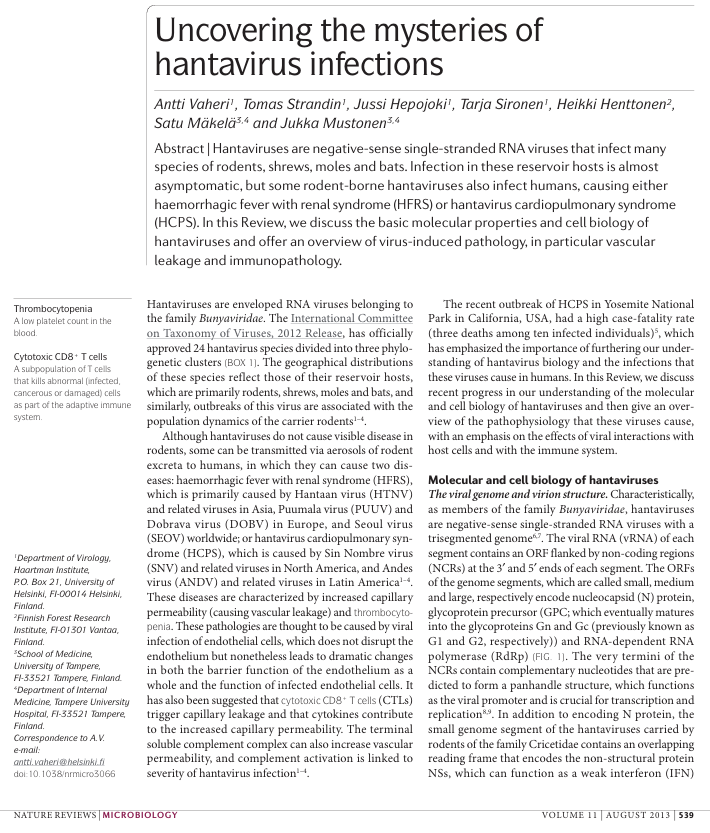
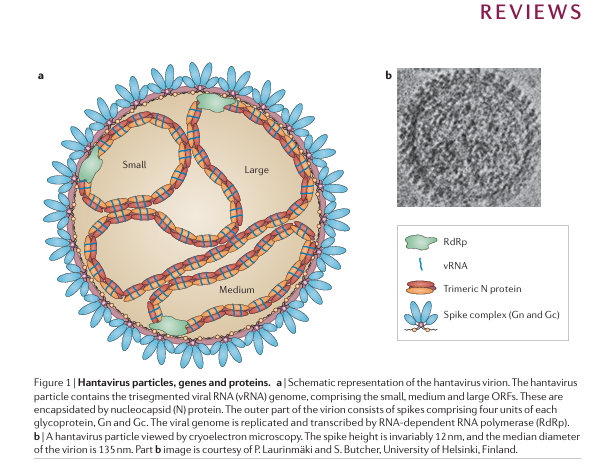
He encontrado este paper sobre #Hantavirus bastante completo sobre su mecanismo de infección.
🐭🦠 Son virus relevantes en salud pública, y muy interesantes desde la virología molecular.
1️⃣ Reservorios y transmisión: infectan roedores, musarañas, topos y murciélagos, aunque las infecciones humanas descritas se asocian sobre todo a hantavirus de roedores. El contagio suele ocurrir al inhalar aerosoles contaminados con excretas. 🌲🌬️
2️⃣ Patologías: algunos hantavirus pueden causar fiebre hemorrágica con síndrome renal (HFRS) o síndrome cardiopulmonar por hantavirus (HCPS), enfermedades potencialmente graves. 💔🏥
3️⃣ Biología: tienen un genoma de ARN monocatenario negativo dividido en tres segmentos. Un punto clave es su interacción con células endoteliales: pueden aumentar la permeabilidad vascular sin destruir masivamente el endotelio. 🔬🧬
4️⃣ Impacto: brotes como el de Yosemite recuerdan que la ecología de los roedores y el contacto humano con sus hábitats pueden influir en el riesgo de infección. 📈🐁
✅ Lo más sólido del artículo: resume la estructura viral, la replicación, el posible uso de integrinas para entrar en células y la relación entre fuga vascular e inmunopatología.
💡 Ojito, es una revisión de 2013; para un hilo actualizado habría que añadir literatura reciente sobre virus Andes, transmisión persona a persona y nuevas herramientas diagnósticas. Pero está bastante bien.
🔗👉 https://t.co/JgR6FRG6WM
#Hantavirus #Virología #SaludPública #Microbiología #Zoonosis
🇪🇺👩🏽🔬👨🏽🔬 Did you miss our yesterday's introductory webinar on Marie Skłodowska-Curie Actions Postdoctoral Fellowships 2026?
⏺️Recording out now▶️ https://t.co/oQeUAGuMs6
🌏 A big thank you to the nearly 570 participants from 61 countries for your interest, and to our excellent speakers and experts for making the session so engaging and interactive 👏
@EUinNZ, @EUinAus
#MSCA #Postdoc #Research #Fellowship #HorizonEurope
Excited to be joining #BiologyOfGenomes online this week 🧬
Great lineup covering DNA variation, complex disease, gene expression & computational genomics - should be a fantastic week of science!
#Genomics#Genetics#Bioinformatics
ITGAL mutants showed altered leukocyte profiles, consistent with its role in immune signalling and migration. These findings show how population-scale data can help pinpoint causative variants and guide breeding strategies. #AnimalGenomics#QTL
Our paper ‘Fine mapping highlights ITGAL and MUS81 loss-of-function mutations modulating recessive impacts in dairy cattle’ is now out in Animal Genetics @WileyEcolEvol, and it’s Open Access! 🐄
https://t.co/Yc4P1iKrEN
Using genotypes from 1M dairy cattle, we revisited two major-effect recessive loci tied to lactation and body traits. Among tightly linked candidate variants, ITGAL and MUS81 stood out—both carrying premature stop mutations. 🧬 #Genetics#DairyScience
🇪🇺📣[BREAKING NEWS] The Horizon Europe Work Programme 2️⃣0️⃣2️⃣5️⃣ has been pre-published.
Check the text for MSCA, all clusters, EU Missions and more: https://t.co/4pClJLisTO
Official adoption is planned for the beginning of May. Stay tuned!
@HorizonEU, @EUinAus , @EUinNZ , @MBIEsci
#Research #Innovation #Opportunity #HorizonEurope #HorizonEU #MSCA #HEPillars #Clusters #EUMissions
Lifestyle is a stronger predictor of aging and mortality than genetics.
A new Nature study of ~500,000 people found:
🎯 17% of mortality variation was linked to lifestyle (exposome).
🧬 <2% of was explained by genetics.
Here’s what you need to know 👇🧵 1/10
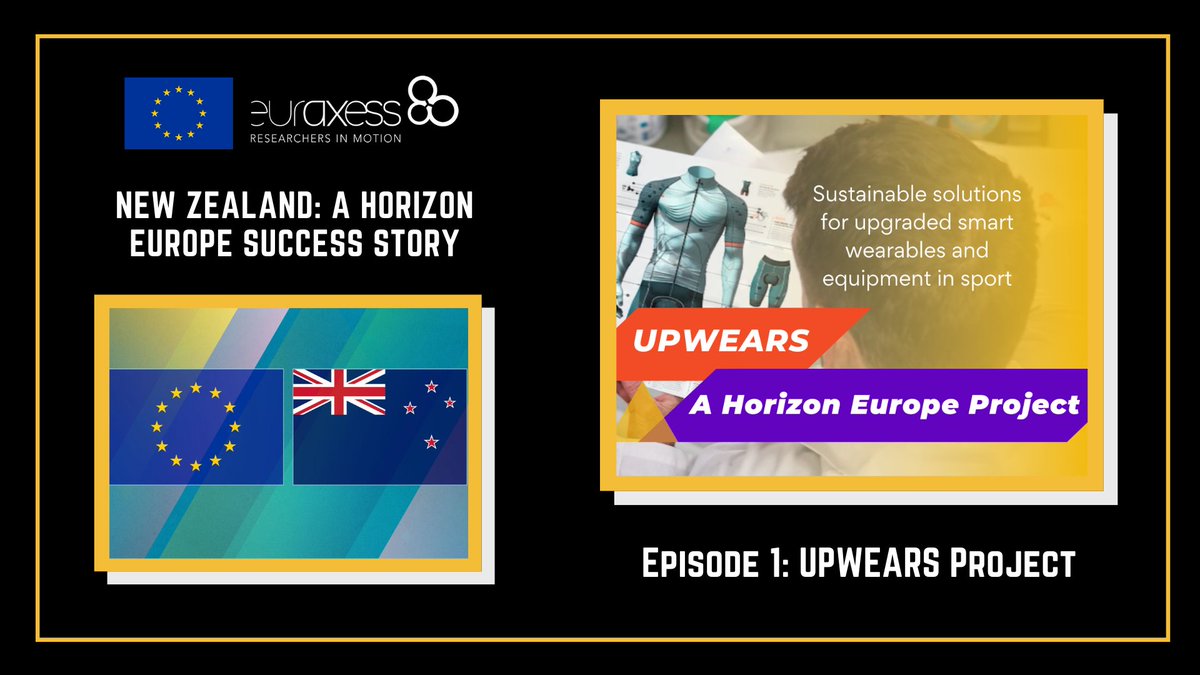
🇪🇺🤝🇳🇿 We’re excited to launch our new feature series, "New Zealand: A Horizon Europe Success Story", highlighting how New Zealand research institutions are making an impact in EU-funded projects.
In Episode 1, we spotlight the UPWEARS project, a groundbreaking initiative at the intersection of sustainability and advanced materials: https://t.co/jt12sP4mM4
New Zealand’s very own @scion_research (New Zealand Forest Research Institute Limited) plays a key role, leveraging its expertise in biobased materials and circular economy solutions to contribute to innovative, sustainable alternatives in the textile and fashion industries.
A huge thank you to the Scion team (for their valuable insights and support in creating this episode! 🎥👏
This is a fantastic example of how New Zealand researchers collaborate globally through Horizon Europe, shaping the future of research and innovation.
Stay tuned as we continue to showcase more success stories!
@EUinNZ, @EUScienceInnov, @REA_research, @MBIEsci
#HorizonEurope #NZinEUResearch #Sustainability #Innovation #EUFunded #HorizonEU #Research #Innovation #StrongerTogether
The Trump administration's efforts to slash research funding have US graduate students, postdocs and other early-career scientists fearing for their careers. Some are considering changing jobs or leaving the country. Others say them might abandon research altogether.
https://t.co/9afome3UzX
A few takeaways from the #German#election: the divisions between east and west appear to be growing, not diminishing, 35 years after #reunification. Young voters continue to drift to the political fringes. Most Germans reject the far-right party. https://t.co/TvcMaOt7Fe
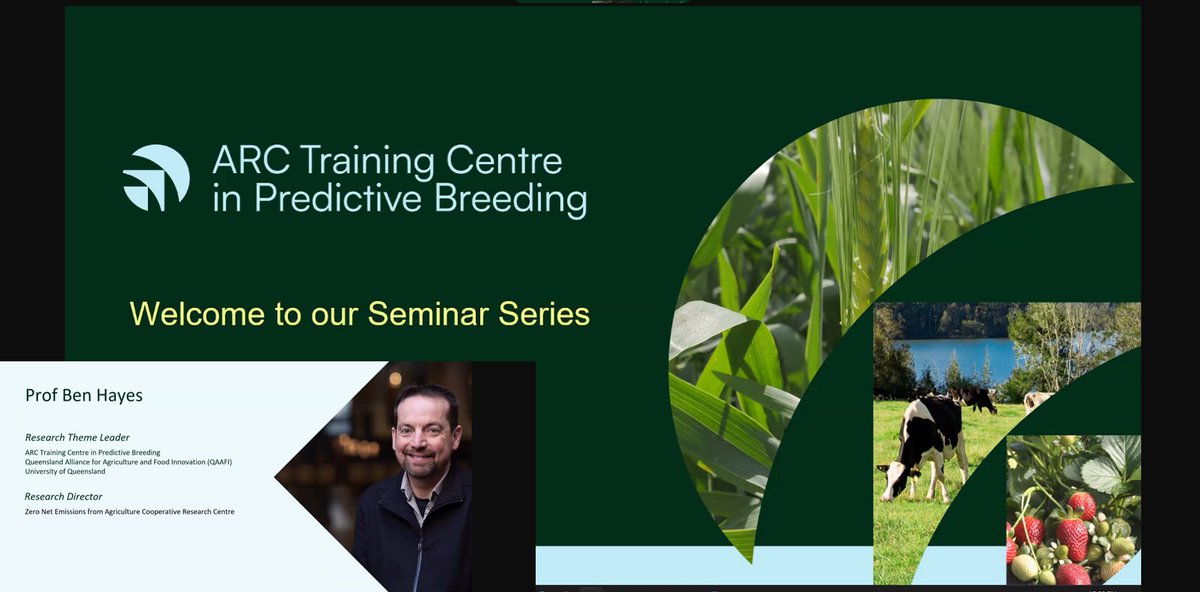
📷 #Seminar: Potential approaches to create ultimate genotypes in #crops and #livestock. Joining Queensland Alliance for Agriculture and Food Innovation (#QAAFI) Prof Ben Hayes for an insight into alternatives to advance current #breeding#strategies. 🐄🌽
Dear science community, I would like to gain more paper reviewing experience (con gen, pop gen, speciation) - feel free to suggest me as alternative reviewer if you can't make it! 🧬🙏
#peerreview#genetics#congen#popgen#speciation
🎉My lab (https://t.co/0lHKr5kx8k) is hiring 2 full-time research assistants to work on NIMH-funded projects focused on the causes and treatment of depression in teens. Please RT and share! Apply⬇️
https://t.co/q4HZRf48kl
📢The 🆕 calendar for the 2024 #MSCA calls is out!
The MSCA will provide organisations with over €1.23 billion to support researchers from all over the world🌏, at all stages of their career and in all disciplines.
🇪🇺 Find out more👉 https://t.co/CCi7NTK41V






![Euraxess_AusNZ's tweet photo. 🇪🇺📣[BREAKING NEWS] The Horizon Europe Work Programme 2️⃣0️⃣2️⃣5️⃣ has been pre-published.
Check the text for MSCA, all clusters, EU Missions and more: https://t.co/4pClJLisTO
Official adoption is planned for the beginning of May. Stay tuned!
@HorizonEU, @EUinAus , @EUinNZ , @MBIEsci
#Research #Innovation #Opportunity #HorizonEurope #HorizonEU #MSCA #HEPillars #Clusters #EUMissions](https://pbs.twimg.com/media/Gpk3-JkbgAAv8fx.jpg)