130 schools said no.
He led the losingest program in college football history to a national championship anyway.
Fernando Mendoza was a 2-star recruit from Miami.
He tried to walk on at his hometown school. They passed.
So did FIU.
So did FAU.
So did everyone else.
At 17, he was sitting in his bedroom, crying over a silent recruiting inbox—after driving to 18 camps with his dad and sending highlights to more than 100 programs.
Not one FBS offer.
His only option? Yale. No scholarship. No NFL path.
Everyone told him to be “realistic.”
“Know your place.”
“Be grateful.”
He didn’t listen.
Because Mendoza understood something most people miss:
The worst outcome isn’t failing.
It’s never getting the chance to try.
Two weeks before signing day in 2022, his phone rang.
Cal needed a body. One offer. Out of 134 schools.
He took it.
He arrived as the third-string quarterback.
Spent a year on the scout team.
Lost his first four starts.
Got sacked 41 times behind a broken offensive line.
Still got up. Every time.
Then Cal brought in a transfer instead of building around him.
So Mendoza left the only school that had ever said yes.
He transferred to Indiana—the losingest program in college football history.
People laughed.
“Career suicide.”
“Graveyard program.”
“Nobody wins there.”
One coach told him something different:
“I’m going to make you the best Fernando Mendoza possible.”
That was enough.
Mendoza wasn’t just playing for football.
His mother has battled multiple sclerosis for 18 years.
Before every snap, he thought of her.
“My mother is my why.”
Indiana went 16–0.
Beat six Top-10 teams.
Won their first Big Ten title since 1945.
Mendoza threw 41 touchdowns.
Won the Heisman—first in school history.
First Cuban-American to ever do it.
Then came the title game.
Miami. Near his hometown.
Fourth-and-4. Season on the line.
Quarterback draw.
The kid 134 schools rejected spun through defenders and dove into the end zone.
Game over.
Indiana—national champions.
The losingest program became the best team in America.
All because a 17-year-old refused to believe “no” was the end.
Rankings don’t decide your ceiling.
Gatekeepers don’t write your ending.
Being overlooked isn’t a verdict—it’s a starting point.
Sometimes all you need is one shot…
and the courage to bet on yourself when nobody else will.
Don’t quit.
Credit: Barclay Mullins
After almost twenty years of sharing the gospel in India, I have lost count of how many of my Hindu friends, relatives, and strangers have said the same thing to me. They admit openly that the idols they bow before are not real gods. They know it. They say it without hesitation. It is spoken almost the way Westerns speak about Santa later in life. Not real, but useful. A noble lie they say. Something cultural. Something emotional. Something passed down.
Scripture already told us this would happen. Romans 1:18 to 23 exposes this. It is not ignorance. IT IS SUPPRESSION. The truth about God is known, yet deliberately pushed down. Not because the evidence is lacking, but because acknowledging the true God would demand repentance and surrender.
Men do not worship idols because they think stone has life. They worship idols because idols make no moral claims. They ask for rituals, not repentance. They accept offerings, not obedience. They comfort the conscience without confronting the heart.
This is why idolatry survives even when belief collapses. It is not faith that keeps it alive. It is fear of the living God. When the true God is removed, something must take His place. And so, men exchange the glory of the incorruptible God for images that demand nothing and change nothing.
And this is where we must be honest. This problem does not end outside Christianity. We have done the very same thing within it.
Many who call themselves Christians admit something similar, though they use different language. They do not deny Jesus, but they reshape Him. They speak of a Christ who never confronts, never warns, never judges. A Jesus who exists to comfort but never to command.
Just as idols are shaped to fit human desire, we have shaped our own version of Christ. A Jesus who affirms our choices, blesses our plans, and never speaks of repentance. A Jesus who saves without lordship and loves without holiness.
Scripture warns us about this. Paul says there will come a time when people will not endure sound teaching but will gather teachers to suit their own passions in 2 Timothy 4:3. That is not paganism entering the church. That is idolatry wearing Christian language.
Even superstition has found a place among us. Crosses are treated like charms, verses are repeated like spells, prayer is reduced to technique, and worship is shaped more by atmosphere than by truth. We anoint everything with oil as though the bottle holds power, sprinkle water as though holiness can be transferred by touch, and chase methods instead of repentance. Faith is measured by outcomes rather than obedience, by results rather than surrender. What was meant to draw us to Christ has been turned into ritual without reverence, practice without truth, religion without the fear of God. And in doing so, we unknowingly replace living faith with sacred habits that demand nothing from the heart.
This is not far from what Romans 1 describes. It is still an exchange. Not of stone this time, but of truth. We exchange the real Christ for a manageable one. A Jesus who asks for admiration but not surrender.
The tragedy is not that people reject Christ openly. It is that many worship a version of Him that does not exist. And a false Christ cannot save, no matter how sincerely He is spoken about.
The living God cannot be edited. He is not a symbol. He is not an idea. He is not safe. And until He is known as He truly is, even Christianity can become another form of idol worship.
A man said "I accept Jesus Christ" on his deathbed.
The church asked if he really meant it.
I need to ask you something.
When did we become the gatekeepers of grace?
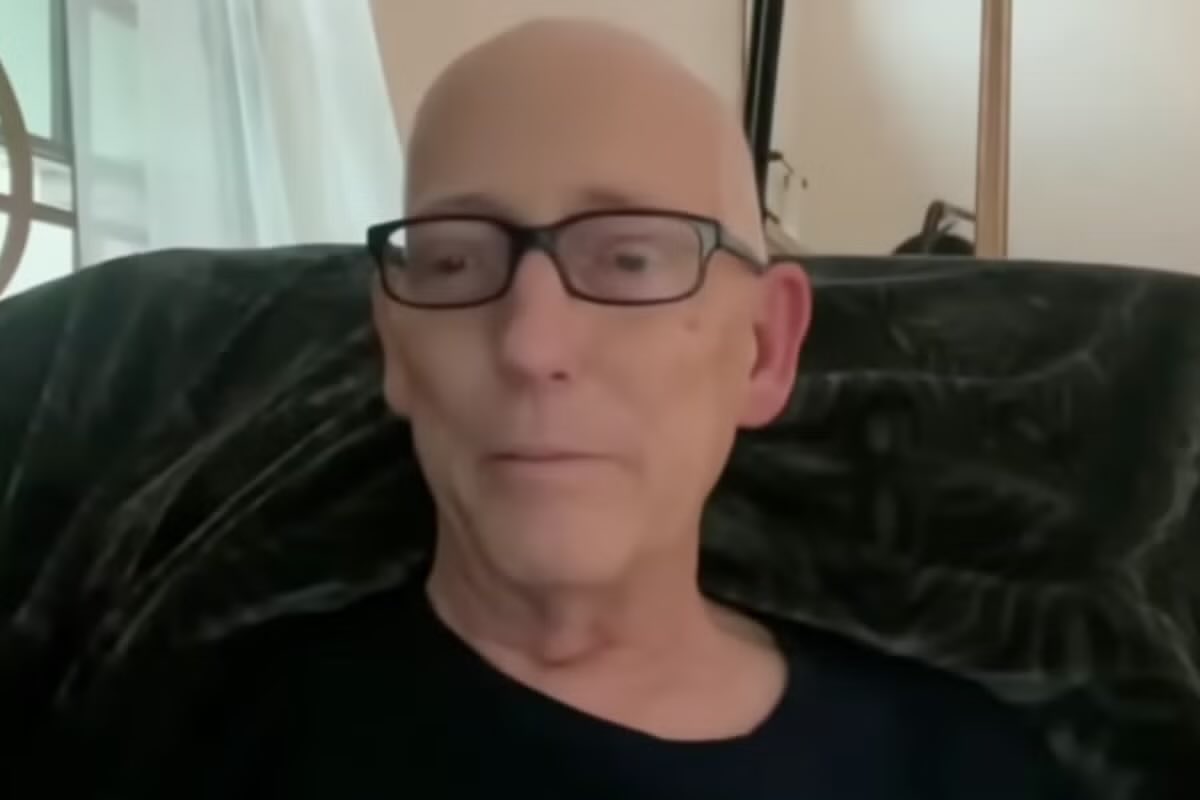
I've watched Christians dissect Scott Adams' final words like prosecutors.
They parsed his phrases. They weighed his tone. They measured his faith against some invisible scale and found it wanting.
"That doesn't sound like surrender," they said. "That sounds like a man hedging his bets."
And I understand the instinct. I do.
But there's a verse that haunts me. Not because it's obscure—because it's too simple.
"Whosoever shall call upon the name of the Lord shall be saved."
(Romans 10:13)
Whosoever.
Not "whosoever truly believes in their heart of hearts." Not "whosoever demonstrates sufficient sincerity." Not "whosoever calls early enough in life that we trust their
motives."
Whosoever.
The moment we add prerequisites to that promise, we've traded the Gospel for religion.
We've smuggled works back in through the side door labeled "authentic faith."
I know what some of you are thinking.
But he admitted he wasn't a believer.
He talked about "risk and reward."
He said he hoped he'd "qualify."
Yes. He did.
And those words make us uncomfortable. They don't sound like the confident declarations we want from converts. They sound uncertain. Calculating. Human.
But here's what I need you to hear:
The thief on the cross didn't have time to develop mature theology either.
He was a criminal. Hours from death. He looked at Jesus and said, "Lord, remember me when you come into your kingdom."
That's it.
No profession of belief in the resurrection. No renunciation of his former life. No evidence of transformed character.
Just a desperate man, reaching for a hand he wasn't sure would take his.
And Jesus said, "Today you will be with me in paradise."
We have a problem, and it's not Scott Adams.
It's us.
We've internalized a law that God never gave us. A natural sense of fairness that says late arrivals should get less. That deathbed conversions are suspicious. That the math
should somehow work out—more faith, more years, more sacrifice equals more standing before God.
Jesus told a parable about this.
We skip over it because it offends us.
A landowner hired workers throughout the day. Some came at dawn. Some at noon. Some showed up with one hour left.
At the end, he paid them all the same.
The early workers were furious.
"These who were hired last worked only one hour, and you have made them equal to us who have borne the burden of the work and the heat of the day."
(Matthew 20:12)
And the landowner replied:
"I am not being unfair to you, friend. Didn't you agree to work for a denarius? Don't I have the right to do what I want with my own money? Or are you envious because I am generous?"
There it is.
The scandal of grace is that it feels unfair.
A man who mocked God for sixty years gets the same inheritance as the saint who served since childhood. A skeptic who hedged his bets at the last breath stands in the same kingdom as the martyr who gave everything.
And something in us recoils.
That's not grace rejecting us.
That's us rejecting grace.
Let me tell you what I see when Christians interrogate a dead man's faith.
I see the older brother standing outside the party, refusing to go in.
The prodigal came home reeking of pig filth and poor decisions. The father ran to him. Threw a robe on his back. Killed the fattened calf.
And the older brother?
"Look! All these years I've been slaving for you and never disobeyed your orders. Yet you never gave me even a young goat so I could celebrate with my friends. But when this son of yours who has squandered your property with prostitutes comes home, you kill the fattened calf for him!"
(Luke 15:29-30)
He couldn't celebrate the return because he was too busy auditing the journey.
Sound familiar?
Here's the truth we don't want to face:
We can't see hearts. We can only see words.
And the words Scott Adams spoke were: "I accept Jesus Christ as my Lord and Savior."
Were they perfect? No.
Were they confident? No.
Were they the words we would have scripted? No.
But they were the words.
And the God who receives those words is not checking for tone. He's not running sentiment analysis. He's not grading on a curve.
He's looking for open hands.
Paul wrote something that lands differently now:
"Who are you to judge someone else's servant? To their own master, servants stand or fall. And they will stand, for the Lord is able to make them stand."
(Romans 14:4)
Scott Adams was not our servant to judge. He answered to his own Master.
And the Lord is able—able—to make him stand.
That's not my promise. That's Scripture's promise.
The question is whether we'll submit to it.
I know why we do this.
I know why we parse and weigh and question.
Because if grace is really this free, then we didn't earn our place either.
If the deathbed convert gets in, then our decades of service weren't the price of admission. They were the privilege of knowing Him longer.
And that reframes everything.
It means the faith we've built isn't a resume. It's a relationship.
It means our years weren't buying something. They were receiving something.
It means we were never the workers earning a wage.
We were always the prodigals coming home.
So did Scott Adams get saved?
I don't know.
But I know what the Scripture says.
Whosoever shall call upon the name of the Lord shall be saved.
I know what Jesus promised the thief who had nothing to offer but a desperate plea.
I know what the father did when his son came crawling home with a rehearsed speech that never even got finished.
And I know what the landowner said to the workers who were angry that grace didn't do math the way they wanted.
"Are you envious because I am generous?"
The gate is narrow, but it's not locked.
The standard is high, but it's not ours to enforce.
The Judge is holy, but He is also the one who ran to meet the prodigal while he was still a long way off.
Stop auditing the dead.
Start marveling at the grace that let you in.
"Whosoever shall call upon the name of the Lord shall be saved."
Whosoever.
Even him.
Even you.
What saith the Scriptures?
That's the only question that matters.
I too, worked on his 1st campaign. Even made the mistake of voting for him a 2nd time. Got smarter, more involved & informed… saw what he was doing to our state. I voted for @AllenWest last time & will be voting for @DocPeteChambers this time around. Globalist Greg’s reign MUST COME TO AN END!
@sometherapist I highly recommend taking the Classes by The Bible Project, start with Heaven & Earth (study of Genesis 1). Tim is great at giving context and insight on original language/translation issues. When you see how the Bible is a unified story that leads to Jesus, the OT aligns w/NT
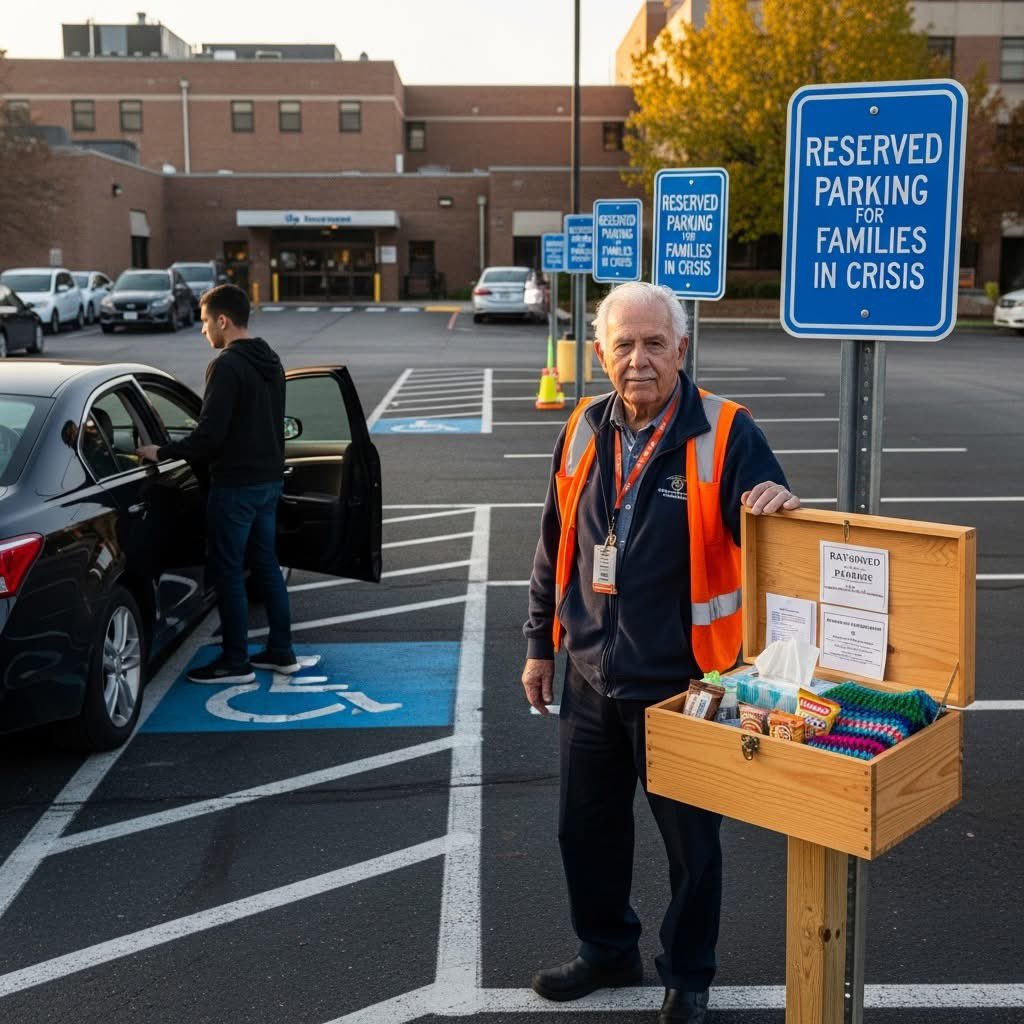
"My name's Raymond. I'm 73. I work the parking lot at St. Joseph's Hospital. Minimum wage, orange vest, a whistle I barely use. Most people don't even look at me. I'm just the old man waving cars into spaces.
But I see everything.
Like the black sedan that circled the lot every morning at 6 a.m. for three weeks. Young man driving, grandmother in the passenger seat. Chemotherapy, I figured. He'd drop her at the entrance, then spend 20 minutes hunting for parking, missing her appointments.
One morning, I stopped him. "What time tomorrow?"
"6:15," he said, confused.
"Space A-7 will be empty. I'll save it."
He blinked. "You... you can do that?"
"I can now," I said.
Next morning, I stood in A-7, holding my ground as cars circled angrily. When his sedan pulled up, I moved. He rolled down his window, speechless. "Why?"
"Because she needs you in there with her," I said. "Not out here stressing."
He cried. Right there in the parking lot.
Word spread quietly. A father with a sick baby asked if I could help. A woman visiting her dying husband. I started arriving at 5 a.m., notebook in hand, tracking who needed what. Saved spots became sacred. People stopped honking. They waited. Because they knew someone else was fighting something bigger than traffic.
But here's what changed everything, A businessman in a Mercedes screamed at me one morning. "I'm not sick! I need that spot for a meeting!"
"Then walk," I said calmly. "That space is for someone whose hands are shaking too hard to grip a steering wheel."
He sped off, furious. But a woman behind him got out of her car and hugged me. "My son has leukemia," she sobbed. "Thank you for seeing us."
The hospital tried to stop me. "Liability issues," they said. But then families started writing letters. Dozens. "Raymond made the worst days bearable." "He gave us one less thing to break over."
Last month, they made it official. "Reserved Parking for Families in Crisis." Ten spots, marked with blue signs. And they asked me to manage it.
But the best part? A man I'd helped two years ago, his mother survived, came back. He's a carpenter. Built a small wooden box, mounted it by the reserved spaces. Inside? Prayer cards, tissues, breath mints, and a note,
"Take what you need. You're not alone. -Raymond & Friends"
People leave things now. Granola bars. Phone chargers. Yesterday, someone left a hand-knitted blanket.
I'm 73. I direct traffic in a hospital parking lot. But I've learned this: Healing doesn't just happen in operating rooms. Sometimes it starts in a parking space. When someone says, "I see your crisis. Let me carry this one small piece."
So pay attention. At the grocery checkout, the coffee line, wherever you are. Someone's drowning in the little things while fighting the big ones.
Hold a door. Save a spot. Carry the weight no one else sees.
It's not glamorous. But it's everything."
Let this story reach more hearts....
Credit: Mary Nelson
@TexasGOP@GregAbbott_TX I’m done with globalist Greg Abbott! He hasn’t just failed Texas he has actively sabotaged our once great state! @DocPeteChambers will get my vote! No more RINOs!!!