The Delhi High Court has denied bail to the former CFO of Reliance Power in a money laundering case under investigation by the Enforcement Directorate (ED). The Court observed the seriousness of the allegations and emphasized the need for a fair and effective investigation before granting any relief.
The case, linked to alleged financial irregularities and fund diversion, continues to draw attention as agencies pursue their probe into the matter.
#DelhiHighCourt #MoneyLaundering #ReliancePower #EDInvestigation #LawFiles
The Delhi High Court has observed that social media platforms need not wait for court orders before acting against content that maligns judges or undermines the dignity of the judiciary. The Court emphasized that digital platforms have a responsibility to take proactive measures against such content while balancing the principles of free speech and judicial independence.
The ruling reinforces the importance of safeguarding public confidence in the justice system and highlights the growing role of social media platforms in maintaining responsible online discourse.
#DelhiHighCourt #Judiciary #SocialMedia #RuleOfLaw #LawFiles
A journalist has approached the Punjab and Haryana High Court challenging multiple police summons issued following complaints allegedly filed by several AAP MLAs. The petitioner has argued that the repeated complaints and subsequent summons amount to harassment and place undue pressure on journalistic work.
According to the plea, multiple complaints were lodged over content published by the journalist, resulting in repeated police action and notices. The petition seeks judicial intervention to safeguard constitutional rights and prevent coercive measures while the matter is examined by the Court.
The case raises broader questions regarding the balance between freedom of the press, criminal complaints, and investigative powers. The High Court is expected to examine whether the repeated proceedings amount to abuse of legal process or fall within the scope of lawful investigation.
The matter is likely to attract attention from media organizations, legal experts, and civil society groups as it touches upon issues of press freedom, procedural fairness, and protection of constitutional liberties.
#PunjabAndHaryanaHighCourt #Journalist #PressFreedom #AAP #LegalNews #FreedomOfSpeech #Judiciary
The Trinamool Congress (TMC) has approached the Calcutta High Court challenging the decision of the West Bengal Assembly Speaker to recognize Ritabrata Banerjee as the Leader of Opposition in the Assembly. The petition seeks judicial review of the Speaker's decision and raises questions regarding the legal and procedural basis for the recognition.
The dispute has emerged as a significant political and constitutional issue, drawing attention to the rules governing recognition of opposition leadership within legislative bodies. The matter is expected to involve interpretation of Assembly procedures, legislative conventions, and relevant statutory provisions.
By moving the High Court, the ruling party has sought legal clarity on the Speaker's decision, arguing that the recognition requires closer examination under the applicable framework. The case is likely to have implications for the functioning of the opposition and legislative dynamics within the West Bengal Assembly.
The High Court's consideration of the matter will be closely watched by political observers and constitutional experts, as it touches upon important questions relating to legislative authority, procedural fairness, and the role of constitutional institutions in resolving political disputes.
#CalcuttaHighCourt #TMC #RitabrataBanerjee #WestBengalAssembly #LeaderOfOpposition #Judiciary #PoliticalNews
The cook arrested in connection with the devastating Malviya Nagar hotel fire case has approached the Saket Court seeking bail as investigations into the tragedy continue. The plea comes days after his arrest in a case that has drawn widespread attention following the loss of multiple lives in the South Delhi blaze.
Investigating agencies are examining the sequence of events that led to the fire, including the actions of staff members and compliance with safety procedures at the establishment. Police have conducted reconstruction exercises and questioned key individuals as part of the ongoing probe.
The Malviya Nagar fire has also sparked broader concerns regarding fire safety compliance in hospitality establishments across the national capital. Following the incident, authorities initiated inspections and reviews of safety measures at commercial properties.
The bail application will now be considered by the court on its merits while the investigation proceeds. The outcome of the proceedings is expected to be closely watched given the seriousness of the incident and its public safety implications.
#MalviyaNagarFire #SaketCourt #DelhiNews #LegalNews #FireSafety #CourtProceedings #Justice
The Delhi High Court has ordered the removal of videos and online content that allegedly blamed a sitting High Court judge for the building collapse incident in Delhi's Saket area. The Court intervened after observing that serious allegations were being circulated without substantiated material to support the claims.
The matter involved content published on social media platforms and digital channels that attempted to connect the judge with the collapsed structure. The Court noted the potential impact of such unverified allegations on the reputation of judicial officers and the administration of justice.
Emphasizing the need for responsible communication, the Court directed the removal of the disputed content and underscored that individuals and platforms must exercise caution before disseminating allegations that lack factual verification. The order highlights the balance between freedom of expression and protection against defamatory or misleading content.
The ruling reinforces the judiciary's commitment to safeguarding institutional integrity while ensuring that public discourse remains grounded in verified facts and legal accountability.
#DelhiHighCourt #SaketCollapse #Judiciary #LegalNews #SocialMedia #RuleOfLaw #CourtOrder
A recent legal analysis has reignited debate on the treatment of evidence obtained through allegedly unlawful searches and seizures. The discussion focuses on whether courts should permit the use of evidence collected in violation of procedural safeguards or constitutional protections, particularly when such evidence may be crucial to criminal investigations.
The article argues that the current legal framework may, in some situations, fail to adequately deter investigative misconduct if unlawfully obtained evidence continues to be relied upon in judicial proceedings. It examines the tension between protecting individual rights and ensuring effective law enforcement, a challenge faced by legal systems across the world.
The issue has significant implications for criminal justice, privacy rights, due process, and constitutional governance. Proponents of stricter safeguards contend that excluding improperly obtained evidence can discourage abuse of power, while others argue that doing so could hamper the pursuit of justice in serious cases.
As technology expands the scope of surveillance, digital investigations, and data collection, questions surrounding search, seizure, privacy, and evidentiary standards are becoming increasingly important. The debate continues to shape discussions on the future of criminal procedure and the protection of fundamental rights.
#SearchAndSeizure #CriminalJustice #RuleOfLaw #ConstitutionalRights #LegalReform #DueProcess #Judiciary
The Rajasthan High Court has quashed the suspension of a government school teacher who faced disciplinary action over comments made in a WhatsApp group concerning a state minister. The Court held that the suspension order could not be sustained in law and directed appropriate relief to the petitioner.
The teacher had challenged the disciplinary action, arguing that the comments did not warrant such a severe administrative response. After examining the facts and circumstances of the case, the Court found the suspension disproportionate and lacking adequate justification.
The judgment underscores the importance of balancing service conduct rules with constitutional protections relating to freedom of expression. The Court observed that disciplinary measures must be based on valid grounds and cannot be imposed arbitrarily without proper consideration of the context and nature of the alleged conduct.
The ruling is expected to be noted in service law matters involving government employees and social media communications, reinforcing the principle that administrative action must satisfy standards of fairness, proportionality, and legality.
#RajasthanHighCourt #ServiceLaw #WhatsApp #FreedomOfExpression #Judiciary #LegalNews #GovernmentEmployees
The Delhi High Court has refused to order re-polling for the Bar Council of Delhi (BCD) elections, declining to intervene in the electoral process at this stage. The Court found no sufficient grounds to direct a fresh poll and allowed the election-related process to continue in accordance with law.
The petition had sought re-polling on the basis of alleged irregularities in the conduct of the elections. After considering the submissions, the Court chose not to grant the relief sought and emphasized adherence to the established legal framework governing election disputes.
The Bar Council of Delhi elections have witnessed multiple legal challenges in recent weeks, including allegations relating to the conduct of polling and counting procedures. Several matters connected with the elections have been examined by both the Delhi High Court and the Supreme Court.
The ruling represents an important development in the ongoing electoral dispute and reinforces the principle that courts generally exercise restraint in interfering with election processes unless compelling grounds are established.
#DelhiHighCourt #BarCouncilOfDelhi #BCDElections #Judiciary #LegalNews #ElectionDispute #RuleOfLaw
The Delhi High Court has lifted its earlier stay and allowed the trial court to pass an order on charges in the larger conspiracy case linked to the 2020 Delhi riots. The decision came after the Court dismissed a plea filed by Pinjra Tod activist Devangana Kalita seeking access to additional materials, including video recordings and certain WhatsApp group communications relied upon by the prosecution.
Justice Neena Bansal Krishna observed that the matter could now proceed before the trial court without the restriction imposed in September 2024, when the court had permitted arguments on charge to continue but restrained the trial court from passing a final order.
With the stay vacated, the trial court will now be able to consider the evidence and submissions of all parties before deciding whether charges should be framed against the accused persons in the case. The development marks an important procedural step in one of the most closely watched cases arising out of the 2020 Delhi riots.
The ruling does not determine guilt or innocence but enables the trial process to move forward in accordance with law. The question of framing charges will now be decided by the trial court after examining the available material and legal arguments.
#DelhiHighCourt #DelhiRiotsCase #DevanganaKalita #Judiciary #LegalNews #RuleOfLaw #CourtProceedings
The Delhi High Court has declined to grant an urgent hearing on a petition seeking intervention against a proposed June 6 protest associated with the Cockroach Janta Party. The plea requested immediate judicial consideration ahead of the scheduled demonstration, citing concerns over the event and its potential implications.
After hearing the request, the Court chose not to accord urgent listing and indicated that the matter would proceed through the regular judicial process. The decision means that no immediate interim relief was granted in connection with the proposed protest.
The case forms part of a broader series of legal proceedings involving the Cockroach Janta Party and its founder, which have recently attracted significant public and legal attention. Various petitions and court proceedings related to the organization are currently being examined by different judicial forums.
The development highlights the judiciary's approach toward balancing claims of urgency with procedural requirements while ensuring that all parties receive an opportunity to present their case through the established legal framework.
#DelhiHighCourt #CockroachJantaParty #LegalNews #Judiciary #CourtProceedings #RuleOfLaw #IndiaNews
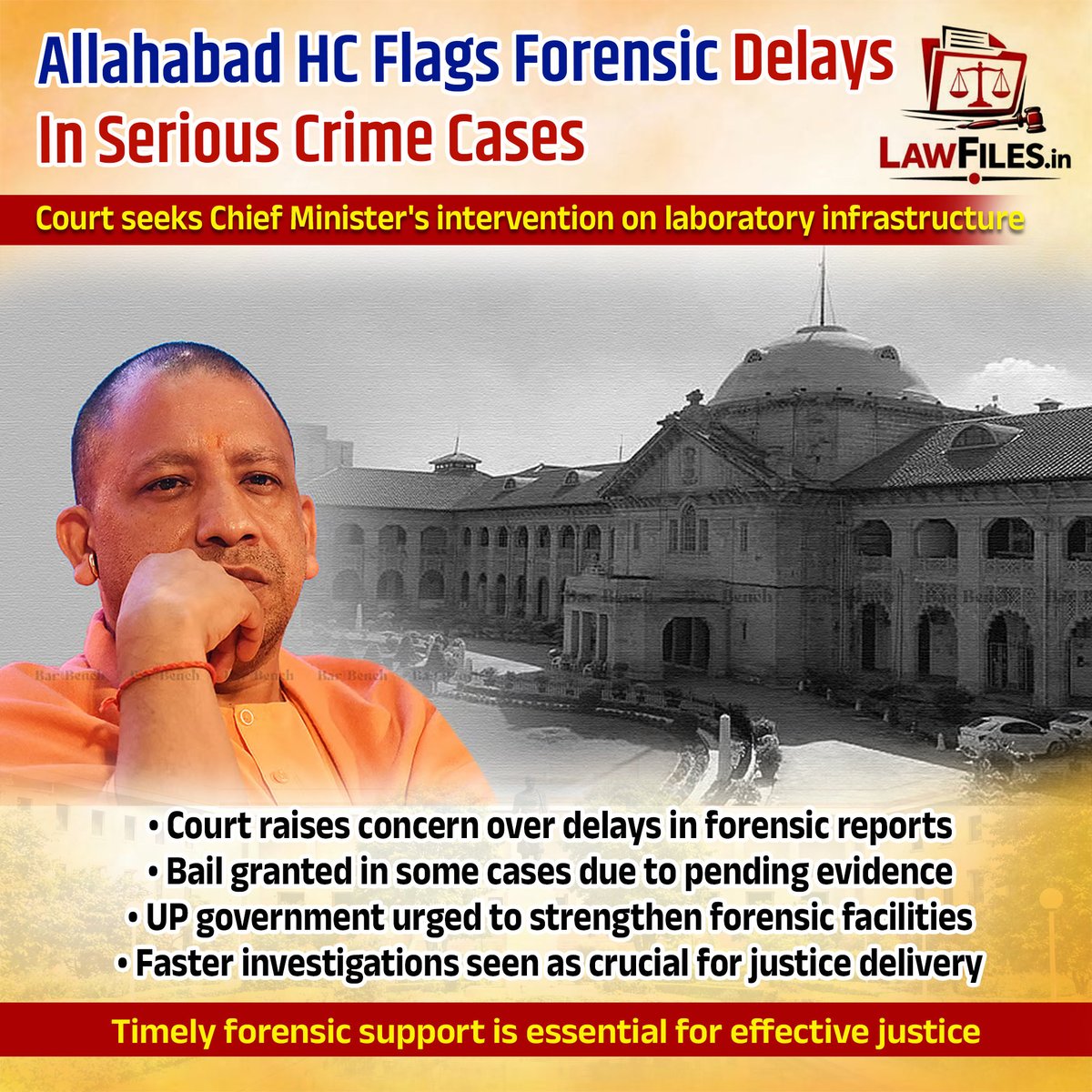
The Allahabad High Court has expressed serious concern over inadequate forensic laboratory infrastructure in Uttar Pradesh, observing that delays in forensic examination are affecting investigations in grave criminal cases, including rape and murder matters. The Court noted that prolonged waiting periods for forensic reports can weaken prosecutions and result in accused persons obtaining bail while investigations remain incomplete.
Highlighting the importance of scientific evidence in modern criminal investigations, the Court emphasized that timely forensic analysis is critical for ensuring effective prosecution and speedy justice. The bench observed that valuable police and judicial resources are often impacted when crucial reports are delayed for extended periods.
Taking note of the issue, the High Court has sought the intervention of Uttar Pradesh Chief Minister Yogi Adityanath and called for urgent measures to strengthen forensic infrastructure, manpower, and testing capacity across the state. The Court stressed that improving forensic facilities would not only aid law enforcement agencies but also help courts deliver timely and evidence-based justice.
The observations underscore the growing importance of forensic science in criminal justice administration and the need for robust institutional support to handle the increasing volume of investigations involving serious offences.
#AllahabadHighCourt #ForensicScience #UttarPradesh #CriminalJustice #Judiciary #LawAndOrder #LegalNews
The Karnataka High Court has set aside a provisional property attachment order issued by the Enforcement Directorate (ED) in connection with the MUDA case, holding that a mere reproduction of statutory language is not enough to justify such action under the Prevention of Money Laundering Act (PMLA). The Court emphasized that authorities must demonstrate clear application of mind to the facts and material available on record before exercising attachment powers.
Justice S. Sunil Dutt Yadav observed that simply copying the language of the statute cannot be treated as compliance with legal requirements. The Court noted that the ED must explain, based on the evidence in its possession, why immediate attachment was necessary and how failure to do so would frustrate proceedings under the law.
The case arose from proceedings linked to the Mysuru Urban Development Authority (MUDA) matter, where the petitioner challenged the provisional attachment order. After examining the record, the Court concluded that the statutory requirement of recording a valid “reason to believe” had not been adequately satisfied.
The ruling reinforces the principle that investigative agencies must support coercive actions with specific reasons and factual analysis rather than relying solely on standardized or formulaic language. The judgment is expected to be closely watched in matters involving property attachment and anti-money laundering proceedings.
#KarnatakaHighCourt #ED #MUDACase #PMLA #Judiciary #LegalNews #RuleOfLaw
The Madras High Court has expressed concern over the increasing misuse of the Protection of Children from Sexual Offences (POCSO) Act, observing that false cases consume valuable police and judicial resources that should be devoted to genuine victims of child sexual abuse. The Court emphasized that frivolous or motivated complaints not only burden the justice system but can also undermine the credibility of legitimate cases.
The Court noted that child protection laws are intended to safeguard vulnerable children and ensure swift action in genuine cases. However, when such stringent provisions are misused, investigating agencies, prosecutors, and courts are forced to spend significant time and resources on matters that may ultimately lack merit.
The observations were made while dealing with a matter under the POCSO Act, where the Court highlighted the need for fair investigations, careful evaluation of evidence, and protection against misuse of legal provisions. The judges stressed that authorities must remain vigilant to ensure that the law serves its intended purpose without becoming an instrument for personal vendettas or collateral disputes.
The ruling reinforces the principle that while stringent child protection laws are essential, their effectiveness depends on responsible implementation. The Court underlined that preserving the integrity of the justice system is crucial for ensuring timely relief to genuine victims and maintaining public confidence in the legal process.
#MadrasHighCourt #POCSO #ChildProtection #Judiciary #LegalNews #JusticeSystem #RuleOfLaw
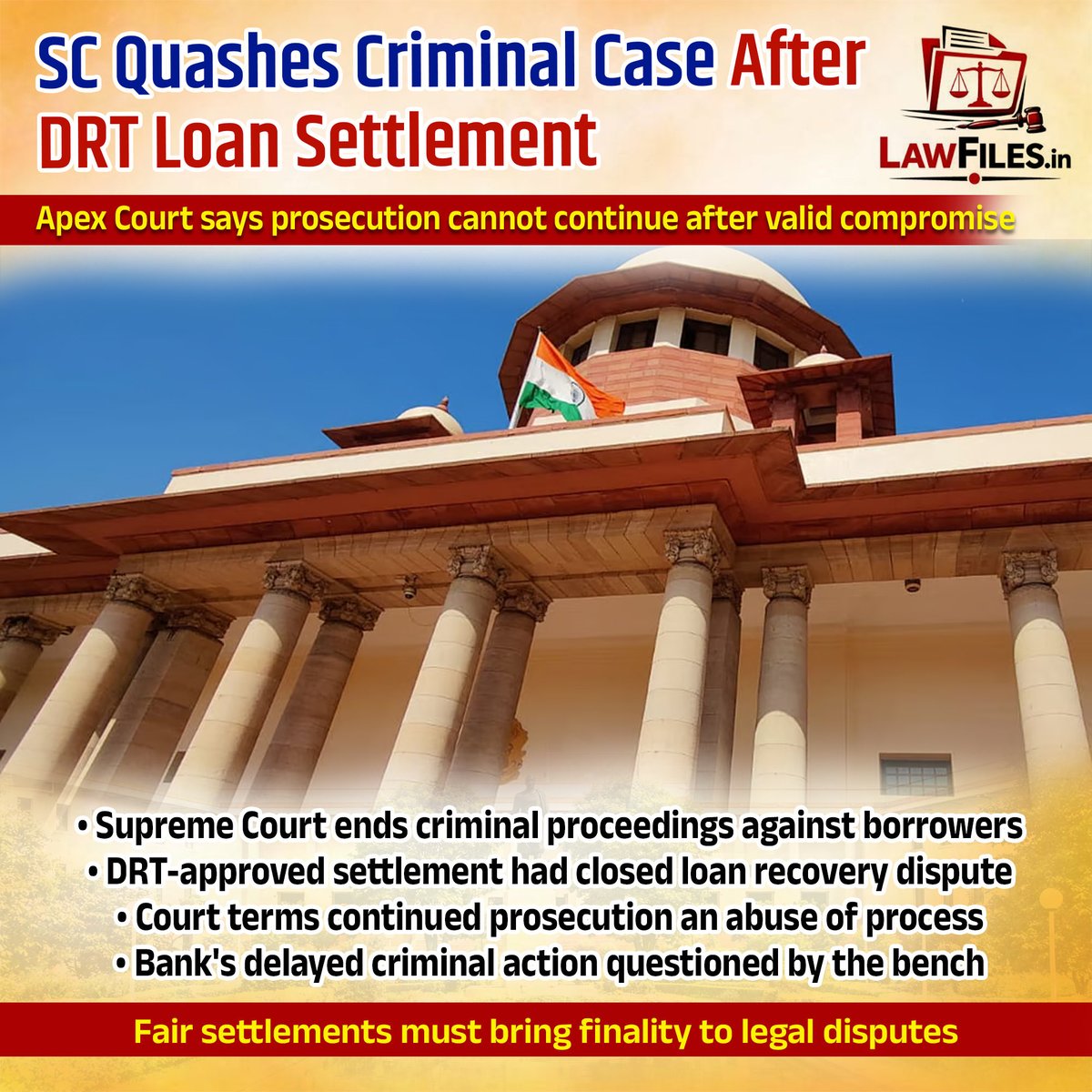
The Supreme Court has ruled that criminal proceedings against a loan defaulter cannot continue once a valid compromise settlement has been approved by the Debts Recovery Tribunal (DRT) and the loan account stands settled. The Court observed that permitting criminal prosecution to continue in such circumstances would amount to an abuse of the process of law.
The case involved borrowers who had entered into a compromise settlement with the bank, following which the settlement amount was accepted, recovery proceedings before the DRT were withdrawn, and the loan account was closed. The Court noted that the bank had certified there were no irregularities in the relevant documents at the time of settlement and subsequently initiated criminal proceedings on the same allegations.
A bench comprising Justice B.V. Nagarathna and Justice Ujjal Bhuyan held that such belated criminal action lacked good faith and could not be sustained after the dispute had been fully resolved through an approved settlement mechanism. The Court emphasized that financial settlements are intended to bring closure and legal certainty to disputes.
The judgment is expected to have significant implications for banking and recovery-related litigation by reinforcing the principle that once a bona fide settlement has been implemented and accepted, parallel criminal proceedings arising from the same dispute should not ordinarily continue.
#SupremeCourt #DRT #BankingLaw #LoanSettlement #Judiciary #LegalNews #FinancialDisputes
The Madras High Court has allowed a Bangladeshi woman to donate her kidney to her son after setting aside an order of the State Authorization Committee that had denied approval for the transplant. The Court observed that the committee's decision was unsustainable and failed to properly appreciate the evidence placed before it.
Justice G.R. Swaminathan noted that documentary records, including the birth certificate, Aadhaar card, and PAN card, sufficiently established the mother-son relationship. The Court held that a mother should not be compelled to undergo a DNA test merely to prove maternity when credible documentary evidence is already available.
The case involved a patient suffering from renal failure who urgently required a kidney transplant. Expressing concern over the committee's approach, the Court remarked that requests involving close family members should not be casually rejected in the absence of evidence suggesting any commercial transaction or improper motive.
Setting aside the rejection order, the High Court directed the authorities to grant approval immediately so that the transplantation process could proceed without further delay. The ruling reinforces the importance of a humane and practical approach in matters involving life-saving organ donations.
#MadrasHighCourt #OrganDonation #KidneyTransplant #Healthcare #Judiciary #Humanity #LegalNews
Dr. Ram Manohar Lohiya National Law University (RMLNLU), Lucknow, has stated that the Bar Council of India (BCI) has not renewed its approval since the academic year 2022-23, despite the university claiming that all required applications and fees have been submitted. The issue has come into focus following recent student protests and concerns regarding the institution's absence from the list of recognized law schools.
According to the university, renewal applications were submitted through the prescribed process and the requisite fees were paid, but approval from the BCI remains pending. RMLNLU has also reportedly written multiple communications seeking issuance of the approval letter and has requested the regulator to expedite the process.
The matter has raised concerns among students, particularly regarding enrollment, professional recognition, and international accreditation-related requirements. University records cited in reports indicate that the last approval available on record pertains to the 2022-23 academic session, while subsequent applications remain under consideration.
The development has intensified discussions on regulatory timelines and the importance of timely approval processes for legal education institutions, with students and stakeholders awaiting clarity on the pending renewal status.
#RMLNLU #BarCouncilOfIndia #LegalEducation #LawStudents #HigherEducation #LawSchool #EducationNews
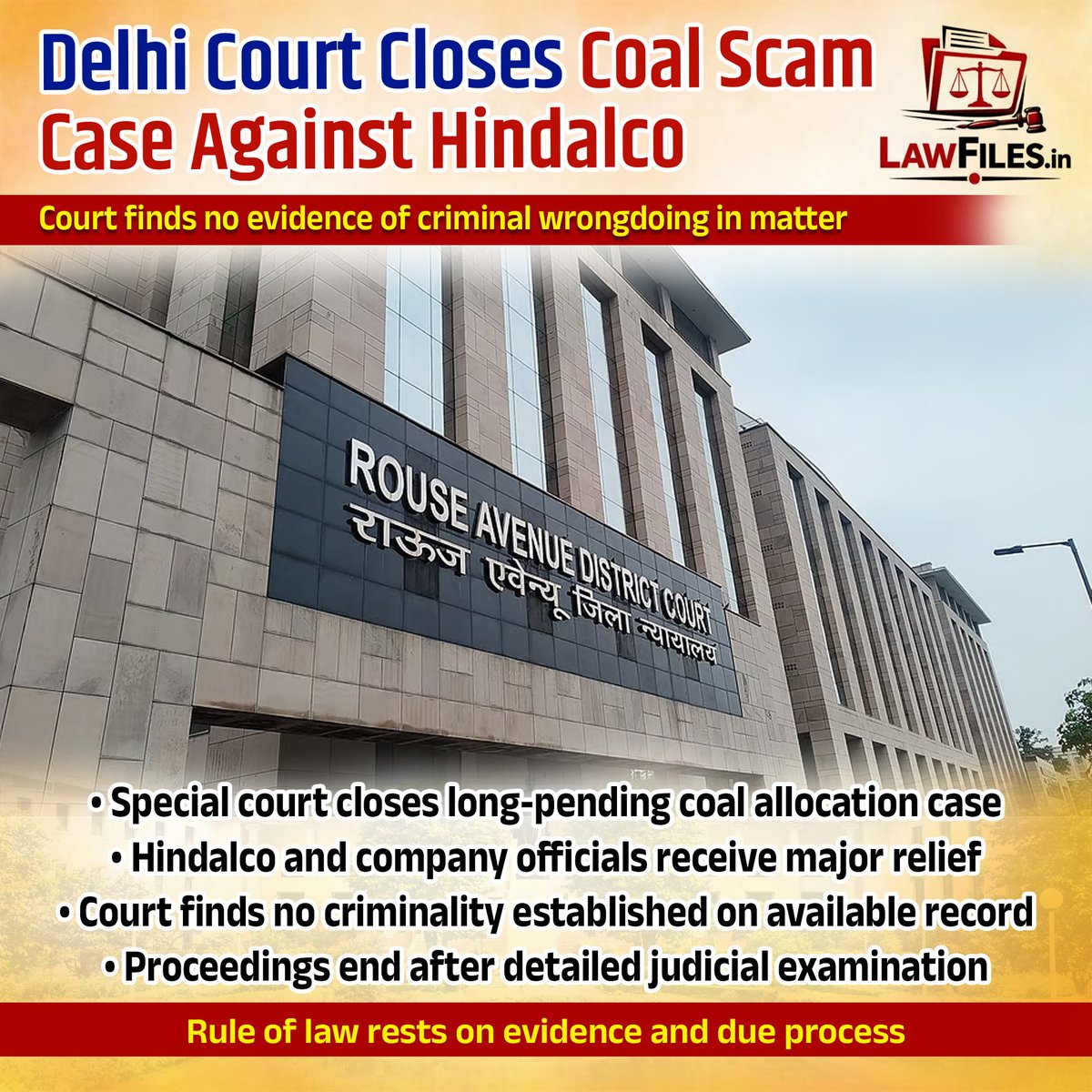
A Delhi court has closed the coal block allocation case involving Hindalco Industries and officials associated with the Aditya Birla Group, concluding that no criminality was established on the basis of the material placed before it. The decision brings an end to a long-running legal proceeding connected to the coal allocation controversy.
The court observed that the evidence and records examined during the proceedings did not justify continuation of criminal action against the company or the individuals concerned. As a result, the case has been closed, providing significant relief to the parties involved.
The matter related to the allocation of a coal block and had remained under legal scrutiny for several years. The latest ruling underscores the importance of evidence-based adjudication and judicial review in complex economic and administrative cases.
The verdict is expected to be closely followed by legal and corporate circles, given its connection to one of the most prominent coal allocation matters examined by courts over the past decade.
#DelhiCourt #CoalBlockCase #Hindalco #AdityaBirlaGroup #Judiciary #LegalNews #CorporateIndia
The Supreme Court has declined to direct the National Testing Agency (NTA) to conduct the NEET-UG 2026 re-examination in Computer-Based Test (CBT) mode, allowing the scheduled re-test to proceed in the existing pen-and-paper format. The decision came while hearing a petition seeking a shift to online testing following concerns raised after the cancellation of the original examination.
The Court observed that the authorities are already facing significant logistical and administrative challenges in reconducting the examination and expressed reluctance to introduce major changes at this stage. As a result, the NEET-UG 2026 re-test will continue as planned on June 21.
The plea had sought a transition to CBT mode citing transparency, security, and examination integrity concerns. However, the Court declined interim relief and deferred further consideration of the matter until after the court vacation.
The issue arises against the backdrop of the cancellation of the May 3 NEET-UG examination following allegations of a paper leak. While broader discussions on examination reforms and technological safeguards continue, the immediate focus remains on ensuring the smooth conduct of the upcoming re-examination for lakhs of medical aspirants across the country.
#SupremeCourt #NEETUG2026 #NTA #MedicalEntranceExam #EducationNews #ExamReforms #NEET
The Kerala High Court has reserved its verdict on an appeal filed by Cochin Minerals and Rutile Limited (CMRL) challenging orders connected to an Enforcement Directorate (ED) investigation. While reserving its decision, the Court directed that the present status quo be maintained until the final judgment is delivered.
The matter relates to legal proceedings arising from the ED's investigation and subsequent actions involving the company. During the hearing, arguments were presented by both sides regarding the validity of the challenged orders and the scope of the investigation. After considering the submissions, the Court decided to reserve its verdict for a detailed examination of the issues involved.
The direction to maintain status quo provides temporary relief by ensuring that the existing position remains unchanged until the Court pronounces its final decision. The outcome of the case is expected to have significance for the parties involved and may also influence related legal proceedings connected to the matter.
The development highlights the judiciary's role in reviewing investigative and administrative actions while ensuring that due process and legal safeguards are maintained. Attention will now remain focused on the High Court's final ruling and its implications for the ongoing proceedings.
#KeralaHighCourt #CMRL #EnforcementDirectorate #JudicialProceedings #LegalNews #CourtCase #RuleOfLaw