In discussing the key advantages of Bitcoin Layer 2 networks, I believe that merely integrating Bitcoin assets into Ethereum's DeFi ecosystem through EVM is not sufficient for a strong moat. If solutions like @arbitrum, supported by services like @ParticleNtwrk's wallet, enable Bitcoin assets to participate in Arbitrum's DeFi, it poses a significant challenge to platforms like Bsquare which are unlikely to surpass Arbitrum in EVM development.
I disagree with @MerlinLayer2's view that inscription assets are currently the most important. Their trading volume and diversity are not even on par with the NFT market. $ordi and $sat's major transactions and market values are on centralized exchanges, which are not truly native transactions but centralized ledgers keeping track of them. The NFT market has various marketing tools like NFTfi, artists, and listed companies, while the inscription market hardly sees a substantial number of solid projects. If Merlin's reward activities end without worthwhile assets to trade on-chain, it would be challenging to sustain such a narrative.
The two crucial moats, in my opinion, are:
1. The fundamental difference between Bitcoin and Ethereum. Initially thought to be in asset scale, the main difference stems from Bitcoin's trust mechanism, which is the most recognized in the cryptocurrency and traditional investment world. Bitcoin users don't participate in DeFi on EVM not because they dislike ETH but because they don't trust its security mechanism. Building trust takes time, and traditional finance took fifteen years to trust Bitcoin's simple yet effective security mechanism. Current Layer 2 solutions struggle to inherit this trust mechanism. How to fully and thoroughly inherit Bitcoin's trust mechanism and rely on the Bitcoin network for all trust-required transactions is something all EVMs fail to achieve, marking the first moat.
2. How to create native, differentiated high-quality assets on the Bitcoin network. Outstanding projects can attract rewards, but native DApps need the chain's inherent differences. For example, @Blast_L2 attracted many new protocols just with its native yield. If Bitcoin Layer 2 fully leverages its characteristics and provides more opportunities for differentiated native assets on top of accommodating EVM developer migration, the DApps nurtured will become the chain's own moat.
@LumiBitL2 takes several measures in these aspects. First, to maintain identity consistency between Bitcoin and LumiBit networks, we introduced native multisig technology, allowing users to access and operate the LumiBit network directly using Bitcoin addresses while viewing assets of both addresses.
Second, we ensure all information transmitted between layers is verified and signed by Bitcoin nodes, ensuring no possibility of wrongdoing in LumiBit. Your trust comes from the Bitcoin network's trust mechanism, which we have fully elaborated on in this article: https://t.co/yUEkfLHi6H
We also introduced a genuine computational layer to inscriptions, enabling smart contract interactions while keeping assets on the Bitcoin network. This not only relies more on Bitcoin's trust mechanism but also allows for the development of many new and interesting DApps based on the intrinsic differences between BTC and ETH.
LumiBit will adhere to this operating mechanism, building all trust relationships entirely on the Bitcoin network and creating a more conducive environment for BTC DApp development and operation.
So, if you trust Bitcoin, choose LumiBit.
🟠LumiBit Devnet 101 is here!
Dive into the basics you need to know to get started with our Devnet, including setting up a wallet, using Uniswap-v2, and exploring the chain.
Check out the guide and join us in building the future of Bitcoin L2 space: https://t.co/rgIVqmLZdw⚫️
On Bitcoin Pizza Day, it's fitting to think about value beyond just spending BTC on pizzas.
Ever wonder what happens when TVL is just "rented" through airdrops? Spoiler: it doesn't really help the ecosystem. Imagine the main chain as a big tree, DApps as its roots, and TVL as the rain. Without strong roots, the rain just washes away, no matter how much you reward it.
So, what kind of DApps do BTC L2s need? Anyone working on or investing in Bitcoin Layer 2 is probably pondering this. Unfortunately, we haven't seen a BTC-native project make waves like GMX did for Ethereum L2. This was predictable. Remember the rush of BTC L2s that popped up using easy-to-deploy SDKs, third-party wallets, and DA strategies? These founders were seizing an opportunity, not necessarily thinking about BTC L2's unique advantages or building robust DApps.
It's like the old saying: you only find out who's swimming naked when the tide goes out. As TVL for airdrop farming dwindles, we'll see who really knows how to run a main chain. We'll put @LumiBitL2 to the same test. This is the right approach to developing and running a BTC L2.
🟠Happy Bitcoin Pizza Day🍕 Remember when 10,000 $BTC bought two pizzas?
With LumiBit's seamless cross-chain transactions and native signature tech, you can now enjoy your Bitcoin just as effortlessly as ordering a pizza⚫️
I'm seeing a lot of chatter about TVL and token price mismatches in the BTC L2 space. When did testnet TVL become the be-all and end-all for mainnet valuation?
Remember the joy of passing those anti-sybil tests? They weren't just about parking assets; they demanded active participation (which is too costly for big players), enriching the ecosystem and keeping users engaged.
TVL should be a sign of organic asset accumulation, not just a number boosted by high-stakes airdrops targeting whales.
When you allocate 20% of the market cap for airdrops to "rent" TVL, it attracts big players coming for the tokens, not the tech, leaving DApps high and dry once the lock-up period ends. This isn't great for ecosystem health. What's crucial is building a community that participates and sticks around, not just inflating numbers. Let's focus on meaningful growth, not just the optics.
Just to share my two cents on what makes a good Bitcoin Layer 2, or a necessary one, really. It boils down to enhancing and integrating with Bitcoin. And while I won't judge whether just using BTC as a bridge for an EVM qualifies as a true BTC L2, it's clear that this doesn't meet the essential needs. I mean, those are cool and all, but where’s the unique value?
From the start, @LumiBitL2 isn’t just capitalizing on Bitcoin's financial clout; we’re all about empowering these funds right on the Bitcoin layer, rather than shuttling them off to some new EVM environment. That’s what a lot of L2s are doing, but not us. Our edge really comes from how deeply we get Bitcoin:
Our Native Signature is the only tech that fully 'bitcoinizes' user addresses—this isn't just for Bitcoin purists but also lets us tap into a fresh surge of assets and users right on the Bitcoin network. For instance, imagine you're running a Bitcoin L2 and you want Runes users to join a DAO or tap into early adopter rewards—how would you do it? With LumiBit's Native Signature, developers can pinpoint addresses just as if they were working directly on Bitcoin. It’s as easy as how Optimism handled airdrops to Ethereum addresses—our L2 addresses are identical to Bitcoin addresses, which is a game-changer.
Then there's the issue of frequent trading of Runes and countless Layer 1 assets. Most L2 solutions rely on trust in their cross-chain bridges, which can be a deal-breaker in terms of trust and time cost for L1 users. LumiBit changes the game with an asynchronous trading structure that lets you list first, transfer assets after a deal—no need to learn new trading methods, everything can be done on Bitcoin Layer 1.
Many high TVL Bitcoin L2s are just hoarding liquidity without building what L2s should—like better chains or wallets. LumiBit has nailed wallet integration; thanks to our Native Signature, moving into LumiBit is as easy as switching from ETH to Arb. We’re working closely with OKX Wallet now, leveraging EOA’s benefits to offer faster, cheaper, and more convenient access than current AA-integrated BTC L2 networks.
Mainchain development is crucial too. It’s not about whether something like the Polygon CDK is good or bad; it’s about choosing the right chain to show our technical strength and capability to deeply customize the chain. We're the only team using @Scroll_ZKP tech for this, proving our chops and readiness to innovate our mainchain products to meet modern demands. And it’s not just about showing off with Scroll; their DA solution lets us store all mainchain DA directly on BTC’s UTXO—making us the only project that can do this, and bringing us back to my initial point:
LumiBit isn't just another L2; It's all about enhancing and integrating with Bitcoin.
Our Decentralized Verification Network (DVN) is not just some tech jargon; it's a game-changer in making cross-chain info transfer secure and smooth.
Picture this: our BTC nodes are like vigilant guards ensuring every piece of data is trustworthy before it hits the BTC mainnet. And the best part? We're sticking to Bitcoin's roots, keeping everything decentralized and secure, just the way the crypto world loves it! Join us in shaping a BTC Layer 2 ecosystem that's not just secure but also crazy efficient and user-friendly!
🟠Dive into the world of decentralized verification with #LumiBit's BTC Nodes, a cornerstone in enhancing BTC Layer 2's security and decentralization.
Our Decentralized Verification Network (DVN) mechanism is redefining secure, cross-chain information transfer, ensuring a seamless and trustable environment for all users.
Key Technical Insights👇
1⃣Decentralized Verification Network:
LumiBit's DVN mechanism is pivotal in enhancing the security and decentralization of our BTC Layer 2 solutions, utilizing BTC native nodes for secure and decentralized information transfer.
2⃣Bitcoin Nativeness:
Our BTC nodes utilize Bitcoin full nodes and LumiBit clients with an X-of-Y-of-N consensus mechanism. In this system, required LumiBit-BTC nodes, along with randomly selected non-essential nodes, validate the states of data packages through their signatures before these packages are uploaded to the BTC mainnet. By leveraging a decentralized network of validators, DVNs diminish the reliance on individual nodes or entities, thereby enhancing security and reinforcing LumiBit's adherence to Bitcoin Nativeness.
3⃣Consensus and Security:
Our BTC nodes leverage Bitcoin's robust consensus mechanism to validate transactions and interactions, reinforcing the platform's security and user trust without relying on centralized entities.
4⃣Interoperability:
Experience unmatched interoperability as LumiBit's BTC Nodes facilitate smooth asset transfers and smart contract interactions, ensuring your BTC assets move freely and securely across layers.
LumiBit is committed to a decentralized future where BTC Nativeness is not just preserved but enhanced. Join us on our journey toward a more secure, efficient, and user-centric BTC Layer 2 ecosystem, and discover our new mission for Bitcoin Layer 2 Nodes.
Read the article here https://t.co/TsZ7KYdofq for more insight.⚫️
Vibing out at #BITCOIN Day in Hong Kong. The takeaways were gold, kick-starting an energizing weekend for us! Excited for the journey ahead with @LumiBit in the Bitcoin Layer 2 space.
LumiBit is all set to lead in the Bitcoin Layer 2 space, thanks to our unique native signature tech – a market-first. This means anyone who's ever interacted with Bitcoin can smoothly transition to LumiBit.
Many Bitcoin L2 projects draw EVM users with juicy incentives, and rightly so. But we're honing in on users who are rooted in the Bitcoin experience, craving the speed and cost cuts of L2.
LumiBit's focus on Bitcoin's native signatures not only makes us stand out but also connects us to a vital user base. We're tapping into a group that's deeply engaged and likely to stick around, strengthening our position in the Bitcoin L2 arena. Catering to the specific needs of the Bitcoin community is key, and we're right there, playing our part in shaping the Bitcoin L2 ecosystem.
🟠In the rapidly evolving BTC Layer 2 ecosystem, seamless user experiences are paramount. However, the current landscape is fragmented, with various wallets and signing mechanisms, none of which fully harness Bitcoin's native functionality. LumiBit aims to bridge this gap with its pioneering "Native Signature" solution, allowing users to interact within the EVM chain using their Bitcoin addresses, thus maintaining address consistency between L1 and L2.
Key Technical Insights👇
1⃣Native Wallet Experience:
LumiBit's Native Signature enables a unified experience, allowing BTC mainnet users to interact with the mainnet and LumiBit using a single wallet and address. This simplification is akin to the ease Ethereum users experience on Layer 2 solutions like Optimism but without withdrawal delays. Furthermore, the consistency of addresses makes it easier for the BTC inscription community to expand into Lumibit.
2⃣Address Interoperability:
At the core of blockchain interaction, addresses play a crucial role. Traditional approaches necessitate managing separate addresses for BTC and EVM networks due to different address generation mechanisms. LumiBit's Native Signature streamlines this by ensuring the same private key can derive consistent BTC and EVM addresses, simplifying the user's interaction across networks.
3⃣Public Key Translation & Address Wrapping:
LumiBit implements a dual mechanism of public key translation and address wrapping to facilitate seamless interoperability between BTC and EVM addresses. This ensures that interactions intended for a BTC address can be effectively mapped and executed on its corresponding EVM address, and vice versa, thereby enhancing the fluidity and consistency of cross-chain interactions.
In essence, LumiBit's Native Signature technology is a significant step toward unifying the BTC L2 experience, offering users a seamless, frictionless interaction paradigm that closely mirrors the native Bitcoin experience while leveraging the advanced capabilities of L2 networks.
Check out the video demo of LumiBit's Native Signature solution and see how LumiBit enables a seamless BTC L2 interaction with one wallet, one address and one private key.
Read our latest article https://t.co/AAfFFarNl1 for more insight⚫️
Ethereum's Layer 2 has been making some real waves with its scalability and speed. Meanwhile, over at Bitcoin's Layer 2, we're diving into boosting how wallets and addresses play together. It's kind of like we're all explorers in this space, finding new ways to move forward.
With Scroll, a prominent player in Ethereum's Layer 2, joining forces with us at LumiBit, a key figure in Bitcoin's landscape, it's a meeting of minds that's opening up exciting new pathways. We’re not just looking to ramp up network performance – we’re making it easier and more fun for developers. It's all about evolving technology in a way that keeps us ahead in the game.
Collaborating like this, we're not only strengthening our own networks but also setting a great example of how working together can push the entire blockchain world into thrilling new directions, especially bridging the best of Ethereum and Bitcoin tech. What a ride!
Amazing to see other projects leveraging the power of the scroll open source stack and rewarding the scroll community! @LumiBitL2 is leading the way on how to pay it forward! Happy Weekend!
🟠To give back and thank @Scroll_ZKP
for their technical support, LumiBit plans to provide an airdrop to the Scroll community, with the distribution to be decided through community voting, allowing the Scroll community to determine whether the airdrop should go to Scroll's open-source developers, early users, or DApps within the Scroll ecosystem. Your vote matters for your share of the airdrop!
As a leading Bitcoin L2 solution, LumiBit leverages Scroll's stack in its rollup module. Integration with Scroll ensures an EVM-equivalent environment, offering users a highly efficient, cost-effective experience and best-in-class developer experience for builders⚫️
🟠In the rapidly evolving BTC Layer 2 ecosystem, seamless user experiences are paramount. However, the current landscape is fragmented, with various wallets and signing mechanisms, none of which fully harness Bitcoin's native functionality. LumiBit aims to bridge this gap with its pioneering "Native Signature" solution, allowing users to interact within the EVM chain using their Bitcoin addresses, thus maintaining address consistency between L1 and L2.
Key Technical Insights👇
1⃣Native Wallet Experience:
LumiBit's Native Signature enables a unified experience, allowing BTC mainnet users to interact with the mainnet and LumiBit using a single wallet and address. This simplification is akin to the ease Ethereum users experience on Layer 2 solutions like Optimism but without withdrawal delays. Furthermore, the consistency of addresses makes it easier for the BTC inscription community to expand into Lumibit.
2⃣Address Interoperability:
At the core of blockchain interaction, addresses play a crucial role. Traditional approaches necessitate managing separate addresses for BTC and EVM networks due to different address generation mechanisms. LumiBit's Native Signature streamlines this by ensuring the same private key can derive consistent BTC and EVM addresses, simplifying the user's interaction across networks.
3⃣Public Key Translation & Address Wrapping:
LumiBit implements a dual mechanism of public key translation and address wrapping to facilitate seamless interoperability between BTC and EVM addresses. This ensures that interactions intended for a BTC address can be effectively mapped and executed on its corresponding EVM address, and vice versa, thereby enhancing the fluidity and consistency of cross-chain interactions.
In essence, LumiBit's Native Signature technology is a significant step toward unifying the BTC L2 experience, offering users a seamless, frictionless interaction paradigm that closely mirrors the native Bitcoin experience while leveraging the advanced capabilities of L2 networks.
Check out the video demo of LumiBit's Native Signature solution and see how LumiBit enables a seamless BTC L2 interaction with one wallet, one address and one private key.
Read our latest article https://t.co/AAfFFarNl1 for more insight⚫️
🟠We're excited to announce the first phase of our LumiPoints program, aiming at rewarding $lbit holders & early supporters and attracting more participants.
LumiPoints represent your stake in future LumiBit airdrops, serving as a testament to your early engagement and participation in our ecosystem. Around 20% of future tokens have been allocated exclusively for the participants of LumiPoints.
As the cornerstone of LumiBit's growth, $lbit inscription serves as a linchpin between LumiBit's ecosystem and the BTC mainnet. Through $lbit, we embrace Bitcoin's diverse user base, achieving a deep fusion of consensus and values. In our ecosystem, $lbit is not just a new asset form but also charts new paths in ecosystem engagement and value creation for Bitcoin users.
Both LumiPoints and $lbit will continually reward participation and innovation in our community throughout the extensive journey.
This initiative will enhance community engagement and influence by offering early participants access to new features, exclusive community roles, and gated events.
At LumiBit, our commitment to Bitcoin's nativeness commitment to Bitcoin's nativeness goes beyond technological innovation but also embeds deeply within our community and ecosystem strategy. By effectively linking with Bitcoin's mainnet assets and users through LumiPoint & $lbit, we ensure our Layer 2 solutions embody Bitcoin's core principles.
Each LumiPoint and $lbit inscription signifies not just a paradigm shift, but a leap into Bitcoin's future⚫️
Discover more about LumiPoints and how to participate:
https://t.co/DWerYJm3e0
$lbit represents a new form of value for LumiBit and a bond connecting our community with the native Bitcoin ecosystem. Through the LumiPoints program, we aim to reward and encourage those in the LumiBit community who explore the frontiers of new Bitcoin applications with us.
From the inception of LumiBit, we have highly respected and emphasized Bitcoin's nativeness, which is reflected in our technology and every decision and strategy of LumiBit. Launching the $lbit inscription and the LumiPoints program demonstrates our commitment to extending Bitcoin's core values and principles to a broader range of applications.
We aim to strengthen the connection between the Bitcoin mainnet and LumiBit through $lbit, bringing new vitality and opportunities to the Bitcoin community. We believe that our close cooperation with the Bitcoin community will make LumiBit an indispensable part of the Bitcoin ecosystem.
Let's embark on this journey together, exploring the limitless potential of Bitcoin and LumiBit. #Lumibit #Lbit
As Lumibit continues to grow, I, as the founder, have realized the profound significance of our bond with the Bitcoin mainnet through the $lbit inscription. This represents not only a new form of value for Lumibit but also marks the beginning of our community's deep integration with the native Bitcoin ecosystem. Through the LumiPoints program, we pay tribute to early explorers and pave the way for exploring new applications of Bitcoin.
At Lumibit, we've embedded Bitcoin's core principles into our DNA from the start. The launch of the $lbit inscription and LumiPoints program is not only a practice of these principles but also a significant sign of our commitment to extending Bitcoin's native value to a broader range of applications.
Our goal with $lbit is to strengthen the connection between the Bitcoin mainnet and Lumibit, bringing new vitality to the Bitcoin community. We firmly believe that our close collaboration with the Bitcoin community will make Lumibit an integral part of the Bitcoin ecosystem. On this journey of exploration, let's move forward together and discover the limitless potential of Bitcoin and Lumibit. #lbit #Lumibit
🟠Dive into the latest article on #LumiBit's cutting-edge cross-chain solution: Consensus Bridge and UTXO Channel Bridge, and discover how we're enhancing #Bitcoin Layer 2 for greater security, efficiency, and scalability⚫️
https://t.co/tAWoFOLvXF
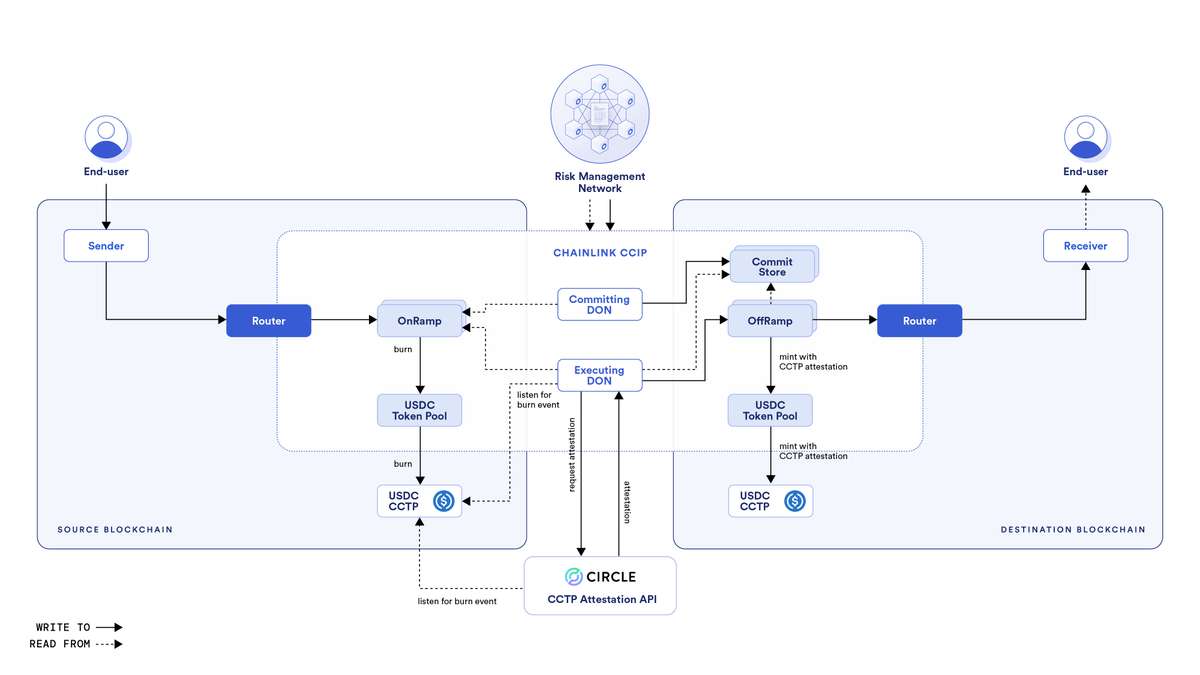
Cross-chain transactions are pretty simple; they involve locking or burning an asset on the source chain and then minting a new asset on the destination chain. The challenge lies in accomplishing this in a decentralized manner, as most existing cross-chain bridges are essentially centralized solutions masquerading in a cloak of decentralization😂. So, what exactly constitutes a decentralized cross-chain bridge? Let me illustrate using Chainlink's CCIP protocol as an example. The onramp and offramp processes, which are just the locking and minting of assets, aren't anything novel. The real decentralized magic happens with the Committing DON and Executing DON.🧐
Imagine a user who wants to transfer assets from Ethereum to Binance Smart Chain (BSC).
1. Role of Committing DON:
- The user initiates a cross-chain request using Chainlink's CCIP protocol.
- The Committing DON captures this request and bundles the relevant information (like the amount of assets and the destination address) into a Merkle root.
- This Merkle root is then signed by one or more oracle nodes in the Chainlink network, validating the request's legitimacy.
- The Committing DON submits this signed Merkle root to the CommitStore contract on Ethereum.
- After the transaction achieves finality on Ethereum, the Committing DON ensures that the required assets are locked or burned on Ethereum, ready to be correspondingly created or released on BSC.
2. Role of Executing DON:
- The Executing DON on BSC waits for the transaction on Ethereum to reach finality.
- Once the Ethereum transaction is confirmed and recorded in the CommitStore contract, the Executing DON checks if the transaction under the Merkle root is valid.
- If validated, the Executing DON initiates the corresponding asset release or creation on BSC through the OffRamp contract.
- This process may include verifying the user's identity and ensuring all security and compliance requirements for cross-chain are met.
- Upon completion, the user on BSC receives the equivalent of the assets they locked or burned on Ethereum.
In this example, the Committing DON is responsible for handling the transaction on the source chain (Ethereum) and ensuring the authenticity and integrity of the transaction data, while the Executing DON completes the transaction on the destination chain (BSC), ensuring the correct release and creation of assets. This dual mechanism ensures the security and efficiency of the entire cross-chain process. #Chainlink #CCIP
🤔Why $ORDI surged 1400x in a few months? Approval of Bitcoin Spot ETF Opens New Opportunity for Wealth Accumulation
⏰Don't miss Jan11, 19:00 (UTC+8) X space
🔗Space Link:https://t.co/P9nfIJdCrf
🔥Guest:@BlackburnS77512@Phillipshuan@CGVFOF@Layer2maestro
Discuss together for a chance to win a 30U reward! Join the TG group : https://t.co/fVawmiqCuO
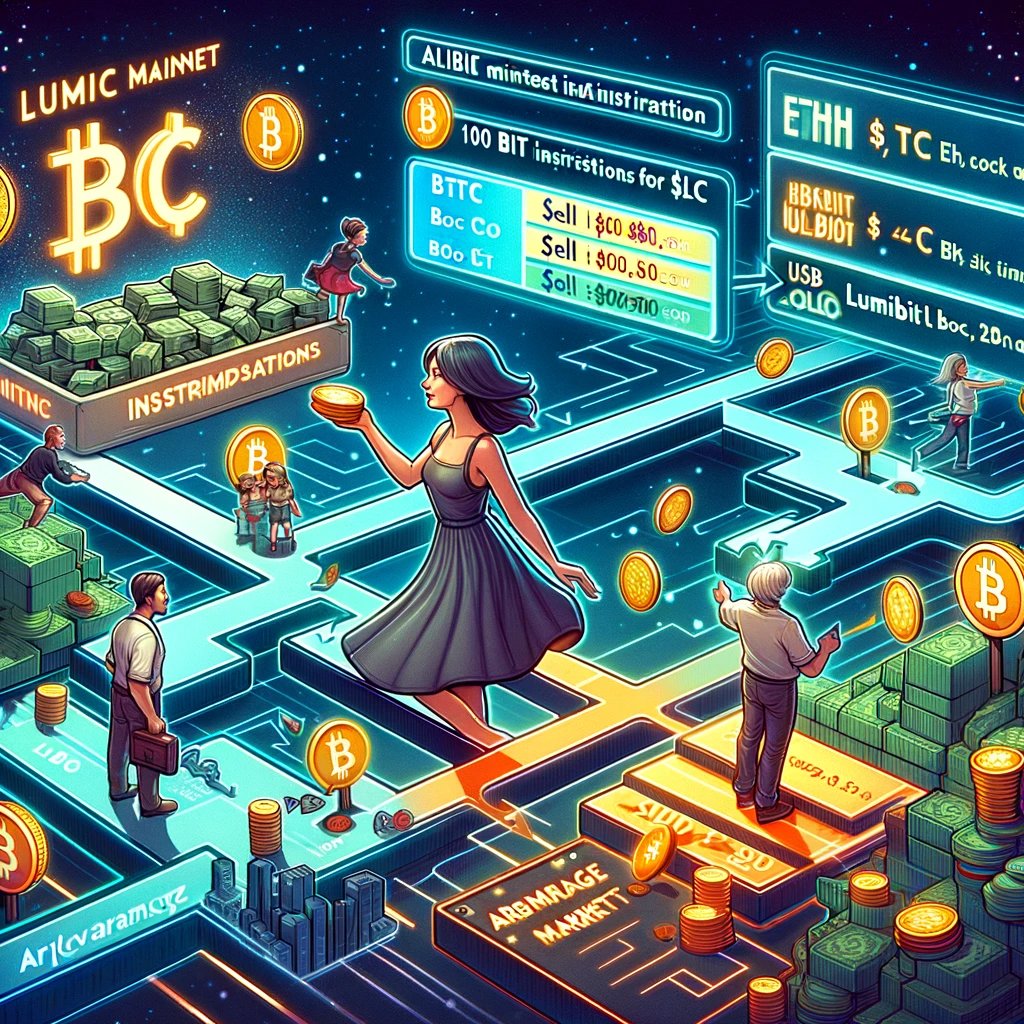
As the founder of Lumibit, I'd like to share some intriguing hypothetical scenarios we imagine based on the unique features of our mainchain. Take this example: Alice mints 100 $lbit inscriptions on the BTC mainnet and chooses to sell them for one BTC (though she could opt for any token available in Lumibit's mainnet contracts, including ETH, USDC, SOL). She informs the Lumibit mainnet inscription market ABC, which immediately lists them on Lumibit L2.
Suppose Bob buys these 100 $lbit inscriptions for one BTC. We transfer Alice's inscriptions to the cross-chain bridge on the BTC mainnet (a process that might take up to an hour due to BTC block times) and lock Bob's 1 BTC assets on Lumibit L2. Once the BTC network broadcasts this transaction, we release Bob's assets to Alice's wallet on Lumibit L2.
However, this mechanism allows Alice an arbitrage opportunity. If the $lbit inscription's price drops within the hour it takes for the BTC block to process, Alice can still sell at the higher price from the time of transaction initiation. Conversely, if the price rises, she can cancel the transaction before the block is processed, ensuring a no-loss situation if she disregards the transaction fees.
I anticipate that developers working on Lumibit will encounter this issue in the future. I'm eager to see their solutions, as unique applications are the real game-changers for a public blockchain's success. #lumibit #lbit
GM. Dive into our latest Medium article to discover the magic of LumiBit's asynchronous structure. This innovative feature enables real-time buying and selling of inscriptions, ensuring you always get the most advantageous price.
https://t.co/X4zwYkVqMp