"WE GUARANTEE:
1,5 million € for a virologist who presents scientific proof of the existence of a corona virus, including documented control experiments of all steps taken in the proof.
You’re on!"
https://t.co/1Rv4AF711P
⏬THREAD⏬
Blue Zones, summarised:
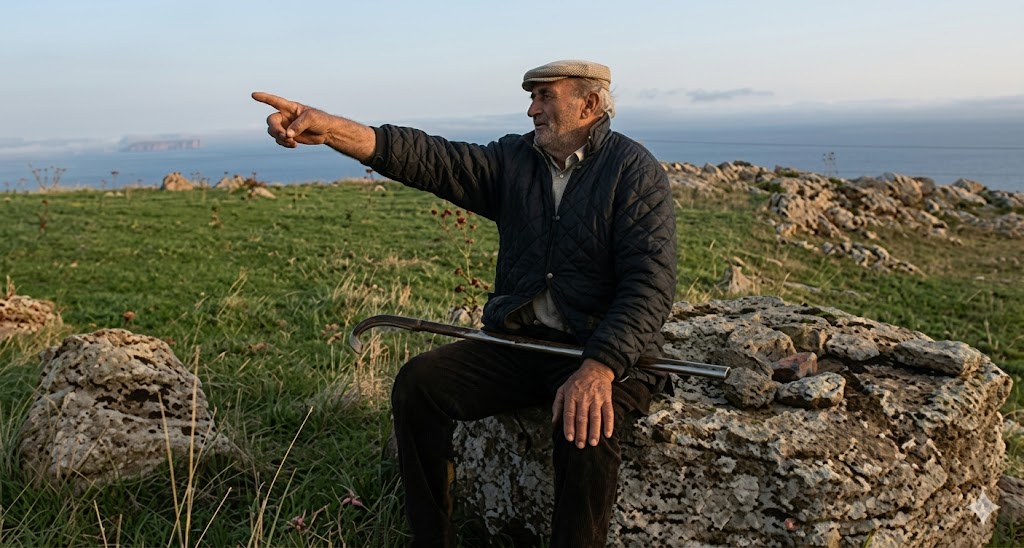
Researcher: "We found 50 centenarians in this mountain village! They eat mostly plants!"
Local official: "Actually we have a pension fraud problem. Many of those people aren't that old. Some are dead."
Researcher: "We're not including that in the documentary."
Local butcher: "Also we eat a lot of lamb and cheese here."
Researcher: "We filmed someone holding a tomato. That's the angle."
Centenarian: "I've eaten pork fat every day for 92 years. My father did the same. He lived to 96."
Researcher: "Can you hold this bowl of lentils for the camera?"
Centenarian: "But I don't eat lentils."
Researcher: "Just hold it. Look wise. Say something about beans."
Centenarian: "..."
Researcher: "Perfect."
Netflix viewers: "Wow. Lentils are the secret to longevity."
There are two narratives about human nutrition.
One is repeated endlessly in public health campaigns, documentaries, and activist slogans.
The other is visible in the actual development outcomes of human populations.
They are not the same story.
Hong Kong, 2026:
- Highest life expectancy in the world: 85.55 years.
- Highest meat consumption per capita in the developed world.
- Roast pork, char siu, roast duck, fish, beef and offal eaten daily.
- Vegetables present as a side dish.
- Smallest landmass of any region on the top-five list.
- No Blue Zone designation.
India, 2026:
- World's largest population of vegetarians, by absolute number.
- World's highest rate of child wasting, at 18.7%.
- World's highest absolute number of stunted children, at 37 million.
- 53.7% of women aged 15-49 anaemic.
- The state of Rajasthan, at 74.9% vegetarian, has 32% of its children stunted and 72% anaemic.
- The state of Kerala, with the highest meat and fish consumption, has the lowest stunting rate in India at 20%.
If plant-based diets produced the outcomes their advocates predict, the data above would look the other way round.
The data above does not look the other way round.
The data above looks exactly like what you would expect if animal protein were the limiting factor in human development.
Which is, broadly speaking, what every population that has industrialised in the last hundred years has demonstrated.
The advocates have not yet addressed this.
The data has been public for fifteen years.
The Blue Zones are a statistical artefact created by pension fraud, not dietary excellence.
Researchers identified areas with unusual numbers of centenarians. Turns out when you dig deeper:
Sardinia: Rampant pension fraud. People claim their dead parents are still alive to collect benefits. "Centenarians" who are actually 20 years younger or literally deceased.
Okinawa: Birth records destroyed in WWII. Ages are self-reported or estimated. Convenient.
Ikaria: No reliable birth certificates. Everyone's age is basically a guess based on oral history.
Loma Linda: Seventh Day Adventists in California with access to modern healthcare, wealth, and health consciousness. They don't smoke, don't drink, exercise regularly, and have tight community support. The diet is the least interesting variable.
The researcher who coined "Blue Zones" found places with bad record-keeping and declared it longevity secrets.
When proper age verification is applied, the centenarian populations collapse to normal levels.
The Blue Zones aren't dietary miracles. They're clerical errors with better marketing than fact-checking.
The Blue Zones are a statistical artefact created by pension fraud, not dietary excellence.
Researchers identified areas with unusual numbers of centenarians. Turns out when you dig deeper:
Sardinia: Rampant pension fraud. People claim their dead parents are still alive to collect benefits. "Centenarians" who are actually 20 years younger or literally deceased.
Okinawa: Birth records destroyed in WWII. Ages are self-reported or estimated. Convenient.
Ikaria: No reliable birth certificates. Everyone's age is basically a guess based on oral history.
Loma Linda: Seventh Day Adventists in California with access to modern healthcare, wealth, and health consciousness. They don't smoke, don't drink, exercise regularly, and have tight community support. The diet is the least interesting variable.
The researcher who coined "Blue Zones" found places with bad record-keeping and declared it longevity secrets.
When proper age verification is applied, the centenarian populations collapse to normal levels.
The Blue Zones aren't dietary miracles. They're clerical errors with better marketing than fact-checking.
3 articles qui démontent l'arnaque des "blue zones" de l'église adventiste du 7ème jour de Loma Linda
C'est beau, ça fait rêver mais c'est une grosse arnaque dangereuse pour votre santé
Data fraud, cherry picking, agenda vegan/végétarien, secte idéologique anti viande au menu:
https://t.co/LT5XztsVfD
https://t.co/GnfI2DmjU8
https://t.co/y2Q0XckTmL
The Blue Zones concept is brilliant marketing.
Take regions with:
- Pension fraud
- Poor record-keeping
- Unusual social structures
- Low stress lifestyles
- Physical activity
- Tight communities
- No access to processed food (poverty, not choice)
Then attribute everything to diet while ignoring the other variables.
Package it in a Netflix documentary. Sell books. Partner with meal kit companies. Launch "Blue Zones lifestyle" corporate wellness programs.
Revenue: Millions.
Actual evidence: Sketchy at best, fraudulent at worst.
But people want to believe you can live forever eating lentils, so they ignore the fraud and buy the books.
The centenarians are probably dead. The diets weren't that plant-based. The ages are often fiction.
But the truth doesn't sell meal kits.
@KJ_11septembre@jmyremets Au moins les explosifs ça existe 😄...
Mais oui t'as raison niveau diversion / os-à-ronger pour dissidents
Merci pour tes vidéos ✨
Char on a steak contains heterocyclic amines and polycyclic aromatic hydrocarbons. These compounds, in extremely high doses, in isolated laboratory conditions, in rats, have shown carcinogenic effects.
The doses used in those studies, scaled to human equivalents, would require you to consume the charred outer crust of approximately several thousand steaks per day for the rest of your life.
Humans have been cooking meat over open fire for somewhere between two hundred thousand and a million years. The crust on a roasted joint, the bark on a brisket, the blackened edges of a chop pulled from the embers: this is the food our species was built around.
If burnt-edge beef caused cancer at the rate the headlines imply, we would not be here to read the headlines.
Eat the steak.
Enjoy the crust.
Plant superfoods. The poverty foods your ancestors ate when they couldn't put meat on the table, now rebranded as peak nutrition.
- Quinoa. Andean peasant grain. Eaten when the llamas were too valuable to kill.
- Lentils. Roman slave food. Pliny called them food for the poor.
- Kale. Medieval hedge crop. Grew where nothing else would.
- Chia. Aztec field ration. Carried by runners who couldn't carry a deer.
- Brown rice. Asian peasant staple. The white rice was for the landlord.
- Oats. Scottish hill crop. Samuel Johnson defined them as food for horses in England and men in Scotland.
- Barley. Roman gladiator rations. They were called hordearii. The barley eaters. Said with contempt.
- Buckwheat. Russian famine food.
- Beans. Universal peasant protein. The default when meat ran out.
- Cassava. Sub-Saharan starvation crop. Mildly poisonous if you prepare it wrong.
- Millet. African and Indian fallback grain. Grown where the soil had given up.
- Sweet potato. Pacific famine insurance.
- Acai. Amazonian filler berry.
- Goji. Chinese hedge fruit.
Now they're a lifestyle.
When you could be having meat instead.
Your ancestors would be furious.