Scientists in the classroom: Students explored stable structures, types of fasteners, types of materials, building framework, and everyday structures to build and construct in a natural environment. #buildingframework#differentmaterials#support#contain#span#science
Today students had so much fun! We began our day with an Easter egg hunt. Then, we had fun dying eggs using/mixing primary colours! Happy Good Friday and Easter Monday to all our families.
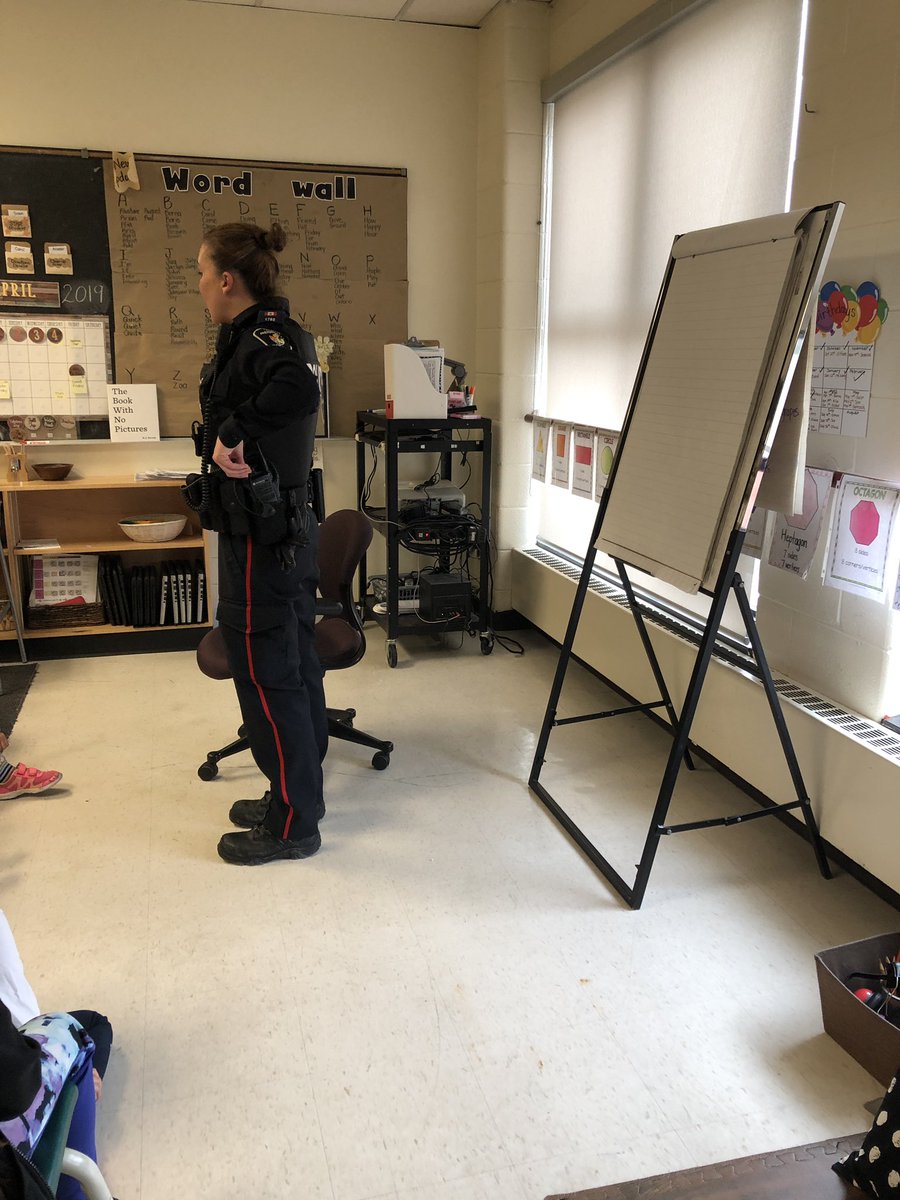
Today we had a fun and relaxing time drumming, doing yoga, learning about public healthy and safety from tgr police officer, and meeting our guest Dexter, the dog. #wellness#mindandbody
Today we had a fun and relaxing time drumming, doing yoga, learning about public healthy and safety from tgr police officer, and meeting our guest Dexter, the dog. #wellness#mindandbody
We examine how the properties of 3D shapes affect how it can move (roll, slide, stack). We also explored real life equipment/tools (rolling pins) & looked at how they’re used and/or helpful in making our life easier. We discovered that prisms can be stacked but pyramids cannot.
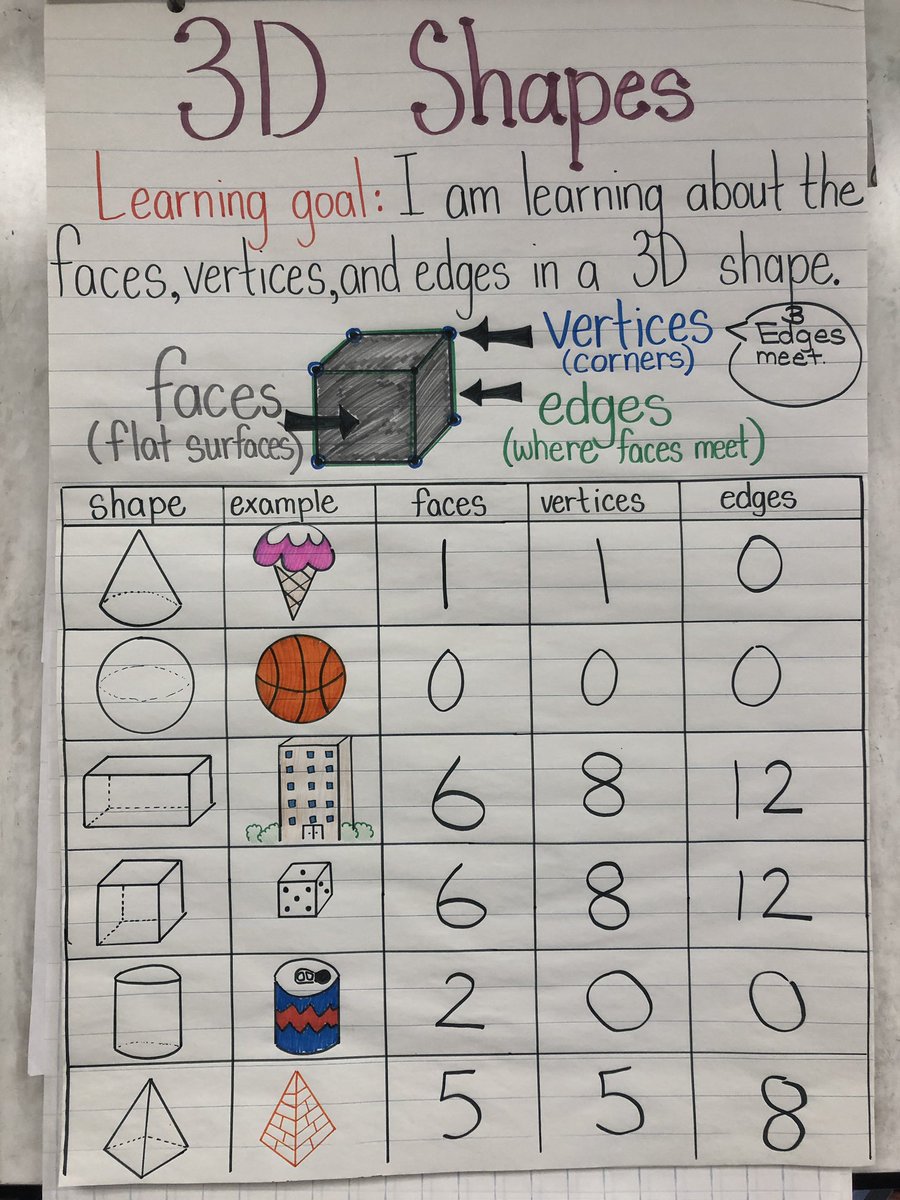
Students explore 3Dshapes in class by using play dough to mark each face,edge,& vertex.We know faces must be a flat surface, edges are when two faces meet, and a vertex is when edges meet to form a corner. Check out our math table! #geometry#facesedgesvertices#3Dshapes#inquiry
In social studies, we have begun our new units on Our Local Community and All About Our World. Students will be exploring several places in their community and what they know about the world. #sevencontinents#kwl#socialstudies#worldmap#localcommunity
In math, students are learning about 2D and 3D shapes in geometry. What is a #polygon? What is a #quadrilateral? Find different shapes you see in your community (e.g. what’s the shape of the stop sign?) #math#wordwall#geometry#describeshapes
Students are finding different ways to add and subtract in class. We are also using fun, short phrases to help us remember what to do in each situation. Check out our anchor charts below!
We learn to subtract using a number of different ways. Challenge your child to add and subtract the number of cutlery in your kitchen, the number of road signs outside, or the number of peas on their plate; make math real! Use these strategies to help them subtract! #mathisfun
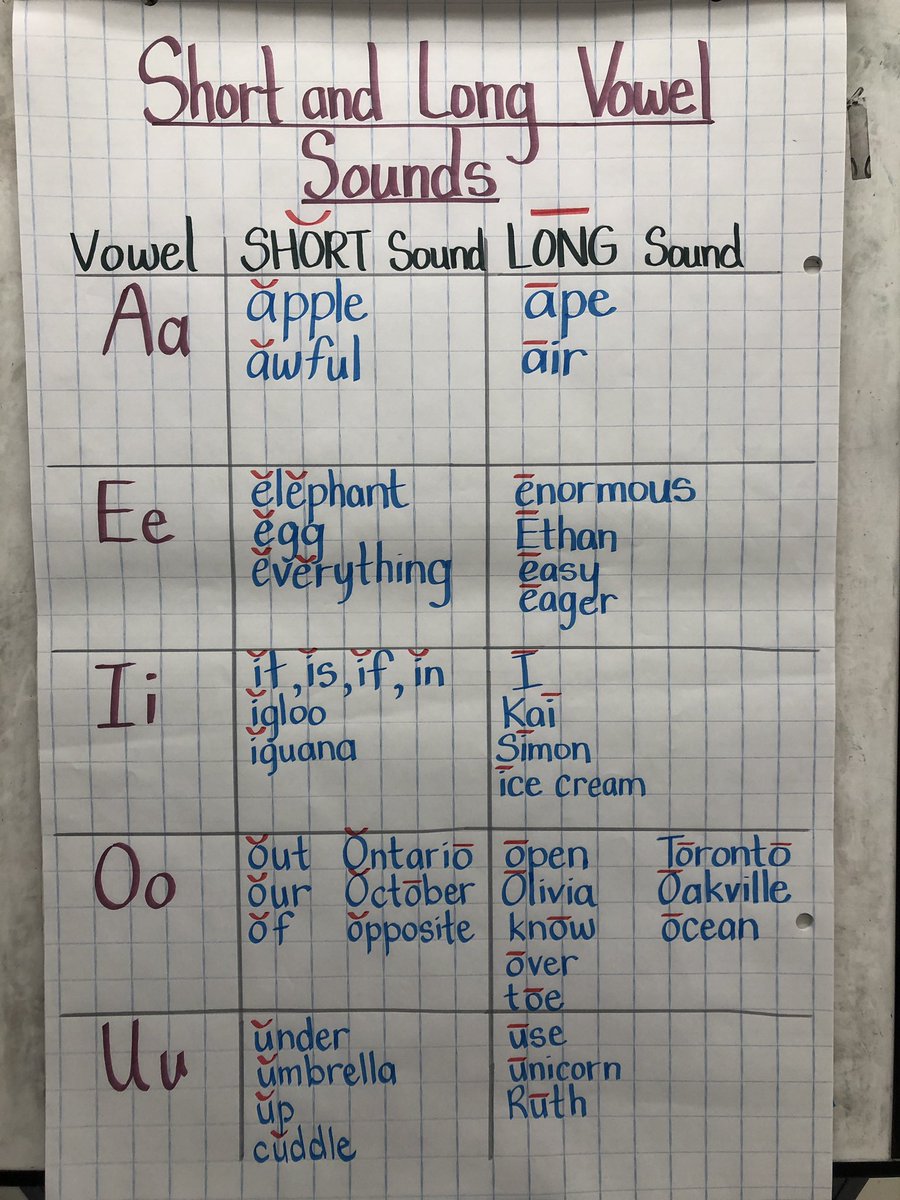
A vowel has 2 sounds. It has a short and a long sound. If the sound is long, it says its name(e.g. long A sound sounds like the letter ‘A’).
Students collaborated to co-create this anchor chart in class. Ask your child to identify some vowel sounds at home.
Our class introduced our new chill zone in our classroom! Check it out! A special thank you to Ms. Schiavo for teaching us about how to regulate our feelings. Talk to your child about how the chill zone helps them. #chillzone#zonesofregulation#innercoach#innercritic
Students are learning about media literacy and how to understand what they see in media. What kinds of strategies do authors use to target a particular audience? What is the purpose of media? #medialiteracy#persuade#inform#entertain#understandwhatyousee
Students are learning how to add. Grade 1’s are learning to add using numbers 0-9 and grade 2’s are learning to add up to 18. Check out our math inquiry center.