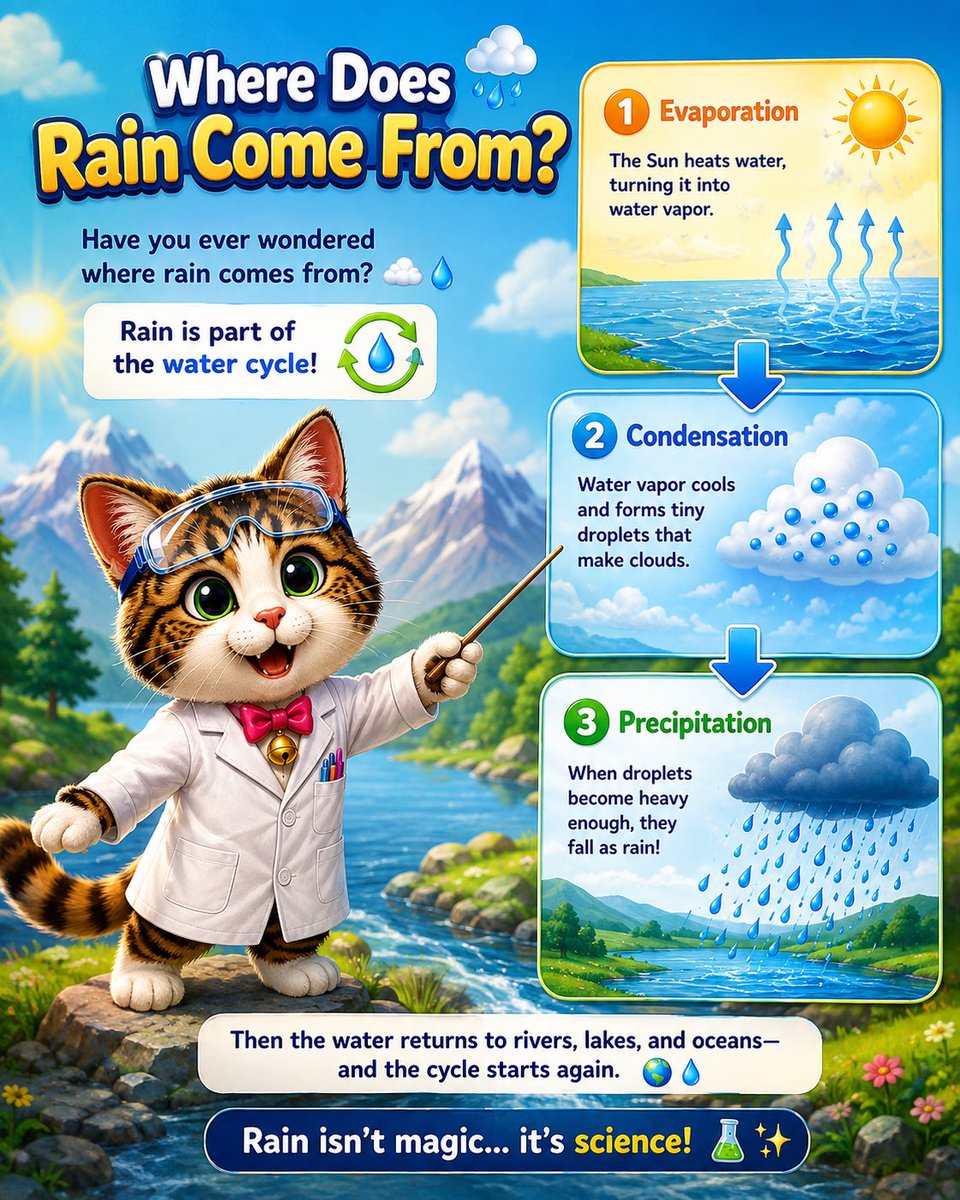
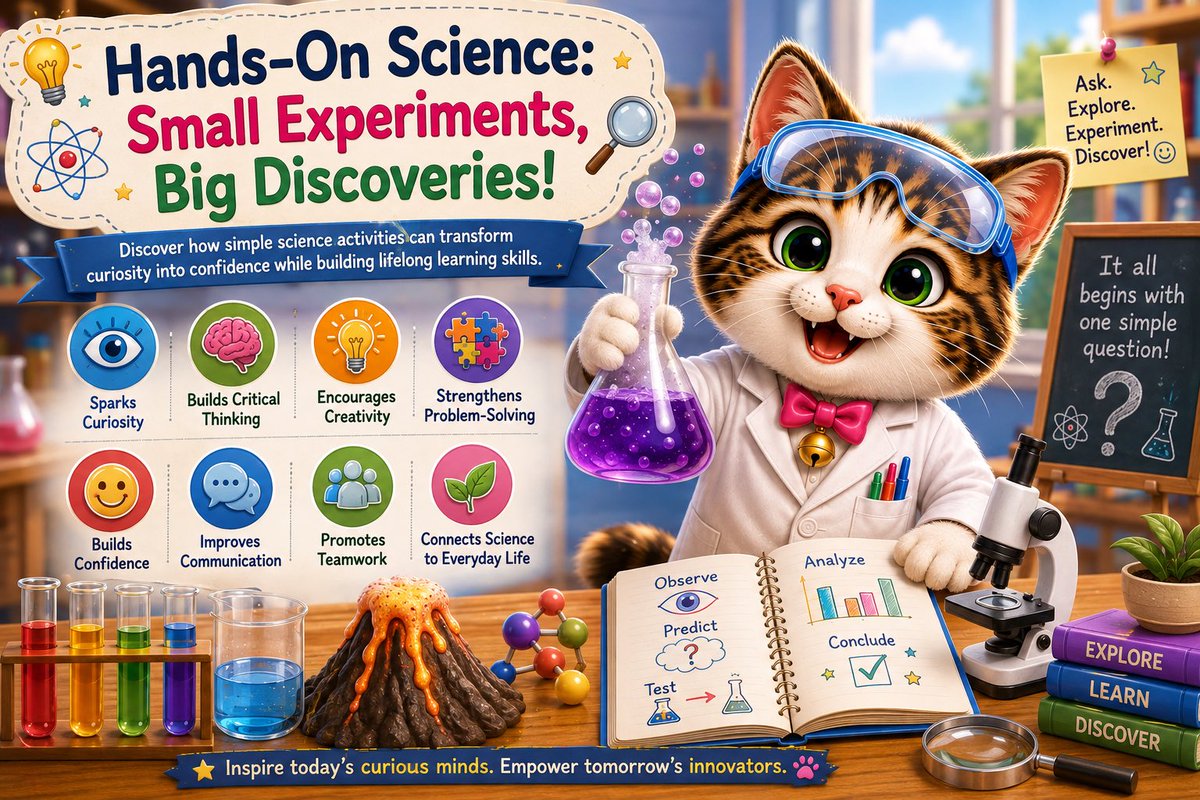
The best way to inspire a future scientist is to let them explore.
Fun Science Experiments for Kids by Learn with Sky is coming soon—safe, engaging, and designed to turn curiosity into discovery. 🌍🔬
#STEMEducation#ScienceForKids#LearnWithSky
🔎🧠 Think Like a Scientist!
Ask questions. Identify problems. Observe, test, and use evidence to discover answers! 🔬✨
❓ Why? How? What if?
🌟 Every discovery begins with curiosity!
#ScienceForKids#STEMEducation#ngss
🌱🔬 Life Science explores living things—plants, animals, humans, and tiny cells! 🧬🐾
It helps us understand how life grows, changes, survives, and interacts with the world. 🌎✨
#LifeScience#ScienceForKids#STEMEducation
🐾 Why do animals live in different places? 🌍
Each habitat provides food, water & shelter. Animals have special adaptations that help them survive there. 🐪🐻❄️🐟
🌎 Different habitats, amazing adaptations!
#ScienceForKids#STEMEducation
🧊💧💨 Solids, Liquids & Gases!
Matter comes in 3 main states:
🧊 Solid = keeps its shape
💧 Liquid = flows
💨 Gas = fills available space
🔬✨ Science is everywhere!
#ScienceForKids#STEMEducation
🐟🌊 How do fish breathe underwater?
Fish use special organs called gills to take dissolved oxygen from water and release carbon dioxide.
They don’t breathe water—they breathe the oxygen in it! 🔬💙
#ScienceForKids#STEMEducation
🌍 Be a Little Eco-Hero! 🌱
5 simple ways to help Earth:
💧 Save water
💡 Save energy
♻️ Reduce & recycle
🌳 Protect nature
🚲 Choose greener travel
Small actions can make a BIG difference! 💚🌎
#EcoKids#ScienceForKids#STEMEducation
🦋 From tiny egg to flying butterfly!
A butterfly’s life has 4 stages: 🥚 Egg → 🐛 Caterpillar → 🟢 Chrysalis → 🦋 Butterfly.
This amazing transformation is called metamorphosis! 🔬✨
#ScienceForKids#STEMEducation
🌡️ Why do seasons have different temperatures?
Earth��s 23.5° tilt changes how directly sunlight reaches us. ☀️🌍
More direct sunlight = warmer days.
Less direct sunlight = cooler days. ❄️
🌍✨ Seasons are science in action!
#ScienceForKids #STEMEducation
🍁 Why do leaves change color in fall?
As days get shorter and cooler, trees make less chlorophyll, so the green fades and yellow, orange, and red pigments appear. 🍂🌳
A beautiful reminder that nature is science in action! 🔬✨
#ScienceForKids#STEMEducation#ScienceEducation
🐾 Welcome to Sky’s World! 💜
Join Sky on a fun journey of questions, experiments, and exciting science adventures! 🧪🔬✨
Explore, discover, and learn with Sky—one adventure at a time! 🐱🌟
🌱 Why Do Plants Grow Faster in Spring?
Spring brings more sunlight, warmth, and water, helping plants make food through photosynthesis and grow new leaves and flowers. ☀️💧🌸
🌱 Spring = new growth!
#ScienceEducation#STEMEducation#ScienceTeachers
🫁 Why Do We Need to Breathe?
We breathe in oxygen to help our cells release energy from food. ⚡ We breathe out carbon dioxide, a waste gas our body needs to remove.
💨 Every breath keeps our cells working!
#ScienceEducation#STEMEducation#ScienceTeachers
🌵 How Do Plants Survive Without Much Water?
Cacti and desert plants survive by storing water, reducing water loss, and adapting to extreme heat. ☀️💧
🌵 Nature is full of amazing survival strategies!
#ScienceEducation#STEMEducation#ScienceTeachers
🌋 How Does a Volcano Work?
Deep inside Earth, melted rock called magma rises. When pressure builds, it can erupt through Earth’s crust as lava, ash, and gases. 🔥🌍
Magma → Lava → Eruption! 🌋
#ScienceEducation#STEMEducation#ScienceTeachers
🧊 Why Does Ice Melt?
Ice melts when it absorbs heat energy from its surroundings. ☀️ The molecules move faster, changing ice from a solid into liquid water. 💧
��� → 💧 Science in action!
#ScienceEducation #STEMEducation #ScienceTeachers
🐝🌸 Why Do Bees Love Flowers?
Flowers give bees nectar for energy and pollen for nutrients. As bees move between flowers, they carry pollen that helps plants produce seeds and fruits. 🌱
🐝 Tiny bee, big job!
#ScienceEducation#STEMEducation#ScienceTeacher
🧪 Science is better when children explore, experiment, and discover!
Hands-on learning builds curiosity, creativity, confidence & critical thinking. 🌟🔬
Every experiment can inspire tomorrow’s innovators! 🚀
#STEMEducation#PrimaryScience#ScienceTeachers