Om je slap te lachen.
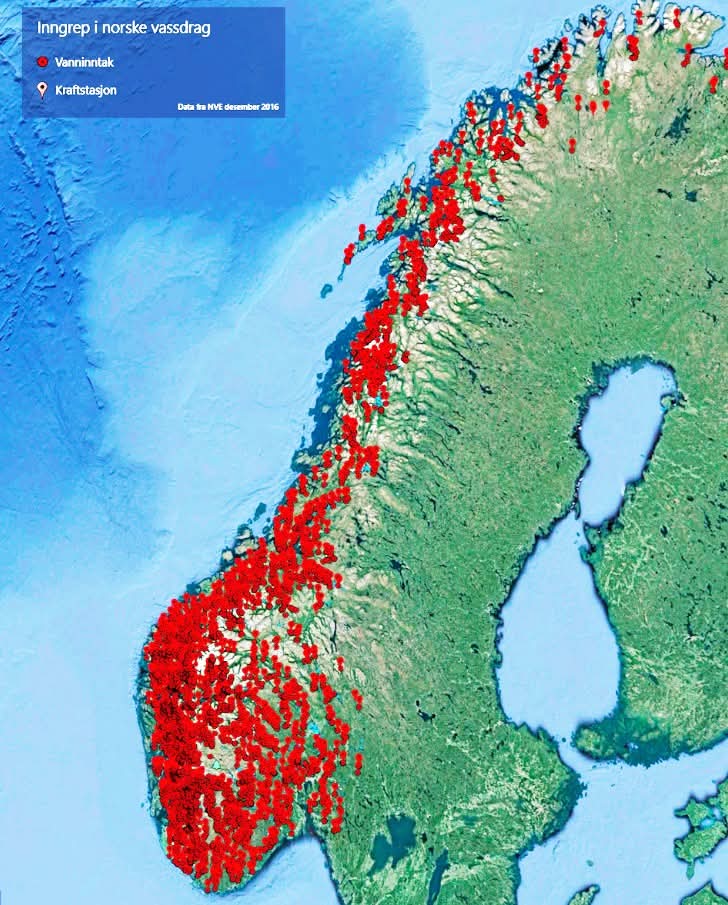
Noorwegen is een rijk land. Ze hebben volop waterkracht, en op zee veel olie en gas. Ze hebben meer dan genoeg energie, kunnen dus best wat missen. Via zeekabels krijgen wij, en bijvoorbeeld ook Duitsland, stroom van de Noorse waterkracht centrales. Dat komt ons goed van pas als zon of wind nauwelijks iets opleveren, en wij op dat moment juist veel stroom nodig hebben.
Noorwegen bouwt kerncentrales. Wat raar, ze zwemmen toch in de energie? De stroom van de kerncentrales gaan ze zelf gebruiken, zodat ze geen stroom van hun waterkracht centrales meer nodig hebben. De Noren worden nog rijker door op deze manier al hun waterkrachtstroom aan ons te verkopen.
Maar waterkrachtstroom verkopen en zelf stroom van kerncentrales gebruiken!? Overal lees je toch dat kernenergie duur is? Organisaties zoals het Fraunhofer Instituut, niet toevallig genoemd naar de gelijknamige absorptielijnen in het zonnespectrum, brengen rapporten uit dat kernenergie veel duurder is dan zon en wind. Met daarin aannames die alleen gunstig zijn voor zon en wind, zoals het weglaten van de alleen bij zon en wind onvermijdelijke kosten van overbrugging als er weinig of geen zon en wind is.
De Noren zijn niet gek, ze krijgen voor de waterkrachtstroom meer geld dan wat de stroom uit hun kerncentrales kost. Noorwegen toont daarmee de realiteit aan, kernenergie is goedkoper. Zelfs goedkoper dan de bijna als ideaal bekend staande waterkracht.
En wij? Wij betalen de stroom van de dure windmolens op de Noordzee, en financieren bovendien de Noorse kerncentrales. Om je slap te lachen, als het niet zo treurig was.
🚨 INCREDIBLE! This is a stunning drone light show depicting Jesus on the Cross (the Crucifixion)
It was created as part of the “Jesus Jesus Jesus” Holy Week event by The Church on Master’s Road in Manvel, Texas.
Thousands of synchronized drones lit up the night sky during Good Friday to tell the Gospel story in a powerful, modern way.
Absolutely breathtaking!
Two mayoral candidates in the upcoming London election have remained completely silent about the harassment, attacks, rape threats, and death threats my family and I faced simply because I chose to sell non-halal food in my restaurant.
This story has gone viral around the world not because of politics, but because I was arrested while I vowed to defend my family after the police failed to protect us and our business.
So I have to ask: why the silence?
Are they afraid of upsetting certain voting blocs? Are Muslim votes more important than the safety and rights of everyone else in London?
If they cannot stand up for a family being threatened for running a lawful business, then how are they any different from Sadiq Khan?
London does not need more politicians who stay silent when it matters.
London needs a patriot who will stand up for law, order, and the freedom of every citizen to live and work without fear.
@reformparty_uk@antmiddleton@policylaila
A powerful scene in the Odyssey happens when Odysseus finally returns to Ithaca after twenty years of war and wandering.
You would expect the story to end with celebration, with the hero coming home, the family reunited, and order restored.
Homer does something far stranger.
Odysseus arrives disguised as a beggar, because Athena warns him that the palace has been taken over by more than a hundred suitors who have been living there for years, eating his food, drinking his wine, and pressuring his wife Penelope to marry one of them.
They believe Odysseus is dead and in their minds the kingdom is already theirs.
So the king of Ithaca walks through his own halls dressed in rags while the men stealing his house sit comfortably at his tables. They mock him, throw scraps at him, and one of them even strikes him, and Odysseus takes it. That is the remarkable part, because the same man who blinded the Cyclops and survived twenty years of disasters now stands quietly while strangers insult him in his own home. Homer tells us his heart burns inside his chest and that he wants to attack them immediately, yet he restrains himself and waits.
Instead of striking, Odysseus studies the room carefully. He counts the men, watches their habits, and quietly observes which servants remain loyal and which have betrayed him. The hero of the Odyssey does something most people cannot do, which is delay revenge until the moment is right.
Eventually Penelope announces a contest and brings out Odysseus’ great bow, declaring that she will marry the man who can string it and shoot an arrow through twelve axe heads lined up in a row. One by one the suitors try and fail, because none of them can even bend the bow. Then the beggar asks for a turn. The suitors laugh at first, but the bow is eventually handed to him.
Odysseus takes it in his hands and strings it effortlessly. Homer says the sound of the bowstring tightening rings through the hall like the note of a swallow. Then he places an arrow on the string and sends it cleanly through all twelve axe heads.
In that moment the beggar disappears. Odysseus turns the bow toward the suitors and reveals who he is.
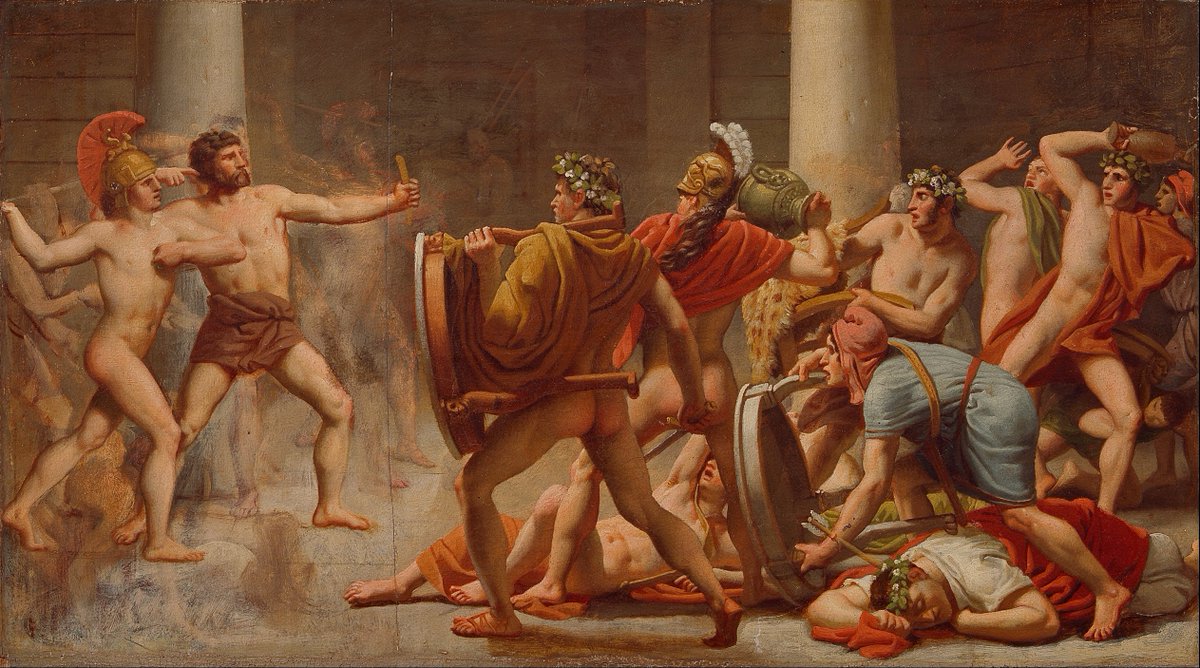
What follows is one of the most brutal scenes in Greek literature. The doors are sealed and the suitors realize too late that they are trapped inside the hall. Odysseus, his son Telemachus, and two loyal servants begin killing them one by one. There is no escape, no mercy, and no negotiation. The men who spent years consuming another man’s house die inside it.
It is a violent ending, but Homer wants you to understand something important. The real danger to Odysseus was never just the monsters and storms on the long journey home. It was the possibility that someone else might take his place while he was gone. When Odysseus finally returns, he reminds everyone in Ithaca of a simple truth: a man’s home is not truly his unless he is willing to fight for it.