TOP 5 PLACES FOR ANGLO MEN TO GO DIE
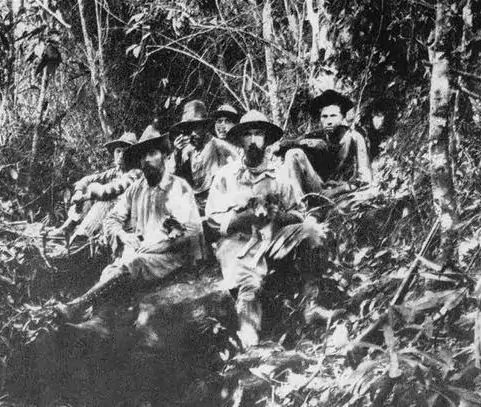
Are you an Anglo male who fantasizes about dying for glory in some green hell jungle, a windswept frozen peak, or a tribal conflict you started?
If so, then this thread is for you
More on Ernst Jünger: Aristocracy and the Worldview of the Bourgeoisie
My suggestion that Jünger was an "aristocrat," in relation to the true, perennial sense of the term as articulated by the likes of Aristotle and even Jünger himself, has apparently ruffled some feathers, particularly within the circles of the contemporary, postmodern bourgeoisie. I believe that this requires further exploration.
Those who criticize the notion that Jünger was an aristocrat do so through the worldview, the lens of the bourgeoisie. For the bourgeoisie, the highest values and goal of all human life are security and comfort. These are fine things in and of themselves, to be secure and comfortable, but they are terrible, paltry things in terms of the type of grand vision that a civilization and a people should embrace to achieve greatness.
Many people in our circles ask very salient questions related to this. For example, why does an 18th-century English water tower look better, being more aesthetically pleasing and beautiful, and function (relatively speaking, for the time) better than some postmodern brutalist monstrosity of ugliness and steel found in today's world? The answer is simple: because of the downward-facing, leveling nature of the bourgeois mentality, where all that matters is comfort and security. Why should something be beautiful when an ugly thing that works will suffice? To the contemporary bourgeoisie, all else besides this—beauty, strength, greatness itself—is irrelevant; function and utility are valued over form (beauty) and greatness. Julius Evola dubbed this perspective the "Merchant's Mentality," where everything is economized and conceptualized to be only as good (useful/utile) as it is practical. In short, Western civilization has been robbed of the very essence that made it great. The West, and the majority of those within it, strive not for greatness but aspire to nothing other than to be mediocre, because to be mediocre is safe and comfortable.
Moreover, and related to Jünger and other great thinkers, the mentality of the bourgeoisie is a totalitarian one. No other competing worldview can be allowed to thrive, let only even survive because that would be "uncomfortable," and could potentially elicit a return to an order, a civilization, that strives for the antithesis of bourgeois madness, i.e., beauty, strength, and glory. Jünger explored the totalitarian nature of the bourgeois worldview in his seminal philosophical work, "The Worker: Dominion and Form." Jünger writes, "the universe itself is for him [the bourgeois] a mirror in which he wishes to see his virtue [security and comfort] confirmed again and again." As such, not only can no other worldview or nature of existence be allowed to survive, which would endanger this age of comfort and security, but EVERYTHING must be interpreted, and like a reflection in a mirror, be made to conform to the bourgeois mentality. The sad truth is, that these people cannot literally even fathom nor conceptualize a reality, an order, a mode of being, or a civilization outside their limited, self-defeating thinking.
Those who say Jünger wasn't an aristocrat deem this to be true because he was of the so-called middle class. The entire conceptualization of the middle class is an economic thing, a derivative of the bourgeois mentality, and isn't a real thing in and of itself but a manifestation, a reflection of the bourgeois mentality meant to encompass and encapsulate all things within its totalitarian and myopic worldview. Jünger was an aristocrat because he embodied the noble aspects of life that transcended petty economics. Was he wealthy in a material sense? No, but what does wealth have to do with true inner, and outer greatness and strength? Further, to define an "aristocrat" solely within the realm of Marxist bourgeois economic paradigm is not only meaningless and absurd but also a great disservice to Jünger himself and all others, many of us, who strive for excellence. Moreover, it's also an exercise in control. The bourgeoisie seeks to discourage those who seek excellence, strength, and beauty from aspiring to these greater things because it would weaken their stranglehold on our throats, endangering their tenuous dominance over society and civilization itself.
Jünger writes that the bourgeoisie only knows "defensive war," which is illustrative of the precariousness of their worldview, and their entire outlook on life. The bourgeoisie cannot go on the proverbial "offensive" because that would suppose a vigor, a vitality, and a daring and dangerous discomfort antithetical to their inner nature. I'm waiting for people to take this literally and say, "What about the Global War on Terrorism (GWOT) and all the offensive actions undertaken by the United States in the Middle East?" These were exercises in "nation-building," a failed attempt to assert and perpetuate the bourgeois mentality to different corners of the world. True offensive action, in the metaphysical sense, seeks to create something new, something greater and better than what existed before, and this lies at the heart of the true aristocrat—elevation and transcendence through the struggle to create something glorious. In this regard, Jünger was a true aristocrat, embodying the excellence and essence that lies at the heart of Western civilization.
Note to self: Never tweet with such a helpless energy.
So many posts follow this impotent form:
Express outrage, demand action, and leave it to others to take the lead.
There’s a better way.🧵
I must again beat on this point, I'm ready to explode like Mt. St. Helens, some Russia bish let her toddler run around restaurant shrieking randomly, sounds still reverberating through my nerves hours later...meanwhile she look through backpack as if it was her private bathroom.







![CCrowley100's tweet photo. More on Ernst Jünger: Aristocracy and the Worldview of the Bourgeoisie
My suggestion that Jünger was an "aristocrat," in relation to the true, perennial sense of the term as articulated by the likes of Aristotle and even Jünger himself, has apparently ruffled some feathers, particularly within the circles of the contemporary, postmodern bourgeoisie. I believe that this requires further exploration.
Those who criticize the notion that Jünger was an aristocrat do so through the worldview, the lens of the bourgeoisie. For the bourgeoisie, the highest values and goal of all human life are security and comfort. These are fine things in and of themselves, to be secure and comfortable, but they are terrible, paltry things in terms of the type of grand vision that a civilization and a people should embrace to achieve greatness.
Many people in our circles ask very salient questions related to this. For example, why does an 18th-century English water tower look better, being more aesthetically pleasing and beautiful, and function (relatively speaking, for the time) better than some postmodern brutalist monstrosity of ugliness and steel found in today's world? The answer is simple: because of the downward-facing, leveling nature of the bourgeois mentality, where all that matters is comfort and security. Why should something be beautiful when an ugly thing that works will suffice? To the contemporary bourgeoisie, all else besides this—beauty, strength, greatness itself—is irrelevant; function and utility are valued over form (beauty) and greatness. Julius Evola dubbed this perspective the "Merchant's Mentality," where everything is economized and conceptualized to be only as good (useful/utile) as it is practical. In short, Western civilization has been robbed of the very essence that made it great. The West, and the majority of those within it, strive not for greatness but aspire to nothing other than to be mediocre, because to be mediocre is safe and comfortable.
Moreover, and related to Jünger and other great thinkers, the mentality of the bourgeoisie is a totalitarian one. No other competing worldview can be allowed to thrive, let only even survive because that would be "uncomfortable," and could potentially elicit a return to an order, a civilization, that strives for the antithesis of bourgeois madness, i.e., beauty, strength, and glory. Jünger explored the totalitarian nature of the bourgeois worldview in his seminal philosophical work, "The Worker: Dominion and Form." Jünger writes, "the universe itself is for him [the bourgeois] a mirror in which he wishes to see his virtue [security and comfort] confirmed again and again." As such, not only can no other worldview or nature of existence be allowed to survive, which would endanger this age of comfort and security, but EVERYTHING must be interpreted, and like a reflection in a mirror, be made to conform to the bourgeois mentality. The sad truth is, that these people cannot literally even fathom nor conceptualize a reality, an order, a mode of being, or a civilization outside their limited, self-defeating thinking.
Those who say Jünger wasn't an aristocrat deem this to be true because he was of the so-called middle class. The entire conceptualization of the middle class is an economic thing, a derivative of the bourgeois mentality, and isn't a real thing in and of itself but a manifestation, a reflection of the bourgeois mentality meant to encompass and encapsulate all things within its totalitarian and myopic worldview. Jünger was an aristocrat because he embodied the noble aspects of life that transcended petty economics. Was he wealthy in a material sense? No, but what does wealth have to do with true inner, and outer greatness and strength? Further, to define an "aristocrat" solely within the realm of Marxist bourgeois economic paradigm is not only meaningless and absurd but also a great disservice to Jünger himself and all others, many of us, who strive for excellence. Moreover, it's also an exercise in control. The bourgeoisie seeks to discourage those who seek excellence, strength, and beauty from aspiring to these greater things because it would weaken their stranglehold on our throats, endangering their tenuous dominance over society and civilization itself.
Jünger writes that the bourgeoisie only knows "defensive war," which is illustrative of the precariousness of their worldview, and their entire outlook on life. The bourgeoisie cannot go on the proverbial "offensive" because that would suppose a vigor, a vitality, and a daring and dangerous discomfort antithetical to their inner nature. I'm waiting for people to take this literally and say, "What about the Global War on Terrorism (GWOT) and all the offensive actions undertaken by the United States in the Middle East?" These were exercises in "nation-building," a failed attempt to assert and perpetuate the bourgeois mentality to different corners of the world. True offensive action, in the metaphysical sense, seeks to create something new, something greater and better than what existed before, and this lies at the heart of the true aristocrat—elevation and transcendence through the struggle to create something glorious. In this regard, Jünger was a true aristocrat, embodying the excellence and essence that lies at the heart of Western civilization.](https://pbs.twimg.com/media/FvDmAmtXwAQw6wy.png)