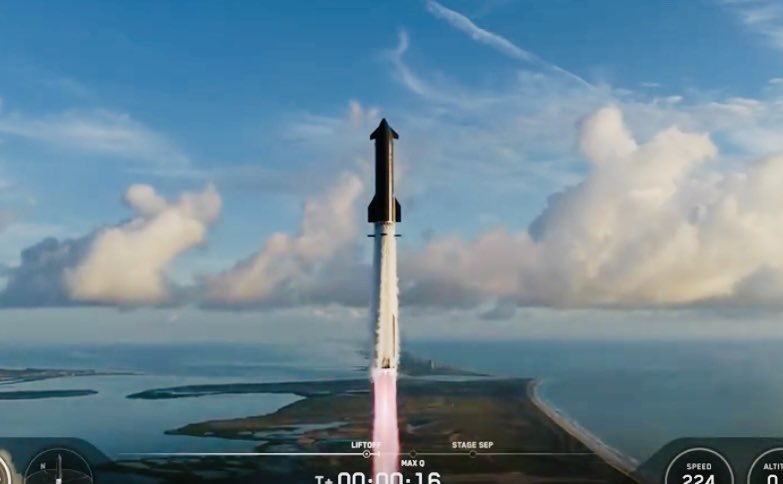
Congrats @SpaceXAI! Can you imagine if we relied on the govt to build Starship, semiconductors, frontier AI models, or GLP1s? The American system of gov’t, innovation & capitalism is the greatest force ever created for human progress. 🇺🇸🚀
Zuck has been delivering for millennials at every stage of life.
Facebook for checking out everyone in college.
Insta for early career when you have disposable income.
Muse for mid-career with kids and no time to do personal tasks.
You know empty nesting is gonna be lit.
@Budgetdog_ 💯So much tedious personal work can be automated now with AI tools. The excuse of "not having enough time" is weaker than ever. And the time it takes to invest and learn how to use these AI tools is so small given how intuitive they are.
This is Trust & Safety 2.0.
The last time we had media-generated panics like this (with Russiagate and Covid), social media companies created “trust & safety” teams to censor conservative and dissident voices. Those hires worked with left-wing NGOs like the SPLC to police public discourse and do an end-run around the First Amendment. It almost worked, until Elon bought Twitter and exposed the whole game in the Twitter Files.
This time the plan is to embed unfireable EA minders inside every AI company as the new trust-and-safety layer. The censorship and control will be far more comprehensive, but also more subtle. Anytime they don’t get what they want, this unaccountable NGO layer (with the veneer of “trust the experts” pseudoscience) will shriek to the press that the AI company is risking humanity, and they will be celebrated as “whistleblowers.”
These groups haven’t earned our trust, and their agenda is not our safety.
https://t.co/3eIsHxaC7h
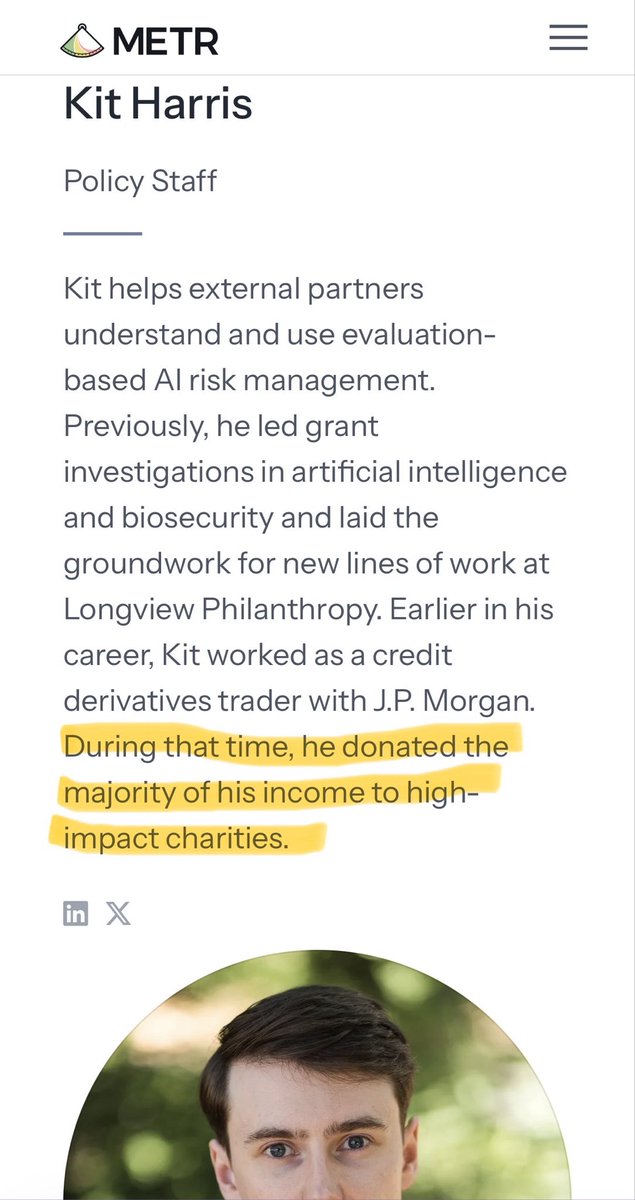
The more I dig into the profiles of the METR cult, the weirder it gets. Who says stuff like “donated a majority of his income to high impact charities?” This is either a virtue signaling lie or Kit is a trust fund baby who doesn’t need to work. Also which charities? NGOs maybe?
SOCIAL SECURITY. Trust fund, year-end 1996: $567B. Year-end 2025: $2.56T. Locked in special-issue Treasuries. S&P 500 total return 1996–2026: ~10.3% annualized; $100 → ~$1,900. The 1994–96 Advisory Council put equities in all three plans. Brookings/CRR reconstruction: phase to ~40% stocks from 1984 and the fund is ~$3.8T in 2015, not $2.8T. Start in 1997 and you still finish ~$600B ahead after the dot-com bust and 2008. Trustees 2026: depletion in 2034, then ~83% of benefits; 4.42% of payroll 75-year hole. A larger buffer does not “solve” SS. It buys time and shrinks the cut. Risk, cash-flow, and a government equity book are real objections. The return gap is also real. Politics closed the window.
🚨 Missed opportunities that would have transformed the American economy:
1. Nuclear energy ☢️
2. Putting Social Security reserves in the S&P 30 years ago 📈
Don’t let AI be #3. 🤖
NUCLEAR. The US ordered ~253 commercial reactors. More than half were cancelled. The fleet peaked at 112 units in 1991; about 94 run today. Nuclear is still ~18% of US electricity at a ~92% capacity factor — highest output of any country — but new orders died after 1978–79. France standardized PWRs after 1973 and still gets ~68% of its power from 57 reactors. Forbes in 1985 called the US program “the largest managerial disaster in business history.” Vogtle 3 & 4: ~$14B plan, ~$35B and a decade late. One-off designs, changing NRC rules, litigation, then a 30-year pause that dissolved the welders and fabricators. Existing plants are cheap to run. New Western plants got expensive because we stopped building the same machine twice. Cheap firm power is what manufacturing and AI data centers need. We chose a quieter path.