Tesla CEO Elon Musk was seen walking into a California courthouse on Tuesday for his legal battle with Sam Altman, alleging Altman's OpenAI, which was founded as a nonprofit research lab, prioritized profits over its original mission to benefit humanity as it ballooned into a corporate enterprise.
Musk originally sued in 2024, alleging that OpenAI, Altman, and OpenAI President Greg Brockman betrayed the company's founding agreement to be altruistic stewards of a revolutionary technology that would eventually result in the launch of ChatGPT in 2022. https://t.co/6ji9xV98Qr
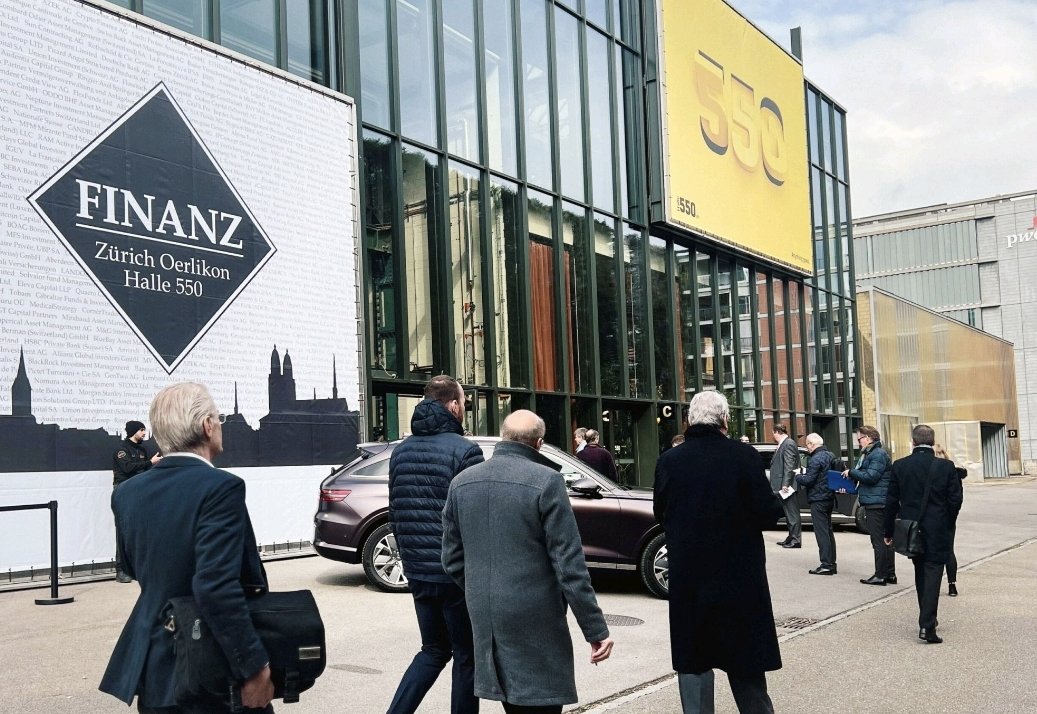
Our team was pleased to attend the @finanzmesse 2025 conference, a primier event for private equity and venture capital firms, as well as multi-family offices and private foundations.
Crypto made its debut on @60Minutes tonight – there’s no doubt that these technologies will continue to become more and more mainstream - with influence and reach that will only continue to grow.
A few things I do want to comment on after watching:
I spoke with Margaret Brennan / 60Minutes for 90+ min straight. When discussing the SEC’s misguided lawsuit against Ripple, 60Minutes shockingly left out that a Federal Judge ruled that XRP is not a security…Gensler’s shill (John Reed Stark) knows better despite his comments that 60Minutes chose to air.
Lastly, to say crypto has no utility is exactly what the naysayers said about the Internet in its earliest days - that it’s nothing more than illicit activity. How vastly they were proven wrong. Today, even JPMorgan is coming around on blockchain… (conveniently 60Minutes also failed to mention that Ripple is doing billions of dollars of KYC-ed transactions for our institutional customers - leveraging XRP to move money cross-border more efficiently than traditional payment rails.)
https://t.co/yPe5oKTq5Q
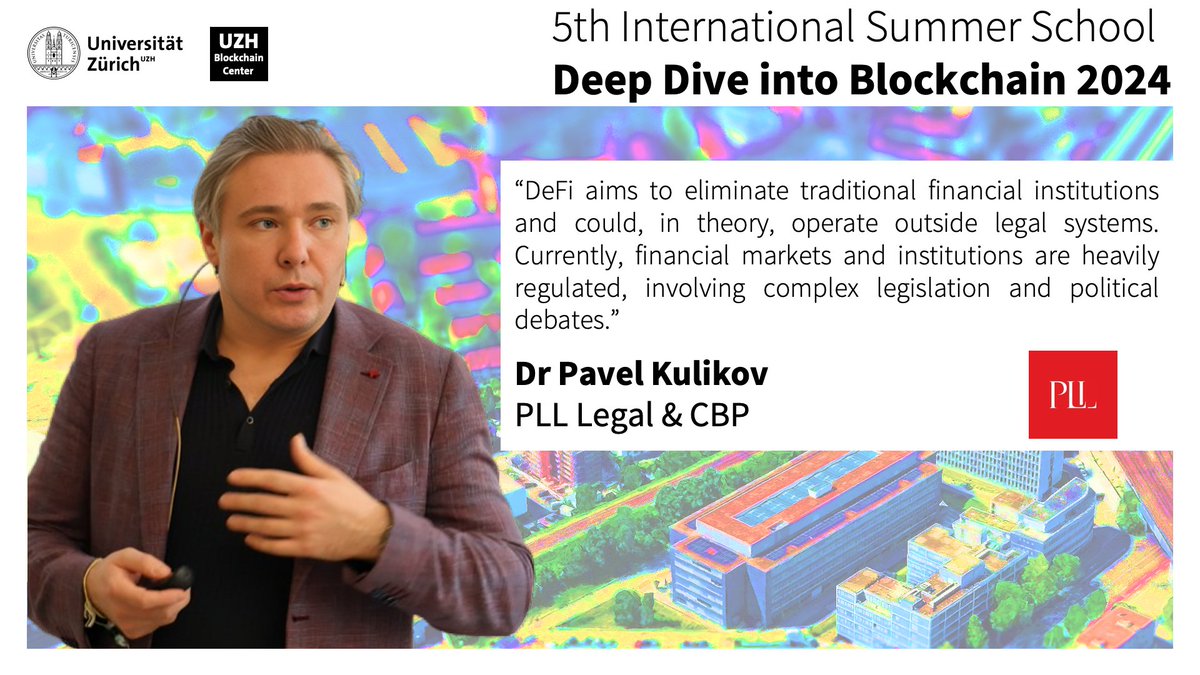
In the third week of the 5th International Summer School Deep Dive into Blockchain, we welcomed Dr Pavel Kulikov, Partner at @LegalPll PLL Legal & Cross border Practice.
#ddib24
PLL Legal & CBP is pleased to support Ethereum Züri event on April 05 - April 07, 2024. Join us in celebrating a decade of #Ethereum! Contact us for special discounts for our partners and friends.
👀 It's no April Fool's joke, you still have time to join Switzerland's largest #Ethereum community gathering & conference, and you can even adjust the price you pay for the event! 🙌
⏰ Head to the ticket shop & secure your spot now! 🎟️ ⬇️
https://t.co/brSpBR0lyG
Every bull market, I get messaged by an increasing number of aspiring traders. Here's the reality - "professional" trading is a job. It's about monetizing some structural advantage (like low latency infrastructure, a customer base with sell side flow, or low cost of capital for arbitrage). And like with any job, you probably won't do it well without a full professional set of training and tools and experience. You wouldn't try to compete against the world's best tennis player or neurosurgeon with little training and subpar equipment. In practice that means...you shouldn't try to compete at tennis, nor neurosurgery, nor trading unless you're really a professional with commensurate resources. A lot of people run their $100 up to $10,000 and think they're geniuses. 99.5% of these people will fail as traders long-term. That's trading (which is based on concrete advantages in a zero sum game). So....my general advice is...don't trade. Investing is different, since you can be betting on general growth, adoption, or even just that your analysis is on par with pros (which is quite reasonable, analysis typically requires far less equipment, capital, etc, to compete on.) When should the non-pro "trade"? I think there's a few rare spots when you have a predictable advantage over the market. When the entire market is euphoric or depressed, the pros can't make it 'efficient', since they're mostly pricing assets against one another. Even more so - the pros are often the ones getting liquidated in extreme market events since they're warehousing risk and market making. So when you get a two standard deviation sell-off that every smart investor wants to buy, that's often caused or exacerbated by wall st getting liquidated for example, since they have to be in the market and trying to capture the small inefficiencies. When the really big moves hit they often take big losses, and you as a 'passive' participant can then take the other side. In tradfi, that generally meant doing a trade every 3-10 years depending on how many asset classes you're looking at. In Crypto, maybe a trade every 1-3 years, basically just selling bubbles and buying bear market depths. And no, you won't time either well, but if all you do is sell when there's real exuberance and euphoria and a market that's technically massively overextended, and all you do is buy when those same assets are hated and leverage has been liquidated, you'll likely outperform "buy and hold." I'll end by explaining why "easy" crypto trading isn't quite as easy as it looks. You yourself or your friends may have made 100% returns yield farming, or a 20x speculating on some memecoin on an offshore exchange. And it seemed obvious and easy. But you hear a bit less often about all the people who did the same, then lost those funds to hackers or criminal exchange operators, or lost their funds due to a crypto operational or human error, etc etc. Worth noting that many of the perceived best traders of last cycle (includign the pros) blew up their funds and PAs. Trading is harder than it looks, people share their successes a lot more frequently than their losses.
A video recording of an enlightening panel discussion on Navigating the Crypto Regulatory Landscape featuring PLL Legal & CBP's partner Pavel Kulikov.
https://t.co/9ND0OB2fPJ
Thanks for sharing @SiGMAworld_@AIBC_World!
Great conversation with Switzerland's Minister of Finance, Karin Keller-Sutter @efd_dff at #WEF24 on global economic and financial issues. Many thanks to 🇨🇭 for its leadership and support to the IMF's activities, including the Resilience and Sustainability Trust.