Digital Lawyer
I help startups/tech companies/ Online businesses stay compliant with Data Protection/Privacy, AI Governance, Cybersecurity, and Risk Management.
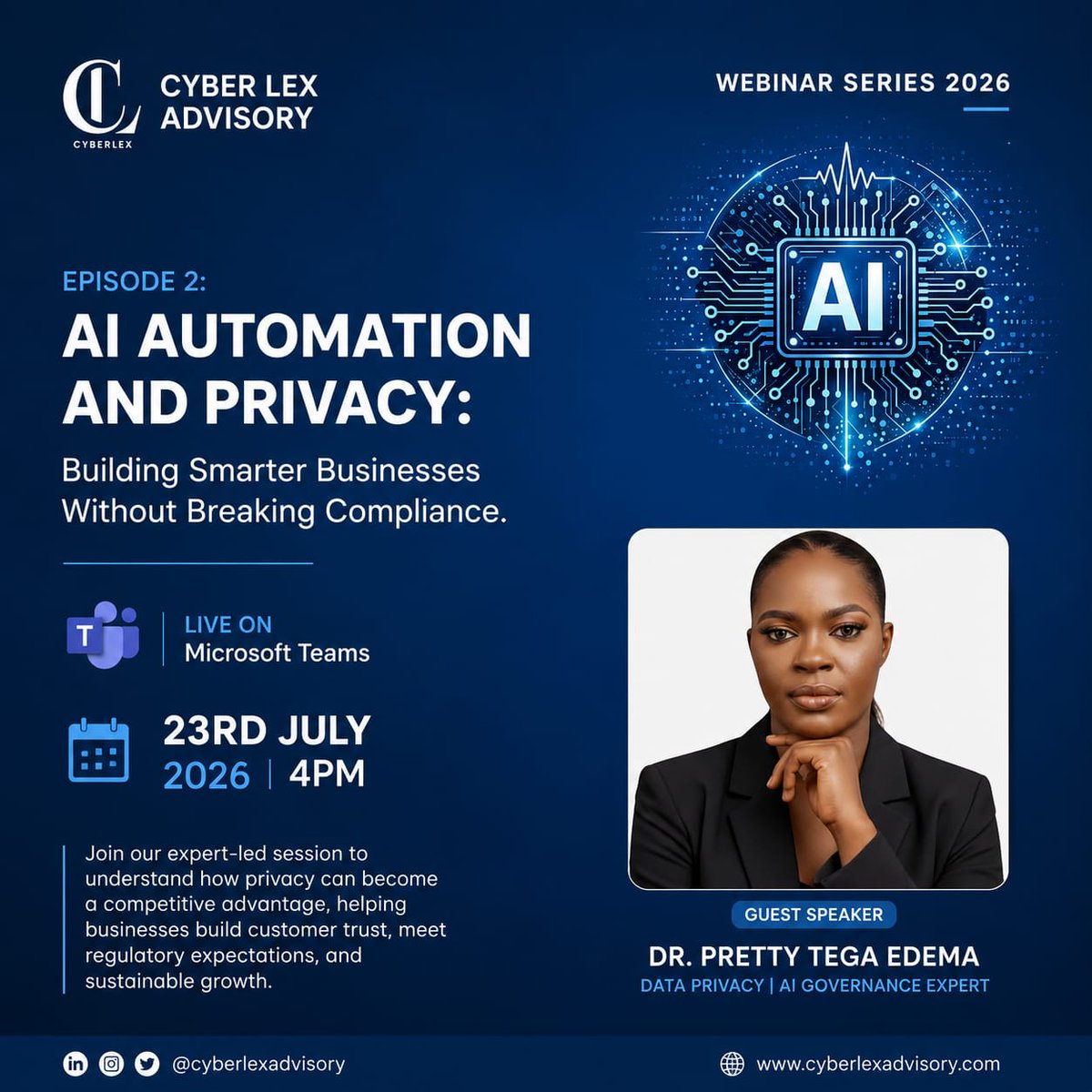
We're back! 🚀 with the another edition of CyberLex Advisory Webinar Series.
On 23 July, we're excited to bring you Episode 2!
Topic: AI Automation & Privacy: Building Smarter Businesses Without Breaking Compliance.
Join us as we discuss:
🔹 Privacy & compliance risks of AI 🔹 Practical steps for responsible AI adoption
🔹 Data protection, vendor due diligence & AI governance
🗓️ 23 July 2026 🕓 4:00 PM (WAT) 💻 Microsoft Teams
Don't miss this insightful session with Dr. Pretty Tega Edema.
In May, we kicked off the CyberLex Advisory Webinar Series with From Idea to Asset, where we explored practical Intellectual Property strategies for startups, SMEs, and creatives ; helping innovators understand how to protect and commercialize their ideas. 💡🛡️
9/
If you want more details on this or I can share a Product Development Agreement template for:
SaaS startups
AI products
Web3 builds
Just send a DM or drop an email @
[email protected]
#founders#startups
Most startups ignore this early ...
But it's one of the fastest ways to lose your product, money, or both:
👉A Product Development Agreement.👇
7/
Think of it less as "legal paperwork"... and more as a founder protection + alignment tool.
It keeps builders and founders on the same page when things get messy.
6/
A Product Development Agreement shouldn't slow you down.
It should match how startups actually build:
Fast iterations.
Changing priorities.
Agile development circles.
Not rigid corporate bureaucracy.
5/
Startups always change direction
Without a structure for changes, you get :
1. Scope Creep
2. Unpaid extra work
3. Constant friction
Especially that last one👆
4/
A good Product Development Agreement quietly solves 3 things:
1. IP ownership (no ambiguity)
2. Scope of work ( what is being built)
3. Change process (how updates/features are handled)
3/
Most startup disputes don't happen at the start.
They happen when:
1.The product starts gaining traction.
https://t.co/kgGG2VllKH starts coming in
3.Or the relationship breaks down.
That's when unclear agreement gets expensive.
2/
Without proper agreement, these questions become problems later:
💡Who owns the code?
💡Who owns the UI/UX?
💡Can the developer reuse your product idea elsewhere?
💡What happens if you part ways mid-build?
1/
If you're building with a developer,agency, or technical cofounder (especially outside your core team), you need clarity on ONE thing:
Who actually owns what's been built?
@MrCharlesky Early stage startups? Product teams? Developers?
My name is Irene Duke. I'm a Compliance and Regulatory strategist. I help startups, product teams, Online vendors set up legal structures for their products with respect to Data privacy,AI Governance, cyber security and risk.