I’ve spent 10 years teaching math to machine learning engineers.
80% of university math is irrelevant to your actual job.
Luckily, I've created a FREE roadmap to teach you the 20% you actually need.
Like, retweet, and comment "roadmap" and I'll DM you the link.
Can We Have A Moment?
There’s absolutely no reason why you should be continually punishing your partner emotionally, with silent treatment in an ideal relationship. There’s no justification either. If you truly want to be in a thriving relationship, you must learn to communicate.
If you or anyone you know is in the process of preparing for one of these exams, there is a tool you should know about that provides up-to-date past questions and a best-in-class exam preparation framework.
It's called https://t.co/WpHvvWYbJw and it's open to everyone.
If you lived inside this head, you'd find all the outside noise funny as well. Because clearly, not many people have any sort of clue about who and what they're dealing with here. Here's a brief run-down of what I've spent the past 10 years doing.
PR/Brand Executive (2014-2017): Worked on the biggest accounts in Nigeria (NB Plc, MTN, Interswitch, Viacom, Etisalat)
Screen Writer (2017-2018): Nominated for Ed Murrow IVLP by US State Dept, featured in Netflix doc and New Yorker magazine
Investigative Journalist (2019-present): Enough said
Documentary Maker (2022-present): Also enough said
Music Producer (2008-present): Worked with Vector
Author: Nigerian Nonfiction bestseller of 2023 (1st book) ; Current Nigerian bestseller (2nd book)
Anything I put my hands to, I become very successful at because I have an incredible amount of belief in myself and I never run away from a challenge. If I decide to become an F1 driver tomorrow, don't be surprised to see me on a podium in Singapore a few years from now. I believe in myself and I believe everything is possible.
Poverty is not merely an economic situation. It is also a socio-cultural state of being that robs its sufferers of the imagination and self-belief that is inherent in all humans. That is why many poor people in our neck of the woods believe that the only way to make something of themselves is to be "loyal" to someone.
That's why poor people who have never said a word to me before are CONVINCED that I *MUST HAVE* been paid by someone to do whatever it is that I do. That's the effect and outcome of poverty - it steals people's imagination away and effectively shrinks the size of their brains - after all if you have never seen prosperity around you before, what point of reference could you possibly consult when you encounter it in the wild?
What a shame.
Scientists use this secret formula to publish research.
Introducing the 4-step scientific paper contributions.
Maximize your impact with this proven strategy.
Sometimes, you wonder about your readers.
They show interest but have low attention spans.
So, you need to tell people 3x about your paper.
Abstract: Tell them what you're going to tell them.
Introduction: Tell them what's in the paper and why.
Conclusion: Tell them what you've told them.
This means you funnel people 3x through 4 questions:
1. What specific issue are we addressing?
This serves to identify your main problem.
But always start with this one.
No problem, no paper.
2. Why is addressing this issue crucial?
Let your readers know why they should care about this.
But contextualize your problem.
Make it matter.
3. What solution are we offering?
This is your proposed study, review, or experiment.
But the problem must motivate this.
The solution must be valuable.
4. How do we confirm the solution's effectiveness?
These are the factual outcomes of your study.
But the findings must give you new insights.
The proof that your idea works.
Synthesize all four.
Now, you have your scientific contribution.
Emphasize this as if your life depends on it.
Hope this is helpful.
Until next time.
Share this with a follower.
Or better: With all of them.
Click on my profile for more.
Have a wonderful day.
P.S. What would you add to the funnel specific to your field?
Day 1 of 21 in the "No Gree" Series
No gree for your fear.
I've lost count on the number of times someone shares an excellent idea with me with excitement. And more often than not, the next moment, I sense hesitation. When I ask why, the answer is usually along the lines of "I know this is a great path to explore but I fear..." Ugh! That word again, "fear." We would never know the amount of dreams that fear has killed.
Look, your dreams will always exist side by side with your fears. Both are products of your rich imagination. And only you have the power to make one or the other a reality.
To have life, to have liberty, to have happiness...you must feed your dreams and starve your fears. What will prevent you from living the life you want is not a lack of money, or lack of time, or lack of talent. What will prevent you from living the life you want is a lack of belief in your dreams. You must believe your dreams to make them real.
In 2024, I beg you, no gree for fear.
Fear keeps many in bondage. It enslaves even the brightest minds. Your fear is a self-constructed prison cell, where you are both the prisoner and the jailer. I am asking the latter to set the former free. We live at a time of unprecedented prosperity, but even the finest education counts for nothing if you let fear choke your dreams.
Like automatic doors that open when approached, your fear generally gives way when confronted. Let me tell you a secret: your fears are a mirage, visible only from afar, but disappearing as you draw near.
This year, don't let fear win. No gree for am.
8 points to understand the difference between HTTP/1.1 and HTTP/2:
[1] HTTP or Hypertext Transfer Protocol is used to transfer data between client and server over the web.
[2] It started off as a single request-and-response protocol. For each cycle, a TCP connection was opened and closed.
[3] HTTP/1.1 made Persistent Connections the default and eliminated the overhead of closing the connections for every request.
[4] HTTP/1.1 also introduced the concept of Request Pipelining.
[5] Despite these improvements, HTTP/1.1 had fundamental performance problems such as Head-of-Line blocking and limited connections per domain.
[6] Also, TCP needs a 3-way handshake and follows the slow-start algorithm resulting in more problems.
[7] As the web grew, HTTP/2 was launched to address the problems with HTTP/1.1
[8] HTTP/2 brought some cool improvements such as:
✅ Binary Framing Layer
✅ Request and Response Multiplexing via Streams
✅ Stream Prioritization
✅ Server Push
✅ Header Compression with HPACK
But all of these points are just a glimpse into the amazing technical details.
I'm sure you'd want to know more about the HTTP/1.1 and HTTP/2 features.👇
21 TUITION-FREE UNIVERSITIES IN GERMANY FOR 2024
Want to work with me? I guide you step by step to apply for 3 scholarships. 12 of my clients got their scholarships in 2023. DM for terms to work with me
A LONG THREAD
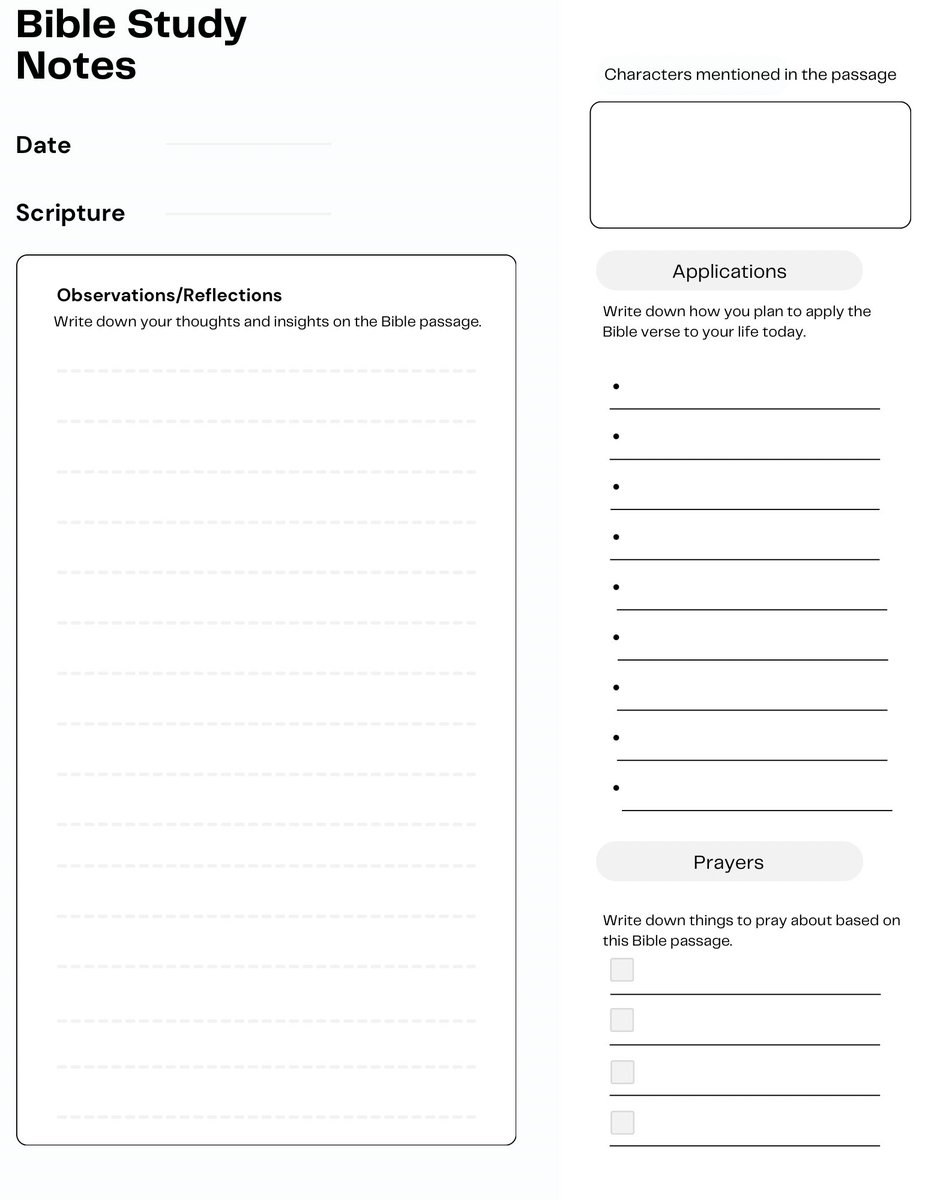
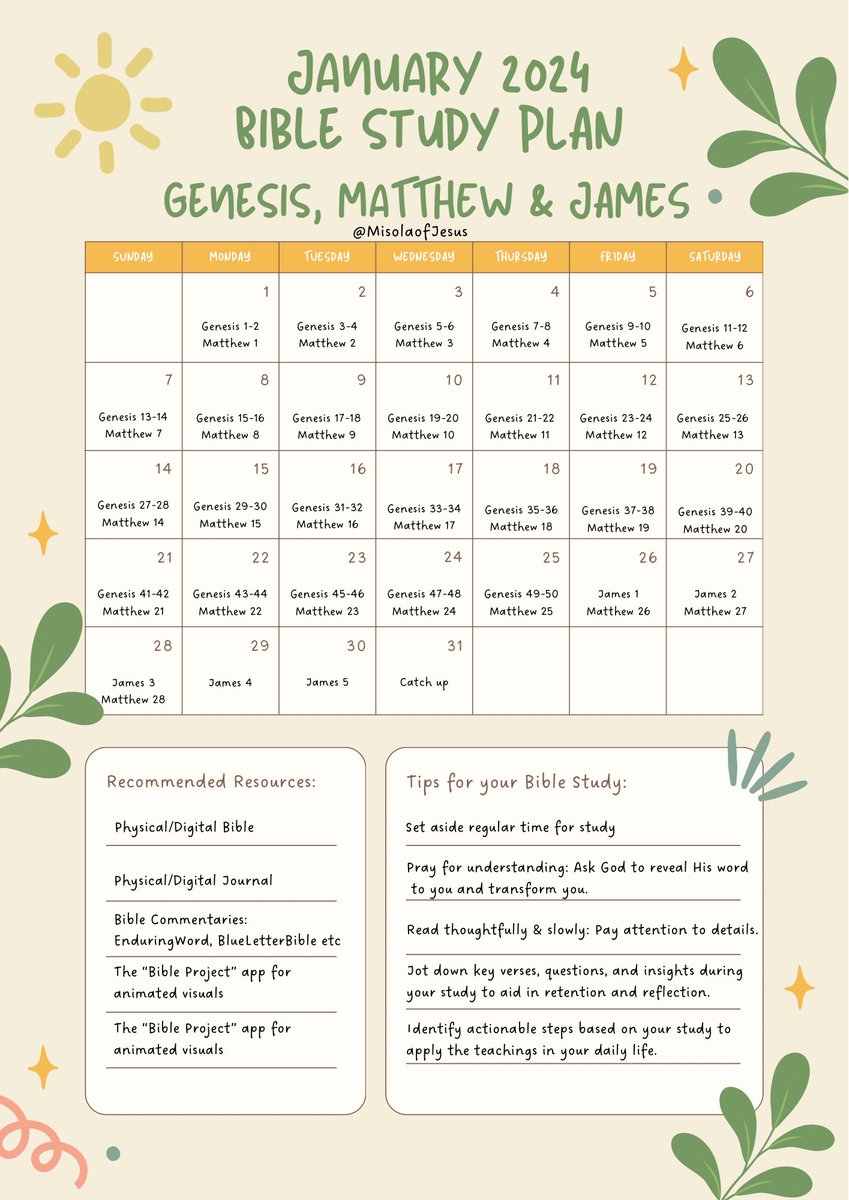
January 2024 Bible Study Plan is here.💃
A Powerful New Year Starts with the Word!
Wow! What a journey we shared in 2023!
Over 500 of us testified to studying the Word more through our Bible study plan.
Now, let's step into 2024 even stronger, hand in hand with God's wisdom.
I would've published 0 papers without this first:
A useful research concept. No fuss. No details.
Just 5 steps to get a sharp idea for a research paper
1. Find your spark
→ Find it within your interests
• What excites you in your field?
• What questions keep popping into your head?
→ Inspiration comes from reading lots
• Browse textbooks, journals, and online resources
• Inspiration lurks everywhere
→ Get curious in discussions
• Chat with professors, mentors, or researchers
• Their insights can ignite your curiosity
2. Find the right angle
→ Refinement is essential
• Choose a specific area within your broader interest.
• Think narrower, not vaguer.
→ Focus on the reasons
• Why is this topic important?
• What gap in knowledge can you fill?
→ Hone in on potential research questions
• These are your paper's driving force
• Start with open-ended explorative queries
3. Conceptualize and strategize
→ Find the nuggets
• What are the key core ideas?
• What must you understand and analyze?
→ Sketch a first outline
• Keep it a simple list or a mind map
• Don't overload it with details
→ Find ways to study this
• How will you find evidence to answer your questions?
• Will you need surveys, interviews, or data analysis?
4. Do a sanity check
→ Check existing literature
• Search academic databases for the concepts
• Read relevant articles, books, and tech reports
→ Take notes on everything you read
• Use notecards, digital tools, or whatever works
• My recent favourites are Obsidian and Notion
→ Evaluate your sources
• Consider the credibility and bias of your sources
• Double-check the relevance of each source you use
5. Connect everything together
→ Analyze everything you've found
• Find patterns
• Find contradictions
• Find unexpected insights
→ Refine your research question
• Did your recorded facts contradict one another?
• Did your exploration lead you down new paths?
• Adapt your question accordingly
→ Find a thesis statement or hypothesis
• What's a falsifiable claim you're willing to make?
• What's a potential answer to your question?
• What assumptions do your facts allow?
This is the key message your paper will deliver.
This is also the full concept for your paper.
Now, you can begin fleshing it out.
Thanks for reading my post.
If this helped you, consider reposting to share with your audience.
Find out more on my profile page.
8️⃣ Freakonomics - MBAs favorite. This podcast uncovers the hidden truths in topics you thought you already knew about.
Very informative but also provides opportunity to rethink and question various ideals.
Link - https://t.co/VGUwTpvrJv
How to STUDY Mathematics:
• Practice, Practice & More Practice.
• Review Errors.
• Master the Key Concepts.
• Understand your Doubts.
• Create a Distraction Free Study Environment.
• Create a Mathematical Dictionary.
• Apply Math to Real World Problems.
If you want to become a better software engineer, read these famous posts from top companies (OpenAI, Airbnb, Stripe, Figma, Netflix, Meta)
I spent hours curating top posts so you don't have to:
I want to expand on two techniques I use to get a lot done - Pomodoro & Don't Break the Chain. This works for any undertaking: writing a complex report, preparing for a difficult presentation/negotiation, mastering a programming language, studying for the GRE and so on.
Pomodoro:
I set aside distraction-free blocks of time to dive into the task. I normally do 45 mins. I switch off my phone, close the door, and work. I don't allow any distraction in this period. If a thought comes to me (you forgot to reply that email!) during this time, I write it down on a notepad and just carry on. My timer rings after 45 min, I get up, take a break and (if really important & urgent) attend to the distracting thought that crept in while I was on the clock. I take about 5 - 10 min break, and start another round. By the time I am on my 3rd Pomodoro and certainly after my 4th, I am cognitively exhausted and need to do something different e.g. tweet, go for a walk, grab a snack or all of the above 🙂
Some days, my schedule allows me to do this one more time i.e. have another three or four 45-min blocks of time to work on an important issue. This means on some days I get to do Pomodoro 6 to 8 times; but most days, I just do 3 to 4.
Don't Break the Chain:
This is to keep me consistent. Each day I am able to work on the item I have decided to master, I put a tick mark next to that on the calendar posted on my wall. It's visible and people can see it. The goal is to place a tick a day i.e. form a chain of ticks. I don't want to break this chain. I want to see how long I can make the chain. When I was preparing for my GRE, I had a 3,500 Word list I wanted to memorize. I broke it down to 70 words a day for 50 days. I did not break the chain. After 50 days, I had 50 unbroken tick chain on my calendar that anyone visiting my workspace could see.
I combine Pomodoro & Don't Break the Chain so much that it has become second nature to me. It is definitely one of the secrets to my productivity.
Hack yourself.
Some years ago, I wrote down my productivity techniques so I can consistently use them and teach some of my mentees at the time.
This is how I’m able to sustain my performance.
To get from where you are now to where you need to be. You may need to reinvent (hack) yourself, once and again. I hope this handwritten note gives you a head start.