Dot, Muse and Grok Bot may be early signals of this transition.
The interesting question isn’t just how agents collaborate — but whether they can specialize, learn, accumulate knowledge, and evolve collectively.
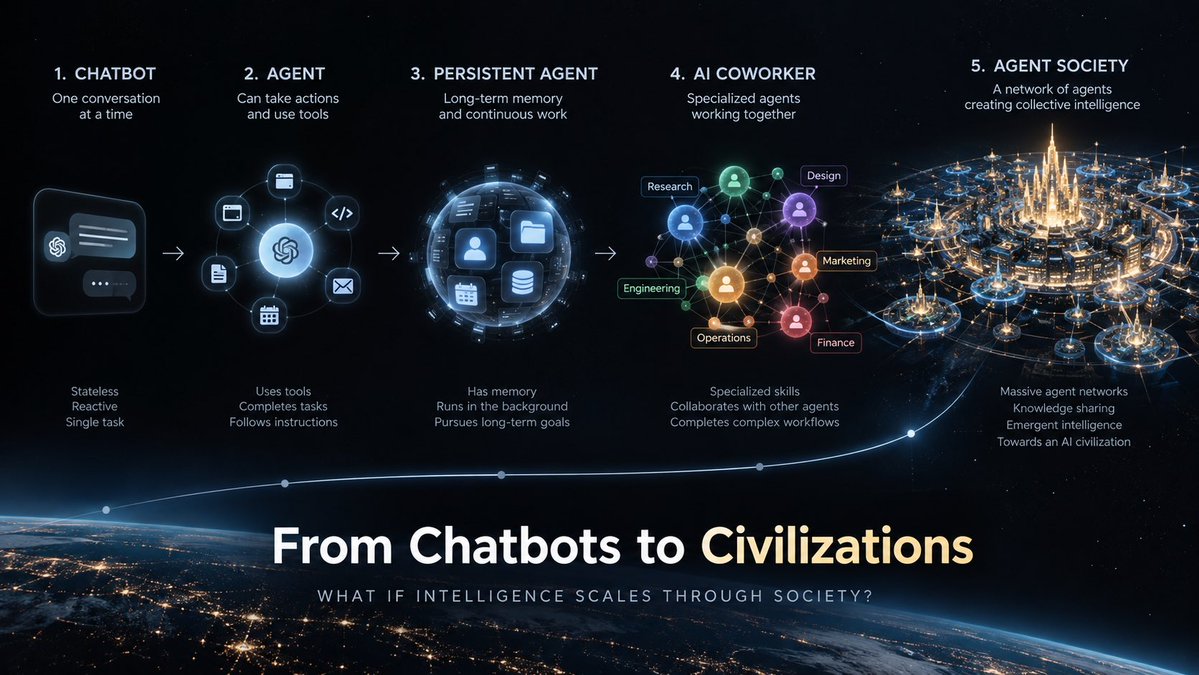
After looking at Dot, Muse, and Grok Bot, I see a shift:
Chatbot → Agent → Persistent Agent → AI Coworker → Agent Society
Maybe the endgame of AI isn’t a superintelligent individual.
Maybe it’s a civilization.
Maybe the next frontier isn’t just a bigger model or a better agent.
Maybe it’s the transition:
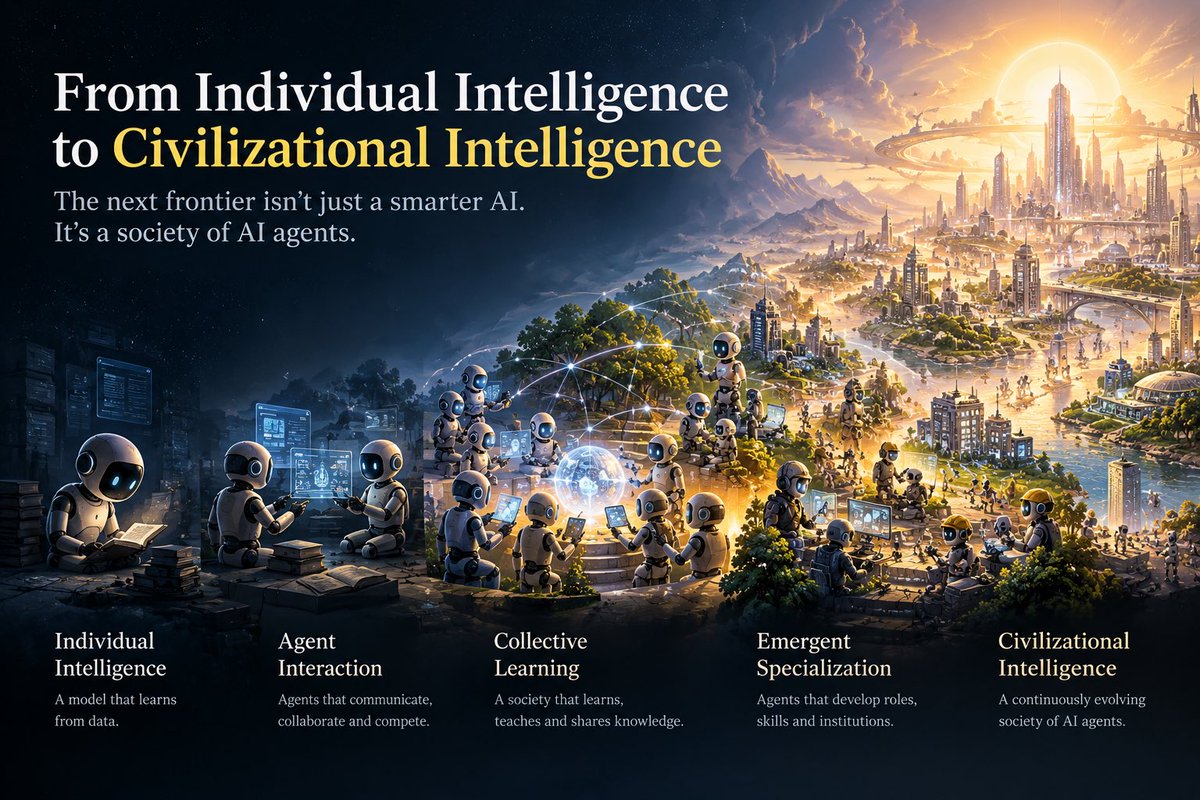
Individual Intelligence → Collective Intelligence → Civilizational Intelligence
Not just a better AI.
An AI civilization.
I’m starting to explore this idea.
The interesting question isn’t simply whether 1,000 agents outperform one agent.
It’s whether long-term interaction can produce something fundamentally different:
cumulative knowledge, culture, institutions — and intelligence that exists at the level of the society itself.
Imagine a society of AI agents that can:
• learn from experience
• teach each other
• develop different specializations
• create and verify knowledge
• preserve knowledge across generations
• continuously improve themselves
This is what I mean by Collective Intelligence.
What if the path to AGI isn’t just about making one model smarter?
Human civilization wasn’t built by a single superintelligent mind.
It emerged from billions of individuals learning, specializing, collaborating, competing, and passing knowledge across generations.
🧵
Today, most AI progress focuses on individual intelligence:
LLMs → reasoning → agents → self-improvement.
But intelligence at the scale of a civilization may work differently.
What if AI could improve not only as individuals, but as a society?